







Question: Procedure: Go to the web site: https://phet.colorado.edu/en/simulation/legacy/capacitor-lab e Click play e You will see the battery of 1.5 V, the parallel plate capacitor, the digital
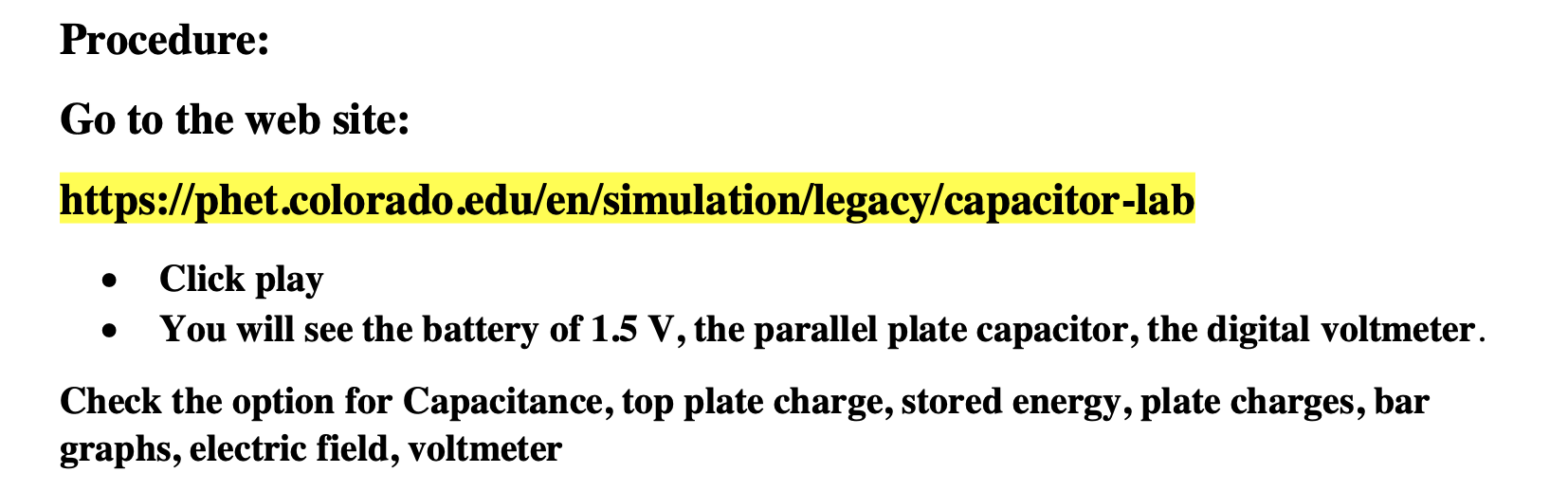
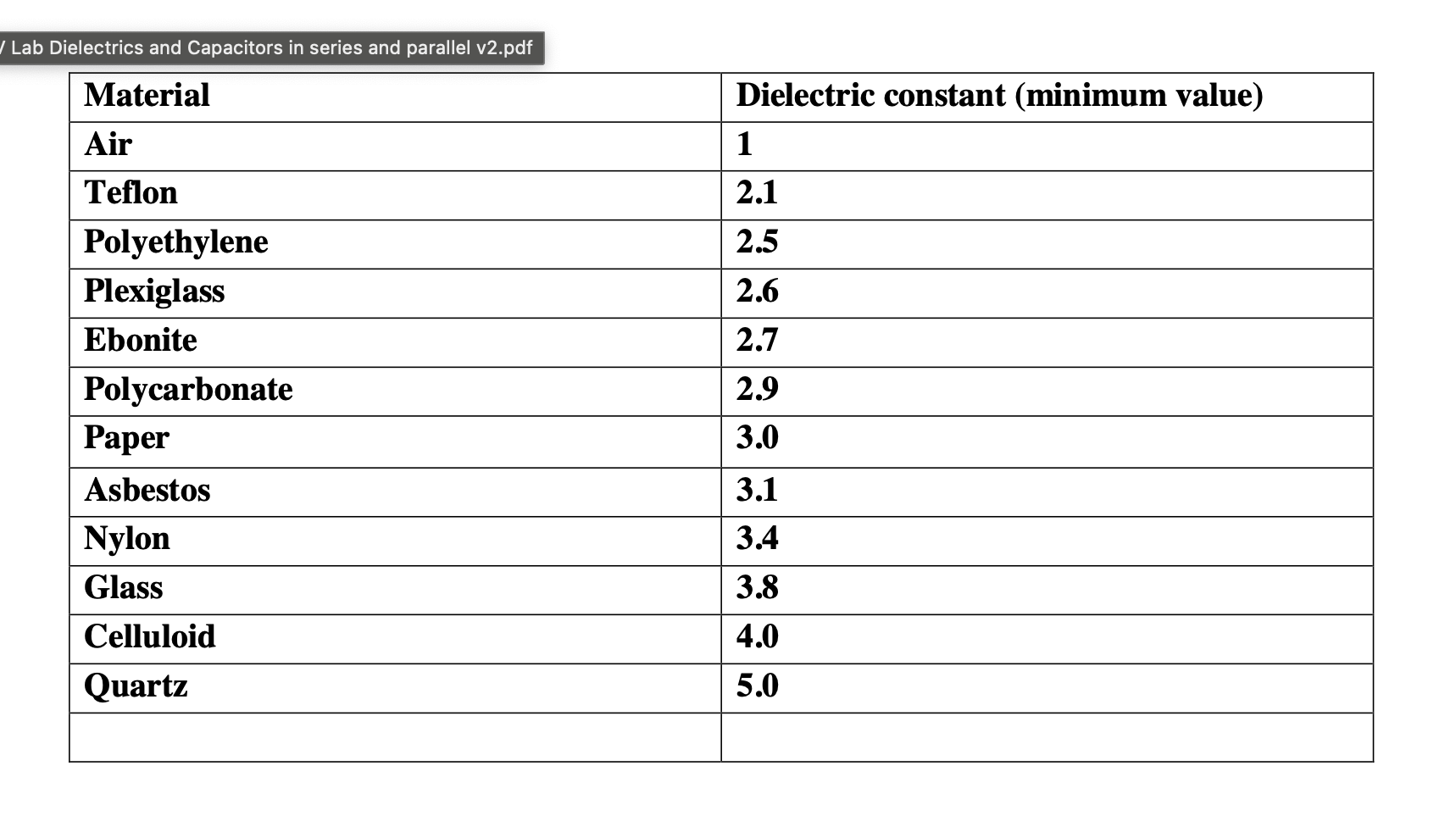
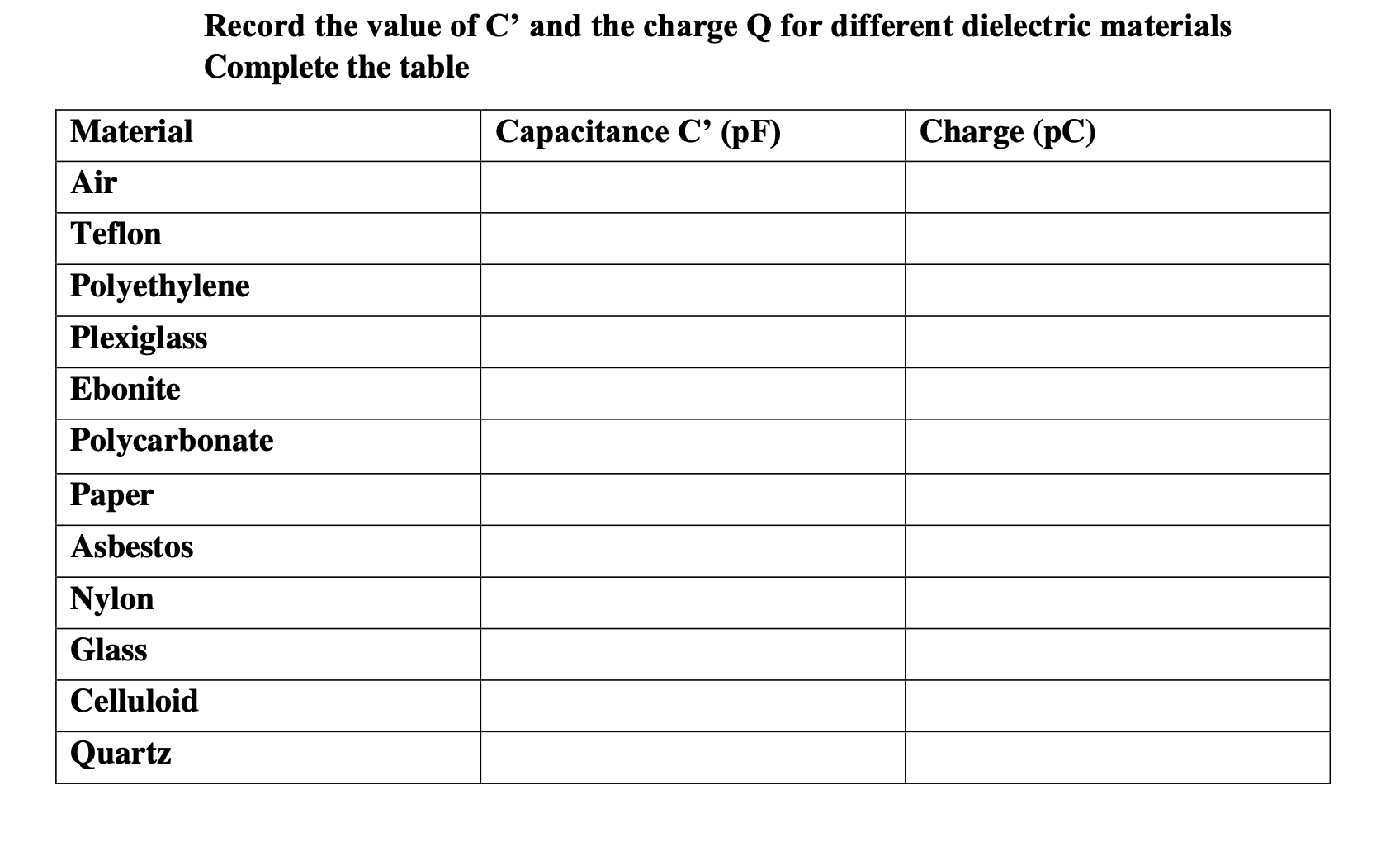
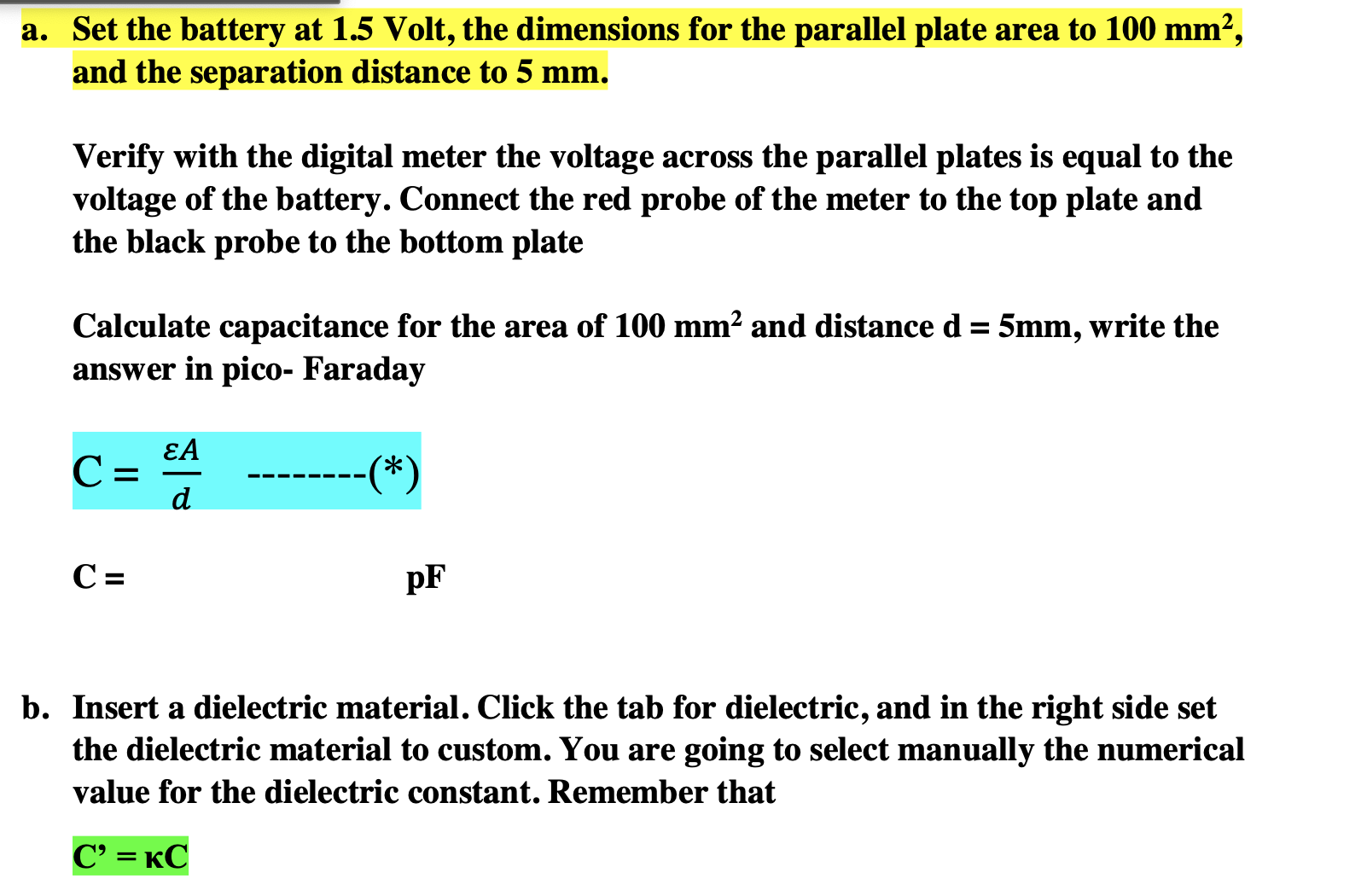
Procedure: Go to the web site: https://phet.colorado.edu/en/simulation/legacy/capacitor-lab e Click play e You will see the battery of 1.5 V, the parallel plate capacitor, the digital voltmeter. Check the option for Capacitance, top plate charge, stored energy, plate charges, bar graphs, electric field, voltmeter Lab Dielectrics and Capacitors in series and parallel v2.pdf Material Dielectric constant (minimum value) Air 1 Teflon 2.1 Polyethylene 2.5 Plexiglass 2.6 Ebonite 2.7 Polycarbonate 2.9 Paper 3.0 Asbestos 3.1 Nylon 3.4 Glass 3.8 Celluloid 4.0 Quartz 5.0Record the value of C' and the charge Q for different dielectric materials Complete the table Material Capacitance C' (PF) Charge (PC) Air Teflon Polyethylene Plexiglass Ebonite Polycarbonate Paper Asbestos Nylon Glass Celluloid QuartzSet the battery at 1.5 Volt, the dimensions for the parallel plate area to 100 mm?, a. and the separation distance to 5 mm. Verify with the digital meter the voltage across the parallel plates is equal to the voltage of the battery. Connect the red probe of the meter to the top plate and the black probe to the bottom plate Calculate capacitance for the area of 100 mm? and distance d = 5Smm, write the answer in pico- Faraday C= pF Insert a dielectric material. Click the tab for dielectric, and in the right side set the dielectric material to custom. You are going to select manually the numerical value for the dielectric constant. Remember that C'=xC
Step by Step Solution
There are 3 Steps involved in it

Get step-by-step solutions from verified subject matter experts
 Study Help