







Question: Q 4 ) ( 1 0 points ) The head loss and effluent during a typical filter run at a drinking water treatment plant are
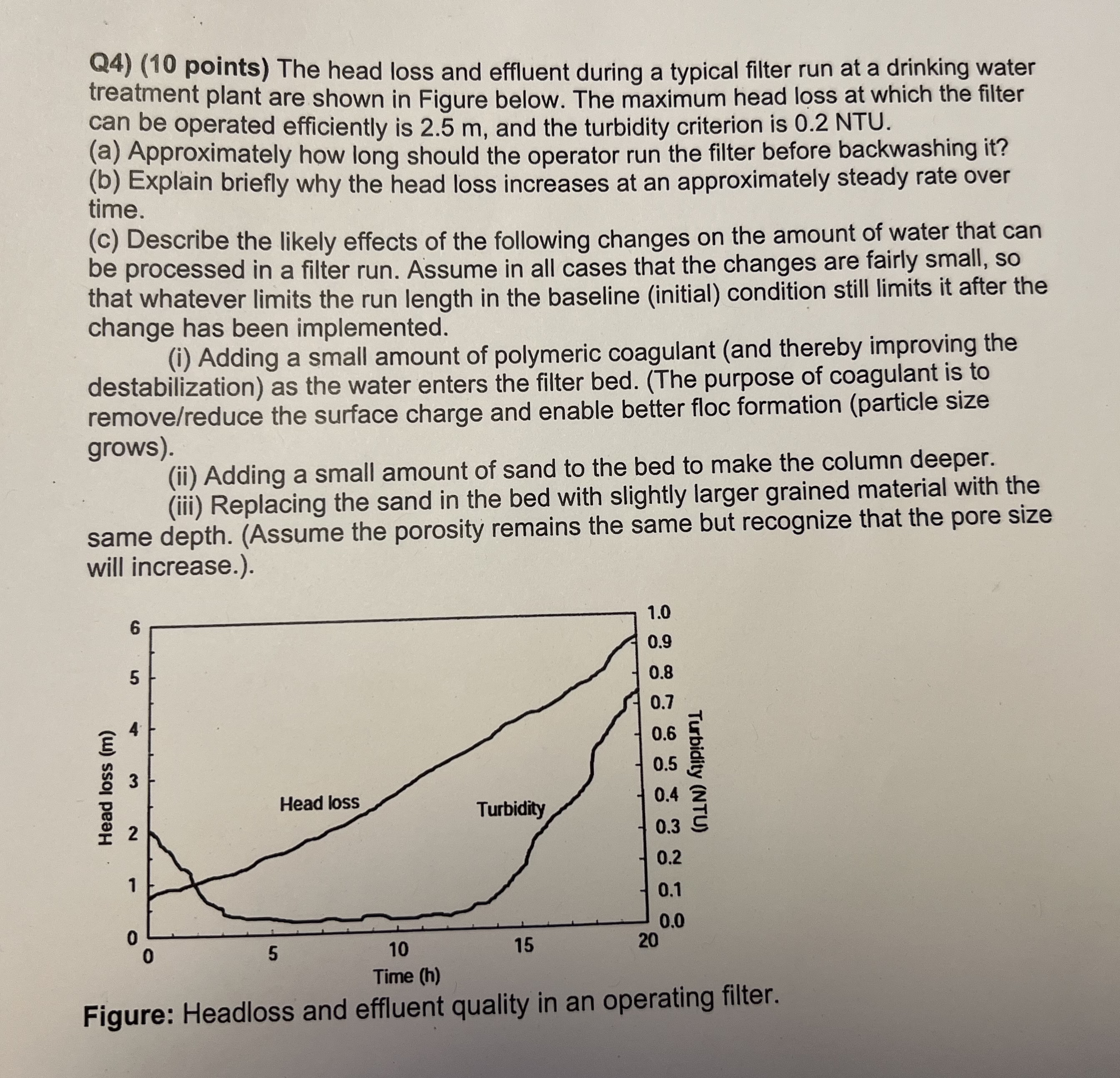
Q points The head loss and effluent during a typical filter run at a drinking water treatment plant are shown in Figure below. The maximum head loss at which the filter can be operated efficiently is m and the turbidity criterion is NTU.
a Approximately how long should the operator run the filter before backwashing it
b Explain briefly why the head loss increases at an approximately steady rate over time.
c Describe the likely effects of the following changes on the amount of water that can be processed in a filter run. Assume in all cases that the changes are fairly small, so that whatever limits the run length in the baseline initial condition still limits it after the change has been implemented.
i Adding a small amount of polymeric coagulant and thereby improving the destabilization as the water enters the filter bed. The purpose of coagulant is to removereduce the surface charge and enable better floc formation particle size grows
ii Adding a small amount of sand to the bed to make the column deeper.
iii Replacing the sand in the bed with slightly larger grained material with the same depth. Assume the porosity remains the same but recognize that the pore size will increase.
Figure: Headloss and effluent quality in an operating muer.
Step by Step Solution
There are 3 Steps involved in it
1 Expert Approved Answer
Step: 1 Unlock

Question Has Been Solved by an Expert!
Get step-by-step solutions from verified subject matter experts
Step: 2 Unlock
Step: 3 Unlock
 Study Help