







Question: Q1: Matching Algorithm (1 point) Recall the deferred acceptance and priority matching algorithms introduced in Chapter 11 of Behavioral Economics by Edward Cartwright. Consider the
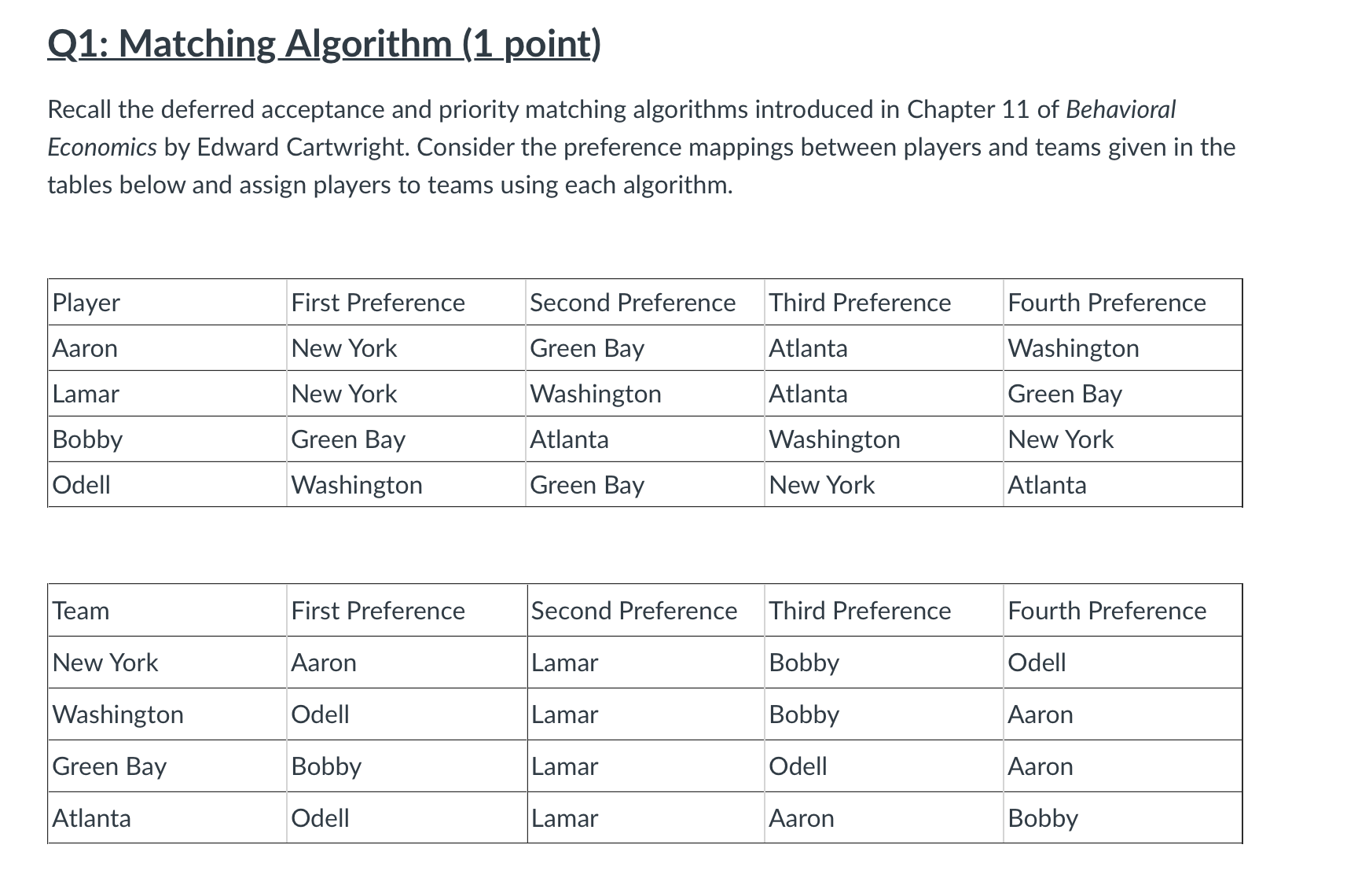
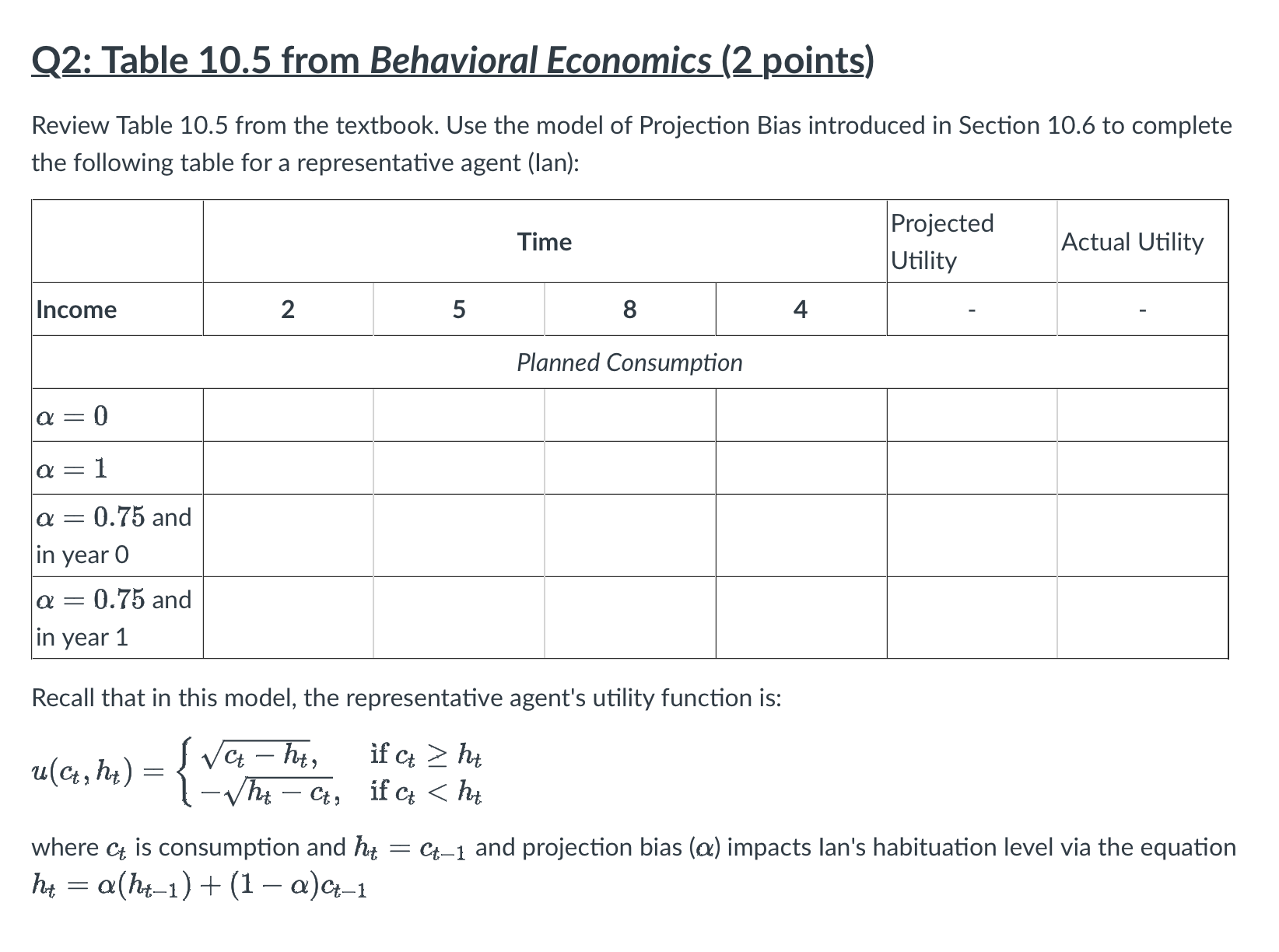
Q1: Matching Algorithm (1 point) Recall the deferred acceptance and priority matching algorithms introduced in Chapter 11 of Behavioral Economics by Edward Cartwright. Consider the preference mappings between players and teams given in the tables below and assign players to teams using each algorithm. Player First Preference Second Preference Third Preference Fourth Preference Aaron New York Green Bay Atlanta Washington Lamar New York Washington Atlanta Green Bay Bobby Green Bay Atlanta Washington New York Odell Washington Green Bay New York Atlanta Team First Preference Second Preference Third Preference Fourth Preference New York Aaron Lamar Bobby Odell Washington Odell Lamar Bobby Aaron Green Bay Bobby Lamar Odell Aaron Atlanta Odell Lamar Aaron BobbyQ2: Table 10.5 from Behavioral Economics (2 points) Review Table 10.5 from the textbook. Use the model of Projection Bias introduced in Section 10.6 to complete the following table for a representative agent (lan): . Projected . Time = Actual Utility Utility Income 2 5 8 4 - - Planned Consumption a=20 a=1 a = 0.75 and in year O a = 0.75 and inyear 1 Recall that in this model, the representative agent's utility function is: ' vhs , ifep
Step by Step Solution
There are 3 Steps involved in it

Get step-by-step solutions from verified subject matter experts
 Study Help