







Question: Question 1 (1 point) An accommodative policy response to an adverse supply shock 0 attempts to keep real GDP at its natural level. 0 maintains
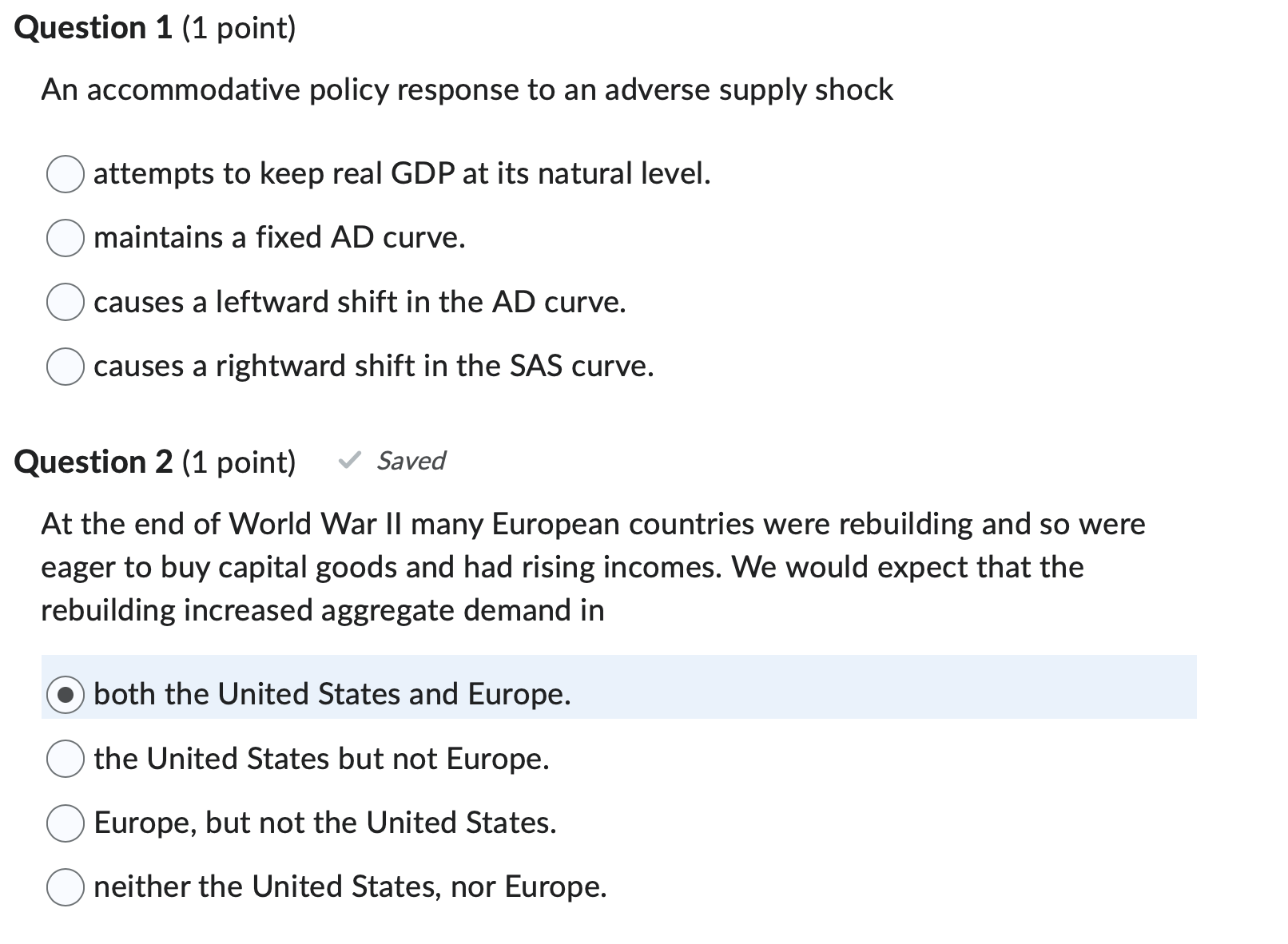
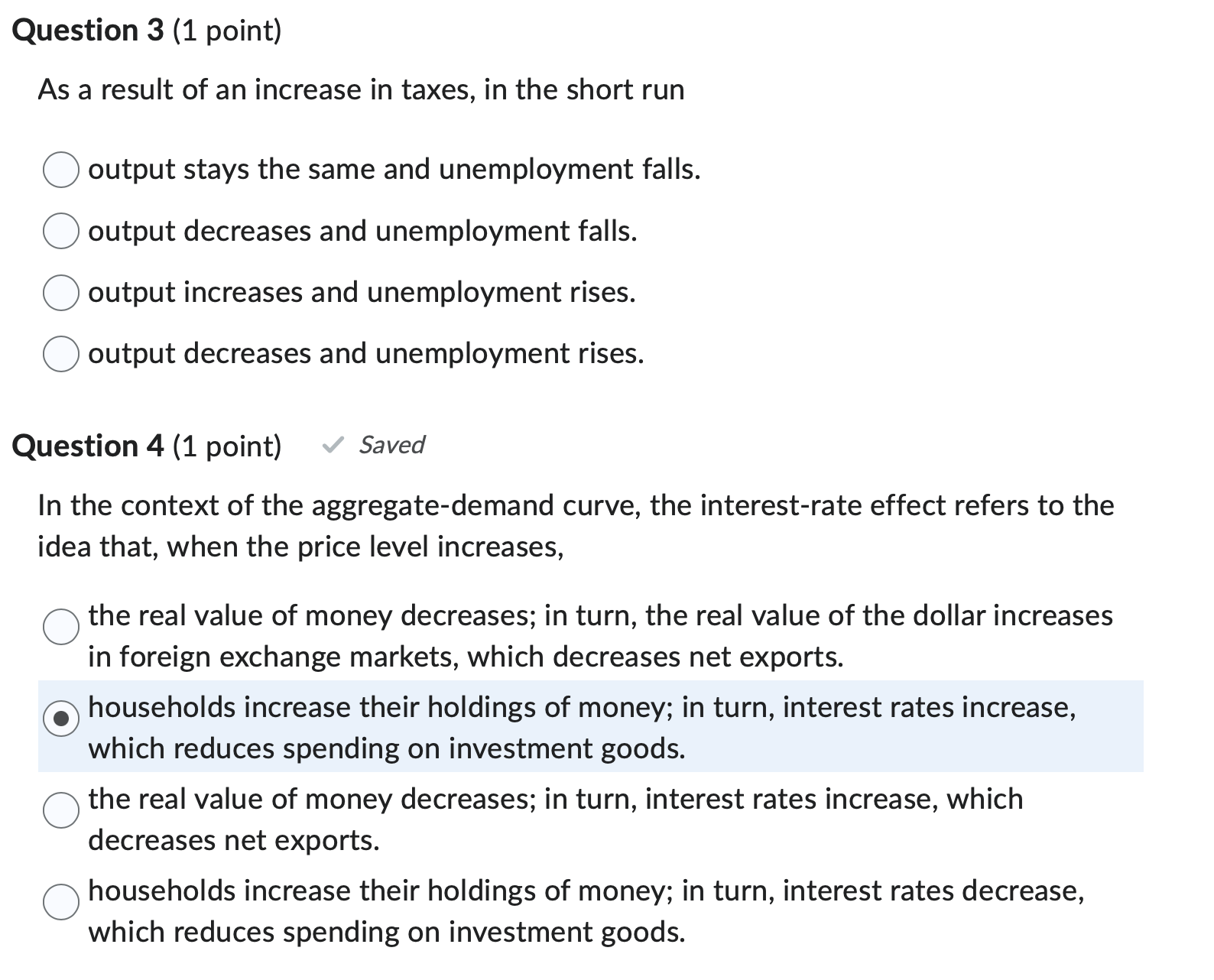

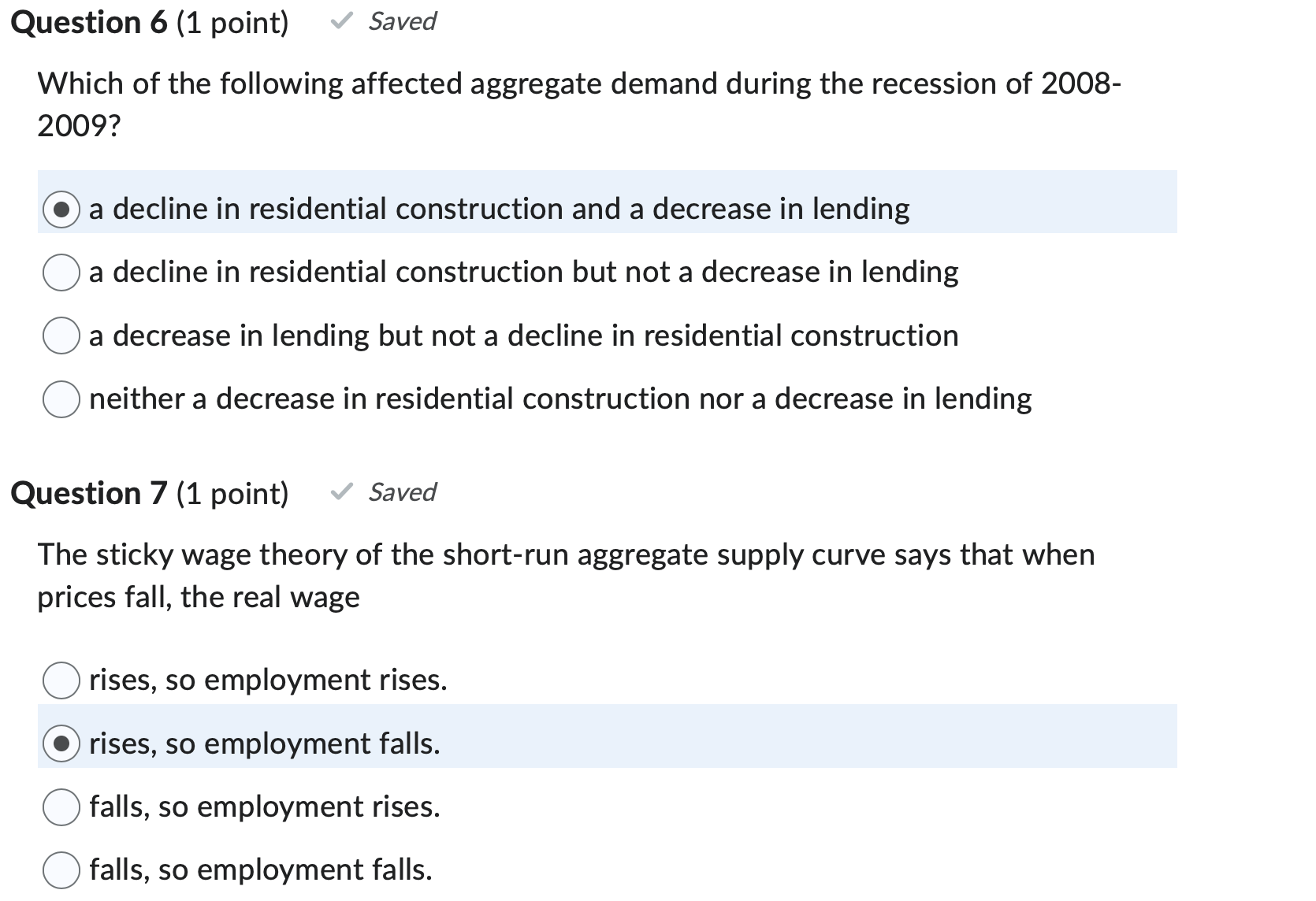
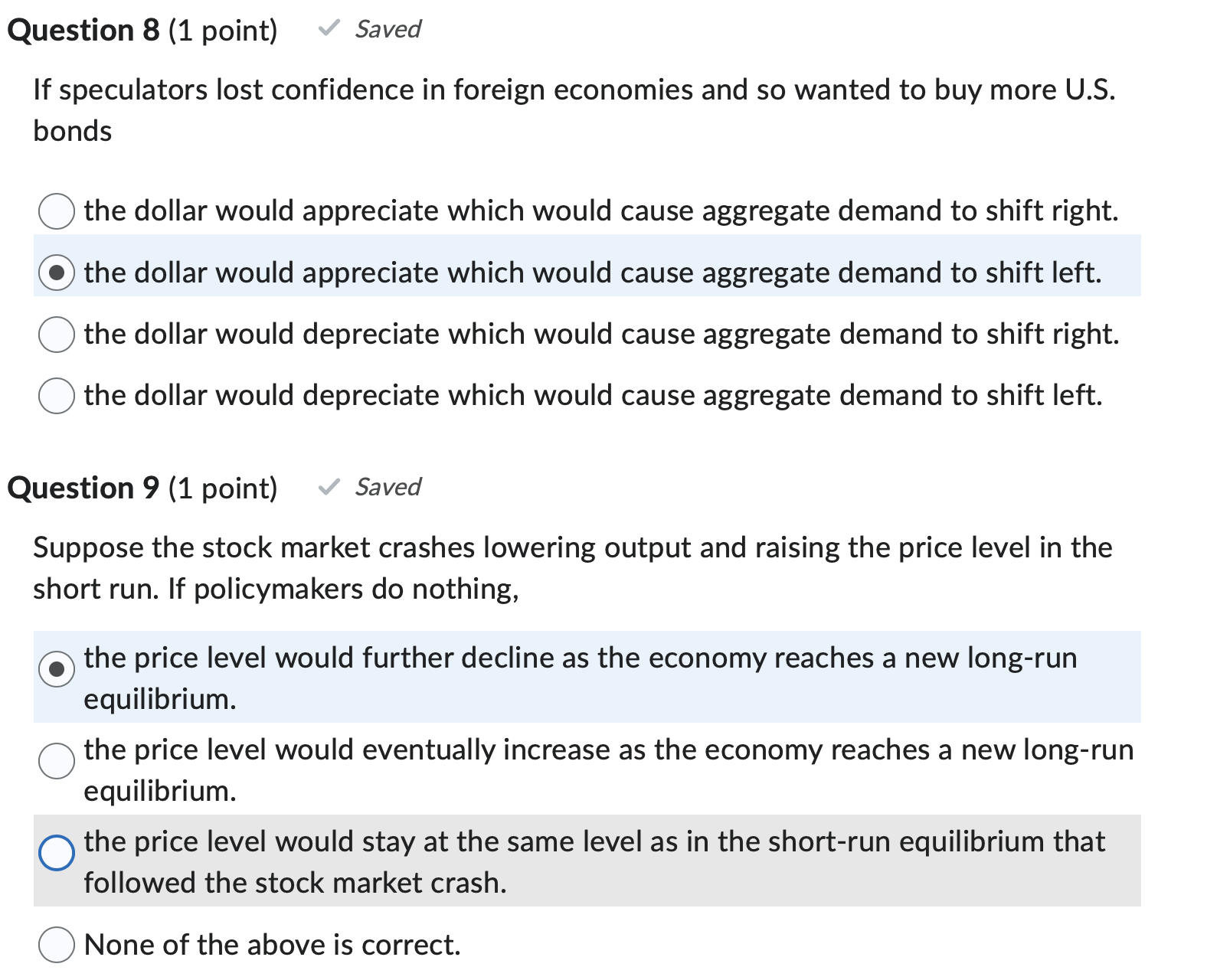
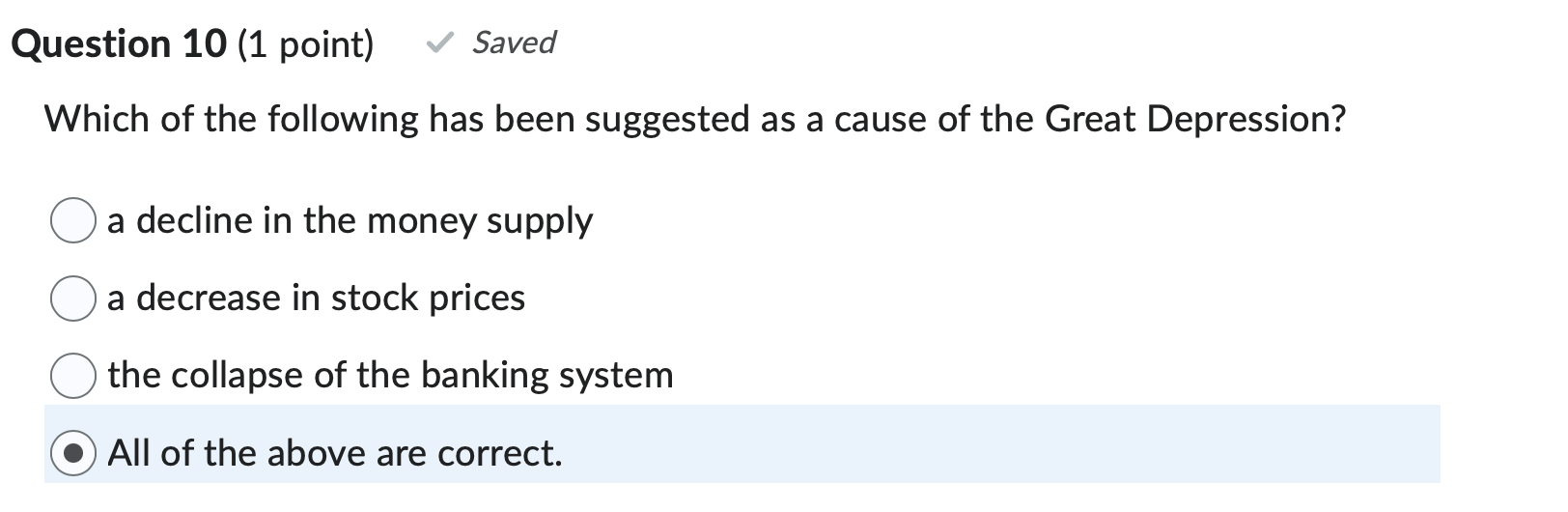
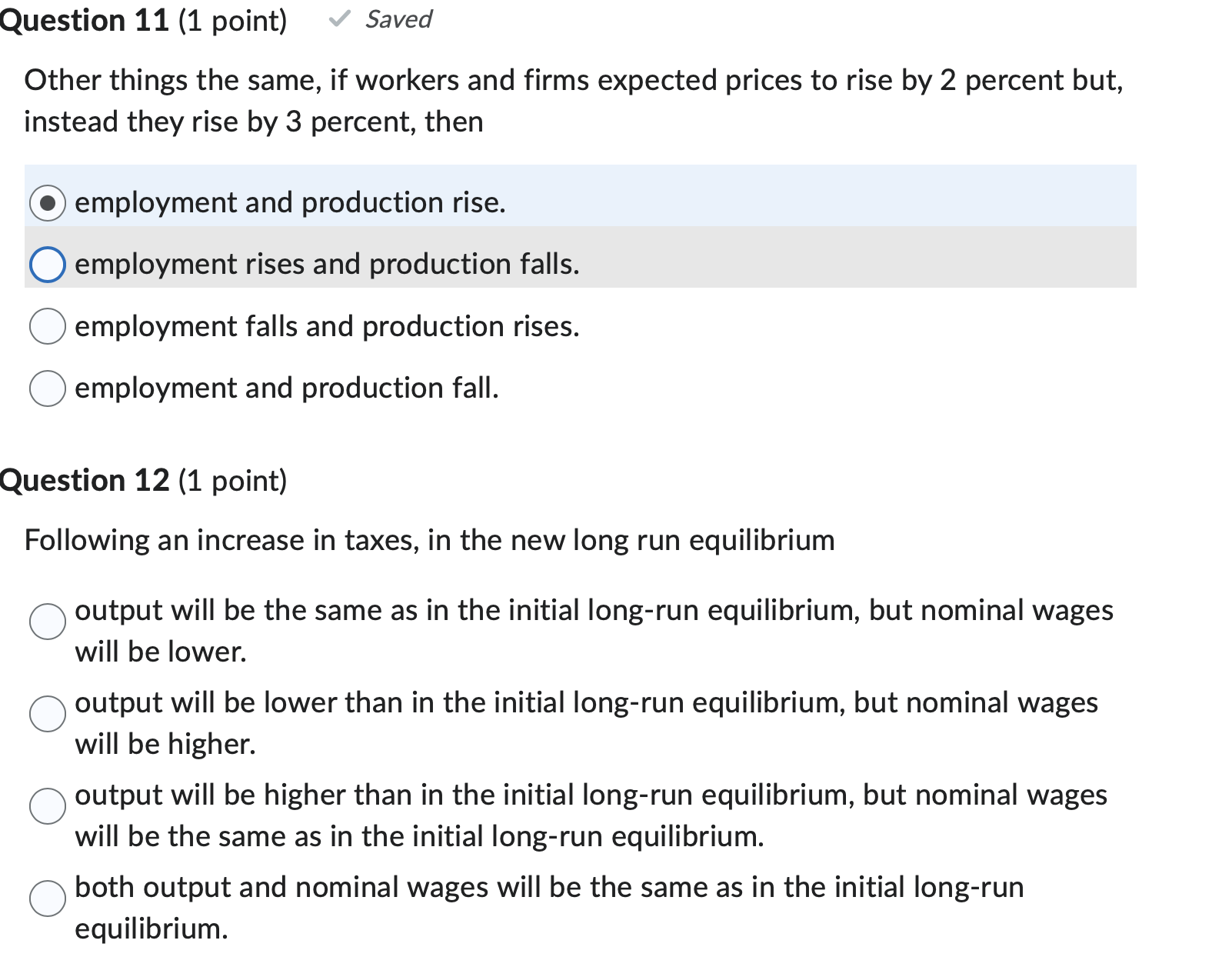
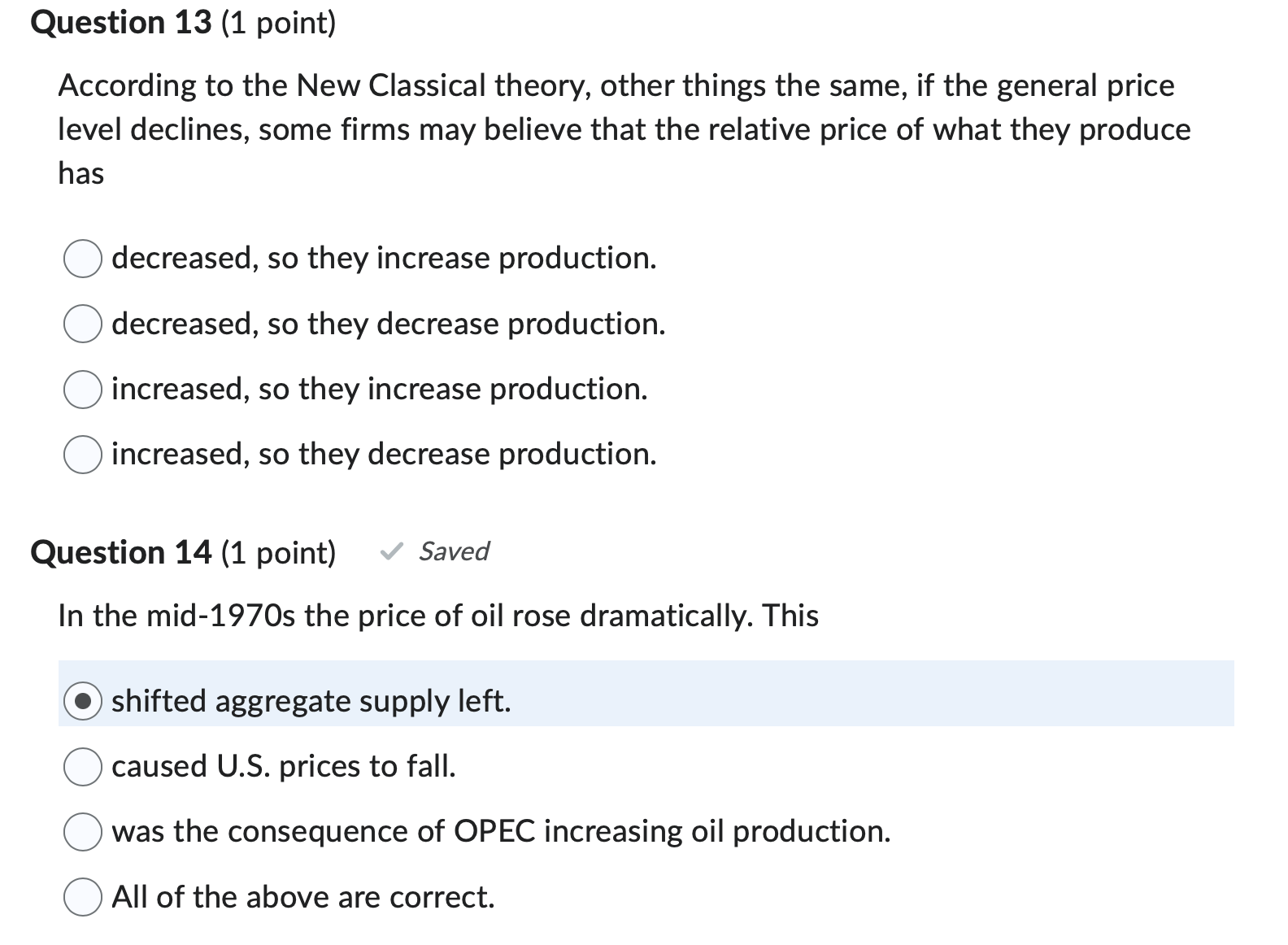
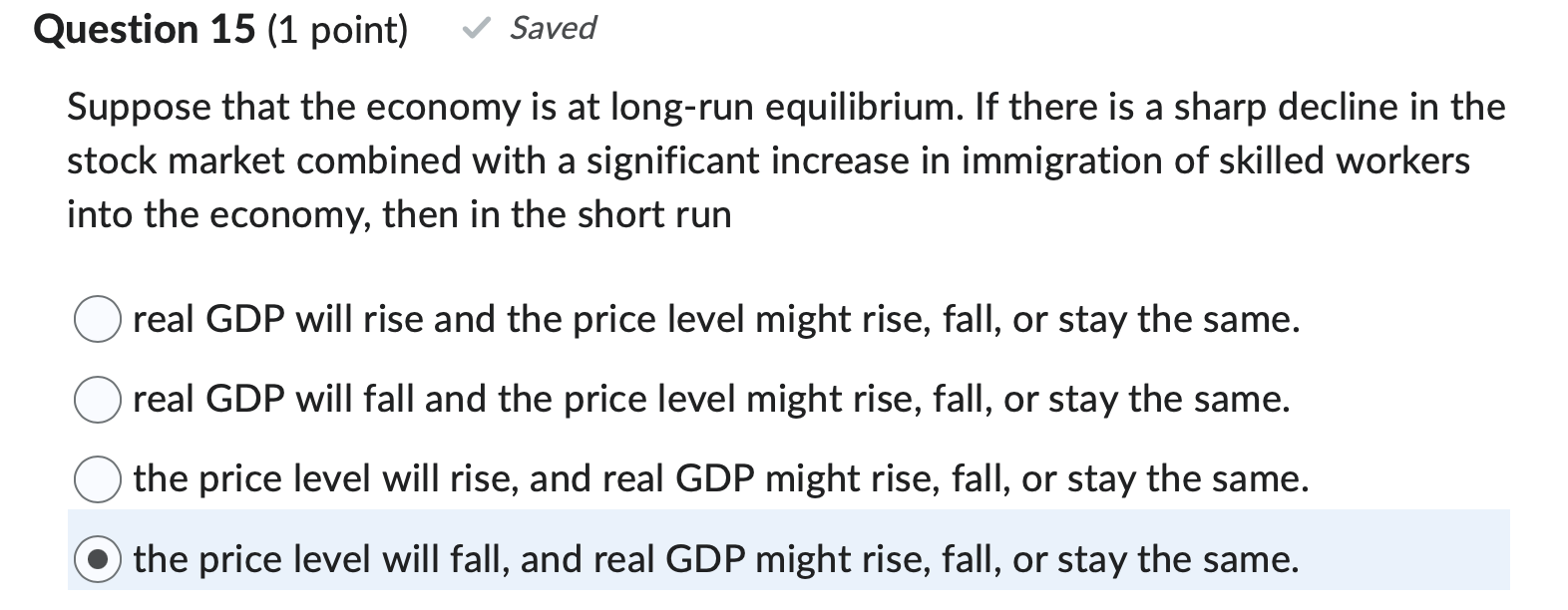
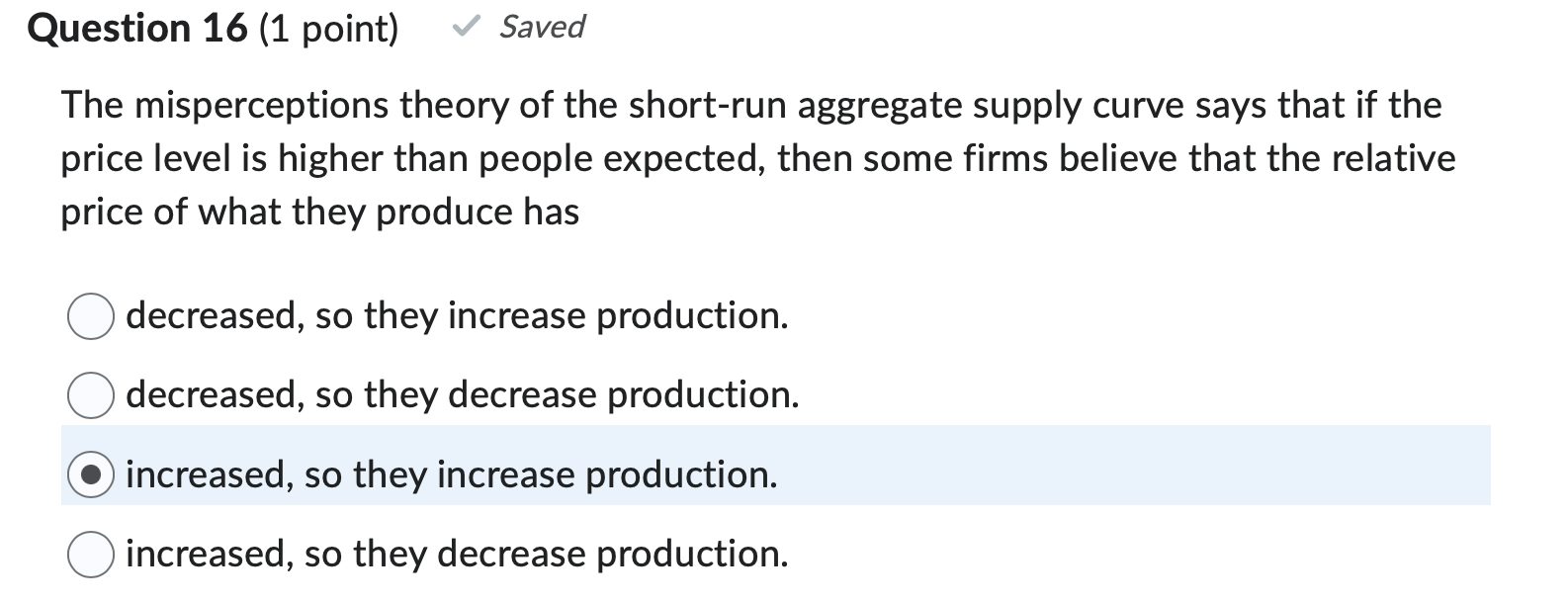
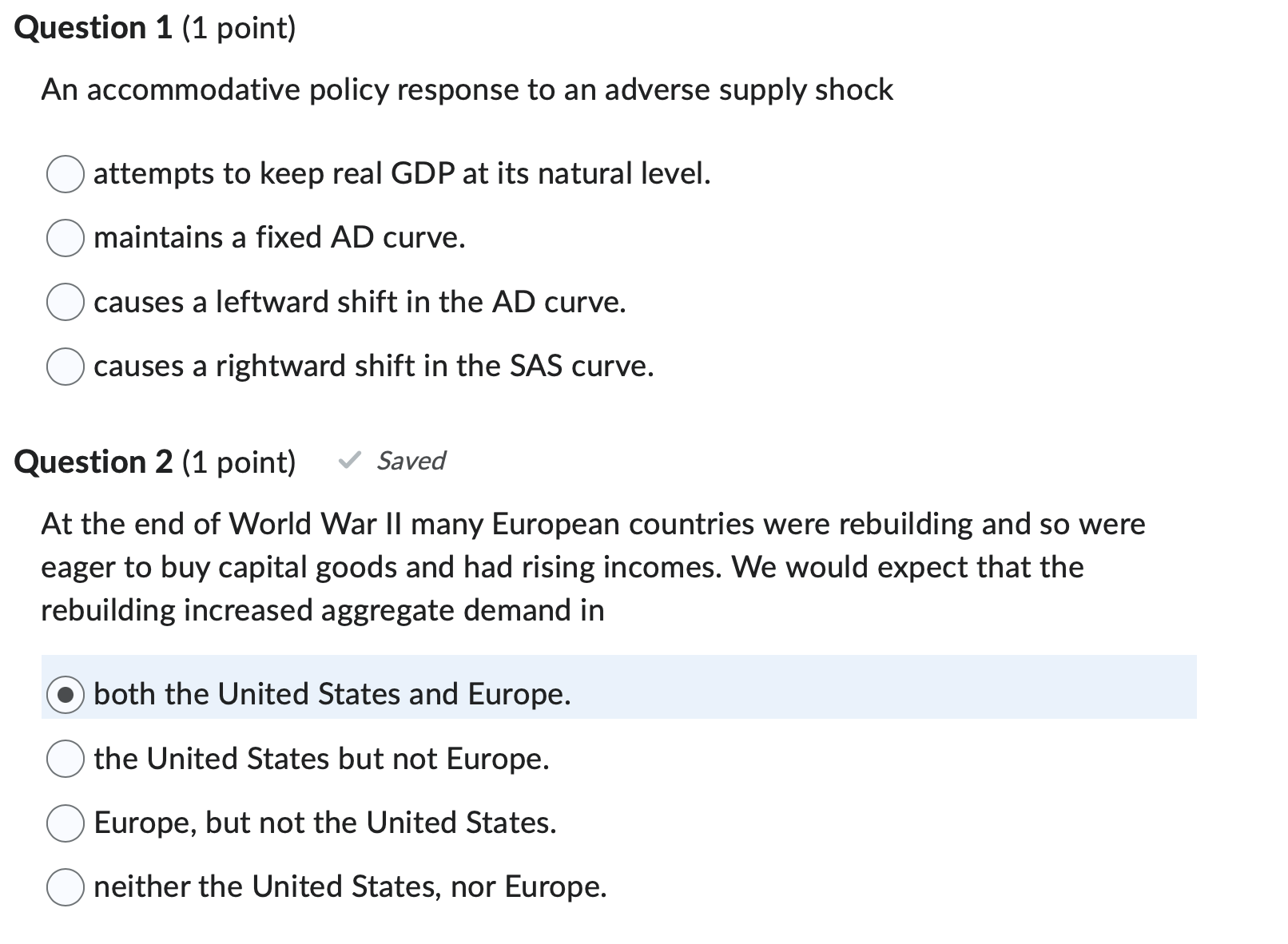
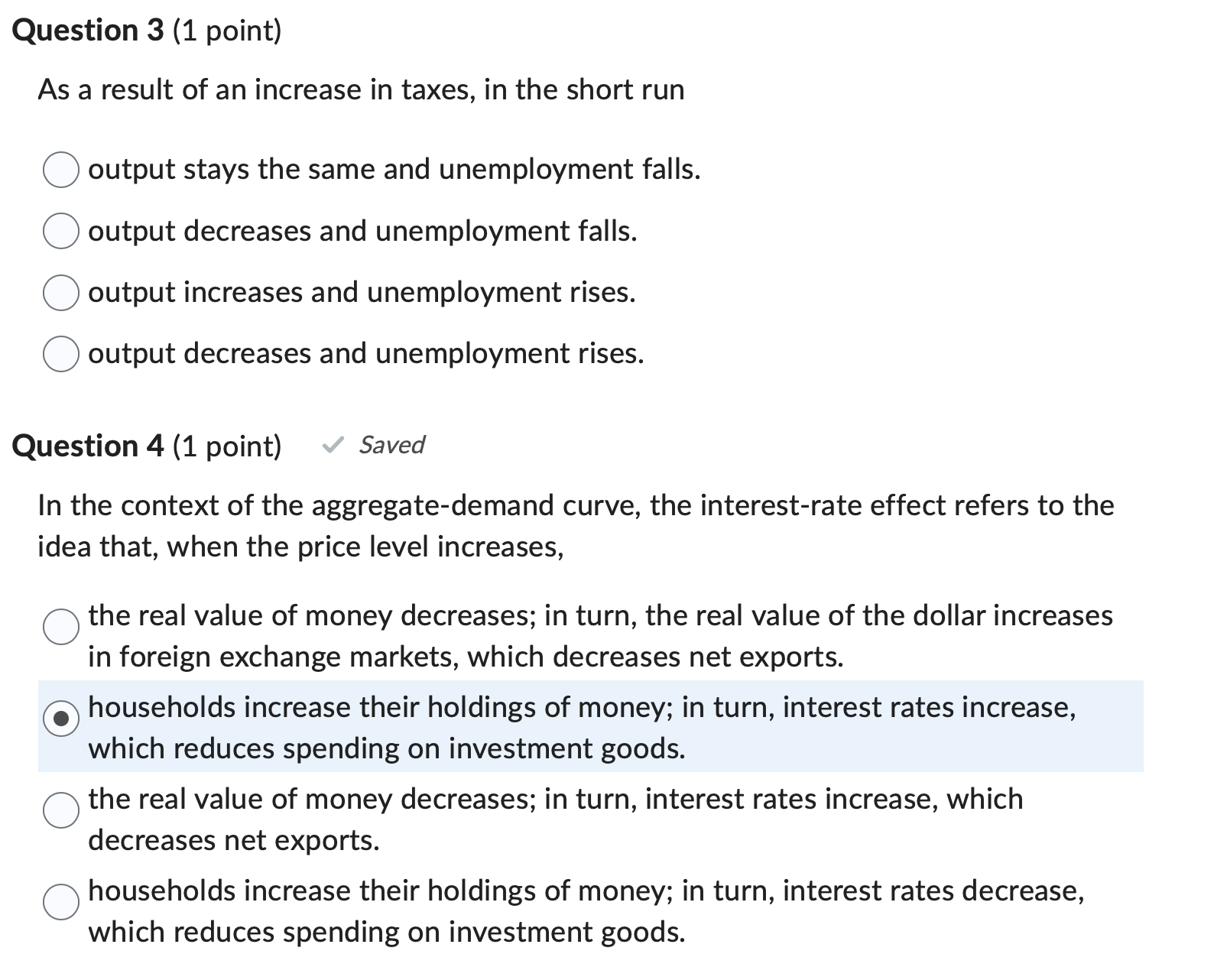

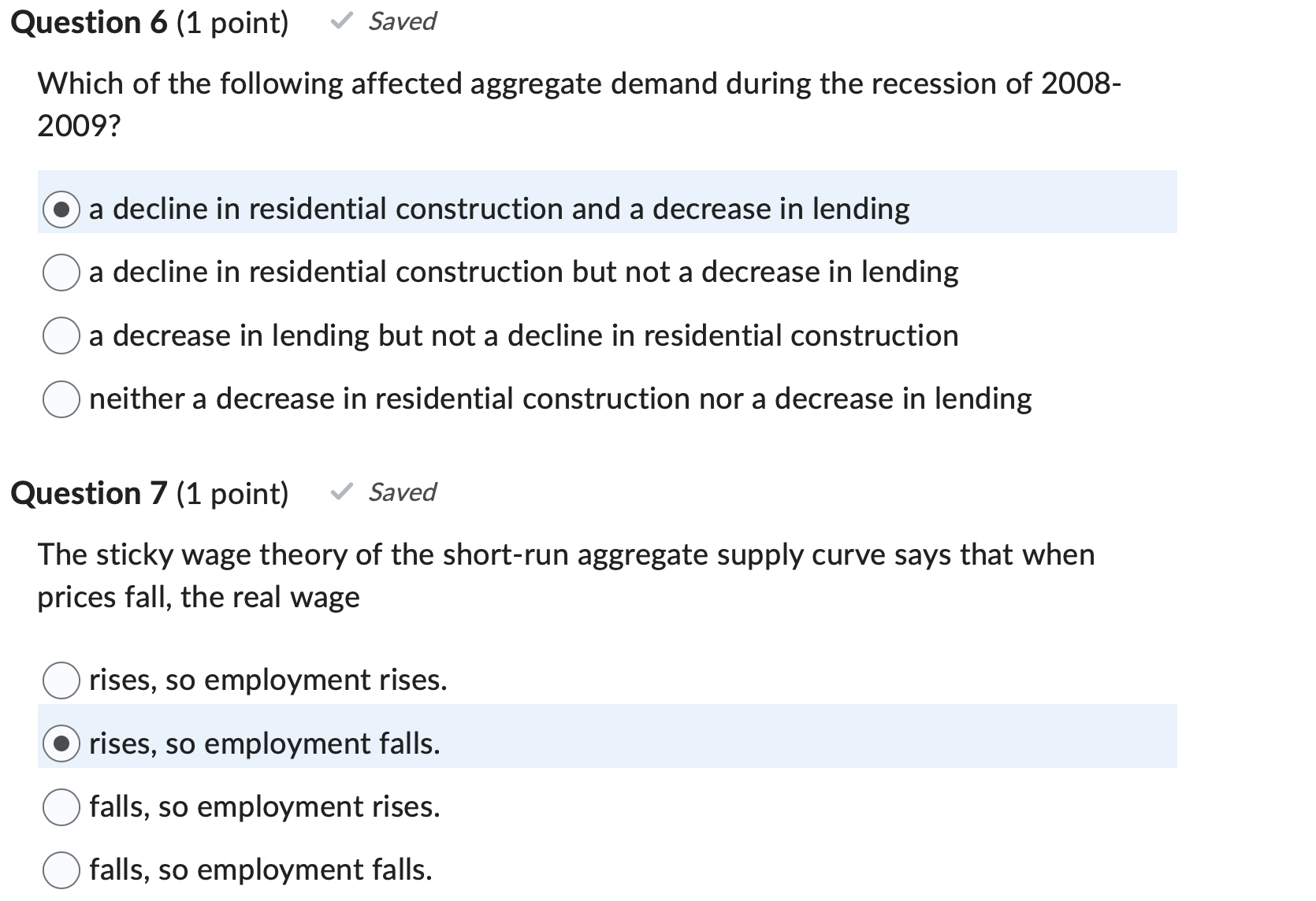
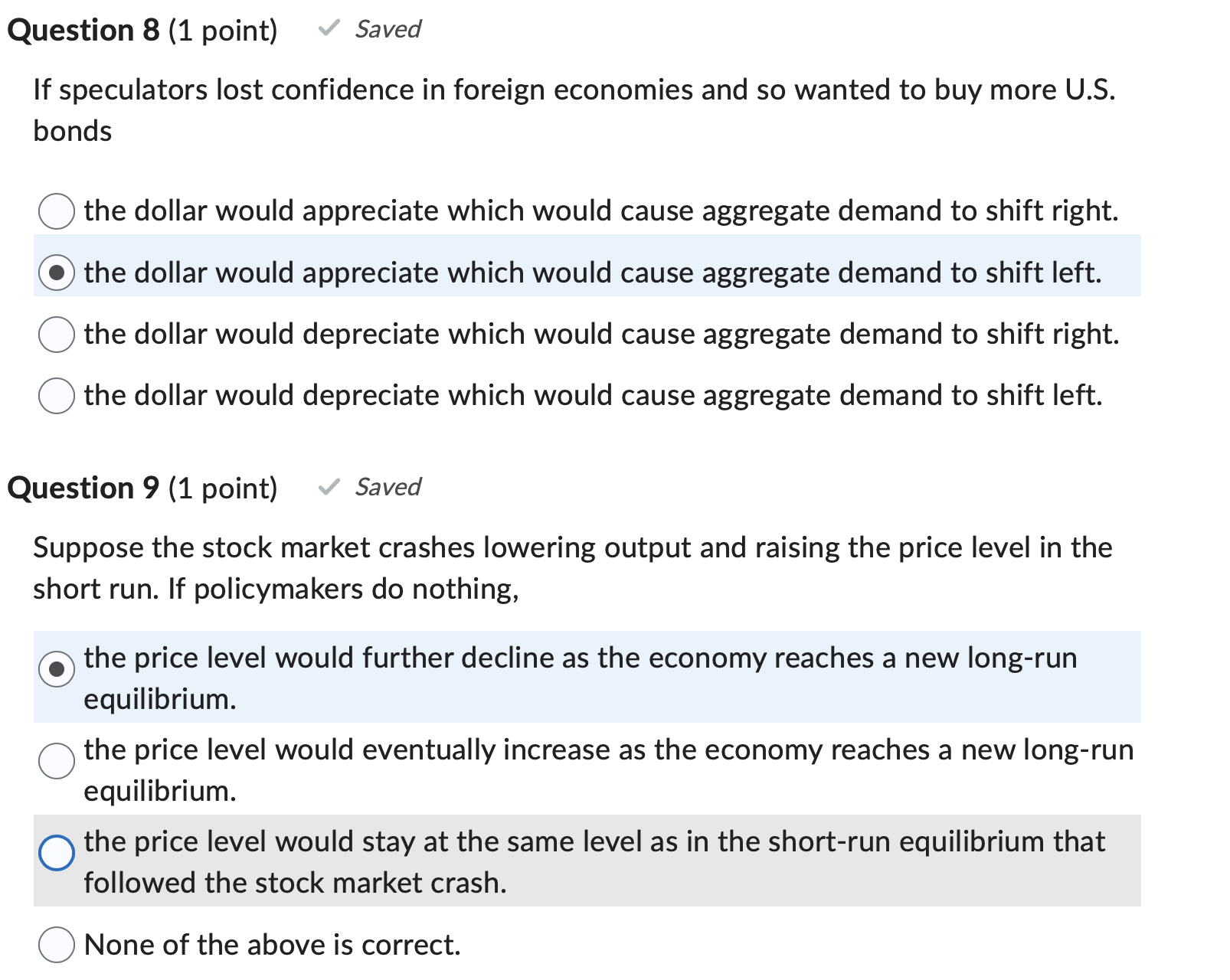
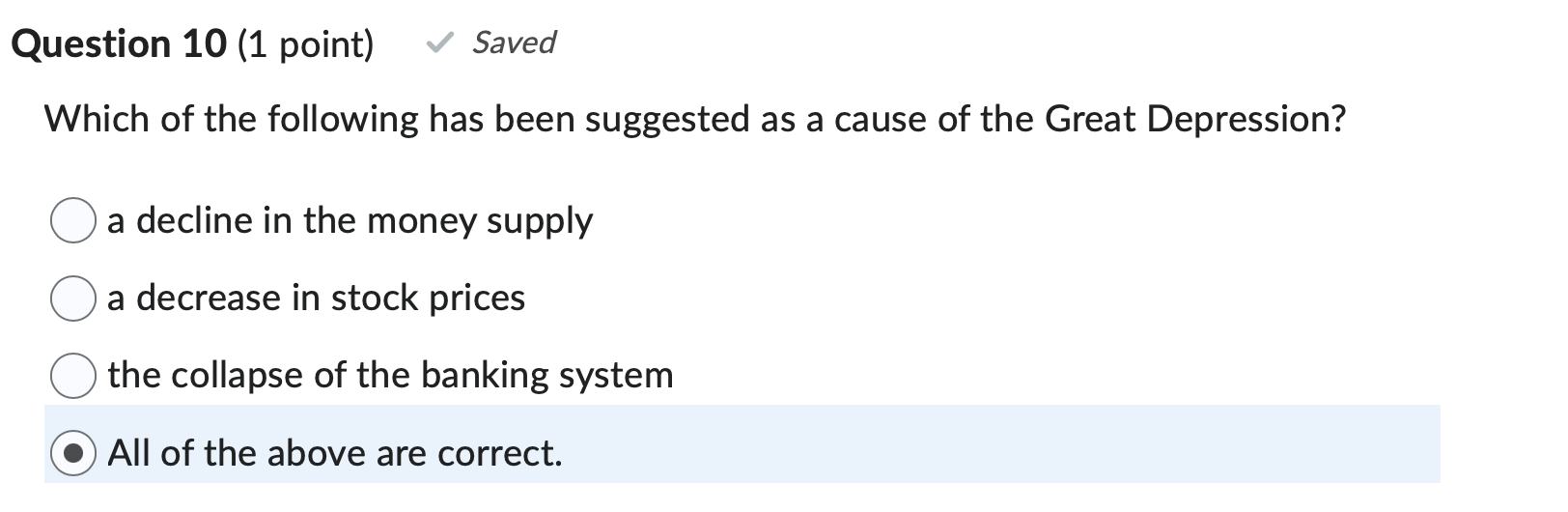
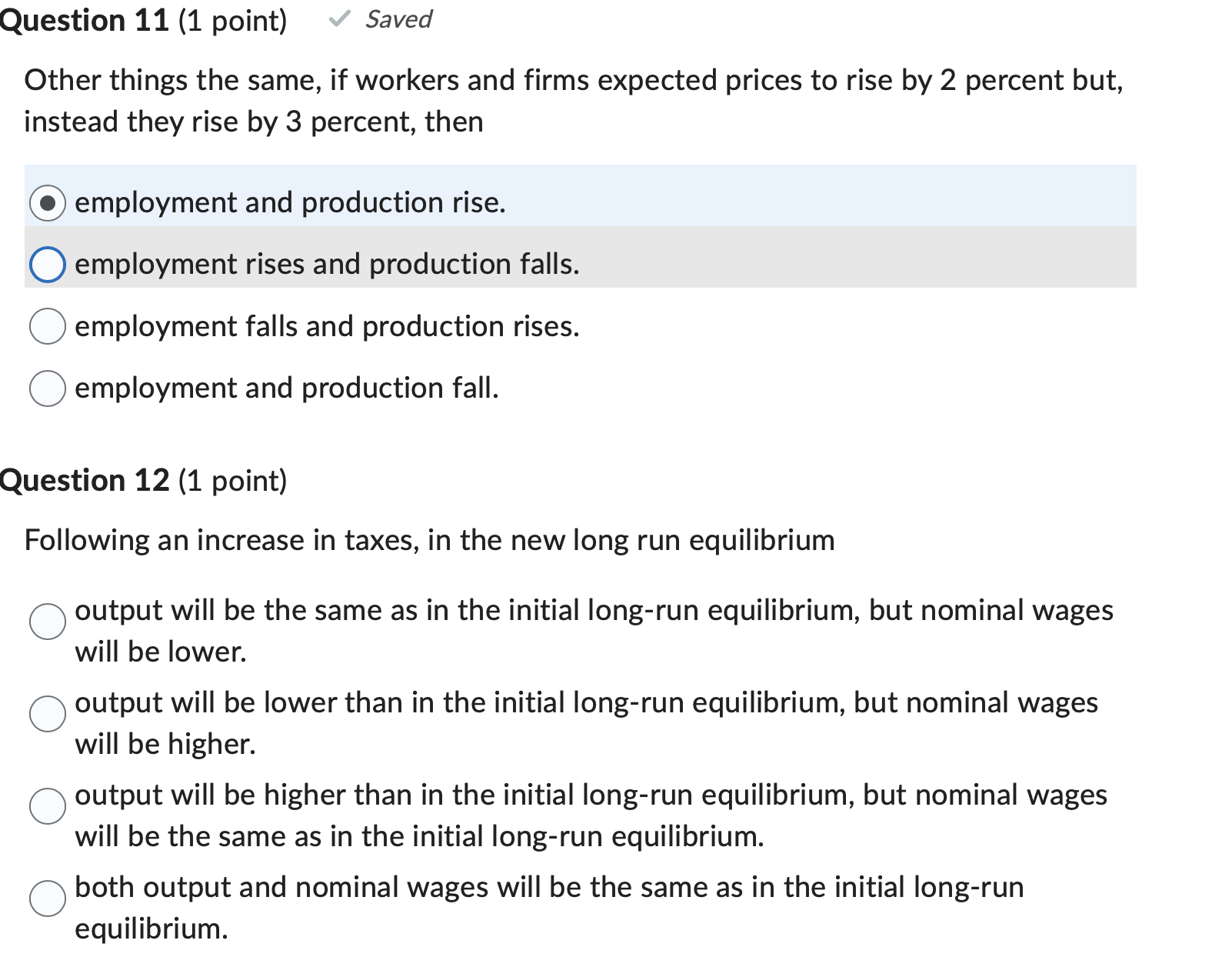
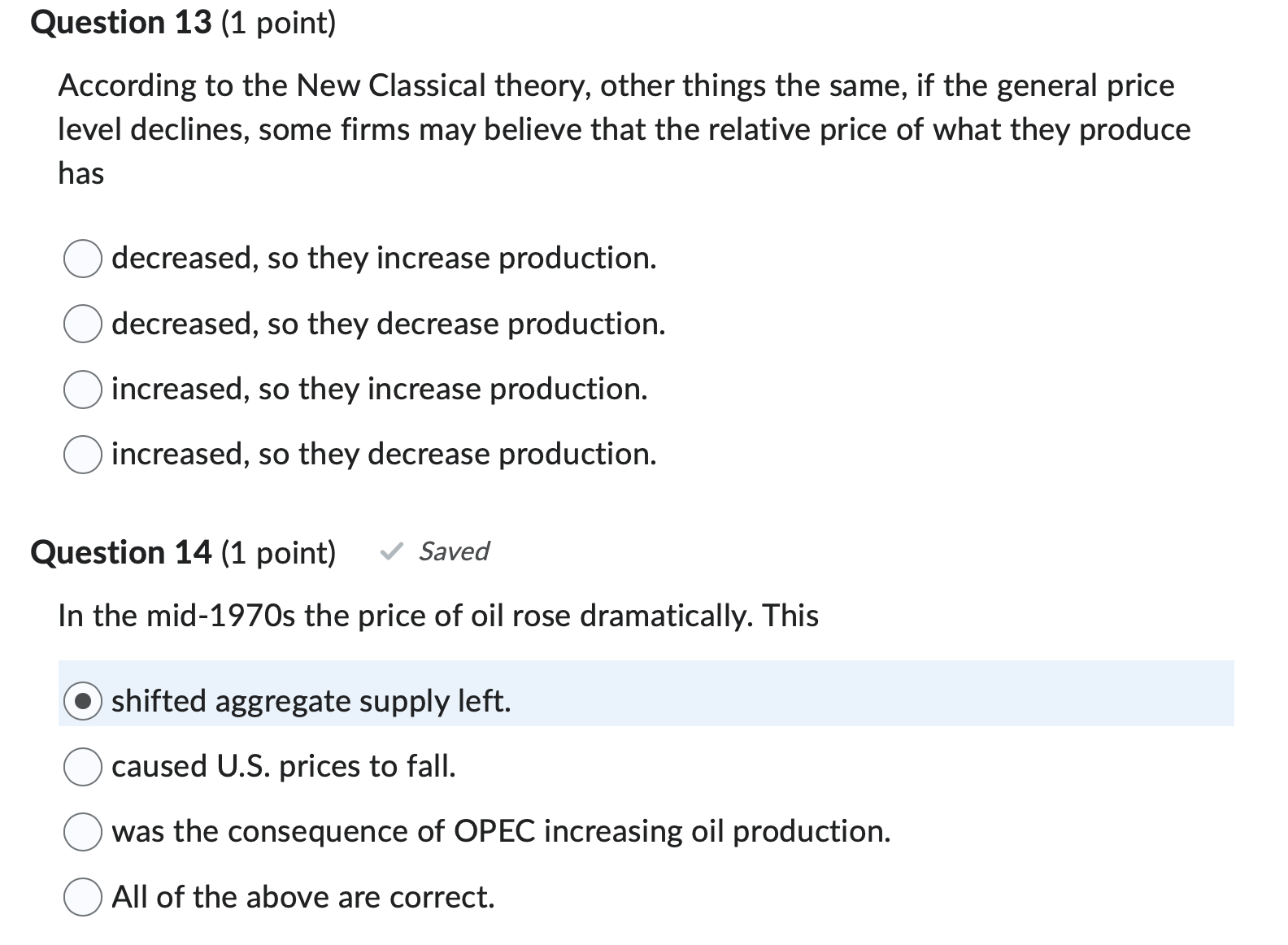
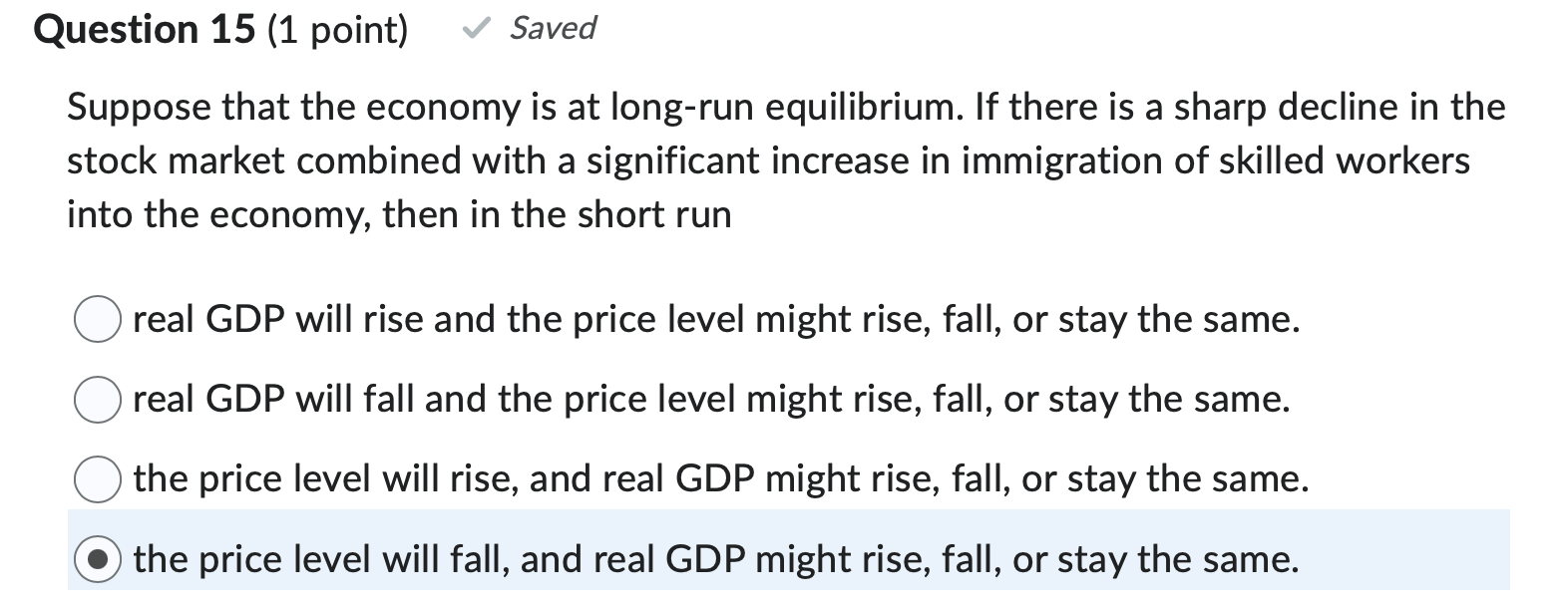
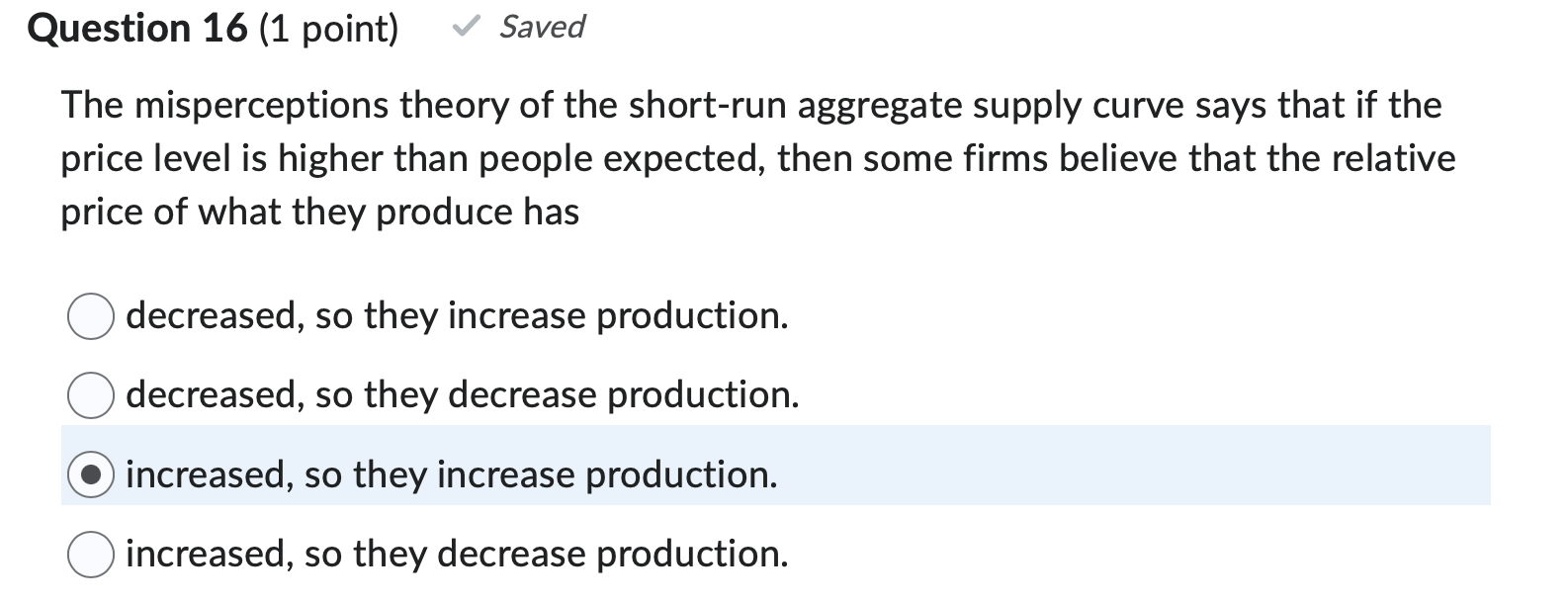
Question 1 (1 point) An accommodative policy response to an adverse supply shock 0 attempts to keep real GDP at its natural level. 0 maintains a fixed AD curve. 0 causes a leftward shift in the AD curve. 0 causes a rightward shift in the SAS curve. Question 2 (1 point) Saved At the end of World War II many European countries were rebuilding and so were eager to buy capital goods and had rising incomes. We would expect that the rebuilding increased aggregate demand in 6) both the United States and Europe. 0 the United States but not Europe. 0 Europe, but not the United States. 0 neither the United States, nor Europe. Question 3 (1 point) As a result of an increase in taxes, in the short run 0 output stays the same and unemployment falls. 0 output decreases and unemployment falls. 0 output increases and unemployment rises. 0 output decreases and unemployment rises. Question 4 (1 point) Saved In the context of the aggregate-demand curve, the interest-rate effect refers to the idea that, when the price level increases, 0 the real value of money decreases; in turn, the real value of the dollar Increases in foreign exchange markets, which decreases net exports. @ households Increase their holdings of money; in turn, interest rates increase, which reduces spending on investment goods. 0 the real value of money decreases; In turn, interest rates increase, which decreases net exports. O households increase their holdings of money; in turn, interest rates decrease, which reduces spending on investment goods. Question 5 (1 point) Saved Which of the following would cause stagflation? O rising government expenditures 6) rising oil prices 0 a falling money supply 0 technical progress Question 6 (1 point) Saved Which of the following affected aggregate demand during the recession of 2008- 2009? a decline in residential construction and a decrease in lending O a decline in residential construction but not a decrease in lending O a decrease in lending but not a decline in residential construction 0 neither a decrease in residential construction nor a decrease in lending Question 7 (1 point) Saved The sticky wage theory of the short-run aggregate supply curve says that when prices fall, the real wage O rises, so employment rises. @ rises, so employment falls. 0 falls, so employment rises. 0 falls, so employment falls. Question 8 (1 point) Saved If speculators lost confidence in foreign economies and so wanted to buy more US. bonds 0 the dollar would appreciate which would cause aggregate demand to shift right. @ the dollar would appreciate which would cause aggregate demand to shift left. 0 the dollar would depreciate which would cause aggregate demand to shift right. 0 the dollar would depreciate which would cause aggregate demand to shift left. Question 9 (1 point) Saved Suppose the stock market crashes lowering output and raising the price level in the short run. If policymakers do nothing, G) the price level would further decline as the economy reaches a new long-run equilibrium. 0 the price level would eventually increase as the economy reaches a new long-run equilibrium. 0 the price level would stay at the same level as in the short-run equilibrium that followed the stock market crash. 0 None of the above is correct. Question 10 (1 point) Saved Which of the following has been suggested as a cause of the Great Depression? 0 a decline in the money supply 0 a decrease in stock prices 0 the collapse of the banking system @ All of the above are correct. Question 11 (1 point) Saved Other things the same, if workers and firms expected prices to rise by 2 percent but, instead they rise by 3 percent, then @ employment and production rise. O employment rises and production falls. 0 employment falls and production rises. O employment and production fall. Question 12 (1 point) Following an increase in taxes, in the new long run equilibrium 0 output will be the same as in the initial long-run equilibrium, but nominal wages will be lower. output will be lower than in the initial long-run equilibrium, but nominal wages will be higher. output will be higher than in the initial long-run equilibrium, but nominal wages will be the same as in the initial long-run equilibrium. 0 both output and nominal wages will be the same as in the initial long-run equilibrium. Question 13 (1 point) According to the New Classical theory, other things the same, if the general price level declines, some firms may believe that the relative price of what they produce has 0 decreased, so they increase production. 0 decreased, so they decrease production. 0 increased, so they increase production. 0 increased, so they decrease production. Question 14 (1 point) Saved In the mid-19705 the price of oil rose dramatically. This @ shifted aggregate supply left. 0 caused U.S. prices to fall. 0 was the consequence of OPEC increasing oil production. 0 All of the above are correct. Question 15 (1 point) Saved Suppose that the economy is at long-run equilibrium. If there is a sharp decline in the stock market combined with a significant increase in immigration of skilled workers into the economy, then in the short run 0 real GDP will rise and the price level might rise, fall, or stay the same. 0 real GDP will fall and the price level might rise, fall, or stay the same. 0 the price level will rise, and real GDP might rise, fall, or stay the same. 6) the price level will fall, and real GDP might rise, fall, or stay the same. Question 16 (1 point) Saved The misperceptions theory of the short-run aggregate supply curve says that if the price level is higher than people expected, then some firms believe that the relative price of what they produce has 0 decreased, so they increase production. 0 decreased, so they decrease production. increased, so they increase production. 0 increased, so they decrease production
Step by Step Solution
There are 3 Steps involved in it

Get step-by-step solutions from verified subject matter experts
 Study Help