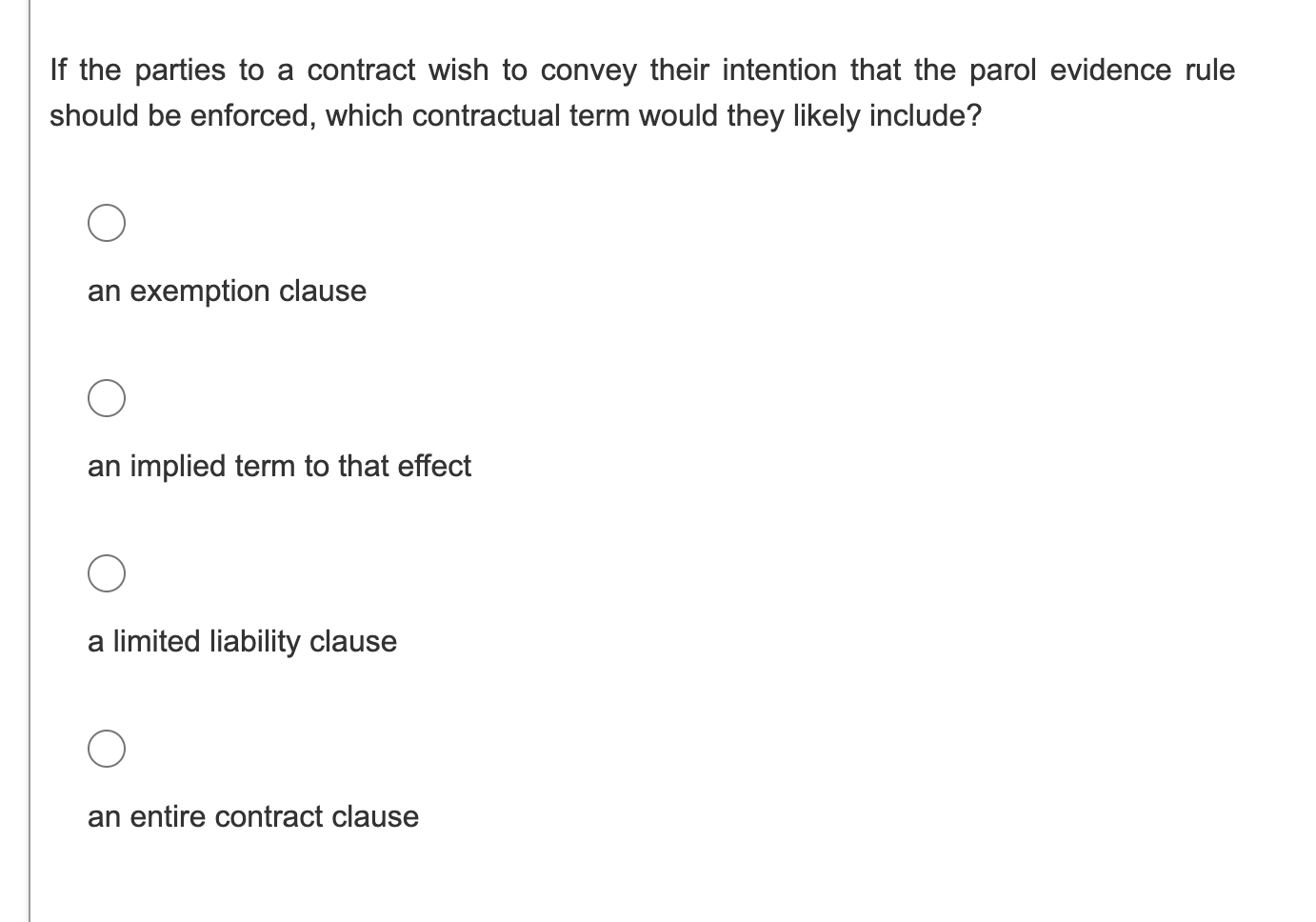
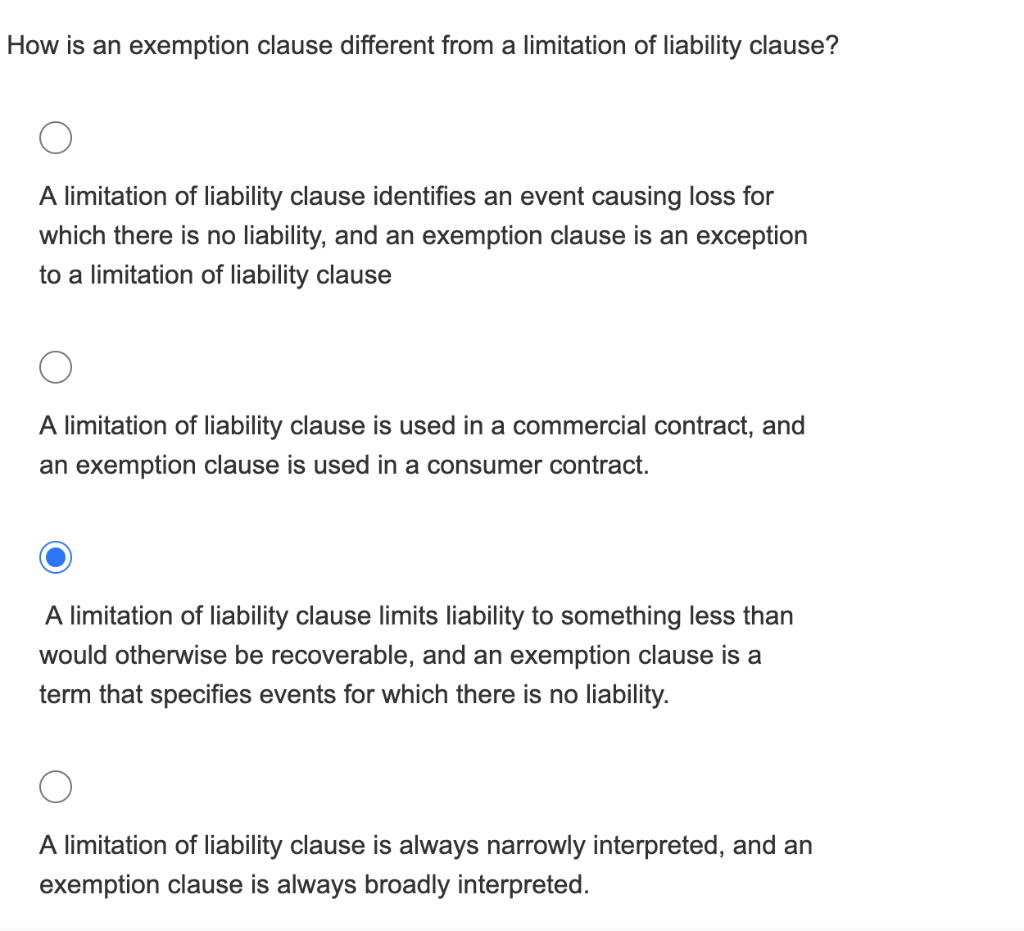
Question: QUESTION 1: QUESTION 2: QUESTION 3: QUESTION 4: QUESTIOn 5: How is an exemption clause different from a limitation of liability clause? A limitation of

QUESTION 1:
QUESTION 1: QUESTION 2: QUESTION 3: QUESTION 4:
QUESTION 2:

QUESTION 1: QUESTION 2: QUESTION 3: QUESTION 4:

QUESTION 3:

QUESTION 1: QUESTION 2: QUESTION 3: QUESTION 4:

QUESTION 4:

QUESTION 1: QUESTION 2: QUESTION 3: QUESTION 4:

QUESTIOn 5:
QUESTION 1: QUESTION 2: QUESTION 3: QUESTION 4:

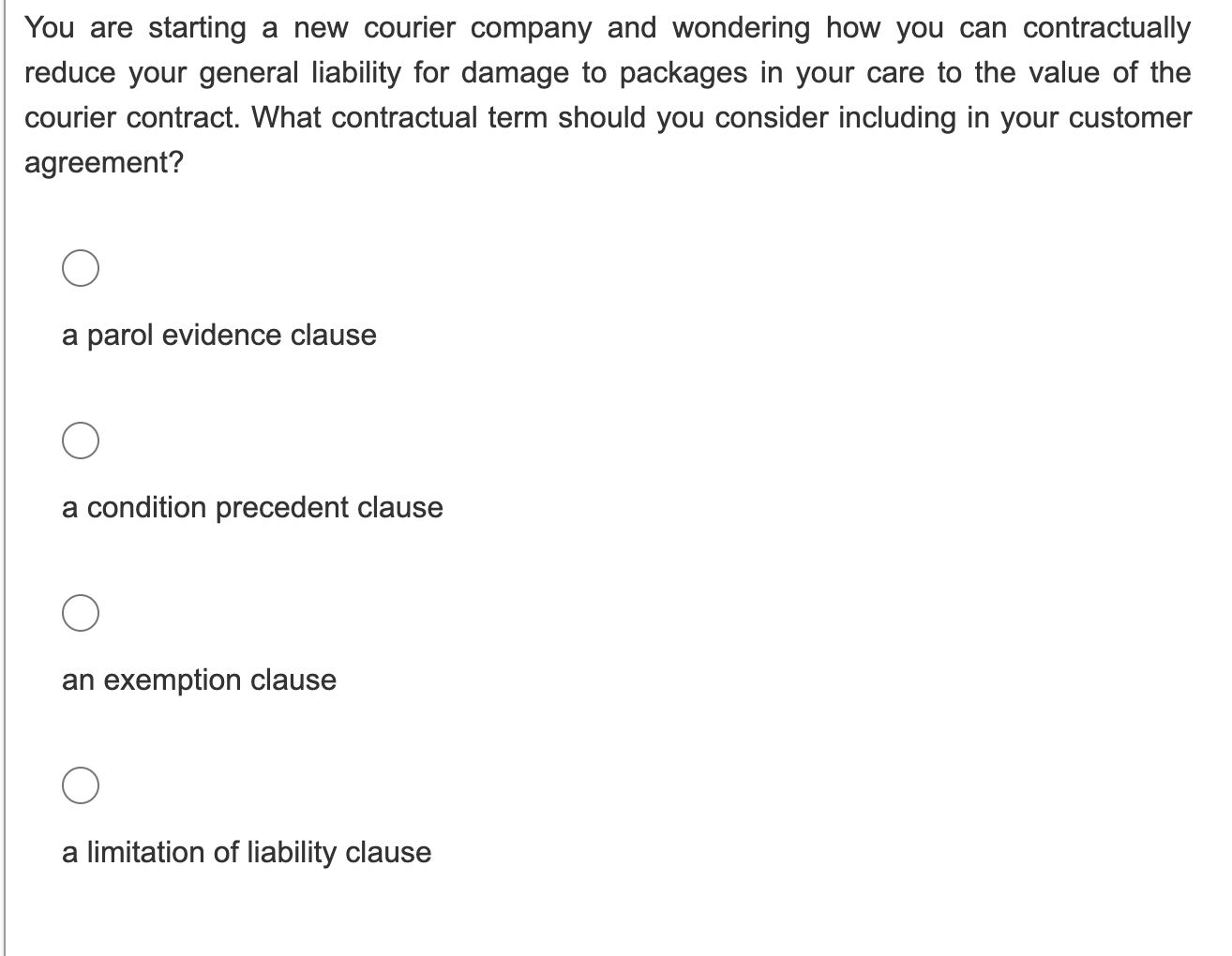
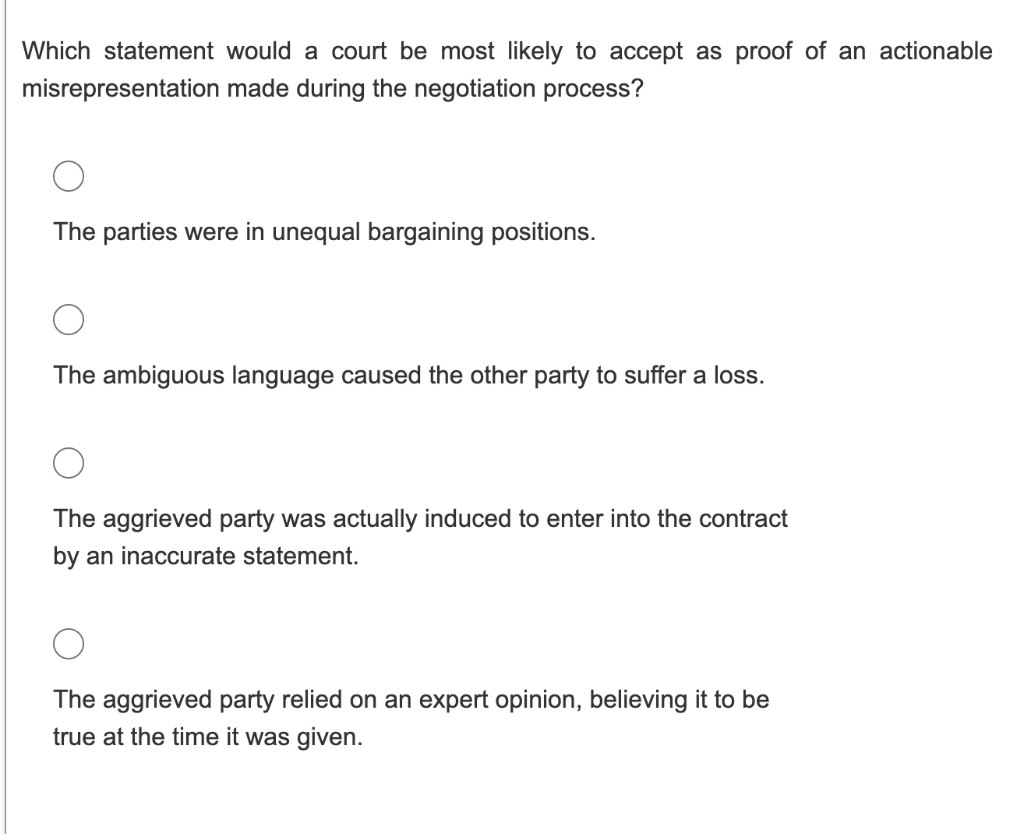
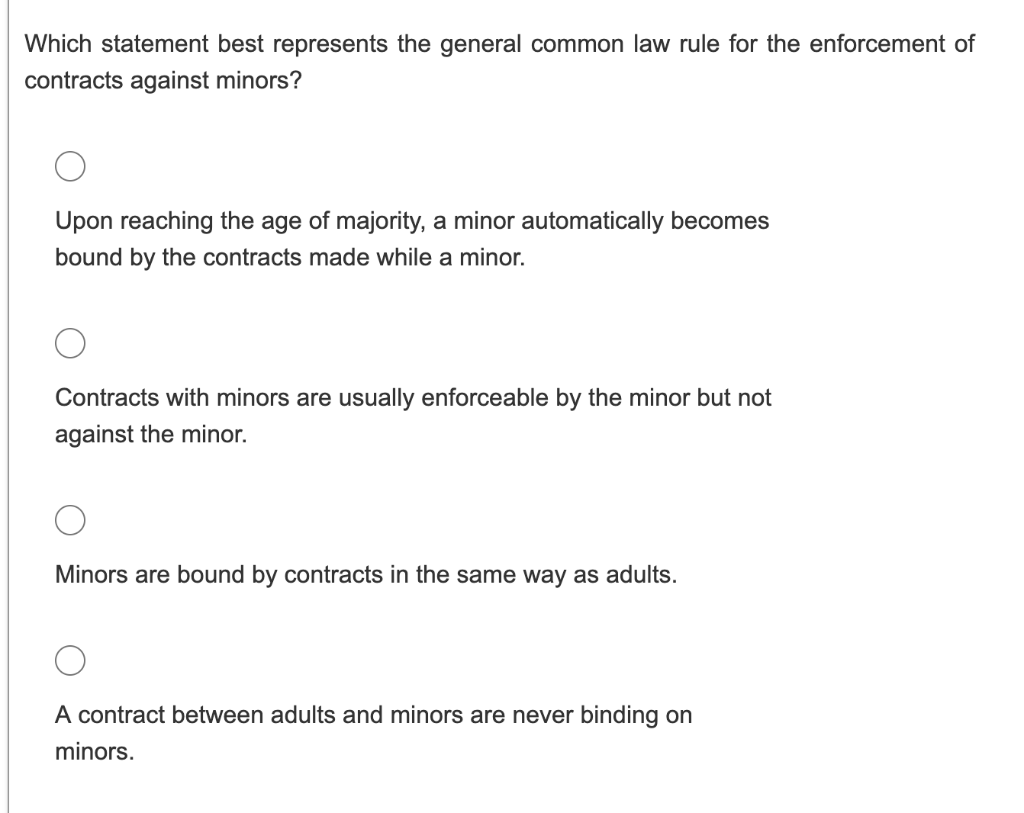
How is an exemption clause different from a limitation of liability clause? A limitation of liability clause identifies an event causing loss for which there is no liability, and an exemption clause is an exception to a limitation of liability clause A limitation of liability clause is used in a commercial contract, and an exemption clause is used in a consumer contract. A limitation of liability clause limits liability to something less than would otherwise be recoverable, and an exemption clause is a term that specifies events for which there is no liability. A limitation of liability clause is always narrowly interpreted, and an exemption clause is always broadly interpreted. If the parties to a contract wish to convey their intention that the parol evidence rule should be enforced, which contractual term would they likely include? an exemption clause an implied term to that effect a limited liability clause an entire contract clause You are starting a new courier company and wondering how you can contractually reduce your general liability for damage to packages in your care to the value of the courier contract. What contractual term should you consider including in your customer agreement? a parol evidence clause a condition precedent clause an exemption clause a limitation of liability clause Which statement would a court be most likely to accept as proof of an actionable misrepresentation made during the negotiation process? The parties were in unequal bargaining positions. The ambiguous language caused the other party to suffer a loss. O The aggrieved party was actually induced to enter into the contract by an inaccurate statement. The aggrieved party relied on an expert opinion, believing it to be true at the time it was given. Which statement best represents the general common law rule for the enforcement of contracts against minors? Upon reaching the age of majority, a minor automatically becomes bound by the contracts made while a minor. Contracts with minors are usually enforceable by the minor but not against the minor. Minors are bound by contracts in the same way as adults. A contract between adults and minors are never binding on minors

Step by Step Solution

There are 3 Steps involved in it

1 Expert Approved Answer
Step: 1 Unlock blur-text-image

Question Has Been Solved by an Expert!

Get step-by-step solutions from verified subject matter experts

Step: 2 Unlock
Step: 3 Unlock

Students Have Also Explored These Related General Management Questions!