Question: Question completion Status Question 2017 Moving to the question will save this response Question 2 5 points GM In our gated economy, businesses across all
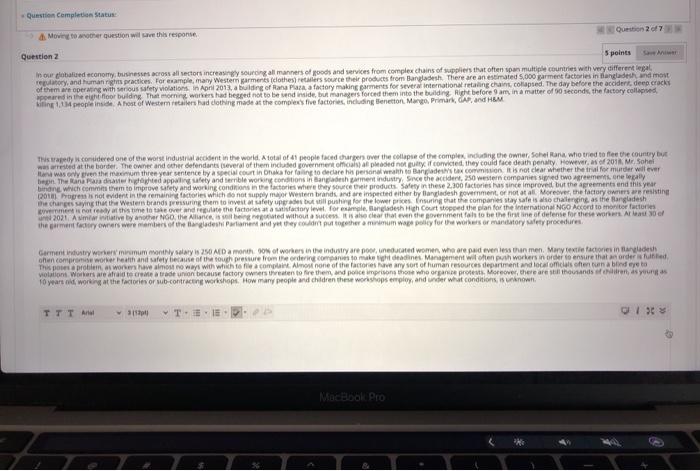
Question completion Status Question 2017 Moving to the question will save this response Question 2 5 points GM In our gated economy, businesses across all sectors increasingy sourong all manners of foods and services from complex chains of supplies that often span multiple countries with very differential egory, and human rights practices. For example, many Western garments clothes ressource their products from Bangladesh. There are an estimated 5.000 garment factories in Bangladesh and most of them are operating with serious safety elations in April 2013. a buling of Rana Para a factory making garments for several ternational retaling chain, collapsed. The day before the accident, deep crack poredintre entor bulding That morning workers had heted not to be wond nide, but managers forced them into the building Right before I am, in a matter of 10 seconds the factory collapsed fing, people in A host of Western terhad clothing made at the complexes five factories, including benetton Margo. Primark, GA and HSM This tragedy considered one of the worst industrial codent in the world. A total of 41 people faced over the collapse of the complex inducting the owner, Sohel Rana who tried to fece country but was arrested at the border. The owner and other defendants several of them included government of paded not quity if convicted, they could face death penalty However, as of 2011 M Sohel Ion was on the maximum three year sentence by a special court in Dhaka for failing to declare personal walth to Beness taxcom it is not clear whether the tror murder will ever bepnhanaan dan hedapping fety and terrible work conditions in Bangladeshment industry the accident, so western companies and two rements only non which commum to improverity and working conditions in the factories where they were products Synthese 2.100 factories has since improve. But the agreements and this year 001 or not at all. Moreover, the factory owners are resisting charges me to rest this time to take over and relate the factores atata tory level for single, bangladesh High Court stopped the plan for the international NGO Accord to monitoruetones 2021. Amir wative by another NGO, the Alliancted without a success it also clear that even the government fails to be the first line of defense for these wonen A the garment crywers were members of the genitament and yet they put together a minimum wage polly for works or mandatory fety procedures Garment industry worker minumum monthly salary is 250 AED a month not workers in the industry are poor, uneducated women who are pad even than men. Many textile factories in onun compromise worker health and safety because of the touch pressure from reordering compare to make the deadlines Management will often puth workers in order to ensure that orders the violation Workers are add to create a trade union because factory resetentore them, and police prison those who organise protests. Moreover, there are still hands are your 10 years of work at the factories or sub-contracting workshops. How many people and children these worshops ereploy, and we will conditions nown. TTTA 3 T- 9 MacBook Pro Remaining Time: 1 hour. 03 minutes, 07 seconds Question Completion Status: in our globale economy, businesses across all sectors increasingly sourong a manners of goods and services from complex chains of suppliers that often span multiple countries with very different legal regulatory, and human rights practices. For example, many Western garments (clothes) retailers source the products from Bangladesh. There are an estimated 5.000 garment factories in bangladesh, and most of them are operating with serious safety violations in April 2012, a building of Rana Plaza a factory making garments for several International retailing chains, collapsed. The day before the accident de cada appeared in the eight floor building, That morning workers had begeed not to be send inside, but managers forced them into the building before 9 am in a matter of 90 seconds, the factory colated killing 1.134 people inside. A host of Western retailers had clothing made at the complex's five factories induding Benetton, Mango, Primark GAP and HEM This tragedy is considered one of the worst industrial accident in the world. A total of 41 people faced charges over the collapse of the complex, including the owner, Sohel Rana, who tried to feebre country but was arrested at the border. The owner and other defendants several of them included government officials all pleaded not guilty of convicted, they could face death penalty. However, as of 2016 Rana was only even the maximum three year sentence by a special court in Dhaka for failing to declare his personal wealth to Bangladesty's tax commission. It is not clear whether the trial for murder will ever begin. The Rana Plaza disaster highlighted appaling safety and terrible working conditions in Bangladesh Bament industry. Since the accident, 250 western companies signed two agreementsone letaly binding which commits them to improve safety and working conditions in the factories where they source their products. Safety in these 2.200 factories has since improved, but the agreements and this yeu the changes saying that the Western brands pressuring them to invest at safety upgrades but still pushing for the lower prices. Ensuring that the companies stay sale is also challenging as the oldesh until 2021. A similar iniciative by another NGO, the Alliance, is still being negotiated without a success. It is also clear that even the government fails to be the first line of defense for these workers that 30 of the garment factory owners were members of the Bangladeshi Parliament and yet they couldn't put together a minimum wage policy for the workers or mandatory safety procedures Garment industry workers minimum monthly salary is 250 AFD a month. 90% of workers in the industry are poor, uneducated women who are paid even less than men. Many textile factories in Bangladesh often compromise worker health and safety because of the tough pressure from the ordering companies to make tight deadlines. Management will often push workers in order to ensure that an order is fulled This poses a problem, as workers have almost no ways with which to file a complaint. Almost none of the factories have any sort of human resources department and local officials often turn and eye to violations. Workers are afraid to create a trade union because factory owners threaten to fire them, and police imprisons those who organize protests. Moreover, there are still thousands of children, as young 10 years old, working at the factories or sub-contracting workshops. How many people and children these workshops employ, and under what conditions, is unknown Arial 312 T.EE Remaining Time 1 hour, 35 seconds Question Completion Status: estion 2 5 points in our globale economy, businesses across all sectors increasingly sourcing all manners of goods and services from complex chains of suppliers that often span multiple countries with very few regulatory, and human rights practices. For example, many Western garments (dothes retailers source their products from Bangladesh. There are an estimated 5,000 garment factores in Bangladesh, and most of them are operating with serious safety violations in April 2013. a building of Rana Plaza, a factory making garments for several International retain chains collapsed. The day before the code destaca appeared in the eight floor building. That morning workers had begged not to be send inside, but managers forced them into the building Right before 9 am in a matter of 90 seconds, the factory collapsed kolling 1.134 people inside. A host of Western retailers had cothing made at the complex's five factories induding Benetton, Mango Primark, CAP, and HSM This tragedy is considered one of the worst industrial accident in the world. A total of 41 people faced charpers over the collapse of the complex induding the owner Schelor, who tried to flee the country Rana was only given the maximum three year sentence by a special court in Dhaka for faang to beclare his personal weath to Bangladeshistas commission. It is not clear whether the trial for mordet bindine which commits them to improve safety and working conditions in the factores where they source their products Safety in these 2.800 factories has since mproved, but the agreements end the year (2015). Progress is not evident in the remaining factories which do not supply major Western brands, and are inspected either by Bangladesh government or not til Moreover, the factory owners are resting the changes saying that the Western brands pressuring them to invest at safety upgrades but still pushing for the lower prices fnsuring that the companies may sales who challenges the Bangladesh government is not ready at this time to take over and regulate the factories at a satisfactory level. For example, Bangladesh High Court stopped the plan for the international NGO Accord to monitor factores until 2021. A similar initiative by another NGO, the Alliance, I still being negotiated without a success. It also clear that even the government fails to be the first line of defense for these workers. At least 30 of the garment factory owners were members of the Bangladesh Parliament and yet they couldn't put together a minimum wage policy for the workers or mandatory safety procedures Garment industry workers minimum monthly salary is 250 AED a month. 90% of workers in the industry are poor, necated women who are paid even less than men. Mary textile factories in Bangladesh often compromise worker health and safety because of the tough pressure from the ordering companies to make tight deadlines Management will often push workers in order to ensure that an order in futiled This poses a problem as workers have almost no ways with which to file a complaint. Almost none of the factories have any sort of human resources department and local offices hentuna Binde 1 violations. Workers are afraid to create a trade union because factory owners threaten to fire them and police mprisons those who organize protests. Moreover, there are still thousands of children as young 10 years old, working at the factories or sub-contracting workshops. How many people and children these workshops employ, and under what conditions, is known TTT Ariel 3/13 T-13. E Question completion Status Question 2017 Moving to the question will save this response Question 2 5 points GM In our gated economy, businesses across all sectors increasingy sourong all manners of foods and services from complex chains of supplies that often span multiple countries with very differential egory, and human rights practices. For example, many Western garments clothes ressource their products from Bangladesh. There are an estimated 5.000 garment factories in Bangladesh and most of them are operating with serious safety elations in April 2013. a buling of Rana Para a factory making garments for several ternational retaling chain, collapsed. The day before the accident, deep crack poredintre entor bulding That morning workers had heted not to be wond nide, but managers forced them into the building Right before I am, in a matter of 10 seconds the factory collapsed fing, people in A host of Western terhad clothing made at the complexes five factories, including benetton Margo. Primark, GA and HSM This tragedy considered one of the worst industrial codent in the world. A total of 41 people faced over the collapse of the complex inducting the owner, Sohel Rana who tried to fece country but was arrested at the border. The owner and other defendants several of them included government of paded not quity if convicted, they could face death penalty However, as of 2011 M Sohel Ion was on the maximum three year sentence by a special court in Dhaka for failing to declare personal walth to Beness taxcom it is not clear whether the tror murder will ever bepnhanaan dan hedapping fety and terrible work conditions in Bangladeshment industry the accident, so western companies and two rements only non which commum to improverity and working conditions in the factories where they were products Synthese 2.100 factories has since improve. But the agreements and this year 001 or not at all. Moreover, the factory owners are resisting charges me to rest this time to take over and relate the factores atata tory level for single, bangladesh High Court stopped the plan for the international NGO Accord to monitoruetones 2021. Amir wative by another NGO, the Alliancted without a success it also clear that even the government fails to be the first line of defense for these wonen A the garment crywers were members of the genitament and yet they put together a minimum wage polly for works or mandatory fety procedures Garment industry worker minumum monthly salary is 250 AED a month not workers in the industry are poor, uneducated women who are pad even than men. Many textile factories in onun compromise worker health and safety because of the touch pressure from reordering compare to make the deadlines Management will often puth workers in order to ensure that orders the violation Workers are add to create a trade union because factory resetentore them, and police prison those who organise protests. Moreover, there are still hands are your 10 years of work at the factories or sub-contracting workshops. How many people and children these worshops ereploy, and we will conditions nown. TTTA 3 T- 9 MacBook Pro Remaining Time: 1 hour. 03 minutes, 07 seconds Question Completion Status: in our globale economy, businesses across all sectors increasingly sourong a manners of goods and services from complex chains of suppliers that often span multiple countries with very different legal regulatory, and human rights practices. For example, many Western garments (clothes) retailers source the products from Bangladesh. There are an estimated 5.000 garment factories in bangladesh, and most of them are operating with serious safety violations in April 2012, a building of Rana Plaza a factory making garments for several International retailing chains, collapsed. The day before the accident de cada appeared in the eight floor building, That morning workers had begeed not to be send inside, but managers forced them into the building before 9 am in a matter of 90 seconds, the factory colated killing 1.134 people inside. A host of Western retailers had clothing made at the complex's five factories induding Benetton, Mango, Primark GAP and HEM This tragedy is considered one of the worst industrial accident in the world. A total of 41 people faced charges over the collapse of the complex, including the owner, Sohel Rana, who tried to feebre country but was arrested at the border. The owner and other defendants several of them included government officials all pleaded not guilty of convicted, they could face death penalty. However, as of 2016 Rana was only even the maximum three year sentence by a special court in Dhaka for failing to declare his personal wealth to Bangladesty's tax commission. It is not clear whether the trial for murder will ever begin. The Rana Plaza disaster highlighted appaling safety and terrible working conditions in Bangladesh Bament industry. Since the accident, 250 western companies signed two agreementsone letaly binding which commits them to improve safety and working conditions in the factories where they source their products. Safety in these 2.200 factories has since improved, but the agreements and this yeu the changes saying that the Western brands pressuring them to invest at safety upgrades but still pushing for the lower prices. Ensuring that the companies stay sale is also challenging as the oldesh until 2021. A similar iniciative by another NGO, the Alliance, is still being negotiated without a success. It is also clear that even the government fails to be the first line of defense for these workers that 30 of the garment factory owners were members of the Bangladeshi Parliament and yet they couldn't put together a minimum wage policy for the workers or mandatory safety procedures Garment industry workers minimum monthly salary is 250 AFD a month. 90% of workers in the industry are poor, uneducated women who are paid even less than men. Many textile factories in Bangladesh often compromise worker health and safety because of the tough pressure from the ordering companies to make tight deadlines. Management will often push workers in order to ensure that an order is fulled This poses a problem, as workers have almost no ways with which to file a complaint. Almost none of the factories have any sort of human resources department and local officials often turn and eye to violations. Workers are afraid to create a trade union because factory owners threaten to fire them, and police imprisons those who organize protests. Moreover, there are still thousands of children, as young 10 years old, working at the factories or sub-contracting workshops. How many people and children these workshops employ, and under what conditions, is unknown Arial 312 T.EE Remaining Time 1 hour, 35 seconds Question Completion Status: estion 2 5 points in our globale economy, businesses across all sectors increasingly sourcing all manners of goods and services from complex chains of suppliers that often span multiple countries with very few regulatory, and human rights practices. For example, many Western garments (dothes retailers source their products from Bangladesh. There are an estimated 5,000 garment factores in Bangladesh, and most of them are operating with serious safety violations in April 2013. a building of Rana Plaza, a factory making garments for several International retain chains collapsed. The day before the code destaca appeared in the eight floor building. That morning workers had begged not to be send inside, but managers forced them into the building Right before 9 am in a matter of 90 seconds, the factory collapsed kolling 1.134 people inside. A host of Western retailers had cothing made at the complex's five factories induding Benetton, Mango Primark, CAP, and HSM This tragedy is considered one of the worst industrial accident in the world. A total of 41 people faced charpers over the collapse of the complex induding the owner Schelor, who tried to flee the country Rana was only given the maximum three year sentence by a special court in Dhaka for faang to beclare his personal weath to Bangladeshistas commission. It is not clear whether the trial for mordet bindine which commits them to improve safety and working conditions in the factores where they source their products Safety in these 2.800 factories has since mproved, but the agreements end the year (2015). Progress is not evident in the remaining factories which do not supply major Western brands, and are inspected either by Bangladesh government or not til Moreover, the factory owners are resting the changes saying that the Western brands pressuring them to invest at safety upgrades but still pushing for the lower prices fnsuring that the companies may sales who challenges the Bangladesh government is not ready at this time to take over and regulate the factories at a satisfactory level. For example, Bangladesh High Court stopped the plan for the international NGO Accord to monitor factores until 2021. A similar initiative by another NGO, the Alliance, I still being negotiated without a success. It also clear that even the government fails to be the first line of defense for these workers. At least 30 of the garment factory owners were members of the Bangladesh Parliament and yet they couldn't put together a minimum wage policy for the workers or mandatory safety procedures Garment industry workers minimum monthly salary is 250 AED a month. 90% of workers in the industry are poor, necated women who are paid even less than men. Mary textile factories in Bangladesh often compromise worker health and safety because of the tough pressure from the ordering companies to make tight deadlines Management will often push workers in order to ensure that an order in futiled This poses a problem as workers have almost no ways with which to file a complaint. Almost none of the factories have any sort of human resources department and local offices hentuna Binde 1 violations. Workers are afraid to create a trade union because factory owners threaten to fire them and police mprisons those who organize protests. Moreover, there are still thousands of children as young 10 years old, working at the factories or sub-contracting workshops. How many people and children these workshops employ, and under what conditions, is known TTT Ariel 3/13 T-13. E









 Study Help