







Question: Question Create a Domain-Level Class Diagram Complex systems may need to be partitioned into Subject Areas. Classes, attributes and relationships have to be deducted from
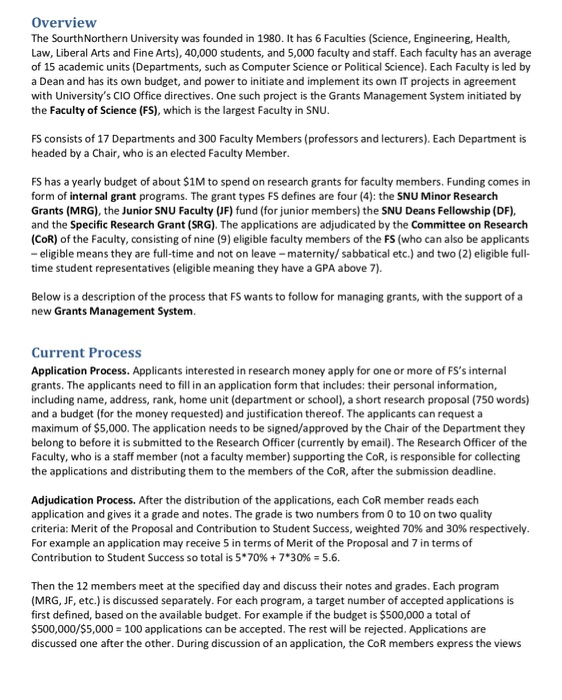
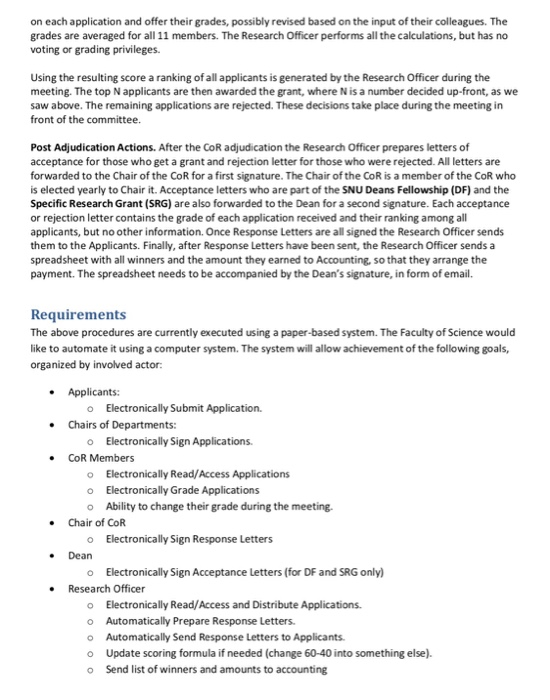
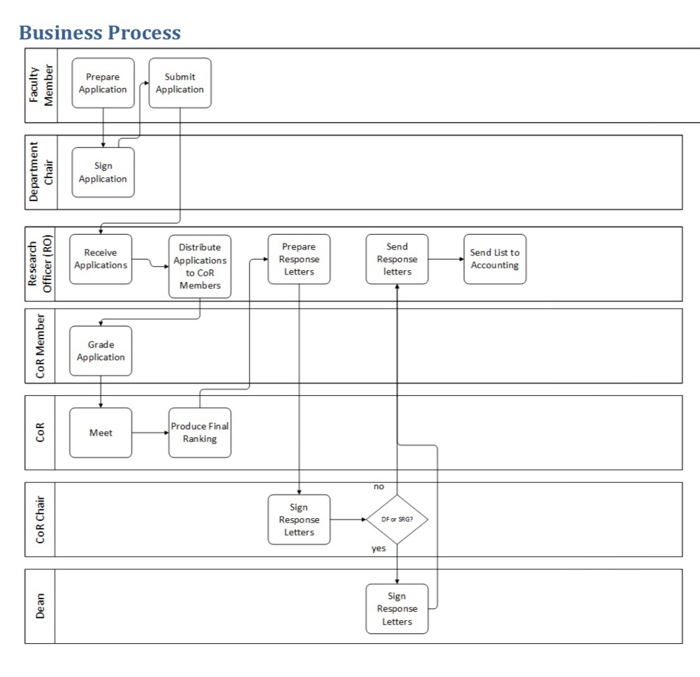
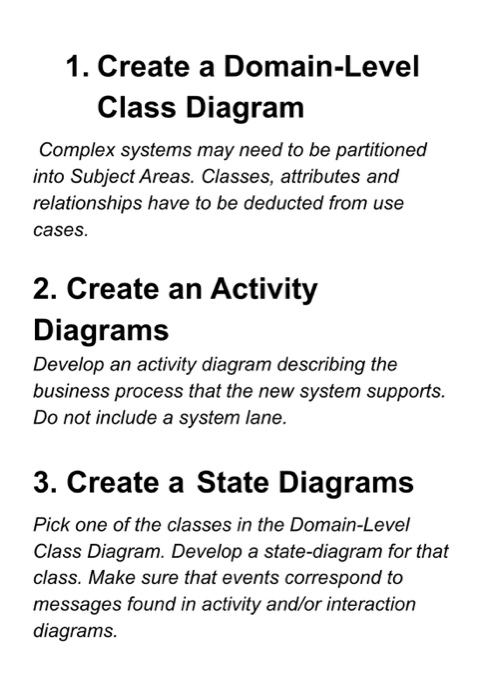
Overview The SourthNorthern University was founded in 1980. It has 6 Faculties (Science, Engineering, Health, Law, Liberal Arts and Fine Arts), 40,000 students, and 5,000 faculty and staff. Each faculty has an average of 15 academic units (Departments, such as Computer Science or Political Science). Each Faculty is led by a Dean and has its own budget, and power to initiate and implement its own IT projects in agreement with University's CIO Office directives. One such project is the Grants Management System initiated by the Faculty of Science (FS), which is the largest Faculty in SNU FS consists of 17 Departments and 300 Faculty Members (professors and lecturers). Each Department is headed by a Chair, who is an elected Faculty Member FS has a yearly budget of about $1M to spend on research grants for faculty members. Funding comes in form of internal grant programs. The grant types FS defines are four (4): the SNU Minor Research Grants (MRG), the Junior SNU Faculty (JF) fund (for junior members) the SNU Deans Fellowship (DF), and the Specific Research Grant (SRG). The applications are adjudicated by the Committee on Research (CoR) of the Faculty, consisting of nine (9) eligible faculty members of the FS (who can also be applicants -eligible means they are full-time and not on leave-maternity/ sabbatical etc.) and two (2) eligible full- time student representatives (eligible meaning they have a GPA above 7). Below is a description of the process that FS wants to follow for managing grants, with the support of a new Grants Management System Current Process Application Process. Applicants interested in research money apply for one or more of FS's internal grants. The applicants need to fill in an application form that includes: their personal information, including name, address, rank, home unit (department or school), a short research proposal (750 words) and a budget (for the money requested) and justification thereof. The applicants can request a maximum of $5,000. The application needs to be signed/approved by the Chair of the Department they belong to before it is submitted to the Research Officer (currently by email). The Research Officer of the Faculty, who is a staff member (not a faculty member) supporting the CoR, is responsible for collecting the applications and distributing them to the members of the CoR, after the submission deadline Adjudication Process. After the distribution of the applications, each CoR member reads each application and gives it a grade and notes. The grade is two numbers from 0 to 10 on two quality criteria: Merit of the Proposal and Contribution to Student Success, weighted 70% and 30% respectively. For example an application may receive 5 in terms of Merit of the Proposal and 7 in terms of Contribution to Student Success so total is 570% + 7*3096 5.6. Then the 12 members meet at the specified day and discuss their notes and grades. Each program (MRG, JF, etc.) is discussed separately. For each program, a target number of accepted applications is first defined, based on the available budget. For example if the budget is $500,000 a total of $500,000/$5,000 100 applications can be accepted. The rest will be rejected. Applications are discussed one after the other. During discussion of an application, the CoR members express the views on each application and offer their grades, possibly revised based on the input of their colleagues. The grades are averaged for all 11 members. The Research Officer performs all the calculations, but has no voting or grading privileges. Using the resulting score a ranking of all applicants is generated by the Research Officer during the meeting. The top N applicants are then awarded the grant, where N is a number decided up-front, as we saw above. The remaining applications are rejected. These decisions take place during the meeting in front of the committee. Post Adjudication Actions. After the CoR adjudication the Research Officer prepares letters of acceptance for those who get a grant and rejection letter for those who were rejected. All letters are forwarded to the Chair of the CoR for a first signature. The Chair of the CoR is a member of the CoR who is elected yearly to Chair it. Acceptance letters who are part of the SNU Deans Fellowship (DF) and the Specific Research Grant (SRG) are also forwarded to the Dean for a second signature. Each acceptance or rejection letter contains the grade of each application received and their ranking among all applicants, but no other information. Once Response Letters are all signed the Research Officer sends them to the Applicants. Finally, after Response Letters have been sent, the Research Officer sends a spreadsheet with all winners and the amount they earned to Accounting, so that they arrange the payment. The spreadsheet needs to be accompanied by the Dean's signature, in form of email. Requirements The above procedures are currently executed using a paper-based system. The Faculty of Science would like to automate it using a computer system. The system will allow achievement of the following goals, organized by involved actor: Applicants: o Electronically Submit Application. Chairs of Departments: o Electronically Sign Applications. CoR Members o o o Electronically Read/Access Applications Electronically Grade Applications Ability to change their grade during the meeting. . Chair of CoR Electronically Sign Response Letters o .Dearn o Electronically Sign Acceptance Letters (for DF and SRG only) Research Officer o Electronically Read/Access and Distribute Applications. o Automatically Prepare Response o Automatically Send Response Letters to Applicants o Update scoring formula if needed (change 60-40 into something else). o Send list of winners and amounts to accounting Letters. 1. Create a Domain-Level Class Diagram Complex systems may need to be partitioned into Subject Areas. Classes, attributes and relationships have to be deducted from use cases. 2. Create an Activity Diagrams Develop an activity diagram describing the business process that the new system supports. Do not include a system lane. 3. Create a State Diagrams Pick one of the classes in the Domain-Level Class Diagram. Develop a state-diagram for that class. Make sure that events correspond to messages found in activity and/or interaction diagrams
Step by Step Solution
There are 3 Steps involved in it

Get step-by-step solutions from verified subject matter experts
 Study Help