







Question: Question: Write a summary for the given case a Pollachi Lorry Owners' Association - Woes of being an owner and still being profitable Pollachi is
Question: Write a summary for the given case
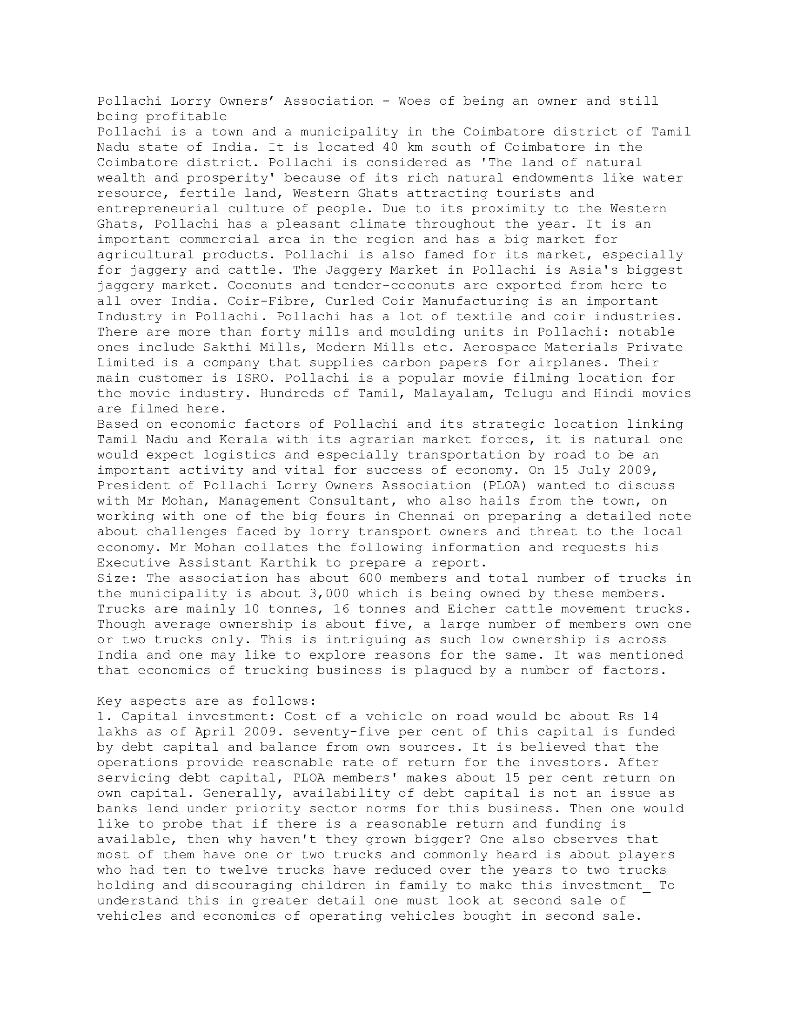
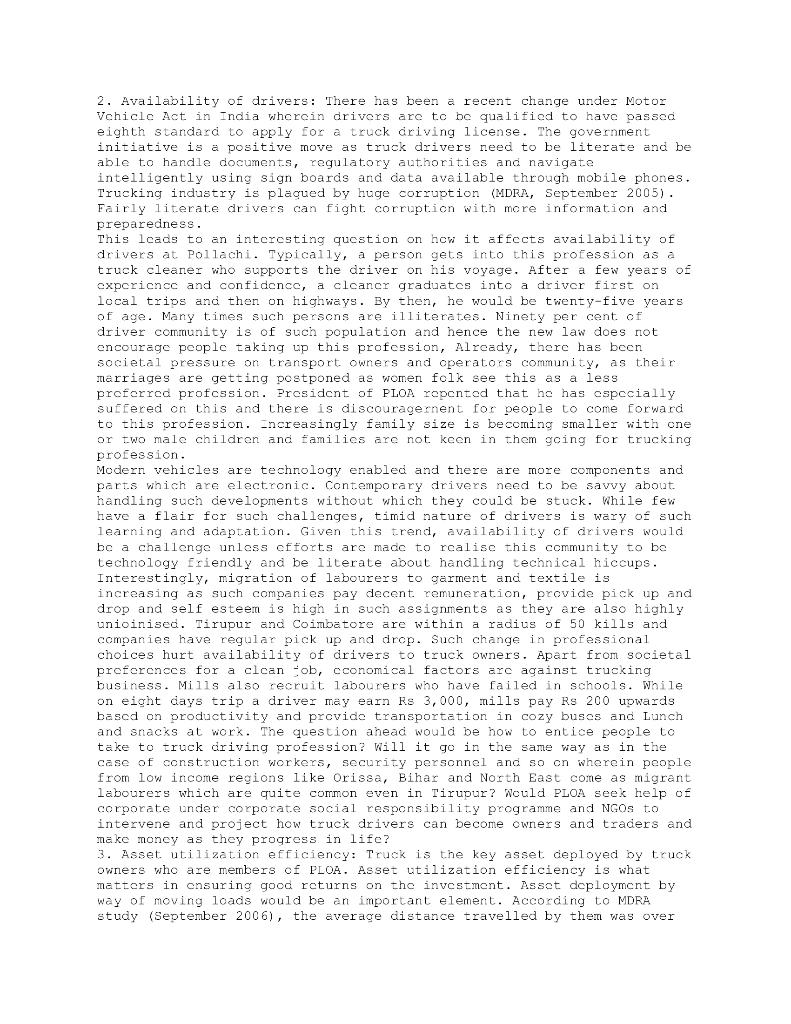
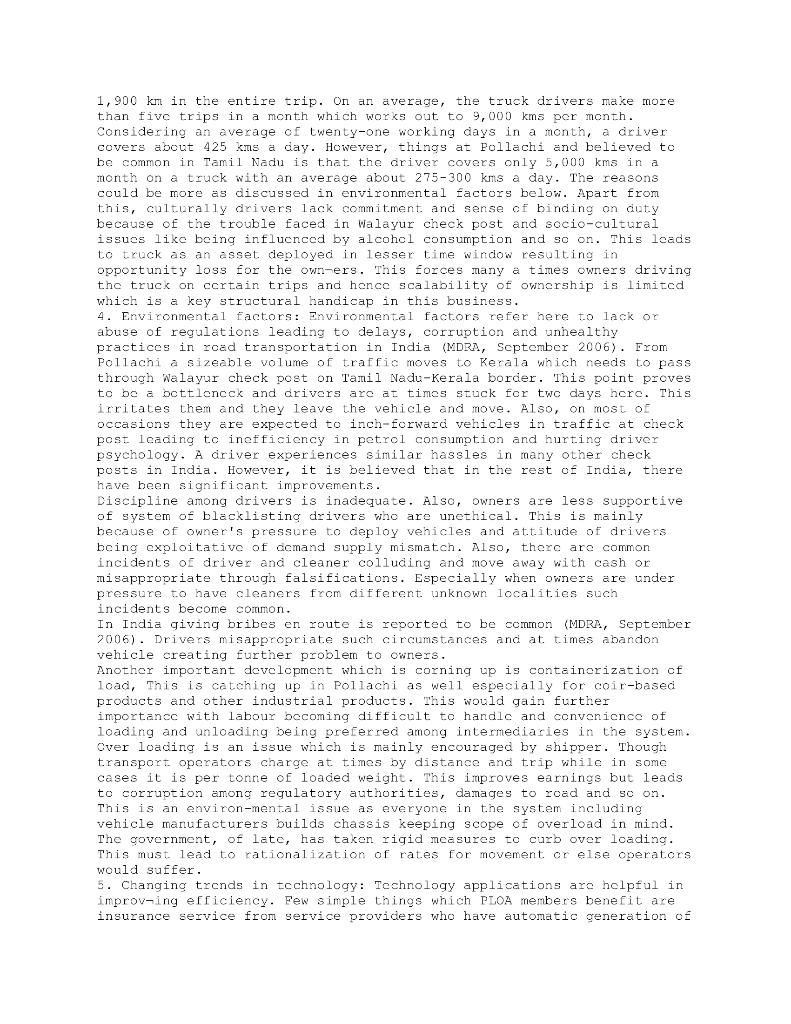
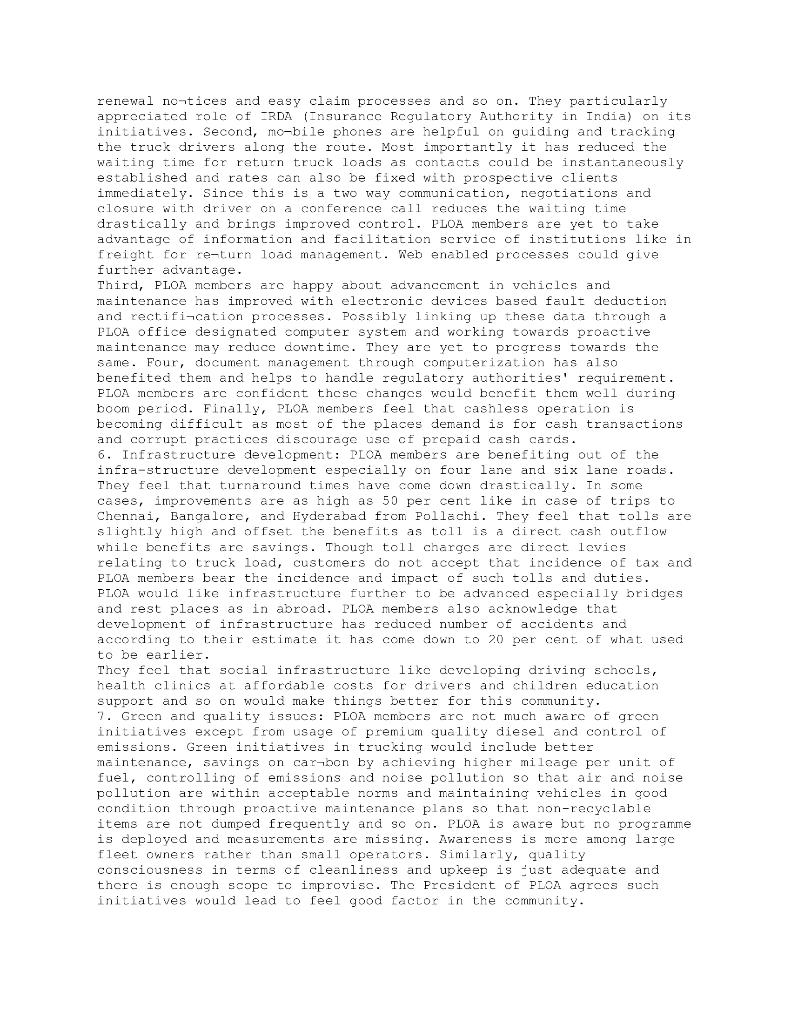
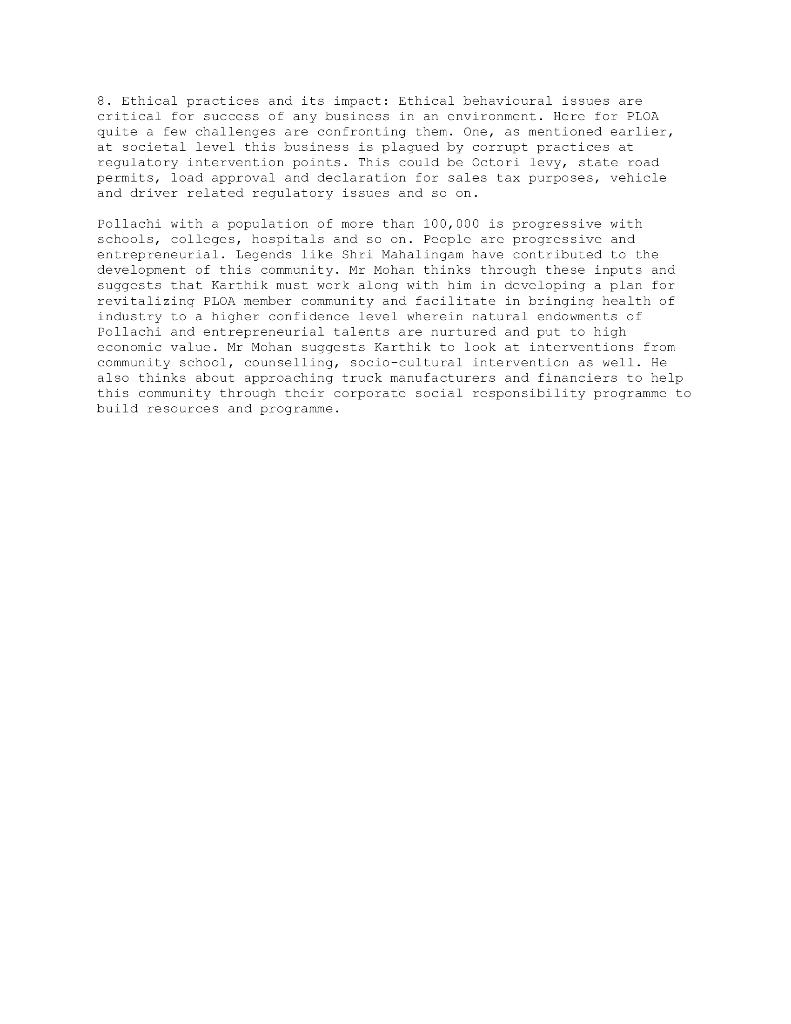
a Pollachi Lorry Owners' Association - Woes of being an owner and still being profitable Pollachi is a town and a municipality in the Coimbatore district of Tamil Nadu state of India. -t is located 40 km south of Coimbatore in the Coimbatore district. Pollachi is considered as 'The land of natural wealth and prosperity' because of its rich natural endowments like water resource, fertile land, Western Ghats attracting tourists and entrepreneurial culture of people. Due to its proximity to the Western Ghats, Pollachi has a pleasant climate throughout the year. It is an important commercial arca in the region and has a big market for agricultural products. Pollachi is also famed for its market, especially for jaggery and cattle. The Jaggery Market in Pollachi is Asia's biggest jaggery market. Coconuts and tender-coconuts are exported from here to all over India. Coir-Fibre, Curled Coir Manufacturing is an important Industry in Pollachi. Pollachi has a lot of textile and coir industries. There are more than forty mills and moulding units in Pollachi: notable oncs include Sakthi Mills, Modern Mills ctc. Aerospace Materials Private Limited is a company that supplies carbon papers for airplanes. Their main customer is ISRO. Pollachi is a popular movie filming location for the movic industry. Hundreds of Tamil, Malayalam, Telugu and Hindi movics are filmed here. Based on economic factors of Pollachi and its strategic location linking Tamil Nadu and Kerala with its agrarian market forces, it is natural onc would expect logistics and especially transportation by road to be an important activity and vital for success of economy. On 15 July 2009, President of Pollachi Lorry Owners Association (PLOA) wanted to discuss with Mr Mohan, Management Consultant, who also hails from the town, on working with one of the big fours in Chennai on preparing a detailed ncte about challenges faced by lorry transport owners and threat to the local economy. Mr Mohan collates the following information and requests his Executive Assistant Karthik to prepare a report. Size: The association has about 600 members and total number of trucks in the municipality is about 3,000 which is being owned by these members. Trucks are mainly 10 tonnes, 16 tonnes and Eicher cattle movement trucks. Though average ownership is about five, a large number of members own cne or two trucks only. This is intriguing as such low ownership is across India and one may like to explore reasons for the same. It was mentioned that economics of trucking business is plagued by a number of factors. Key aspects are as follows: 1. Capital investment: Cost of a vehicle on road would be about Rs 14 lakhs as of April 2009. seventy-five per cent of this capital is funded by debt capital and balance from own sources. It is believed that the operations provide reasonable rate of return for the investors. After servicing debt capital, PLOA members' makes about 15 per cent return on own capital. Generally, availability of debt capital is not an issue as banks lend under priority sector norms for this business. Then one would like to probe that if there is reasonable return and funding is available, then why haven't they grown bigger? One also observes that most of them have one or two trucks and commonly heard is about players who had ten to twelve trucks have reduced over the years to two trucks holding and discouraging children in family to make this investment To understand this in greater detail one must look at second sale of vehicles and economics of operating vehicles bought in second sale. a 2. Availability of drivers: There has been a recent change under Motor Vehicle Act in India wherein drivers are to be qualified to have passed eighth standard to apply for a truck driving license. The government initiative is a positive move as truck drivers need to be literate and be able to handle documents, regulatory authorities and navigate intelligently using sign boards and data available through mobile phones. Trucking industry is plagued by huge corruption (MDRA, September 2005). Fairly literate drivers can fight corruption with more information and preparedness. This leads to an interesting question on how it affects availability of drivers at Pollachi. Typically, a person gets into this profession as a truck cleaner who supports the driver on his voyage. After a few years of experience and confidence, a cleaner graduates into a driver first on local trips and then on highways. By then, he would be twenty-five years of age. Many times such persons are illiterates. Ninety per cent of driver community is of such population and hence the new law does not encourage people taking up this profession, Already, there has been societal pressure on transport owners and operators community, as their marriages are getting postponed as women folk see this as less prcfcrrcd profession. President of FLOA rcpcnted that he has cspccially suffered on this and there is discouragernent for people to come forward to this profession. Increasingly family size is becoming smaller with one or two male children and families are not keen in them going for trucking profession. Modern vehicles are technology enabled and there are more components and parts which are electronic. Contemporary drivers need to be savvy about. handling such developments without which they could be stuck. While fex have a flair for such challenges, timid nature of drivers is wary of such learning and adaptation. Given this trend, availability of drivers would be a challenge unless efforts are made to realise this community to be technology friendly and be literate about handling technical hiccups. Interestingly, migration of labourers to garment and textile is increasing as such companies pay decent remuneration, provide pick up and drop and self esteem is high in such assignments as they are also highly unioinised. Tirupur and Coimbatore are within a radius of 50 kills and companies have regular pick up and drop. Such change in professional choices hurt availability of drivers to truck owners. Apart from societal preferences for a clcan fob, cconomical factors are against trucking business. Mills also recruit labourers who have failed in schools. While on eight days trip a driver may earn Rs 3,000, mills pay Rs 200 upwards based on productivity and provide transportation in cozy buses and Lunch and snacks at work. The question anead would be how to entice people to take to truck driving profession? Will it go in the same way as in the case of construction workers, security personnel and so on wherein people from low income regions like Orissa, Bihar and North East come as migrant labourers which are quite common even in Tirupur? Would PLOA seek help of corporate under corporate social responsibility programme and NGOs to intervene and project how truck drivers can become owners and traders and make money as they progress in life? 3. Asset utilization efficiency: Truck is the key asset deployed by truck owners who are members of PLOA Asset utilization efficiency is what matters in ensuring good returns on the investment. Asset deployment by way of moving loads would be an important element. According to MDRA study (September 2006), the average distance travelled by them was over 1,900 km in the entire trip. On an average, the truck drivers make more than fivc trips in a month which works out to 9,000 kms per month. Considering an average of twenty-one working days in a month, a driver covers about 425 kms a day. However, things at Pollachi and believed to be common in Tamil Nadu is that the driver covers only 5,000 kms in a month on a truck with an average about 275-300 kms a day. The reasons could be more as discussed in environmental factors below. Apart from this, culturally drivers lack commitment and sense of binding on duty because of the trouble faced in Walayur check post and socio-cultural issues like being influenced by alcohol consumption and so on. This leads to truck as an asset deployed in lesser time window resulting in opportunity loss for the own-ers. This forces many a times owners driving the truck on certain tain trips and hence scalability of ownership is limited which is a key structural handicap in this business. 4. Environmental factors: Environmental factors refer here to lack or abuse of regulations leading to delays, corruption and unhealthy practices in road transportation in India (MDRA, September 2006). From Pollachi a sizeable volume of traffic moves to Kerala which needs to pass through walayur check post on Tamil Nadu-Kerala border. This point proves to be a a bottleneck and drivers are at times stuck for two days here. This irritates them and they leave the vehicle and move. Also, on most of occasions they are expected to inch-forward vehicles in traffic at check post leading to inefficiency in petrol consumption and hurting driver psychology. A driver experiences similar hassles in many other check posts in India. However, it is believed that in the rest of India, there have been significant improvements. Discipline among drivers is inadequate. Also, owners are less supportive of system of blacklisting drivers who are unethical. This is mainly because of owner's pressure to deploy vehicles and attitude of drivers being exploitative of demand supply mismatch. Also, there are common incidents of driver and cleaner colluding and move away with cash or misappropriate through falsifications. Especially when owners are under pressure to have cleaners from different unknown localities such incidents become common. In India giving bribes en route is reported to be common (MDRA, September 2006). Drivers misappropriate such circumstances and at times abandon vehicle creating further problem to owners. Another important development which is corning up is containerization of load, This is catching up in Pollachi as well especially for coir-based products and other industrial products. This would gain further importance with labour becoming difficult to handle and convenience of loading and unloading being preferred among intermediaries in the system. Over loading is an issue which is mainly encouraged by shipper. Though transport operators charge at times by distance and trip while in some cases it is per tonne of loaded weight. This improves earnings but leads to corruption among regulatory authorities, damages to read and so on. This is an environ-mental issue as everyone in the system including vehicle manufacturers builds chassis keeping scope of overload in mind. The government, of late, has taken rigid measures to curb over loading. This must lead to rationalization of rates for movement or else operators would suffer. 5. Changing trends in technology: Technology applications are helpful in improv-ing efficiency. Few simple things which PLOA members benefit are insurance service from service providers who have automatic generation of renewal notices and easy claim processes and so on. They particularly appreciated role of RDA (Insurance Regulatory Authority in India) on its initiatives. Second, mo-bile phones are helpful on guiding and tracking the truck drivers along the route. Most importantly it has reduced the waiting time for return truck loads as contacts could be instantaneously established and rates can also be fixed with prospective clients immediately. Since this is a two way communication, negotiations and closure with driver on a conference call reduces the waiting time drastically and brings improved control. PLOA members are yet to take advantage of information and facilitation service of institutions like in further advantage. freight for re-turn load management. Web enabled processes could give Third, PLOA members are happy about advancement in vehicles and maintenance has improved with electronic devices based fault deduction and rectification processes. Possibly linking up these data through a PLOA office designated computer system and working towards proactive maintenance may reduce downtime. They are yet to progress towards the same. Four, document management through computerization has also benefited them and helps to handle regulatory authorities' requirement. PLOA members are confident these changes would benefit them well during boom period. Finally, PLOA members feel that cashless operation is becoming difficult as most of the places demand is for cash transactions and corrupt practices discourage use of prepaid cash cards. 6. Infrastructure development: PICA members are benefiting out of the infra-structure development especially on four lane and six lane roads. They feel that turnaround times have come down drastically. In some cases, improvements are as high as 50 per cent like in case of trips to Chennai, Bangalore, and Hyderabad from Pollachi. They feel that tolls are slightly high and offset the benefits as toll is a direct cash while benefits are savings. Though toll charges are direct levics relating to truck load, customers do not accept that incidence of tax and PLOA members bear the incidence and impact of such tolls and duties. PLOA would like infrastructure further to be advanced especially bridges and rest places as in abroad. PLOA members also acknowledge that development of infrastructure has reduced number of accidents and according to their estimate it has come down to 20 per cent of what used to be earlier. They feel that social infrastructure like developing driving schools, health clinics at affordable costs for drivers and children education support and so on would make things better for this community. 7. Green and quality issues: PLOA members are not much aware of green initiatives except from usage of premium quality diesel and control of emissions. Green initiatives in trucking would include better intenance, savings on carbon by achieving higher mileage per unit of fuel, controlling of emissions and noise pollution so that air and noise pollution are within acceptable norms and maintaining vehicles in good condition through proactive maintenance plans so that non-recyclable items are not dumped frequently and so on. PLOA is aware but no programme is deployed and measurements are missing. Awareness is more among large fleet owners rather than small operators. Similarly, quality consciousness in terms of cleanliness and upkeep is ust adequate and there is cnough scope to improvise. The President of PLOA agrecs such initiatives would lead to feel good factor in the community. outflow ma 8. Ethical practices and its impact: Ethical behavioural issues are critical for success of any business in an environment. Here for PLOA quite a few challenges are confronting them. One, as mentioned earlier, at societal level this business is plagued by corrupt practices at regulatory intervention points. This could be Octori levy, state road permits, load approval and declaration for sales tax purposes, vehicle and driver related regulatory issues and so on. Pollachi with a population of more than 100,000 is progressive with schools, colleges, hospitals and so on. People are progressive and entrepreneurial. Legends like Shri Mahalingam have contributed to the development of this community. Mr Mohan thinks through these inputs and suggests that Karthik must werk along with him in developing a plan for revitalizing PLOA member community and facilitate in bringing health of industry to a Pollachi and entrepreneurial talents are nurtured and put to high higher confidence level wherein natural endowments of cconomic value. Mr Mohan suggests Karthik to look at interventions from community school, counselling, socio-cultural intervention as well. He also thinks about approaching truck manufacturers and financiers to help this community through their corporate social responsibility programme to build resources and programmeStep by Step Solution
There are 3 Steps involved in it
1 Expert Approved Answer
Step: 1 Unlock

Question Has Been Solved by an Expert!
Get step-by-step solutions from verified subject matter experts
Step: 2 Unlock
Step: 3 Unlock
 Study Help