







Question: read a case and find the customers' problems and its solution as well. Setting Finding and Solving Customers' Problems Chapter 5 will be devoted to
read a case and find the customers' problems and its solution as well.
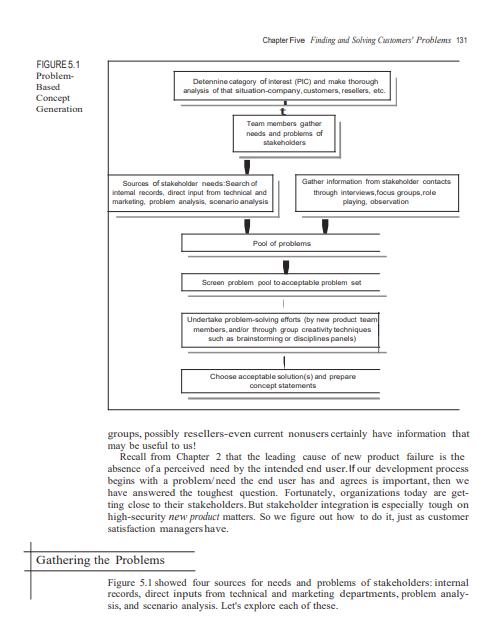
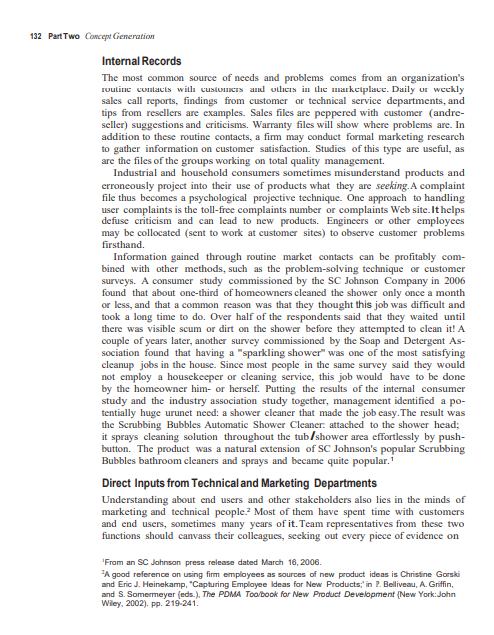
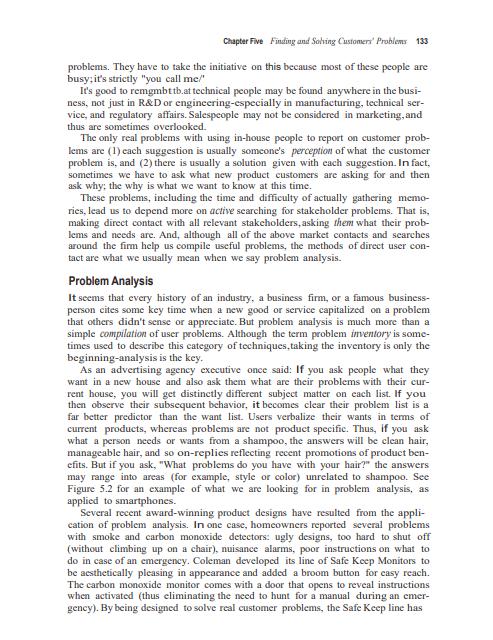
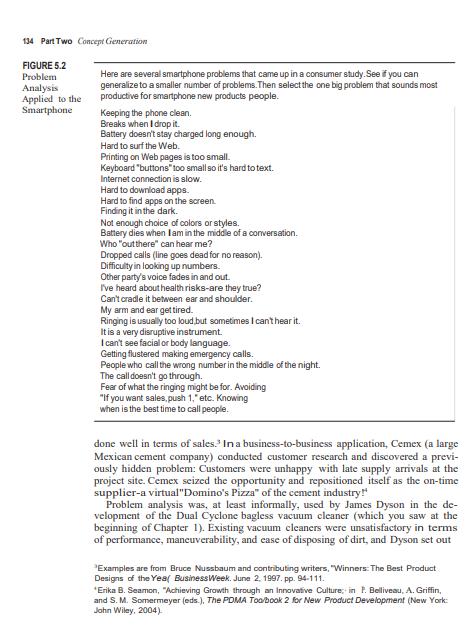
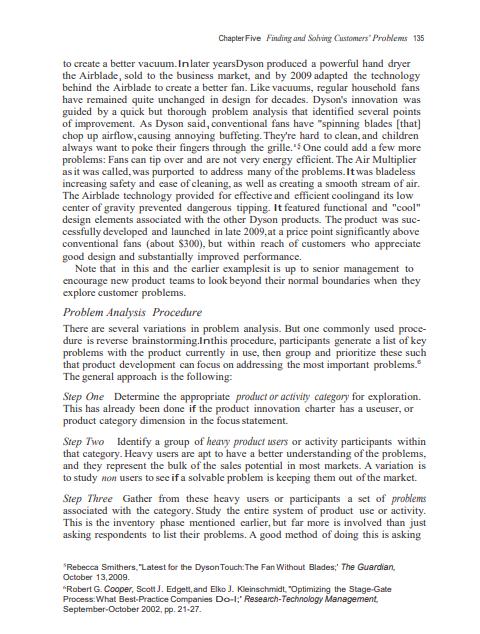
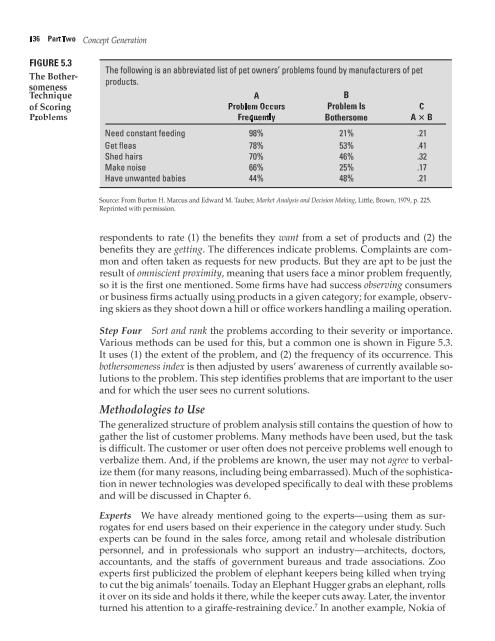
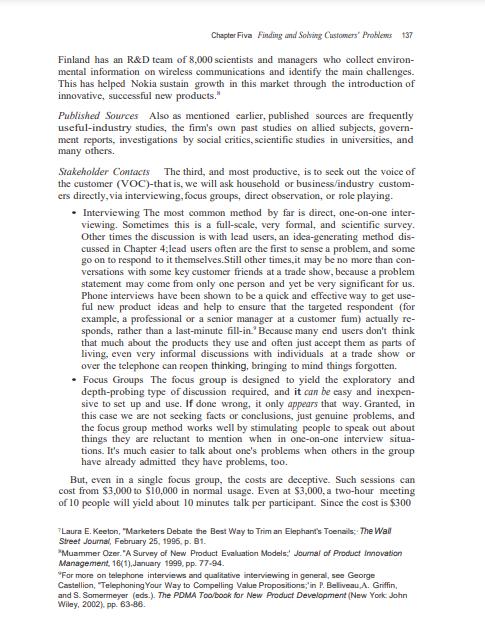
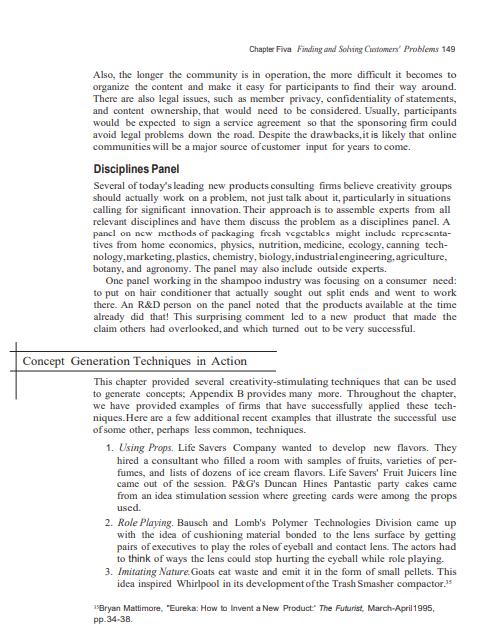
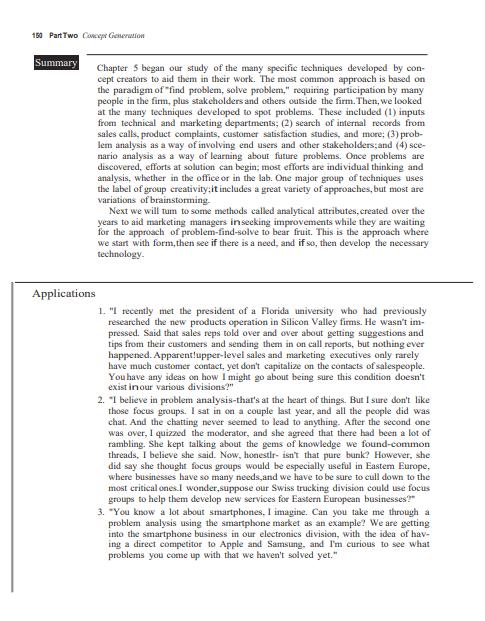
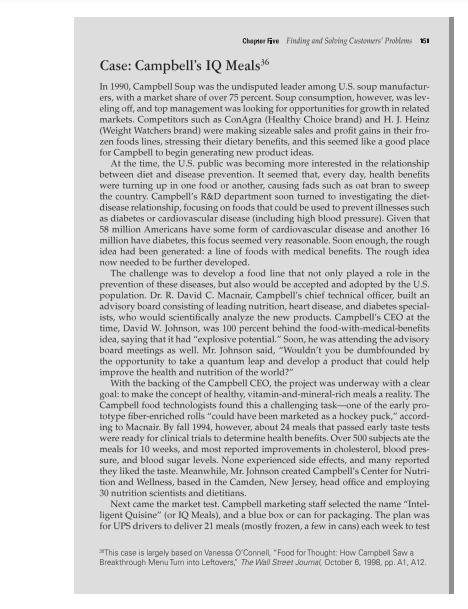
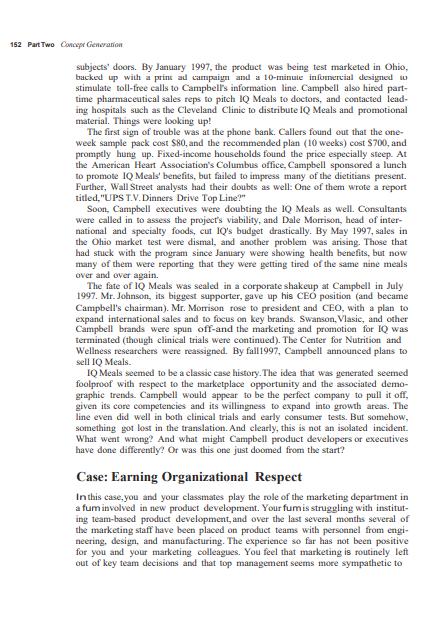
Setting Finding and Solving Customers' Problems Chapter 5 will be devoted to the most productive concept-generating system that we know the problem-based approach of finding and solving customers' prob- lems. It seems obvious and easy: Ask customers what their problems are and have a scientist put together the solution! But it's not always so simple. Just getting customers involved is often difficult. Learning their toughest prob- lems is more difficult, partly because they often don't know their problems very well. Many departments of a firm may be involved, not just the technical ones. You might want to glance back at Figure II.1 in the introduction to Part II, which briefly depicts the problem-based approach to generating concepts, and see how problem-based ideation fits in with other methods for gathering new product concepts. But ask product managers, and you'll find that they are passionate about identi- fying customer problems and figuring out how to best solve them for them, this is fun and exciting work! Think about toy companies. The most innovative ones recognize that one cannot just ask young children what problems they experience with existing toys. But watch them playing in a room with a variety of toys and ob- serve what appears to be missing to them and what they do about it (for example, using the box a toy car came in as a garage), and you may be on to something! The Overall System of Internal Concept Generation Every ideation situation is different and varies by the urgency, the skills of the firm and its customers, the product, the resources available, and so on. But one general approach, that of problem-based ideation, works best and can be modified to fit virtually every situation. The steps are diagrammed in Figure 5.1. The flow essentially is from the study of the situation, to use of various tech- niques of problem identification, to screening of the resulting problems, and to development of concept statements that will then go into the evaluation phase. The whole system is based on close involvement with parties who have information to help us, primarily stakeholders, which include end users, of course, but also advi- sors, financiers, consultants, maybe architects, physicians, or other professional Setting Finding and Solving Customers' Problems Chapter 5 will be devoted to the most productive concept-generating system that we know the problem-based approach of finding and solving customers' prob- lems. It seems obvious and easy: Ask customers what their problems are and have a scientist put together the solution! But it's not always so simple. Just getting customers involved is often difficult. Learning their toughest prob- lems is more difficult, partly because they often don't know their problems very well. Many departments of a firm may be involved, not just the technical ones. You might want to glance back at Figure II.1 in the introduction to Part II, which briefly depicts the problem-based approach to generating concepts, and see how problem-based ideation fits in with other methods for gathering new product concepts. But ask product managers, and you'll find that they are passionate about identi- fying customer problems and figuring out how to best solve them for them, this is fun and exciting work! Think about toy companies. The most innovative ones recognize that one cannot just ask young children what problems they experience with existing toys. But watch them playing in a room with a variety of toys and ob- serve what appears to be missing to them and what they do about it (for example, using the box a toy car came in as a garage), and you may be on to something! The Overall System of Internal Concept Generation Every ideation situation is different and varies by the urgency, the skills of the firm and its customers, the product, the resources available, and so on. But one general approach, that of problem-based ideation, works best and can be modified to fit virtually every situation. The steps are diagrammed in Figure 5.1. The flow essentially is from the study of the situation, to use of various tech- niques of problem identification, to screening of the resulting problems, and to development of concept statements that will then go into the evaluation phase. The whole system is based on close involvement with parties who have information to help us, primarily stakeholders, which include end users, of course, but also advi- sors, financiers, consultants, maybe architects, physicians, or other professional
Step by Step Solution
3.44 Rating (151 Votes )
There are 3 Steps involved in it
Customer Problem Campbell Soup was facing the challenge of finding opportunities for growth in relat... View full answer

Get step-by-step solutions from verified subject matter experts
 Study Help