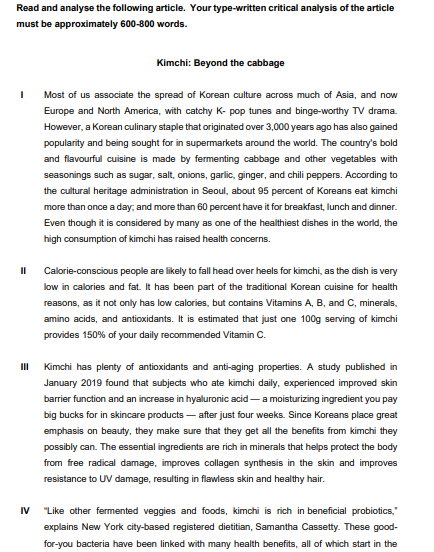
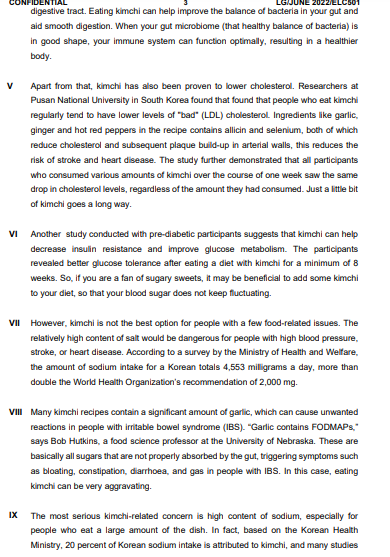
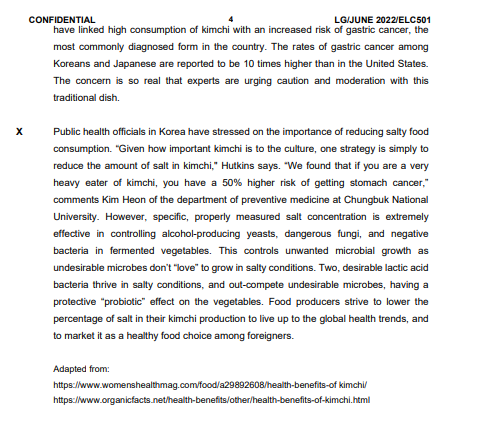
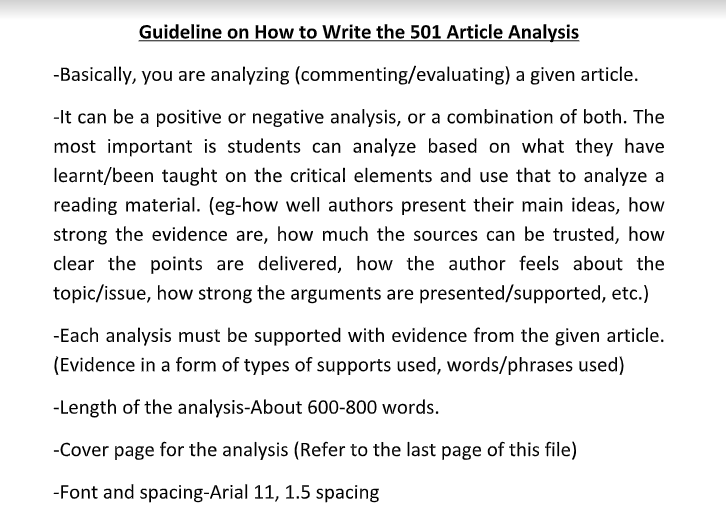
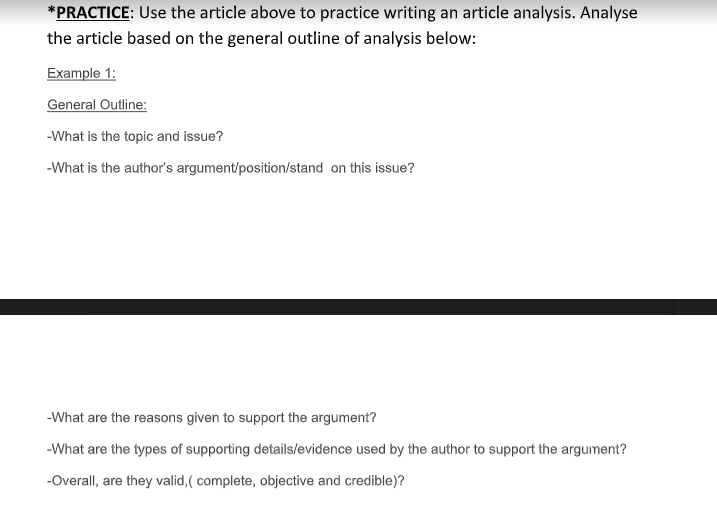
Read and analyse the following article. Your type-written critical analysis of the article must be approximately 600-800 words. Kimchi: Beyond the cabbage I Most of us associate the spread of Korean culture across much of Asia, and now Europe and North America, with catchy K-pop tunes and binge-worthy TV drama. However, a Korean culinary staple that originated over 3,000 years ago has also gained popularity and being sought for in supermarkets around the world. The country's bold and flavourful cuisine is made by fermenting cabbage and other vegetables with seasonings such as sugar, salt, onions, garlic, ginger, and chili peppers. According to the cultural heritage administration in Seoul, about 95 percent of Koreans eat kimchi more than once a day, and more than 60 percent have it for breakfast, lunch and dinner. Even though it is considered by many as one of the healthiest dishes in the world, the high consumption of kimchi has raised health concerns. II Calorie-conscious people are likely to fall head over heels for kimchi, as the dish is very low in calories and fat. It has been part of the traditional Korean cuisine for health reasons, as it not only has low calories, but contains Vitamins A, B, and C, minerals, amino acids, and antioxidants. It is estimated that just one 100g serving of kimchi provides 150% of your daily recommended Vitamin C. Kimchi has plenty of antioxidants and anti-aging properties. A study published in January 2019 found that subjects who ate kimchi daily, experienced improved skin barrier function and an increase in hyaluronic acid-a moisturizing ingredient you pay big bucks for in skincare products after just four weeks. Since Koreans place great emphasis on beauty, they make sure that they get all the benefits from kimchi they possibly can. The essential ingredients are rich in minerals that helps protect the body from free radical damage, improves collagen synthesis in the skin and improves resistance to UV damage, resulting in flawless skin and healthy hair. IV "Like other fermented veggies and foods, kimchi is rich in beneficial probiotics," explains New York city-based registered dietitian, Samantha Cassetty. These good- for-you bacteria have been linked with many health benefits, all of which start in the CONFIDENTIAL LG/JUNE 2022/ELC50 digestive tract. Eating kimchi can help improve the balance of bacteria in your gut and aid smooth digestion. When your gut microbiome (that healthy balance of bacteria) is in good shape, your immune system can function optimally, resulting in a healthier body. V Apart from that, kimchi has also been proven to lower cholesterol. Researchers at Pusan National University in South Korea found that found that people who eat kimchi regularly tend to have lower levels of "bad" (LDL) cholesterol. Ingredients like garlic, ginger and hot red peppers in the recipe contains allicin and selenium, both of which reduce cholesterol and subsequent plaque build-up in arterial walls, this reduces the risk of stroke and heart disease. The study further demonstrated that all participants who consumed various amounts of kimchi over the course of one week saw the same drop in cholesterol levels, regardless of the amount they had consumed. Just a little bit of kimchi goes a long way. VI Another study conducted with pre-diabetic participants suggests that kimchi can help decrease insulin resistance and improve glucose metabolism. The participants revealed better glucose tolerance after eating a diet with kimchi for a minimum of 8 weeks. So, if you are a fan of sugary sweets, it may be beneficial to add some kimchi to your diet, so that your blood sugar does not keep fluctuating. VII However, kimchi is not the best option for people with a few food-related issues. The relatively high content of salt would be dangerous for people with high blood pressure, stroke, or heart disease. According to a survey by the Ministry of Health and Welfare, the amount of sodium intake for a Korean totals 4,553 milligrams a day, more than double the World Health Organization's recommendation of 2,000 mg. VIII Many kimchi recipes contain a significant amount of garlic, which can cause unwanted reactions in people with irritable bowel syndrome (IBS). "Garlic contains FODMAPs," says Bob Hutkins, a food science professor at the University of Nebraska. These are basically all sugars that are not properly absorbed by the gut, triggering symptoms such as bloating, constipation, diarrhoea, and gas in people with IBS. In this case, eating kimchi can be very aggravating. IX The most serious kimchi-related concern is high content of sodium, especially for people who eat a large amount of the dish. In fact, based on the Korean Health Ministry, 20 percent of Korean sodium intake is attributed to kimchi, and many studies X LG/JUNE 2022/ELC501 CONFIDENTIAL have linked high consumption of kimchi with an increased risk of gastric cancer, the most commonly diagnosed form in the country. The rates of gastric cancer among Koreans and Japanese are reported to be 10 times higher than in the United States. The concern is so real that experts are urging caution and moderation with this traditional dish. Public health officials in Korea have stressed on the importance of reducing salty food consumption. "Given how important kimchi is to the culture, one strategy is simply to reduce the amount of salt in kimchi," Hutkins says. "We found that if you are a very heavy eater of kimchi, you have a 50% higher risk of getting stomach cancer," comments Kim Heon of the department of preventive medicine at Chungbuk National University. However, specific, properly measured salt concentration is extremely effective in controlling alcohol-producing yeasts, dangerous fungi, and negative bacteria in fermented vegetables. This controls unwanted microbial growth as undesirable microbes don't "love" to grow in salty conditions. Two, desirable lactic acid bacteria thrive in salty conditions, and out-compete undesirable microbes, having a protective "probiotic" effect on the vegetables. Food producers strive to lower the percentage of salt in their kimchi production to live up to the global health trends, and to market it as a healthy food choice among foreigners. Adapted from: https://www.womenshealthmag.com/food/a29892608/health-benefits-of kimchi/ https://www.organicfacts.net/health-benefits/other/health-benefits-of-kimchi.html Guideline on How to Write the 501 Article Analysis -Basically, you are analyzing (commenting/evaluating) a given article. -It can be a positive or negative analysis, or a combination of both. The most important is students can analyze based on what they have learnt/been taught on the critical elements and use that to analyze a reading material. (eg-how well authors present their main ideas, how strong the evidence are, how much the sources can be trusted, how clear the points are delivered, how the author feels about the topic/issue, how strong the arguments are presented/supported, etc.) -Each analysis must be supported with evidence from the given article. (Evidence in a form of types of supports used, words/phrases used) -Length of the analysis-About 600-800 words. -Cover page for the analysis (Refer to the last page of this file) -Font and spacing-Arial 11, 1.5 spacing *PRACTICE: Use the article above to practice writing an article analysis. Analyse the article based on the general outline of analysis below: Example 1: General Outline: -What is the topic and issue? -What is the author's argument/position/stand on this issue? -What are the reasons given to support the argument? -What are the types of supporting details/evidence used by the author to support the argument? -Overall, are they valid,(complete, objective and credible)




