







Question: Read mini-case and answer 3 and 4 3. Do you think Delight, dont dilute is a principle that P&G can easily apply to other emerging
Read mini-case and answer 3 and 4
3. Do you think Delight, dont dilute is a principle that P&G can easily apply to other emerging markets? Why or why not? What customer analysis tool would be most helpful in making this determination?
4. Why were the photos of sleeping babies more effective than just reporting P&G research reports?
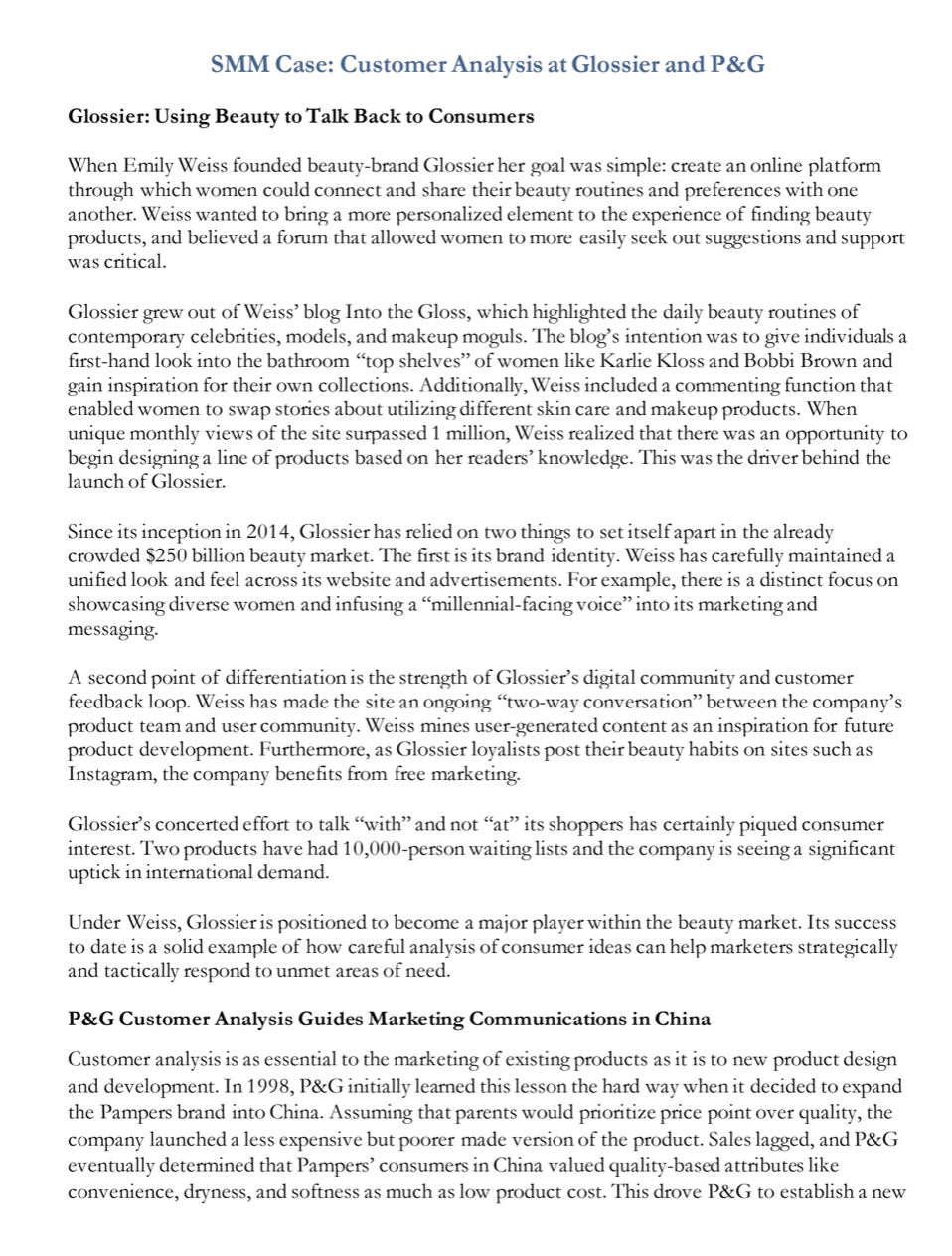
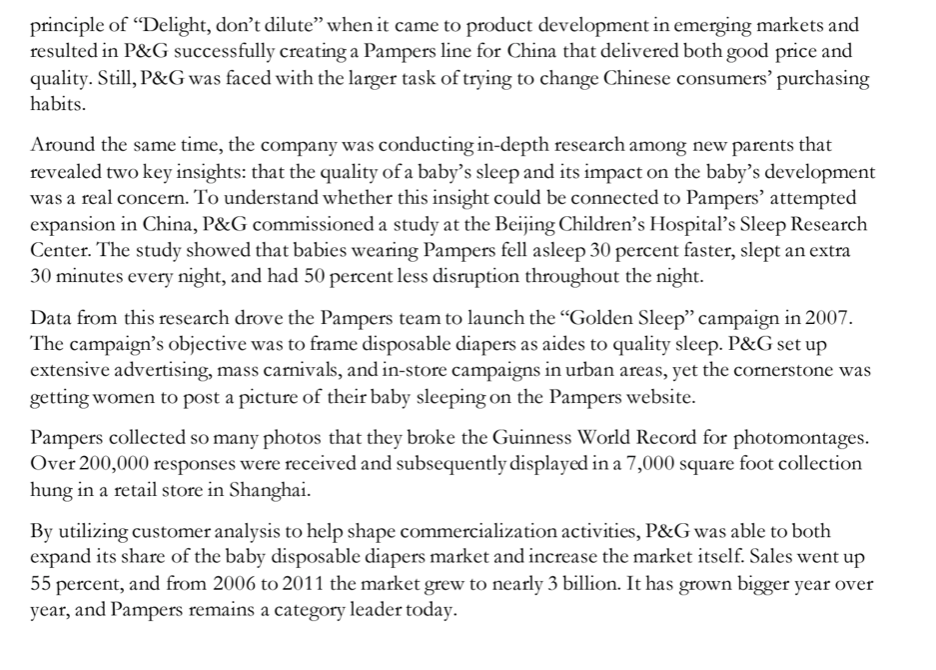
SMM Case: Customer Analysis at Glossier and P&G Glossier: Using Beauty to Talk Back to Consumers When Emily Weiss founded beauty-brand Glossier her goal was simple: create an online platform through which women could connect and share their beauty routines and preferences with one another. Weiss wanted to bring a more personalized element to the experience of finding beauty products, and believed a forum that allowed women to more easily seek out suggestions and support was critical. Glossier grew out of Weiss' blog Into the Gloss, which highlighted the daily beauty routines of contemporary celebrities, models, and makeup moguls. The blog's intention was to give individuals a first-hand look into the bathroom "top shelves" of women like Karlie Kloss and Bobbi Brown and gain inspiration for their own collections. Additionally, Weiss included a commenting function that enabled women to swap stories about utilizing different skin care and makeup products. When unique monthly views of the site surpassed 1 million, Weiss realized that there was an opportunity to begin designing a line of products based on her readers knowledge. This was the driver behind the launch of Glossier. Since its inception in 2014, Glossier has relied on two things to set itself apart in the already crowded $250 billion beauty market. The first is its brand identity. Weiss has carefully maintained a unified look and feel across its website and advertisements. For example, there is a distinct focus on showcasing diverse women and infusing a millennial-facing voice into its marketing and messaging. A second point of differentiation is the strength of Glossier's digital community and customer feedback loop. Weiss has made the site an ongoing two-way conversation between the company's product team and user community. Weiss mines user-generated content as an inspiration for future product development. Furthermore, as Glossier loyalists post their beauty habits on sites such as Instagram, the company benefits from free marketing. Glossier's concerted effort to talk with and not at its shoppers has certainly piqued consumer interest. Two products have had 10,000-person waiting lists and the company is seeing a significant uptick in international demand. Under Weiss, Glossier is positioned to become a major player within the beauty market. Its success to date is a solid example of how careful analysis of consumer ideas can help marketers strategically and tactically respond to unmet areas of need. P&G Customer Analysis Guides Marketing Communications in China Customer analysis is as essential to the marketing of existing products as it is to new product design and development. In 1998, P&G initially learned this lesson the hard way when it decided to expand the Pampers brand into China. Assuming that parents would prioritize price point over quality, the company launched a less expensive but poorer made version of the product. Sales lagged, and P&G eventually determined that Pampers' consumers in China valued quality-based attributes like convenience, dryness, and softness as much as low product cost. This drove P&G to establish a new principle of Delight, don't dilute when it came to product development in emerging markets and resulted in P&G successfully creating a Pampers line for China that delivered both good price and quality. Still, P&G was faced with the larger task of trying to change Chinese consumers' purchasing habits. Around the same time, the company was conducting in-depth research among new parents that revealed two key insights: that the quality of a baby's sleep and its impact on the baby's development was a real concern. To understand whether this insight could be connected to Pampers' attempted expansion in China, P&G commissioned a study at the Beijing Children's Hospitals Sleep Research Center. The study showed that babies wearing Pampers fell asleep 30 percent faster, slept an extra 30 minutes every night, and had 50 percent less disruption throughout the night. Data from this research drove the Pampers team to launch the Golden Sleep campaign in 2007. The campaign's objective was to frame disposable diapers as aides to quality sleep. P&G set up extensive advertising, mass carnivals, and in-store campaigns in urban areas, yet the cornerstone was getting women to post a picture of their baby sleeping on the Pampers website. Pampers collected so many photos that they broke the Guinness World Record for photomontages. Over 200,000 responses were received and subsequently displayed in a 7,000 square foot collection hung in a retail store in Shanghai. By utilizing customer analysis to help shape commercialization activities, P&G was able to both expand its share of the baby disposable diapers market and increase the market itself. Sales went up 55 percent, and from 2006 to 2011 the market grew to nearly 3 billion. It has grown bigger year over year, and Pampers remains a category leader today
Step by Step Solution
There are 3 Steps involved in it
1 Expert Approved Answer
Step: 1 Unlock

Question Has Been Solved by an Expert!
Get step-by-step solutions from verified subject matter experts
Step: 2 Unlock
Step: 3 Unlock
 Study Help