







Question: read the article and post a 250 word description of how this article might affect your career. Why is it important? What did you learn
read the article and post a 250 word description of how this article might affect your career. Why is it important? What did you learn from it?
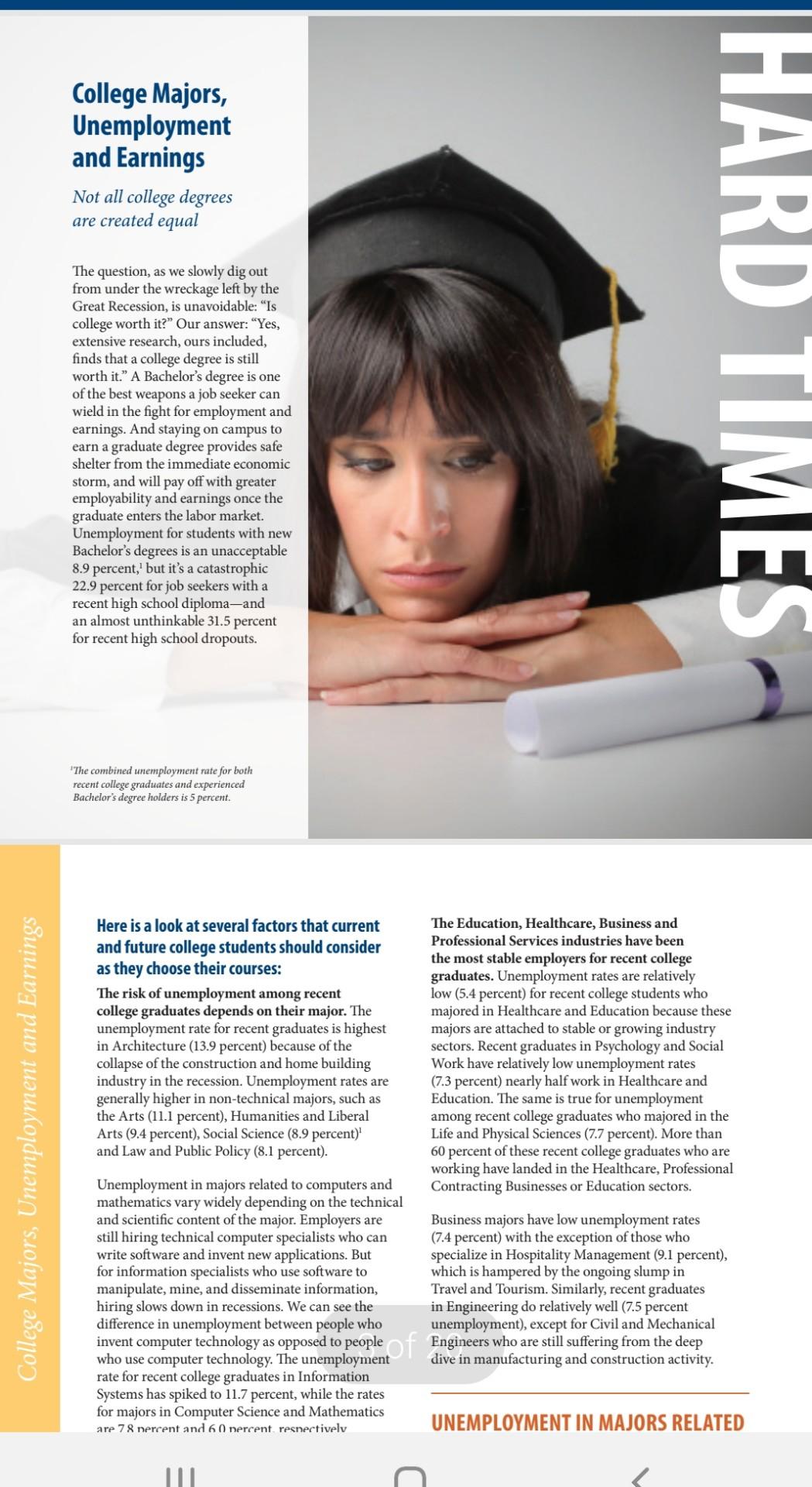
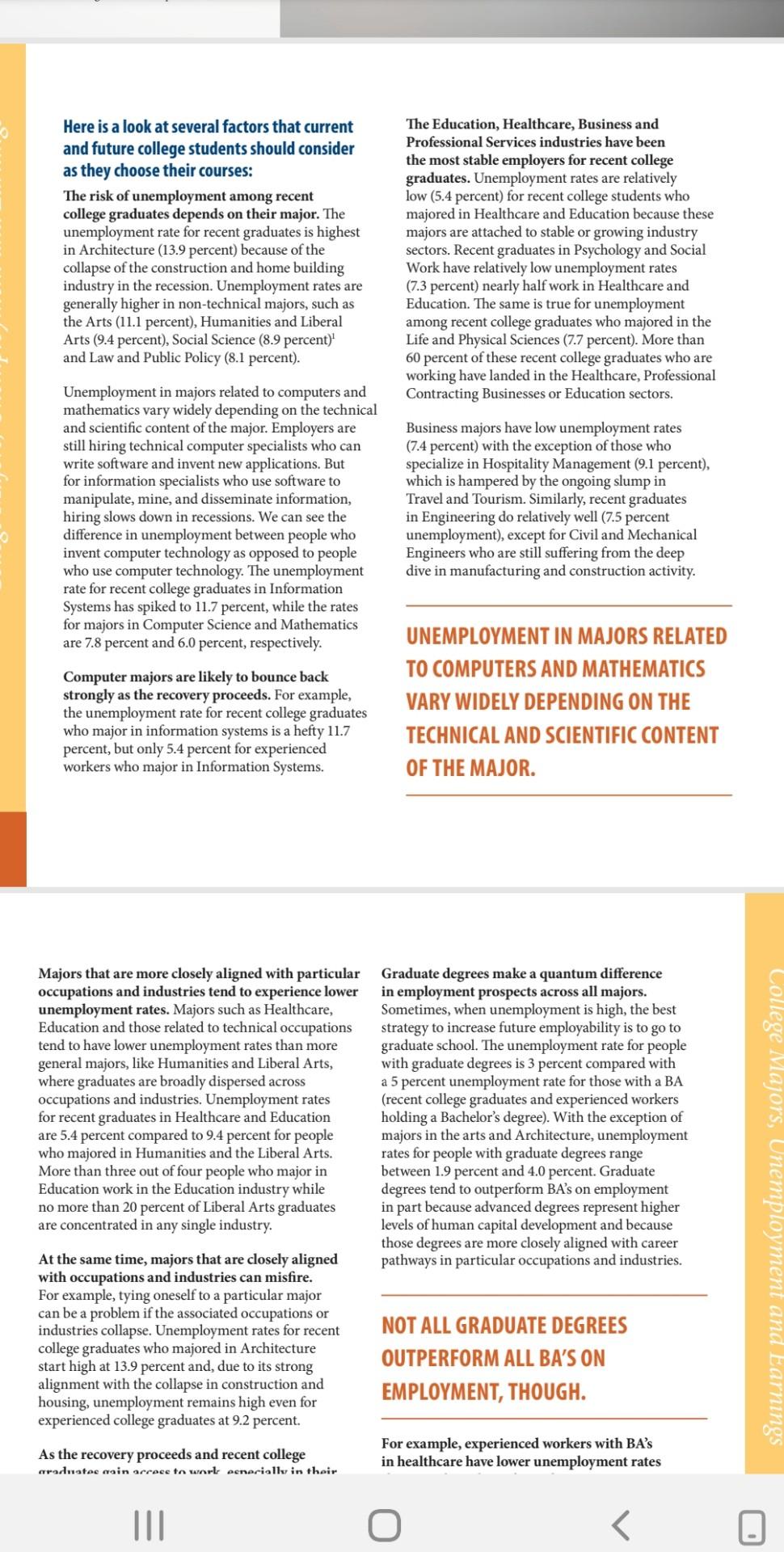
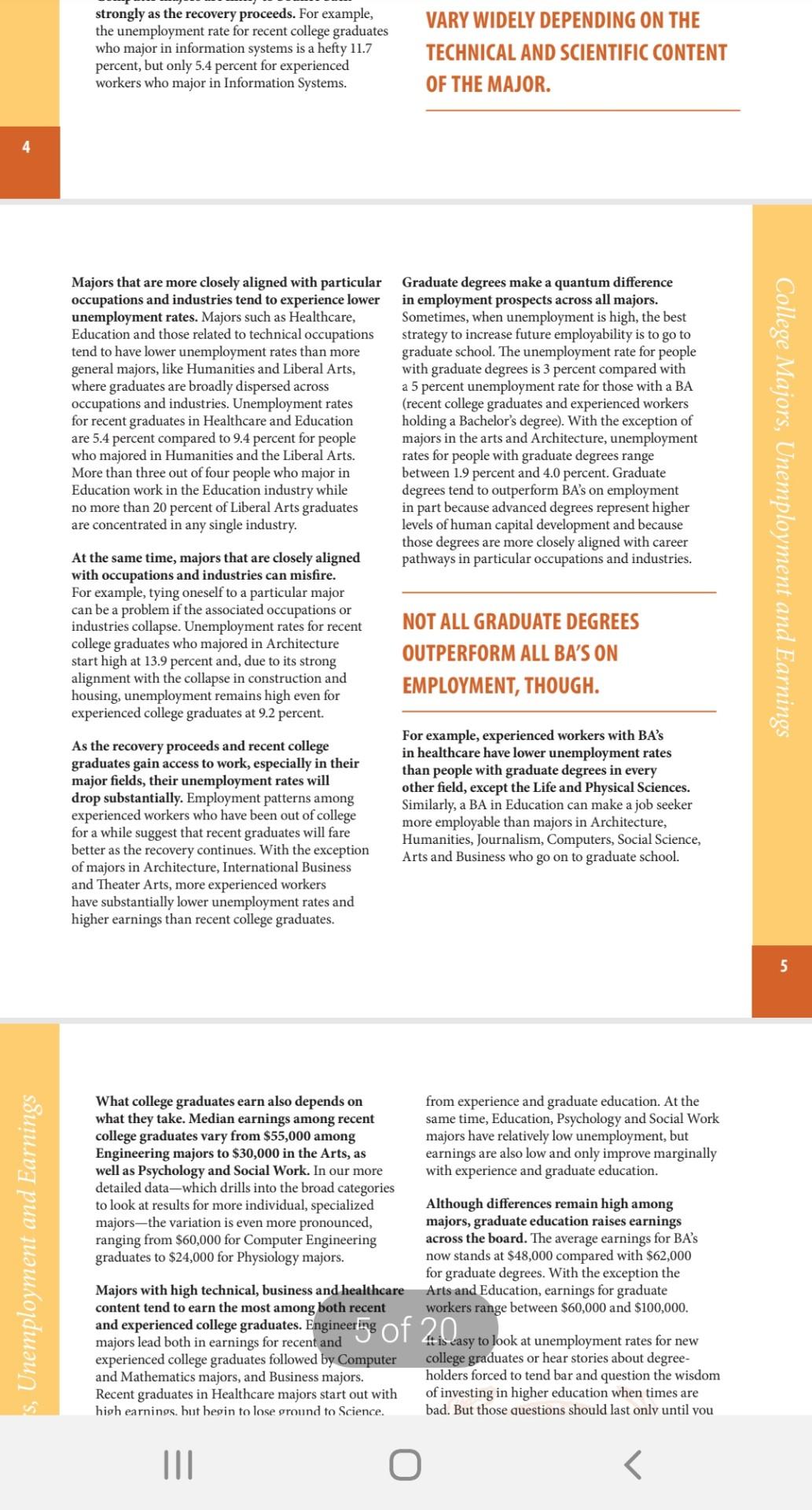
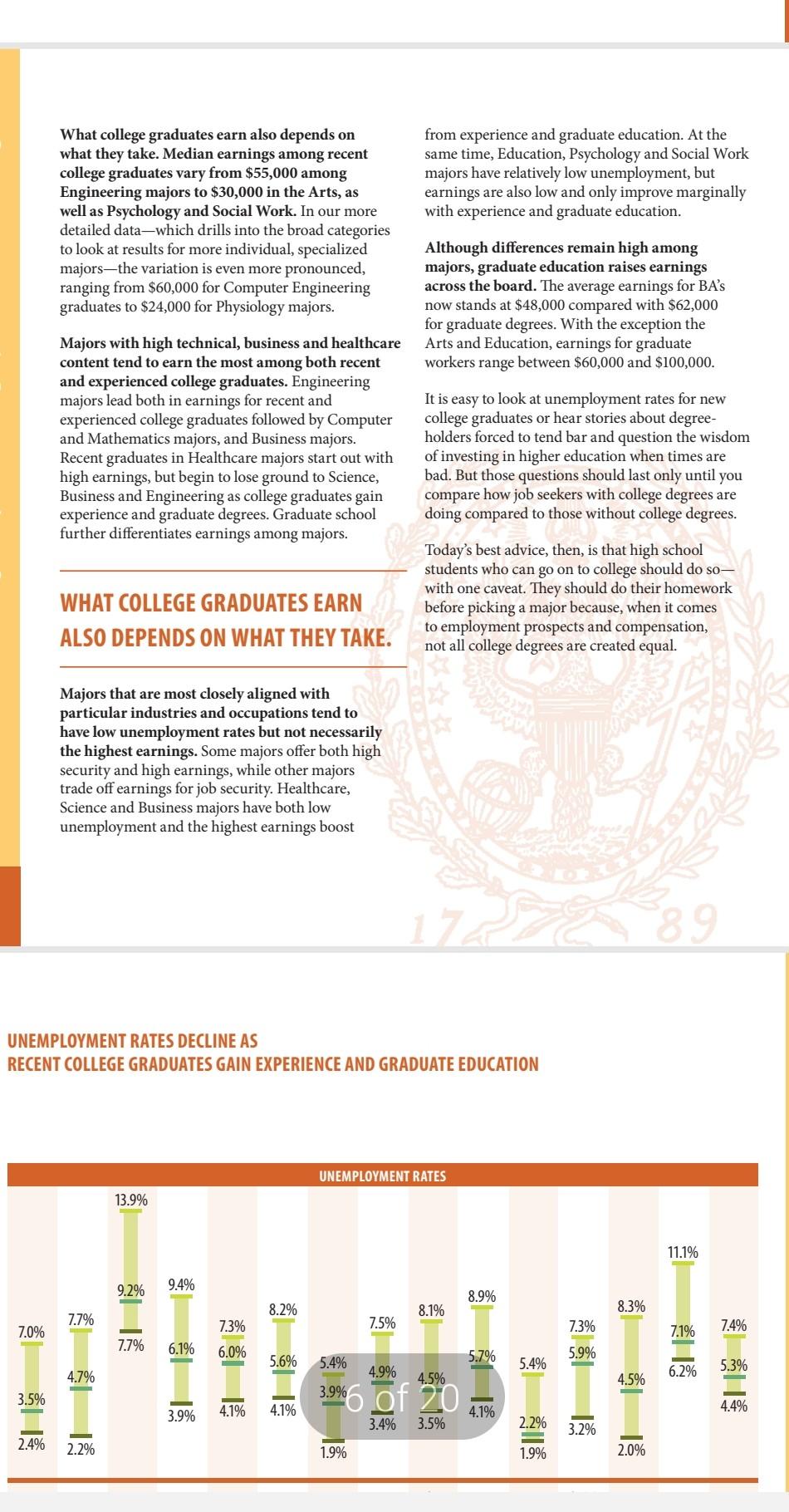
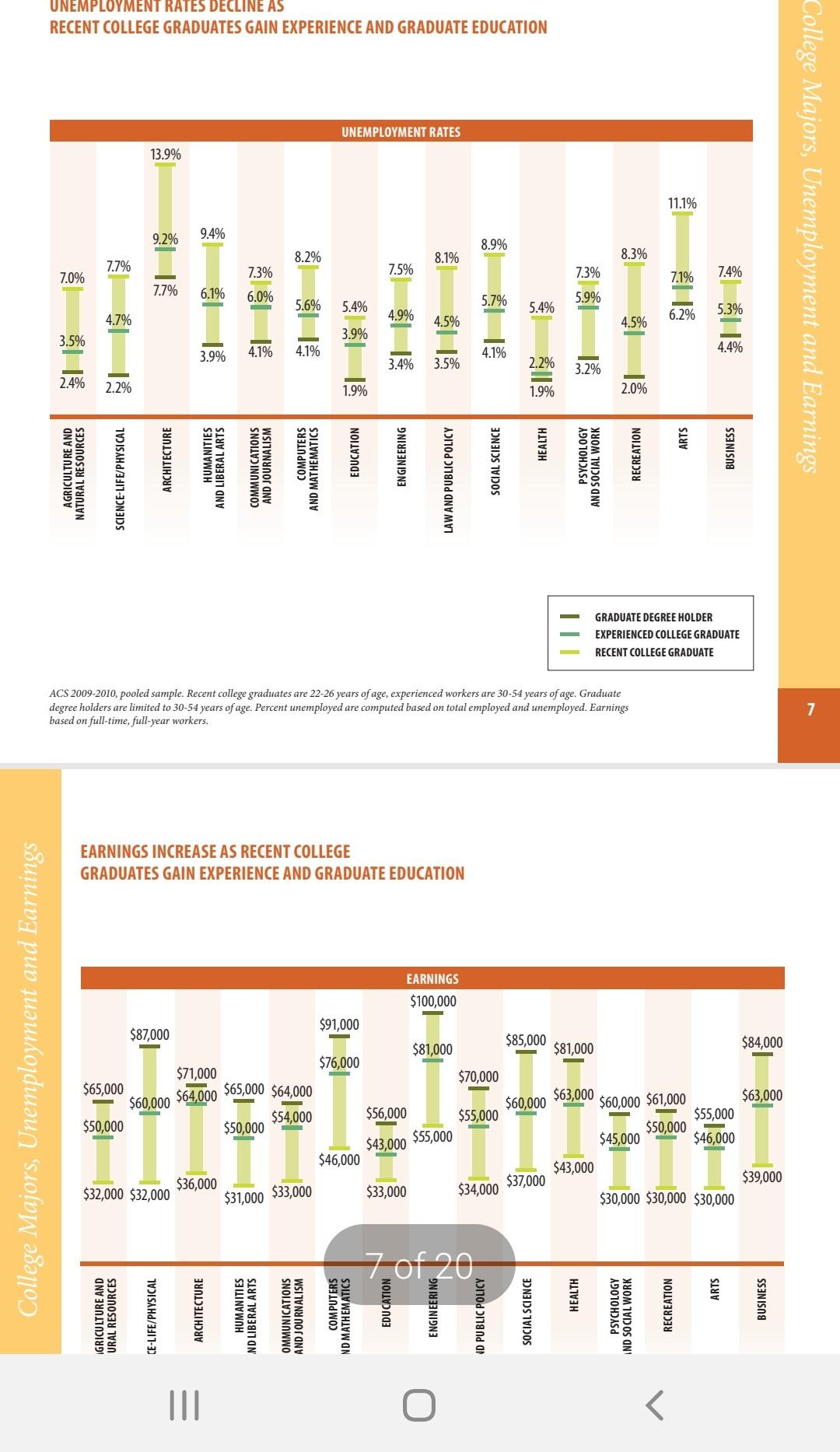
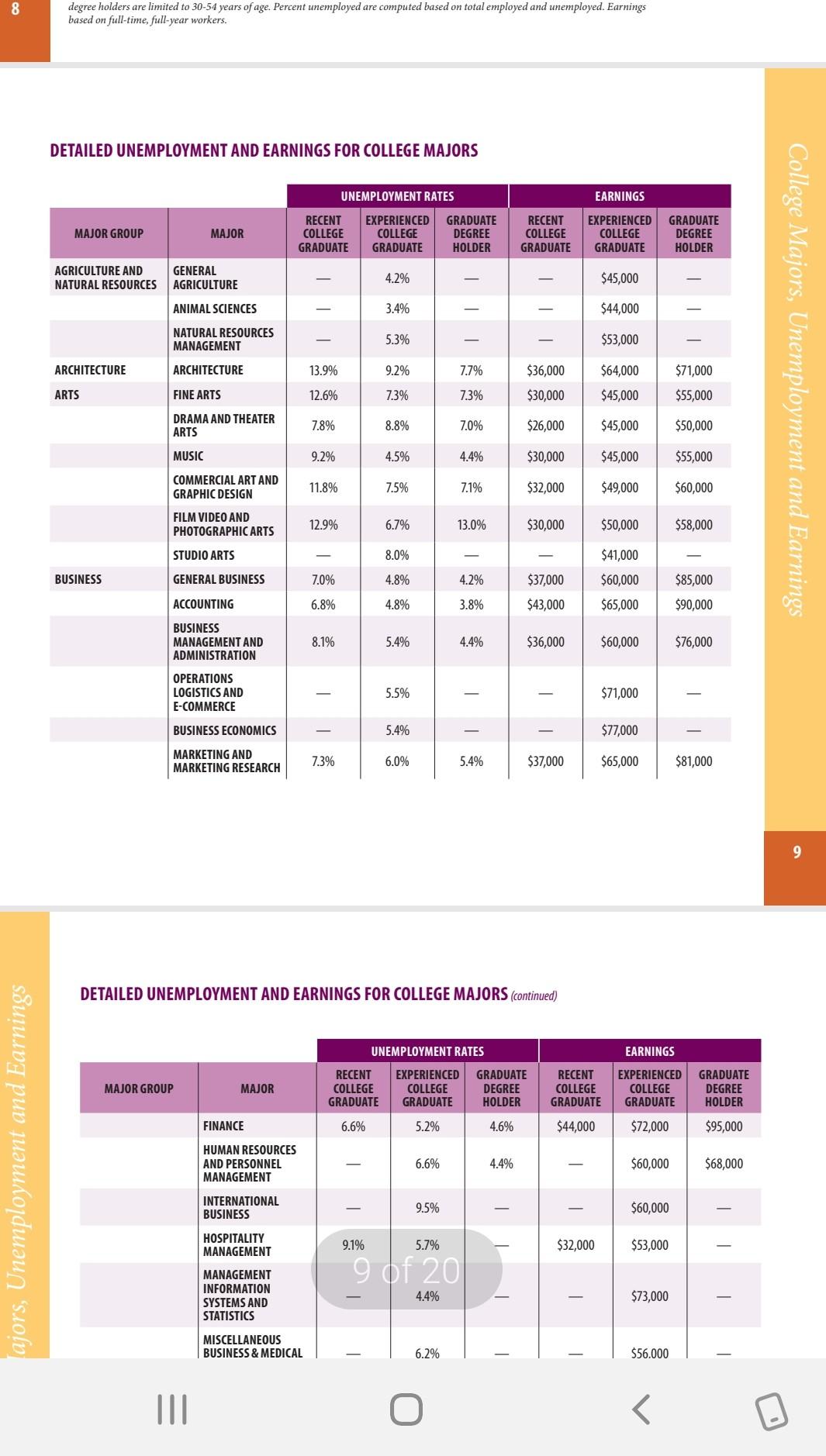
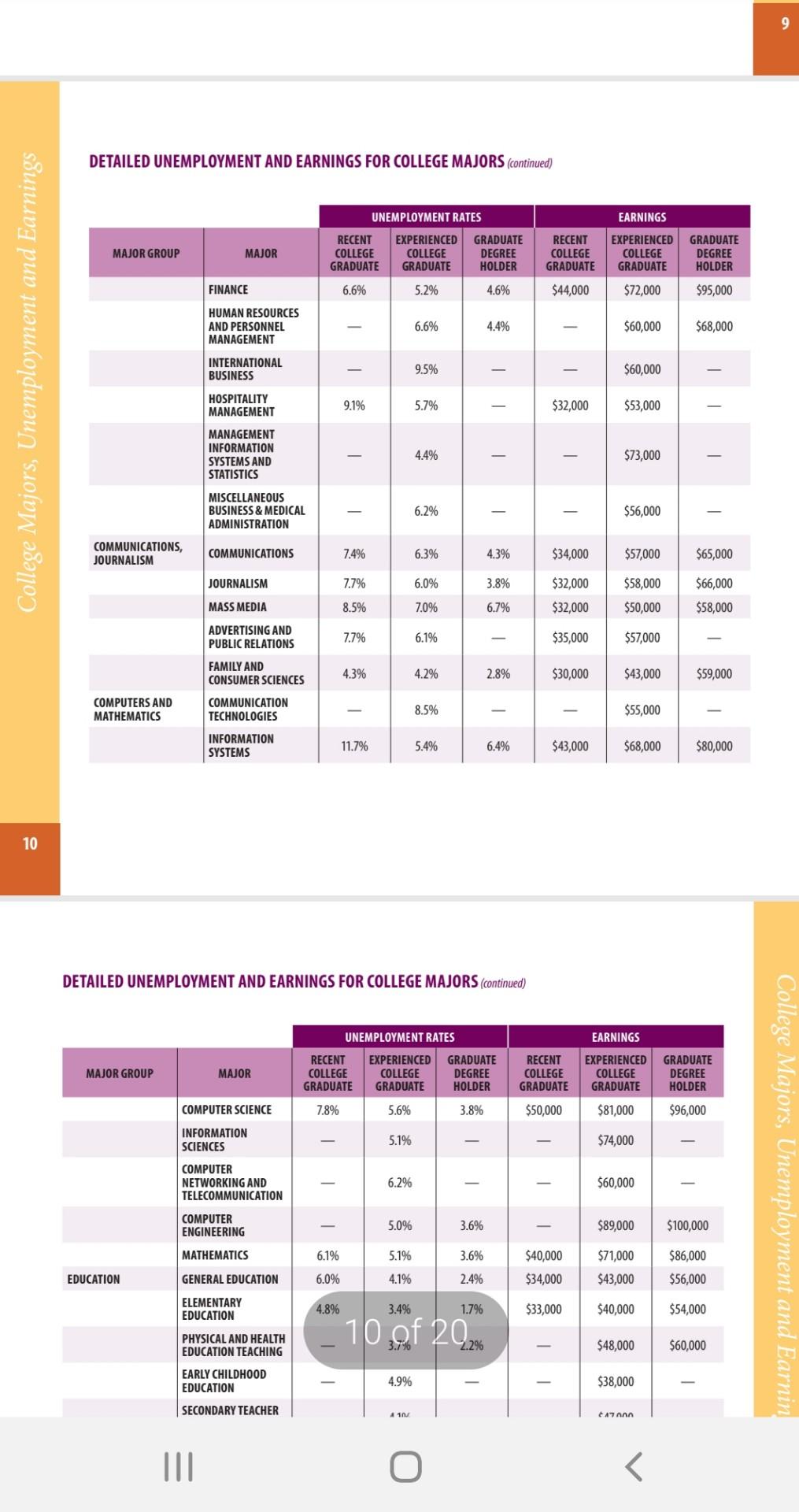
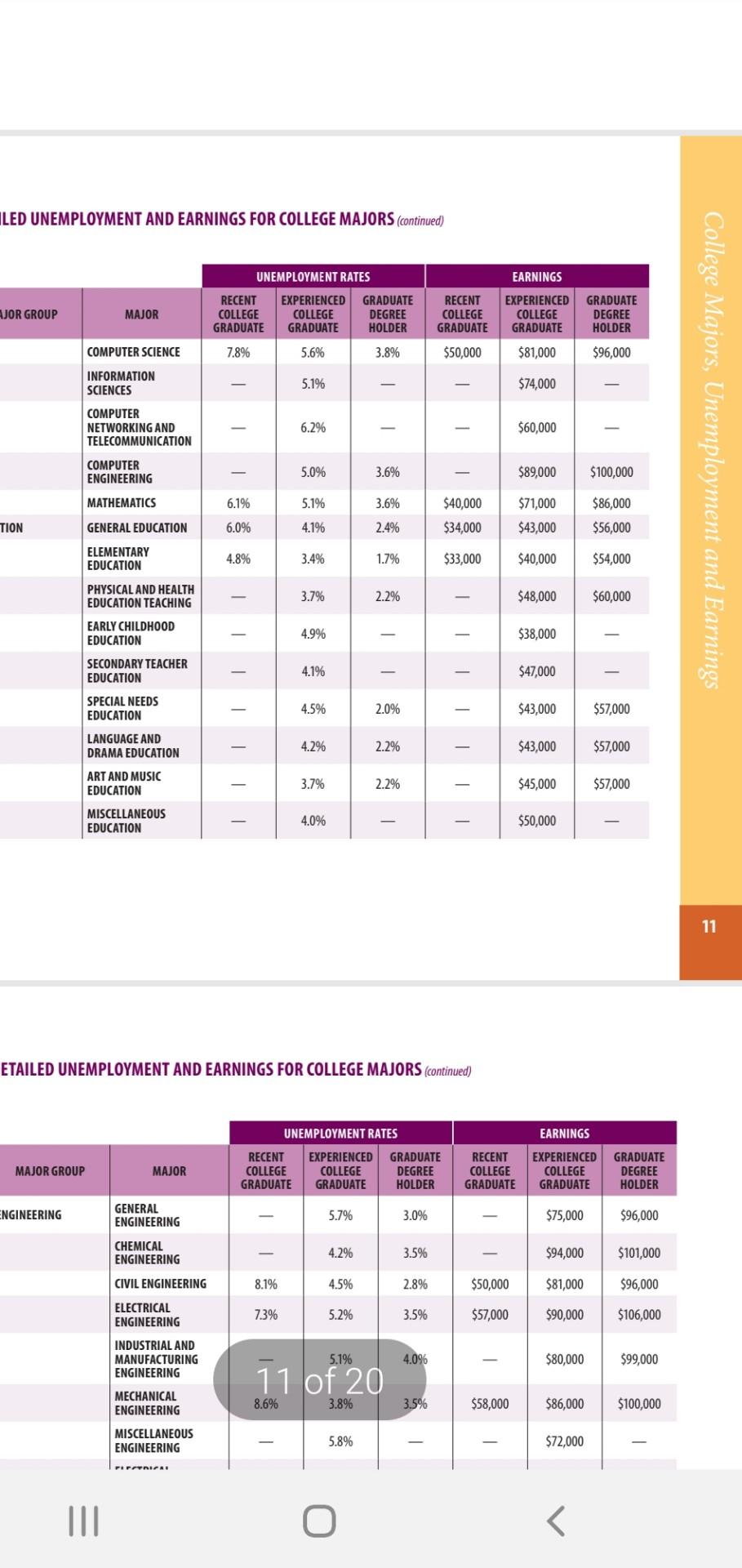
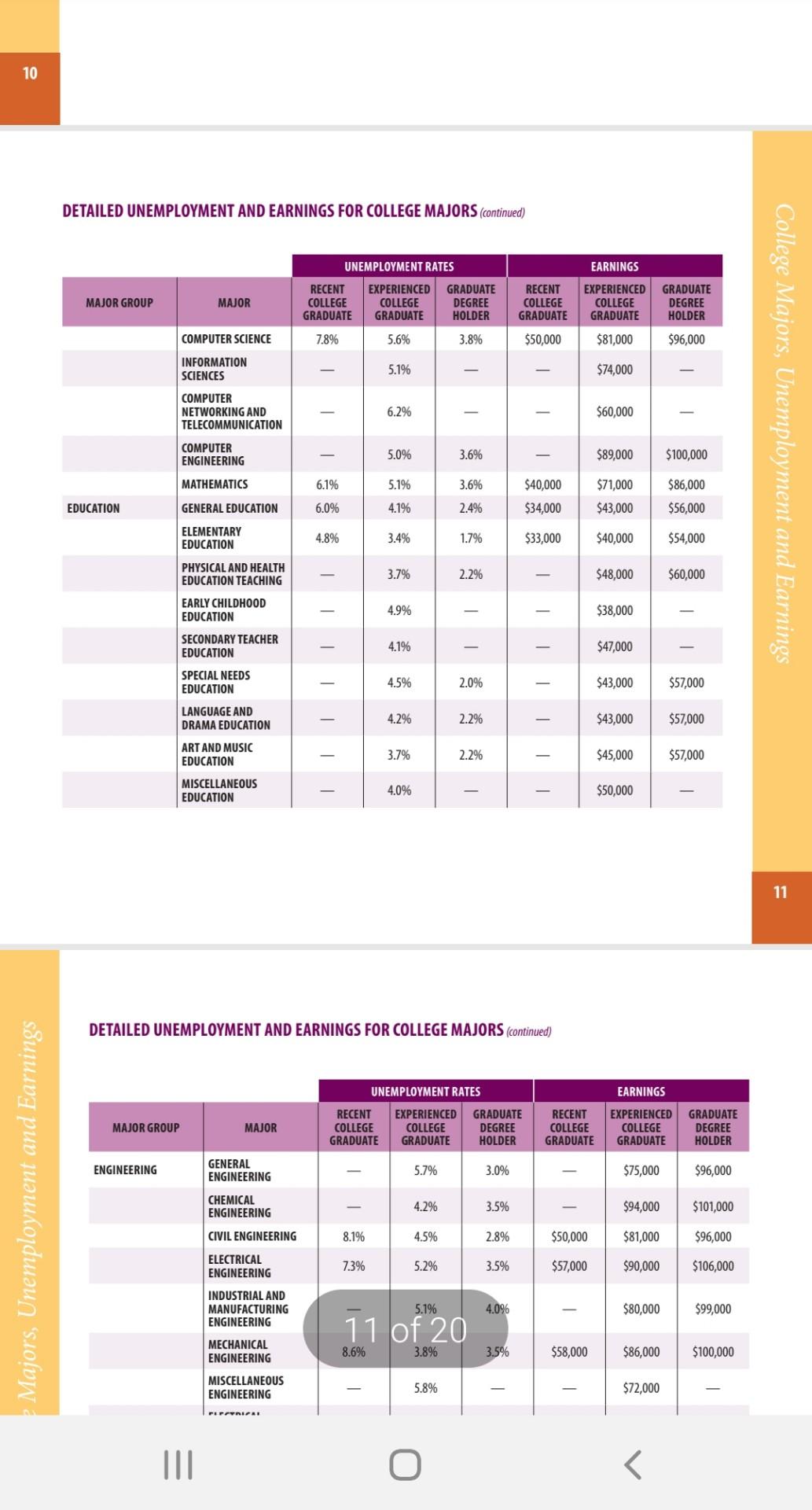
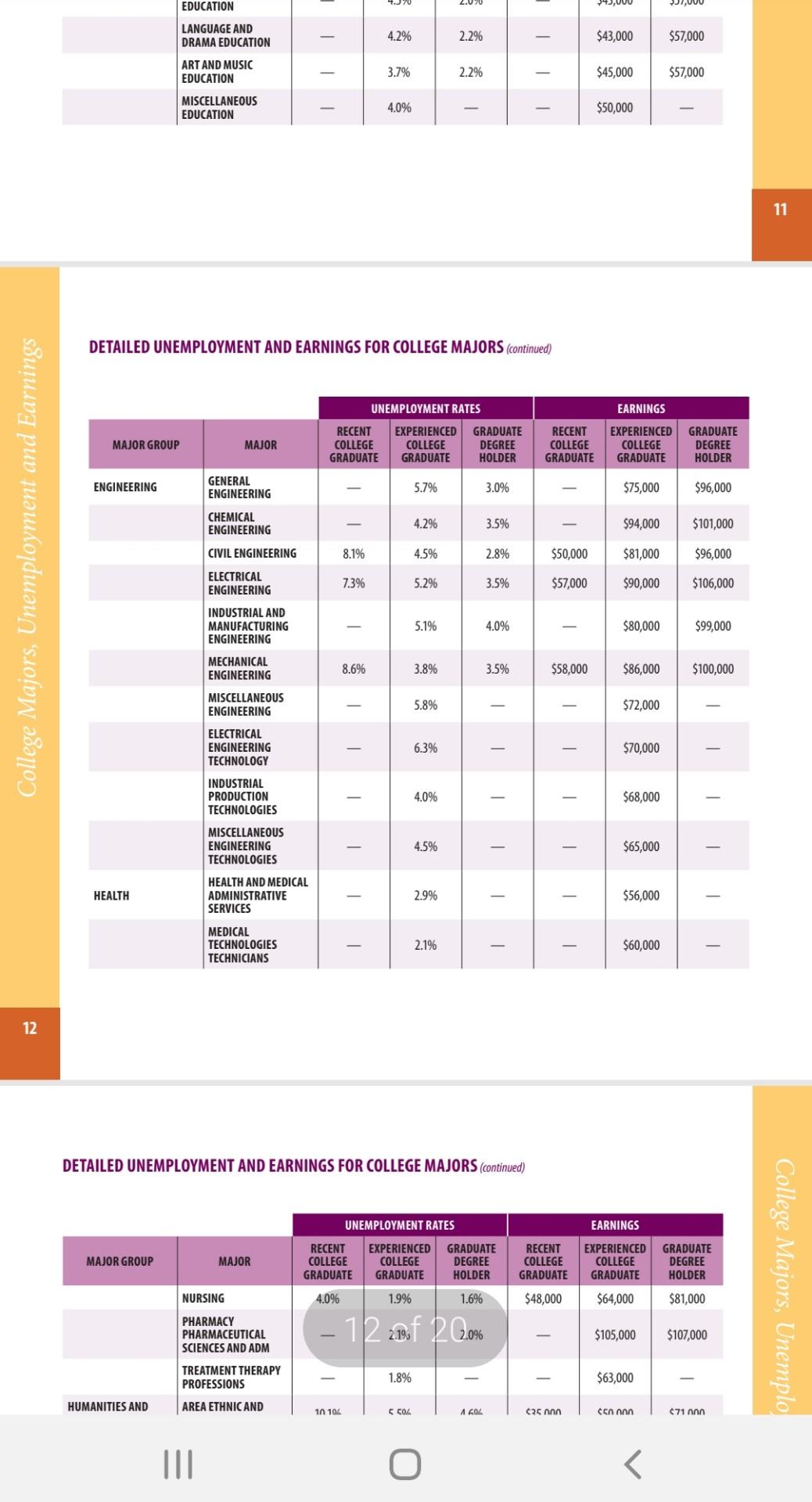
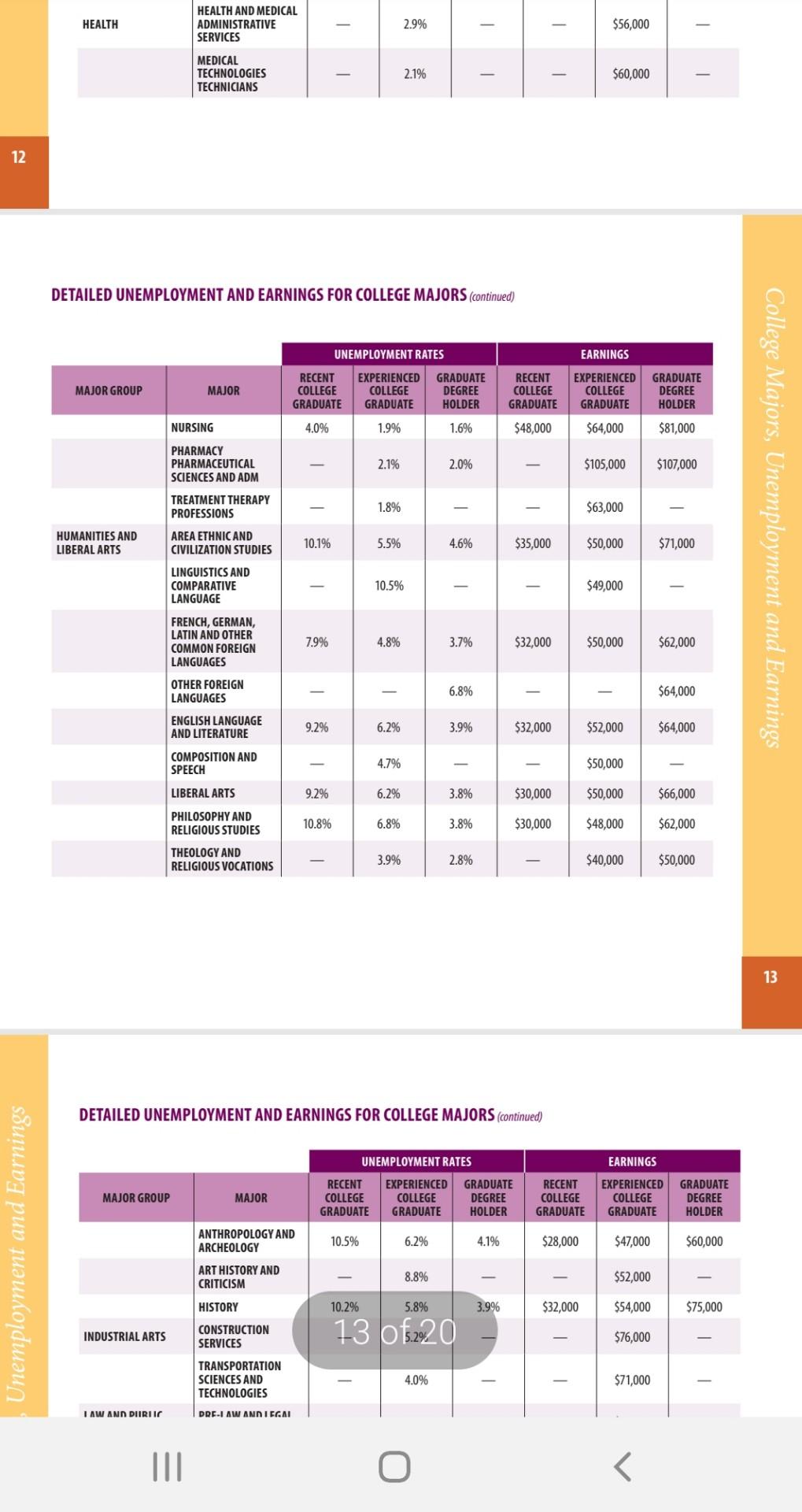
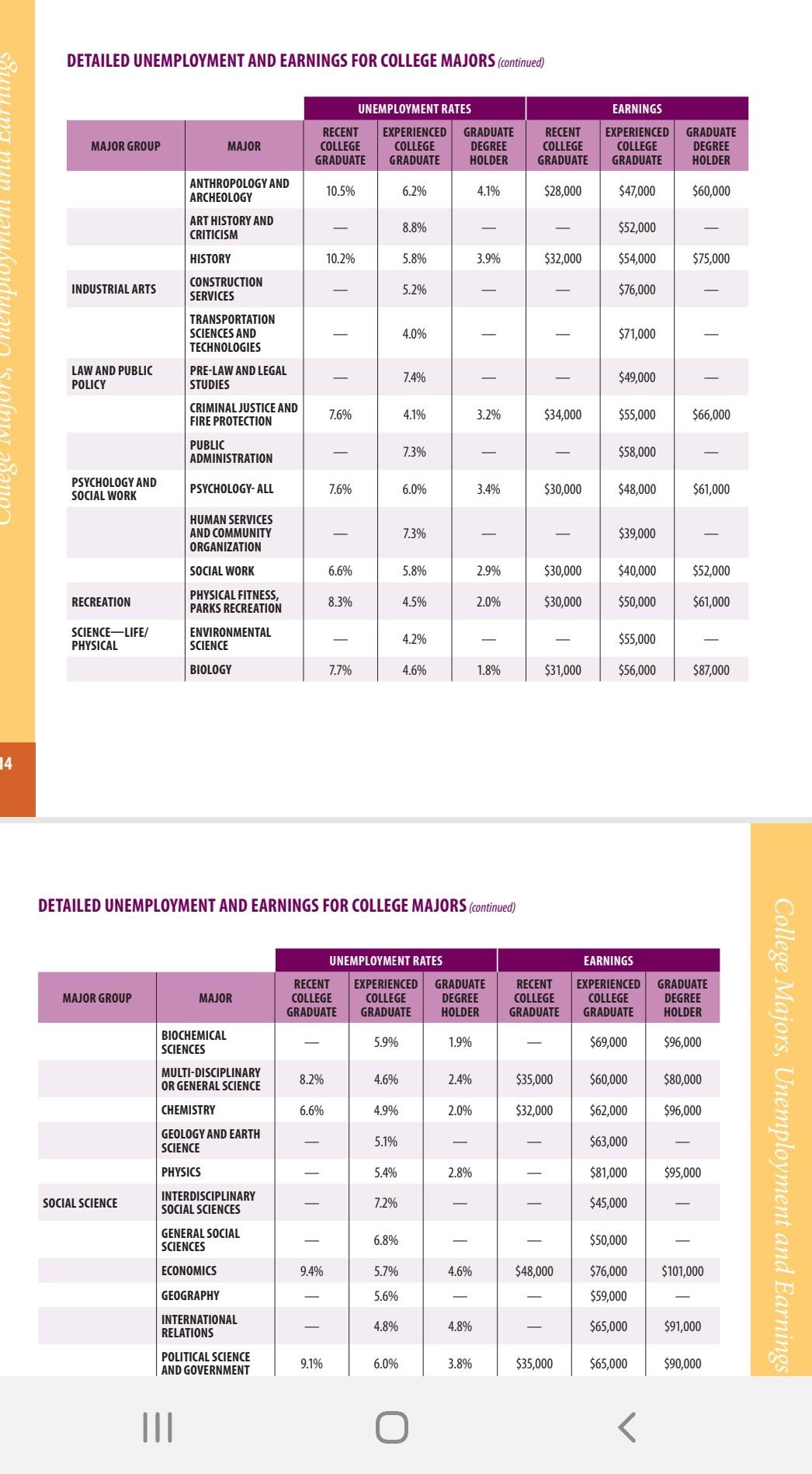
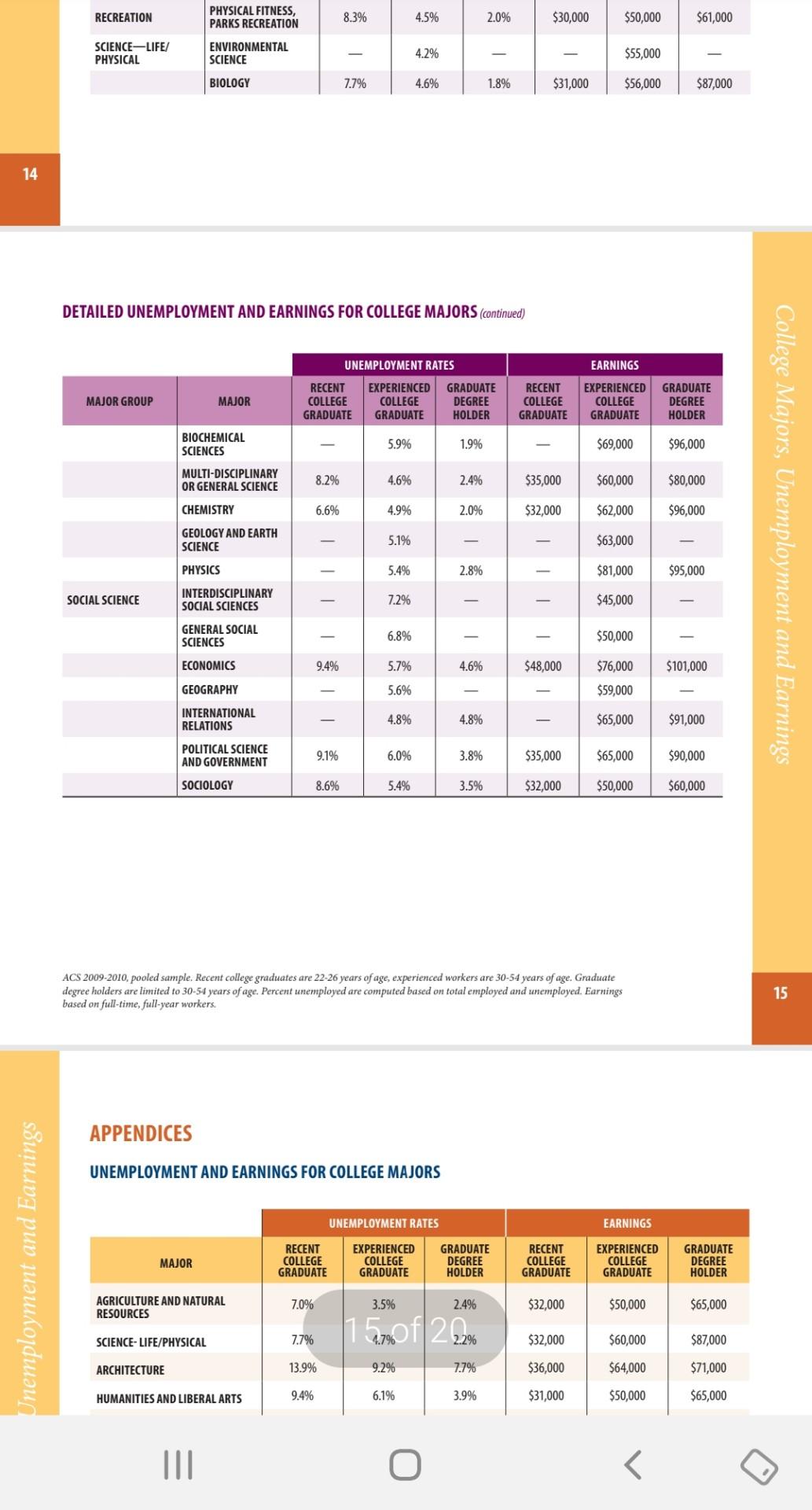
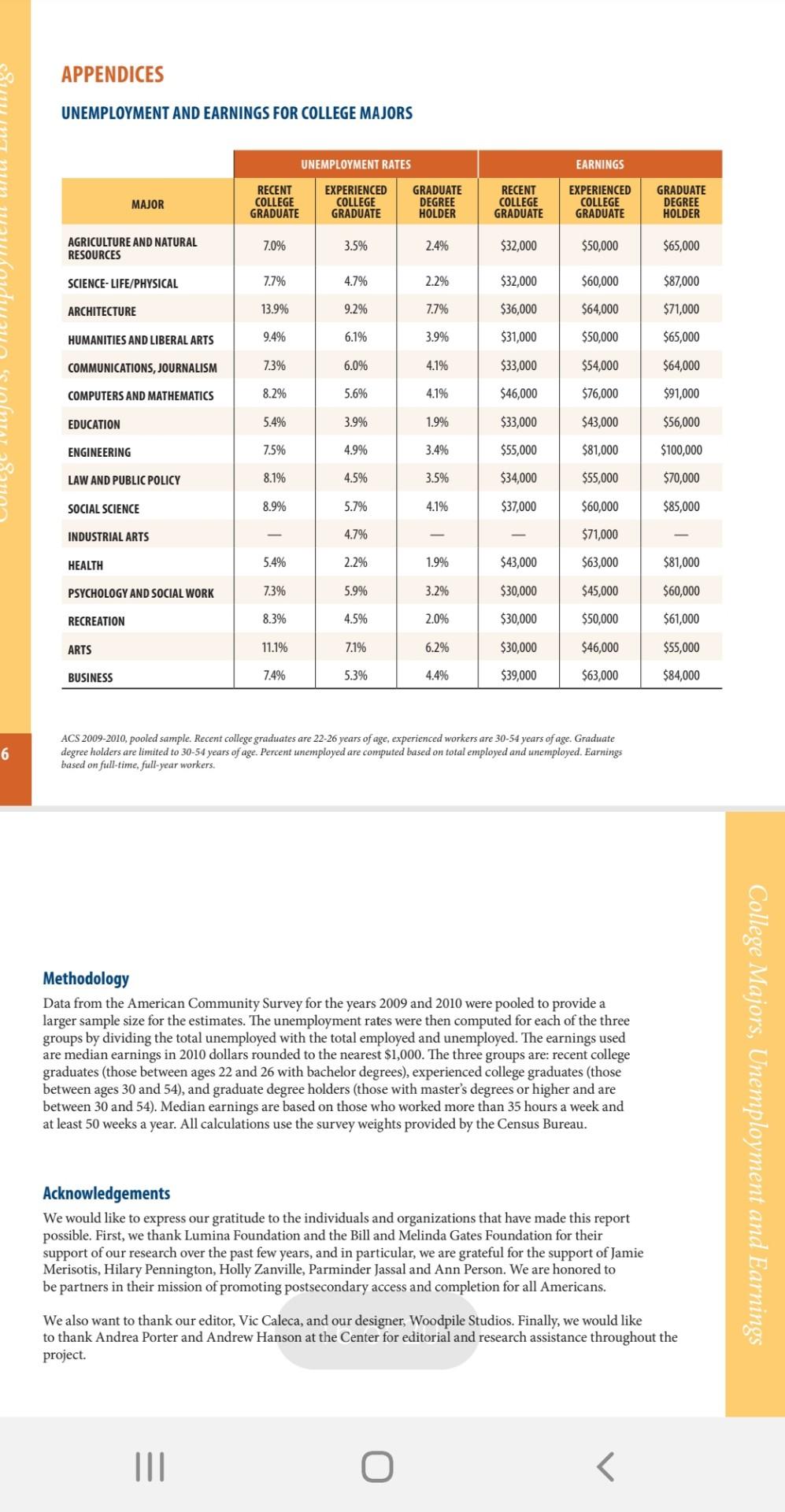
College Majors, Unemployment and Earnings Not all college degrees are created equal The question, as we slowly dig out from under the wreckage left by the Great Recession, is unavoidable: "Is college worth it?" Our answer: "Yes, extensive research, ours included, finds that a college degree is still worth it." A Bachelor's degree is one of the best weapons a job seeker can wield in the fight for employment and earnings. And staying on campus to earn a graduate degree provides safe shelter from the immediate economic storm, and will pay off with greater employability and earnings once the graduate enters the labor market. Unemployment for students with new Bachelor's degrees is an unacceptable 8.9 percent, but it's a catastrophic 22.9 percent for job seekers with a recent high school diploma-and an almost unthinkable 31.5 percent for recent high school dropouts. HARD TIMES "The combined unemployment rate for both recent college graduates and experienced Bachelor's degree holders is 5 percent. College Majors, Unemployment and Earnings Here is a look at several factors that current and future college students should consider as they choose their courses: The risk of unemployment among recent college graduates depends on their major. The unemployment rate for recent graduates is highest in Architecture (13.9 percent) because of the collapse of the construction and home building industry in the recession. Unemployment rates are generally higher in non-technical majors, such as the Arts (11.1 percent), Humanities and Liberal Arts (9.4 percent), Social Science (8.9 percent) and Law and Public Policy (8.1 percent). The Education, Healthcare, Business and Professional Services industries have been the most stable employers for recent college graduates. Unemployment rates are relatively low (5.4 percent) for recent college students who majored in Healthcare and Education because these majors are attached to stable or growing industry sectors. Recent graduates in Psychology and Social Work have relatively low unemployment rates (7.3 percent) nearly half work in Healthcare and Education. The same is true for unemployment among recent college graduates who majored in the Life and Physical Sciences (7.7 percent). More than 60 percent of these recent college graduates who are working have landed in the Healthcare, Professional Contracting Businesses or Education sectors. Unemployment in majors related to computers and mathematics vary widely depending on the technical and scientific content of the major. Employers are still hiring technical computer specialists who can write software and invent new applications. But for information specialists who use software to manipulate, mine, and disseminate information, hiring slows down in recessions. We can see the difference in unemployment between people who Business majors have low unemployment rates (7.4 percent) with the exception of those who specialize in Hospitality Management (9.1 percent), which is hampered by the ongoing slump in Travel and Tourism. Similarly, recent graduates in Engineering do relatively well (7.5 percent unemployment), except for Civil and Mechanical invent computer technology as opposed to people of Engineers who are still suffering from the deep dive in manufacturing and construction activity. who use computer technology. The unemployment rate for recent college graduates in Information Systems has spiked to 11.7 percent, while the rates for majors in Computer Science and Mathematics are 78 percent and 60 percent respectively UNEMPLOYMENT IN MAJORS RELATED Here is a look at several factors that current and future college students should consider as they choose their courses: The risk of unemployment among recent college graduates depends on their major. The unemployment rate for recent graduates is highest in Architecture (13.9 percent) because of the collapse of the construction and home building industry in the recession. Unemployment rates are generally higher in non-technical majors, such as the Arts (11.1 percent), Humanities and Liberal Arts (9.4 percent), Social Science (8.9 percent) and Law and Public Policy (8.1 percent). The Education, Healthcare, Business and Professional Services industries have been the most stable employers for recent college graduates. Unemployment rates are relatively low (5.4 percent) for recent college students who majored in Healthcare and Education because these majors are attached to stable or growing industry sectors. Recent graduates in Psychology and Social Work have relatively low unemployment rates (7.3 percent) nearly half work in Healthcare and Education. The same is true for unemployment among recent college graduates who majored in the Life and Physical Sciences (7.7 percent). More than 60 percent of these recent college graduates who are working have landed in the Healthcare, Professional Contracting Businesses or Education sectors. Unemployment in majors related to computers and mathematics vary widely depending on the technical and scientific content of the major. Employers are still hiring technical computer specialists who can write software and invent new applications. But for information specialists who use software to manipulate, mine, and disseminate information, hiring slows down in recessions. We can see the difference in unemployment between people who invent computer technology as opposed to people who use computer technology. The unemployment rate for recent college graduates in Information Systems has spiked to 11.7 percent, while the rates for majors in Computer Science and Mathematics are 7.8 percent and 6.0 percent, respectively. Business majors have low unemployment rates (7.4 percent) with the exception of those who specialize in Hospitality Management (9.1 percent), which is hampered by the ongoing slump in Travel and Tourism. Similarly, recent graduates in Engineering do relatively well (7.5 percent unemployment), except for Civil and Mechanical Engineers who are still suffering from the deep dive in manufacturing and construction activity. Computer majors are likely to bounce back strongly as the recovery proceeds. For example, the unemployment rate for recent college graduates who major in information systems is a hefty 11.7 percent, but only 5.4 percent for experienced workers who major in Information Systems. UNEMPLOYMENT IN MAJORS RELATED TO COMPUTERS AND MATHEMATICS VARY WIDELY DEPENDING ON THE TECHNICAL AND SCIENTIFIC CONTENT OF THE MAJOR. Majors that are more closely aligned with particular occupations and industries tend to experience lower unemployment rates. Majors such as Healthcare, Education and those related to technical occupations tend to have lower unemployment rates than more general majors, like Humanities and Liberal Arts, where graduates are broadly dispersed across occupations and industries. Unemployment rates for recent graduates in Healthcare and Education are 5.4 percent compared to 9.4 percent for people who majored in Humanities and the Liberal Arts. More than three out of four people who major in Education work in the Education industry while no more than 20 percent of Liberal Arts graduates are concentrated in any single industry. Graduate degrees make a quantum difference in employment prospects across all majors. Sometimes, when unemployment is high, the best strategy to increase future employability is to go to graduate school. The unemployment rate for people with graduate degrees is 3 percent compared with a 5 percent unemployment rate for those with a BA (recent college graduates and experienced workers holding a Bachelor's degree). With the exception of majors in the arts and Architecture, unemployment rates for people with graduate degrees range between 1.9 percent and 4.0 percent. Graduate degrees tend to outperform BA's on employment in part because advanced degrees represent higher levels of human capital development and because those degrees are more closely aligned with career pathways in particular occupations and industries. College Majors, Unem At the same time, majors that are closely aligned with occupations and industries can misfire. For example, tying oneself to a particular major can be a problem if the associated occupations or industries collapse. Unemployment rates for recent college graduates who majored in Architecture start high at 13.9 percent and, due to its strong alignment with the collapse in construction and housing, unemployment remains high even for experienced college graduates at 9.2 percent. NOT ALL GRADUATE DEGREES OUTPERFORM ALL BA'S ON EMPLOYMENT, THOUGH. carnings As the recovery proceeds and recent college arraduates main access to work eenerially in their For example, experienced workers with BA's in healthcare have lower unemployment rates III strongly as the recovery proceeds. For example, the unemployment rate for recent college graduates who major in information systems is a hefty 11.7 percent, but only 5.4 percent for experienced workers who major in Information Systems. VARY WIDELY DEPENDING ON THE TECHNICAL AND SCIENTIFIC CONTENT OF THE MAJOR. Majors that are more closely aligned with particular Graduate degrees make a quantum difference occupations and industries tend to experience lower in employment prospects across all majors. unemployment rates. Majors such as Healthcare, Sometimes, when unemployment is high, the best Education and those related to technical occupations strategy to increase future employability is to go to tend to have lower unemployment rates than more graduate school. The unemployment rate for people general majors, like Humanities and Liberal Arts, with graduate degrees is 3 percent compared with where graduates are broadly dispersed across a 5 percent unemployment rate for those with a BA occupations and industries. Unemployment rates (recent college graduates and experienced workers for recent graduates in Healthcare and Education holding a Bachelor's degree). With the exception are 5.4 percent compared to 9.4 percent for people majors in the arts and Architecture, unemployment who majored in Humanities and the Liberal Arts. rates for people with graduate degrees range More than three out of four people who major in between 1.9 percent and 4.0 percent. Graduate Education work in the Education industry while degrees tend to outperform BA's on employment no more than 20 percent of Liberal Arts graduates in part because advanced degrees represent higher are concentrated in any single industry. levels of human capital development and because those degrees are more closely aligned with career At the same time, majors that are closely aligned pathways in particular occupations and industries. with occupations and industries can misfire. For example, tying oneself to a particular major can be a problem if the associated occupations or industries collapse. Unemployment rates for recent NOT ALL GRADUATE DEGREES college graduates who majored in Architecture OUTPERFORM ALL BA'S ON start high at 13.9 percent and, due to its strong alignment with the collapse in construction and EMPLOYMENT, THOUGH. housing, unemployment remains high even for experienced college graduates at 9.2 percent. For example, experienced workers with BA' As the recovery proceeds and recent college in healthcare have lower unemployment rates graduates gain access to work, especially in their than people with graduate degrees in every major fields, their unemployment rates will other field, except the Life and Physical Sciences. drop substantially. Employment patterns among Similarly, a BA in Education can make a job seeker experienced workers who have been out of college more employable than majors in Architecture, for a while suggest that recent graduates will fare Humanities, Journalism, Computers, Social Science, better as the recovery continues. With the exception Arts and Business who go on to graduate school. of majors in Architecture, International Business and Theater Arts, more experienced workers have substantially lower unemployment rates and higher earnings than recent college graduates. College Majors, Unemployment and Earnings 5 from experience and graduate education. At the same time, Education, Psychology and Social Work majors have relatively low unemployment, but earnings are also low and only improve marginally with experience and graduate education. s, Unemployment and Earnings What college graduates earn also depends on what they take. Median earnings among recent college graduates vary from $55,000 among Engineering majors to $30,000 in the Arts, as well as Psychology and Social Work. In our more detailed data-which drills into the broad categories to look at results for more individual, specialized majors--the variation is even more pronounced, ranging from $60,000 for Computer Engineering graduates to $24,000 for Physiology majors. Although differences remain high among majors, graduate education raises earnings across the board. The average earnings for BA's now stands at $48,000 compared with $62,000 for graduate degrees. With the exception the Arts and Education, earnings for graduate workers range between $60,000 and $100,000. Majors with high technical, business and healthcare content tend to earn the most among both recent and experienced college graduates. Engineering of 2Qasy to look at unemployment rates for new majors lead both in earnings for recent and experienced college graduates followed by Computer and Mathematics majors, and Business majors. Recent graduates in Healthcare majors start out with high earnings, but begin to lose ground to Science. college graduates or hear stories about degree- holders forced to tend bar and question the wisdom of investing in higher education when times are bad. But those questions should last only until you IIIStep by Step Solution
There are 3 Steps involved in it
1 Expert Approved Answer
Step: 1 Unlock

Question Has Been Solved by an Expert!
Get step-by-step solutions from verified subject matter experts
Step: 2 Unlock
Step: 3 Unlock
 Study Help