Question: Read the case study, Bhatt, M. (2016). Getting to know your digital-age customers: An airline industry case study. (Links to an external site.) Business Intelligence
Read the case study, Bhatt, M. (2016). Getting to know your digital-age customers: An airline industry case study. (Links to an external site.) Business Intelligence Journal,21, 48-54.
Prepare a written response to it. In your response, first provide a brief summary of the case. Second, discuss one or two key issues. For example, what caused these issues? What was the impact? Finally, evaluate any solutions provided and offer your own recommendations.
Case Study:
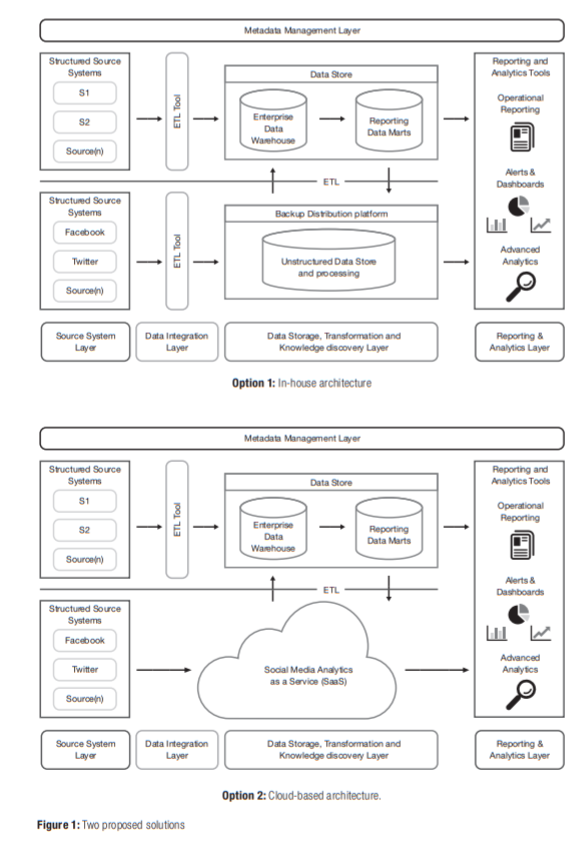
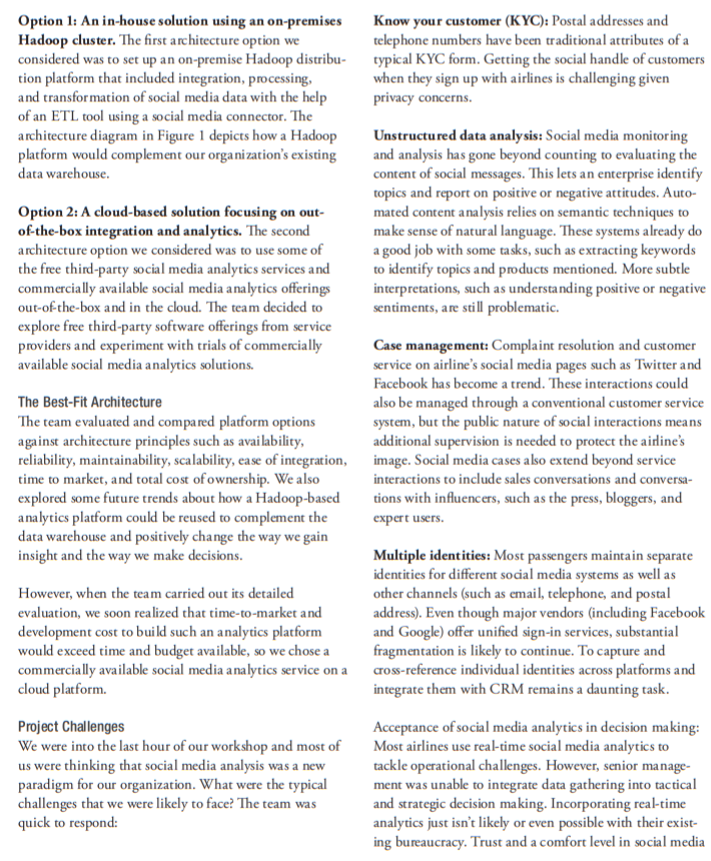
Introduction Executive management was shaken up by one customer's tweet. That unhappy customer began by simply writing "Don't fly (@thisairline) ... customer service is horren- dous." However, he went on to spend $1,000 to promote his tweet until it went viral in New York and the United Kingdom, two major markets for the airline. The reason? He was unhappy his father's luggage had been misplaced and that the airline's customer service did not respond immediately to his complaint on their Twitter page. As head of customer service, I was familiar with customer complaintsfrom delayed flights to cleanliness issues in aircraft toilets. However, this incident was a game changer; its impact and visibility had not been seen before. In addition to the unprecedented negative publicity on social media, television stations and news- papers across the world reported it. In the aftermath, the assignment from the CEO was loud and clear-change the way we use social media. The Business Problem For all intents and purposes, the customer's effort suc- ceeded. The airline had to publicly apologize for its delay in responding to the incident and ensured subsequently that his bag was delivered. Unfortunately, the story had The unhappy customer began already been shared by dozens of media outlets, doing damage to the airline's brand. by simply writing Don't fly I attended a workshop organized by the CIO that [@thisairline) ... customer service included the head of IT and business services, a leadership team from CRM and finance, an innovation is horrendous." evangelist and technology advisor from our IT partner, and a few of the brightest BI solution architects from our Rudimentary analysis of popular sites such as Twitter and firm. In the context of the incident, the question was, "Is Facebook confirmed our understanding. It was evident social media a problem for us now?" Did the customer that there was now a need to understand customer service representative make an error? How could the feedback and comments on various social platforms to customer service team reach out to various blogs, ascertain customer sentiment toward our services. websites, and social media platforms to get the current pulse of the customer? Above all, as head of the customer This information, if analyzed correctly and delivered service team, what would I propose to solve the problem? on time, would have made a considerable difference in avoiding damage to the airline's brand. However, the Our IT partner took charge of the meeting and started mechanism to scan, filter, understand, and analyze this a presentation with a holistic question: Do we know our vast store of data on the Internet was beyond our under- digital-age customers? standing and definitely required a stronger technology backbone to decode this mammoth data into tangible, They listed what we did know about these customers: comprehensive, and consumable data sets. They check their social media accounts more than The Solution their email accounts in a day It was clear in the first few minutes of the workshop that there should be a technology solution to the problem. They want an immediate response; if any website page After brainstorming with a team from a diverse techni- takes more than a few seconds to load, they won't wait cal and functional background, along with the airline industry knowledge and experience our IT partner They expect the same response time from the customer brought, we had answers to a few important questions by service department the end of the workshop They have no patience for promotions or offers that How Does the Airline Industry Use Social Media? don't target them directly, especially when they've Airlines across the globe leverage social media to create provided personal information buzz around products and services, respond to a crisis or complaint, generate revenue, and foster loyalty among They use smartphones to surf various online reviews customers. and likely know as much as we do about our business's products and services, as well as our strengths and Buzz: Adopting Facebook, Twitter, YouTube, and other weaknesses social media platforms allows the business to reach out to a large number of current and potential customers. When interaction moves between channels (chat, Facebook, call center, etc.), they expect the processes Crisis and complaints: Crisis response on social media and policies to be consistent across these channels and can include updating customers about situations that may for each one to pick up where the other left off directly or indirectly affect their flight, responding to BUSINESS INTELLIGENCE JOURNAL. VOL. 21, NO. 3 49 their inquiries in real time, or assuring compensation if significant change in brand perception within a short they are negatively affected by issues that arise. period so that corrective actions could be taken. Revenue: Companies can generate faster and greater In addition, regular trend reports about brand perception revenues by promoting special deals via social media were generated and would be used for service improve platforms. ments as well as for targeted advertisements on social media platforms. Loyalty: Loyalty among customers can be fostered by participation in discussions and constant interactions to Use Case Two: Social media dashboard allow customers to feel personally connected to the brand Once the system for monitoring and alerts was estab- and relate positively to it. lished, the team set about creating a dashboard to relay the information Social media has quickly become There are millions of fans following social media sites and the medium of choice for registering providing their responses to fight, products and services, marketing campaigns, and brand perceptions. A social complaints and grievances. media dashboard uses this information to provide quick and valuable input to various marketing, advertisement, These use cases illustrate how analytics contributed to and operations teams to improve, enhance, and optimize each of the four business goals. their respective areas. Use Case One: Brand monitoring and near-real-time alerts Analytics from social media can also help identify Social media has quickly become the medium of choice customer perceptions of a competitor's offerings, their for registering complaints and grievances, as consumers propensity to switch, and general trends and thoughts vent their frustrations via means inherently designed to about other popular requests. give them a voice. Use Case Three: Campaign designs and targeted Customers know that social media networks can generate marketing more attention and faster responses than contacting a Airlines have large customer bases following them on call center. Therefore, it is essential for airlines to act Facebook where they conduct campaign marketing. Each swiftly and perform any necessary damage control before campaign receives likes and comments from existing negative campaigns are detected on social media. and potential customers. Customer's public profiles and preferences can be used in campaign designs and for For this use case, the business drivers were to measure targeted marketing. brand performance, identify brand advocates, and improve customer service on social media, as well as The key business drivers for this use case were to reach plan swift and timely damage control activities in case of beyond existing customers and traditional technology negative campaigns. audiences and target customers by providing relevant offers by connecting CRM with social data from social The proposed solution used automated monitoring of collaboration channels. blogs, media websites, and social media platforms at specified intervals. The results were then compared with In addition, it would help the marketing department to historical brand sentiment statistics. Triggers were created design and enhance effective marketing campaigns based to alert senior management in near real time if there was on the quantitative and qualitative feedback received about the campaign Solution Components Measures of Success As part of our solution, we decided to: In order to measure the success of our project, we had to develop key performance indicators. We focused first Collect users' public profile information on KPIs for social media that would spur innovation, measure dialogue with our customers, measure advocacy, Collect users' likes and comments about specific and measure our customer support. marketing campaigns on the airline's Facebook page The team collaborated with the finance, customer Identify existing and potential customers by running support, sales, and marketing departments and developed the information through our current CRM system KPIs (including detailed definitions) to help us analyze social media and get meaningful insights to various Send targeted emails or reach out on customers' social departments within our organization. profiles with customized offers based on customers comments, likes, and preferences Architecture Options The team addressed the challenging task of understand- Pass the results of our sentiment analysis on comments ing the latest technology trends in the market, analyzing to our campaign design team the available technologies, and suggesting architecture options tailored to our requirements. In addition, our campaign design team would modify existing campaigns or design new campaigns based on We considered the best architectural practices to evaluate our sentiment analysis. our options based on how they were used in our enter- prise and to learn from similar assignments. At a high The Project level, two architecture options were proposed and we used There were three main components to our project: comparative analysis of the various architecture principles determining our measures of success, selecting the most to help us make a decision. appropriate architecture, and examining the challenges and opportunities this project would present. KPIS TO MEASURE HOW WE KPIS FOR MEASURING SPURRED INNOVATION DIALOGUE Topic trends measure key brand Share of voice indicates how a producVservice topics identified brand stacks up compared to its by monitoring social media competitors in the airline industry conversations Sentiment ratio measures the Audience engagement shows the positive, neutral, and negative brand amount of the audience engaged mentions about specific products or with the airline in comparison to its services over a given time period total viewership KPIS FOR MEASURING ADVOCACY Active advocates measures the number of individuals generating posifive sentiment over a given time frame Advocate influence indicates a unique advocate's influence across one or more social media channels KPIS FOR MEASURING CUSTOMER SUPPORT Resolution rate is the percentage of Customer service inquiries resolved satisfactorily using social media channels Satisfaction score indicates the relative satisfaction of customers by dividing positive customer feedback by all customer feedback collected using airline's social media channels Idea impact measures the rate of interaction, engagement, and positive sentiment generated from a new product or service idea Conversation reach reveals the Advocacy impact measures the number of unique visitors who direct or indirect contributions of participate in a specific brand/issue/ advocacy on conversions topic conversation across one or more social media channels Table 1: Initial metrics for project success. Metadata Management Layer Structured Source Systems Reporting and Analytics Tools Data Store Operational Reporting Enterprise Data Warehouse Reporting Data Marts Sourcoin) ETL + Alerts & Dashboards Structured Source Systems Backup Distribution platform Facebook ETL Tool Advanced Analytics Twitter ! Unstructured Data Store and processing Source) Source System Layer Data Integration Layer Data Storage, Transformation and Knowledge discovery Layer Reporting & Analytics Layer Option 1: In-house architecture Metadata Management Layer Structured Source Systems Data Store Reporting and Analytics Tools S1 ETL Tool Operational Reporting S2 - Enterprise Data Reporting Data Marts Warehouse Sourcen Alerts & Dashboards Structured Source Systems Facebook Twitter Advanced Analytics Social Media Analytics as a Service (SaaS) Sourcein) Source System Layer Data Integration Layer Data Storage, Transformation and Knowledge discovery Layer Reporting & Analytics Layer Option 2: Cloud-based architecture. Figure 1: Two proposed solutions Option 1: An in-house solution using an on-premises Know your customer (KYC): Postal addresses and Hadoop cluster. The first architecture option we telephone numbers have been traditional attributes of a considered was to set up an on-premise Hadoop distribu- typical KYC form. Getting the social handle of customers tion platform that included integration, processing, when they sign up with airlines is challenging given and transformation of social media data with the help privacy concerns. of an ETL tool using a social media connector. The architecture diagram in Figure 1 depicts how a Hadoop Unstructured data analysis: Social media monitoring platform would complement our organization's existing and analysis has gone beyond counting to evaluating the data warehouse content of social messages. This lets an enterprise identify topics and report on positive or negative attitudes. Auto- Option 2: A cloud-based solution focusing on out- mated content analysis relies on semantic techniques to of-the-box integration and analytics. The second make sense of natural language. These systems already do architecture option we considered was to use some of a good job with some tasks, such as extracting keywords the free third-party social media analytics services and to identify topics and products mentioned. More subtle commercially available social media analytics offerings interpretations, such as understanding positive or negative out-of-the-box and in the cloud. The team decided to sentiments, are still problematic. explore free third-party software offerings from service providers and experiment with trials of commercially Case management: Complaint resolution and customer available social media analytics solutions. service on airline's social media pages such as Twitter and Facebook has become a trend. These interactions could The Best-Fit Architecture also be managed through a conventional customer service The team evaluated and compared platform options system, but the public nature of social interactions means against architecture principles such as availability, additional supervision is needed to protect the airline's reliability, maintainability, scalability, ease of integration, image. Social media cases also extend beyond service time to market, and total cost of ownership. We also interactions to include sales conversations and conversa- explored some future trends about how a Hadoop-based tions with influencers, such as the press, bloggers, and analytics platform could be reused to complement the expert users. data warehouse and positively change the way we gain insight and the way we make decisions. Multiple identities: Most passengers maintain separate identities for different social media systems as well as However, when the team carried out its detailed other channels (such as email, telephone, and postal evaluation, we soon realized that time-to-market and address). Even though major vendors (including Facebook development cost to build such an analytics platform and Google) offer unified sign-in services, substantial would exceed time and budget available, so we chose a fragmentation is likely to continue. To capture and commercially available social media analytics service on a CROSS-reference individual identities across platforms and cloud platform. integrate them with CRM remains a daunting task. Project Challenges Acceptance of social media analytics in decision making: We were into the last hour of our workshop and most of Most airlines use real-time social media analytics to us were thinking that social media analysis was a new tackle operational challenges. However, senior manage- paradigm for our organization. What were the typical ment was unable to integrate data gathering into tactical challenges that we were likely to face? The team was and strategic decision making. Incorporating real-time quick to respond: analytics just isn't likely or even possible with their exist- ing bureaucracy. Trust and a comfort level in social media









 Study Help