







Question: Read the Richard the Information Systems Executive case study, then discuss the following questions: 1. What do Richard's experiences indicate about the process of career
Read the "Richard the Information Systems Executive" case study, then discuss the following questions:
1. What do Richard's experiences indicate about the process of career management?
2. What environmental factors have affected Richard's career?
3. When Richard decided to leave his initial employer, what career trade-offs, either consciously or subconsciously, did he make?
4. Do you believe that Richard has done a good job of managing his career? Why or why not?
5. If Richard sought your help, what advice would give him in terms of the future management of his career?
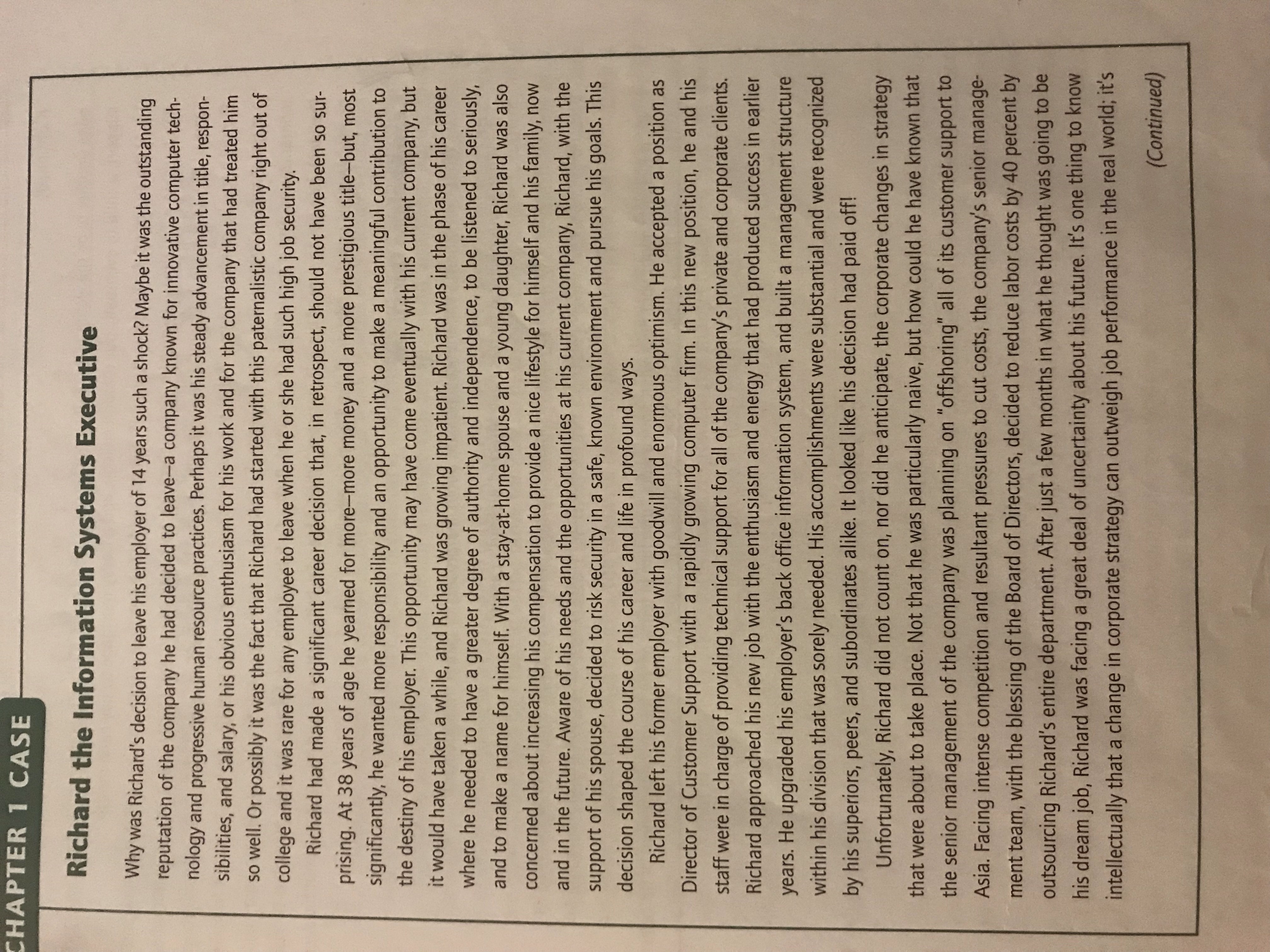
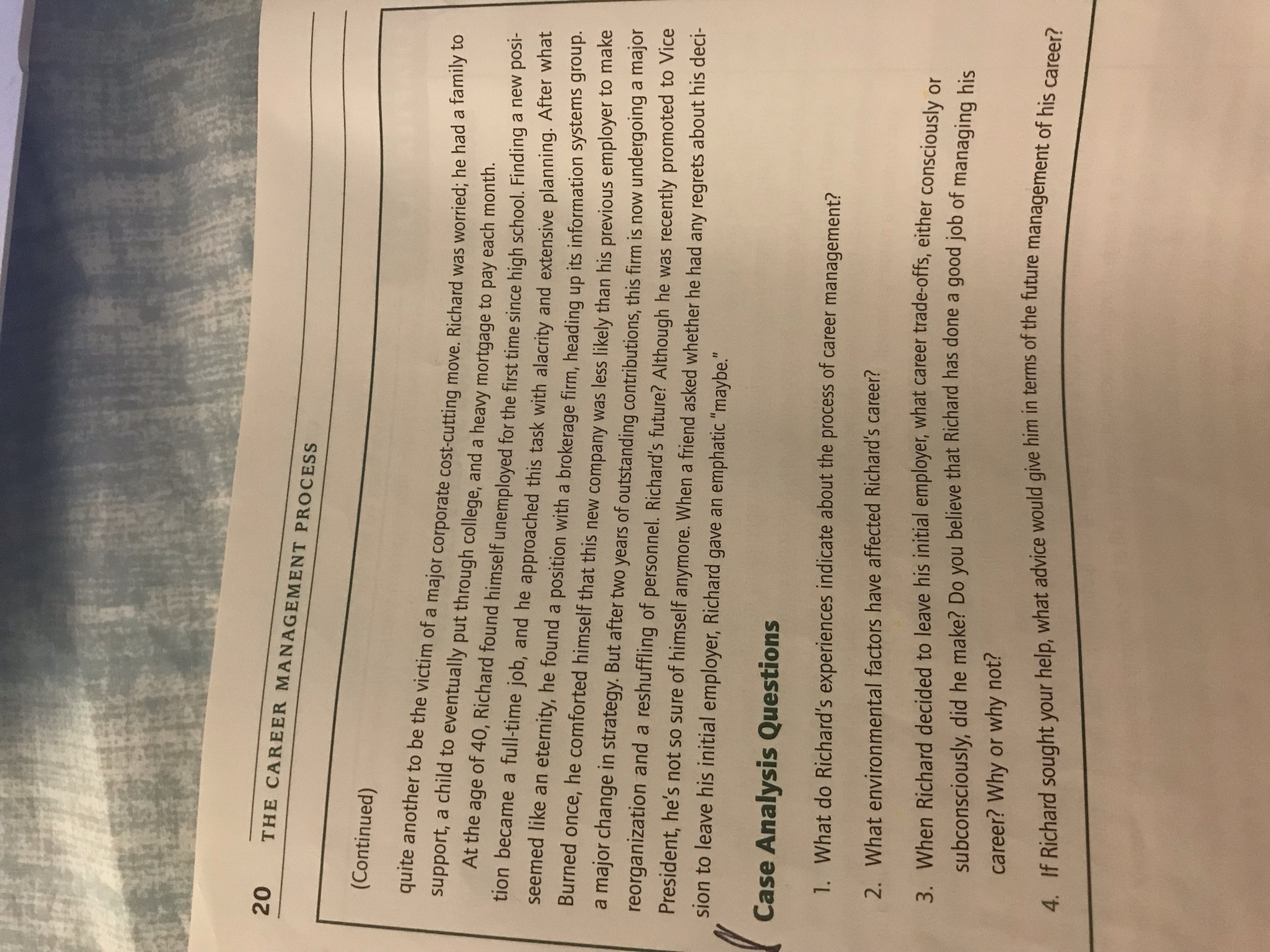
CHAPTER 1 CASE Richard the Information Systems Executive Why was Richard's decision to leave his employer of 14 years such a shock? Maybe it was the outstanding reputation of the company he had decided to leave-a company known for innovative computer tech- nology and progressive human resource practices. Perhaps it was his steady advancement in title, respon sibilities, and salary, or his obvious enthusiasm for his work and for the company that had treated him so well. Or possibly it was the fact that Richard had started with this paternalistic company right out of college and it was rare for any employee to leave when he or she had such high job security. Richard had made a significant career decision that, in retrospect, should not have been so sur- prising. At 38 years of age he yearned for more-more money and a more prestigious title-but, most significantly, he wanted more responsibility and an opportunity to make a meaningful contribution to the destiny of his employer. This opportunity may have come eventually with his current company, but it would have taken a while, and Richard was growing impatient. Richard was in the phase of his career where he needed to have a greater degree of authority and independence, to be listened to seriously, and to make a name for himself. With a stay-at-home spouse and a young daughter, Richard was also concerned about increasing his compensation to provide a nice lifestyle for himself and his family, now and in the future. Aware of his needs and the opportunities at his current company, Richard, with the support of his spouse, decided to risk security in a safe, known environment and pursue his goals. This decision shaped the course of his career and life in profound ways. Richard left his former employer with goodwill and enormous optimism. He accepted a position as Director of Customer Support with a rapidly growing computer firm. In this new position, he and his staff were in charge of providing technical support for all of the company's private and corporate clients. Richard approached his new job with the enthusiasm and energy that had produced success in earlier years. He upgraded his employer's back office information system, and built a management structure within his division that was sorely needed. His accomplishments were substantial and were recognized by his superiors, peers, and subordinates alike. It looked like his decision had paid off! Unfortunately, Richard did not count on, nor did he anticipate, the corporate changes in strategy that were about to take place. Not that he was particularly naive, but how could he have known that the senior management of the company was planning on "offshoring" all of its customer support to Asia. Facing intense competition and resultant pressures to cut costs, the company's senior manage- ment team, with the blessing of the Board of Directors, decided to reduce labor costs by 40 percent by outsourcing Richard's entire department. After just a few months in what he thought was going to be his dream job, Richard was facing a great deal of uncertainty about his future. It's one thing to know intellectually that a change in corporate strategy can outweigh job performance in the real world; it's (Continued)20 THE CAREER MANAGEMENT PROCESS (Continued) quite another to be the victim of a major corporate cost-cutting move. Richard was worried; he had a family to support, a child to eventually put through college, and a heavy mortgage to pay each month. At the age of 40, Richard found himself unemployed for the first time since high school. Finding a new posi- tion became a full-time job, and he approached this task with alacrity and extensive planning. After what seemed like an eternity, he found a position with a brokerage firm, heading up its information systems group. Burned once, he comforted himself that this new company was less likely than his previous employer to make a major change in strategy. But after two years of outstanding contributions, this firm is now undergoing a major reorganization and a reshuffling of personnel. Richard's future? Although he was recently promoted to Vice President, he's not so sure of himself anymore. When a friend asked whether he had any regrets about his deci- sion to leave his initial employer, Richard gave an emphatic "maybe." Case Analysis Questions 1. What do Richard's experiences indicate about the process of career management? 2. What environmental factors have affected Richard's career? 3. When Richard decided to leave his initial employer, what career trade-offs, either consciously or subconsciously, did he make? Do you believe that Richard has done a good job of managing his career? Why or why not? 4. If Richard sought your help, what advice would give him in terms of the future management of his career
Step by Step Solution
There are 3 Steps involved in it

Get step-by-step solutions from verified subject matter experts
 Study Help