







Question: Requested daily quantity for a product is 1050 units (defect free). The production times (given as normal time) of the two operations respectively are as
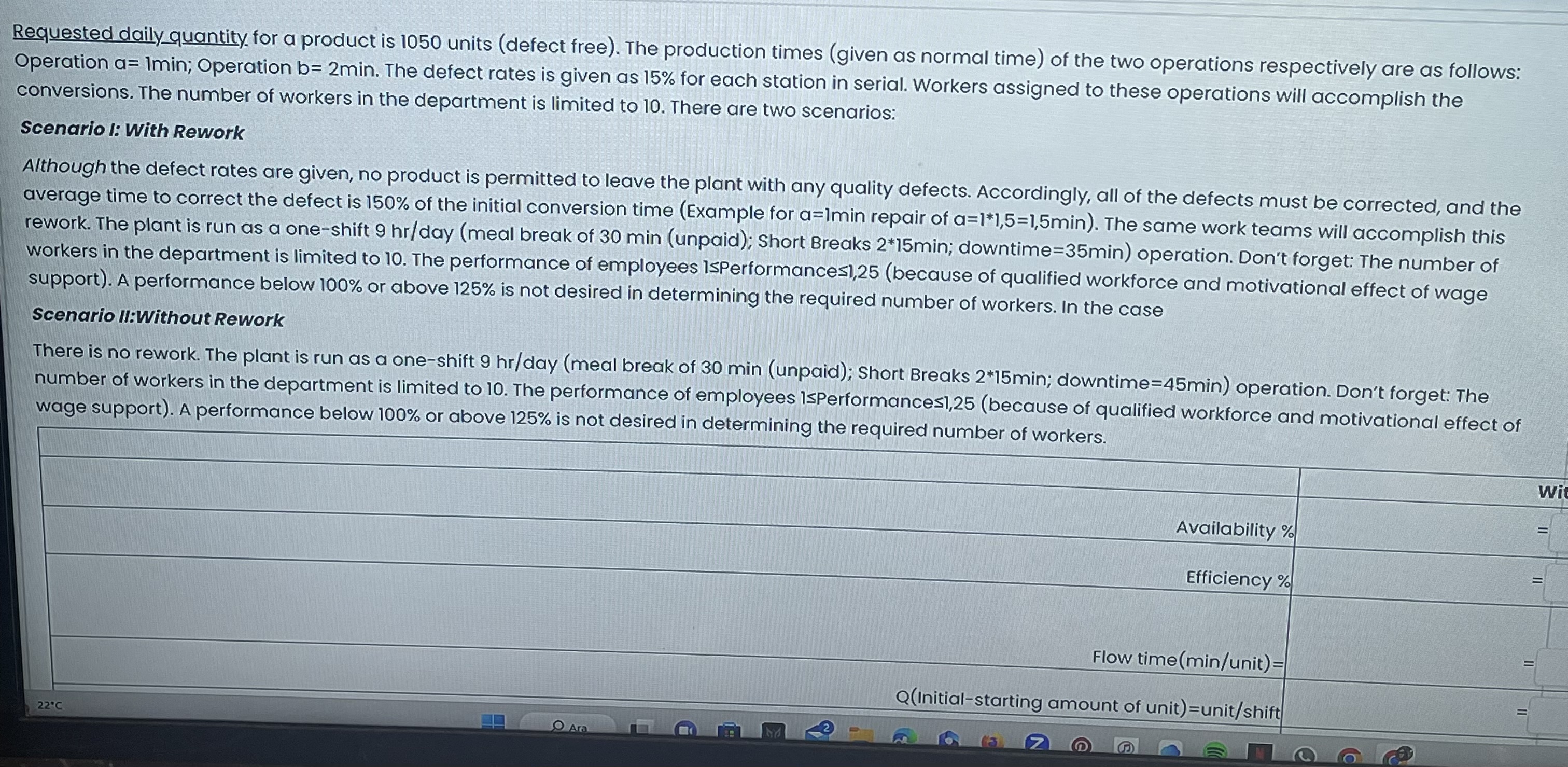
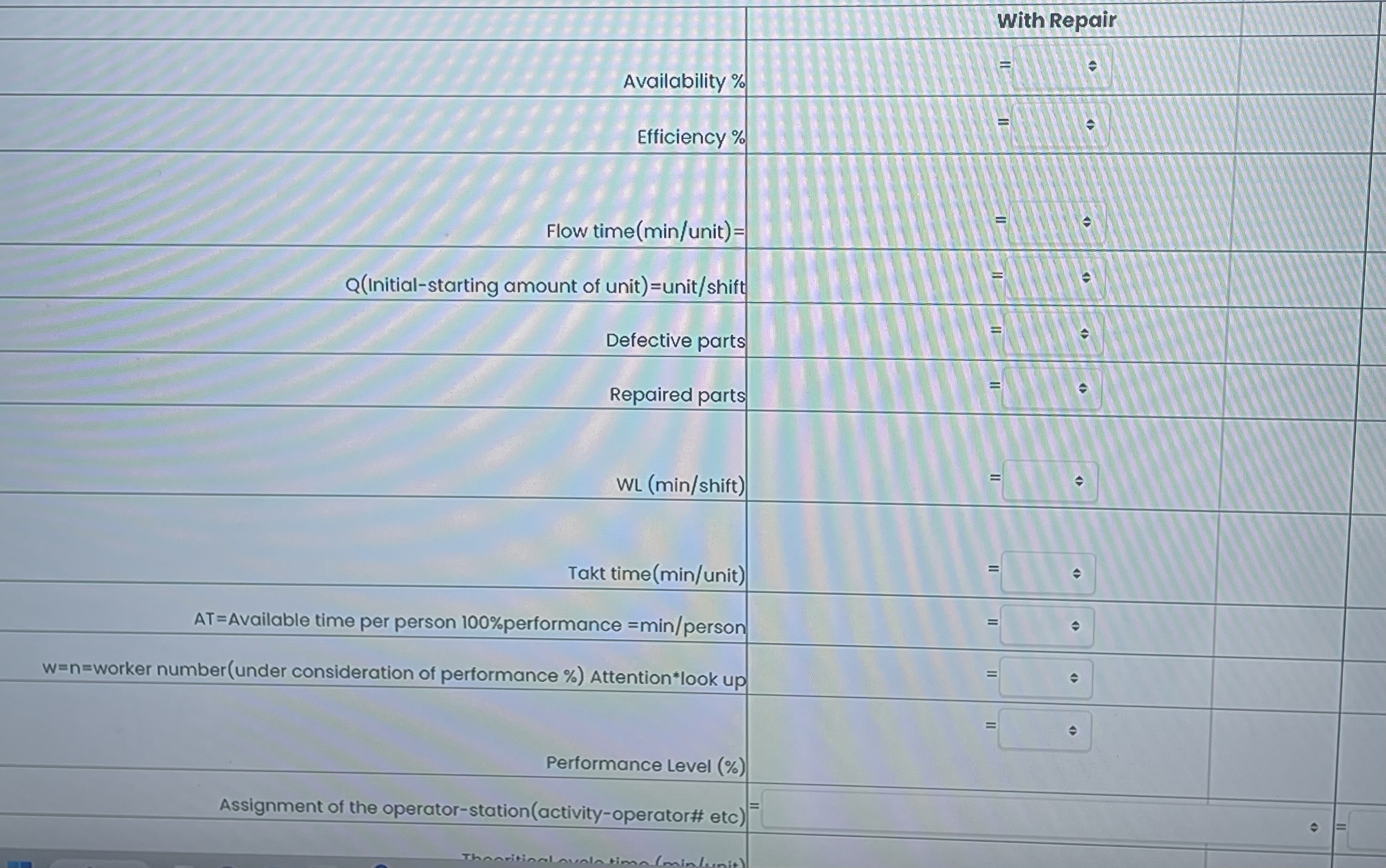
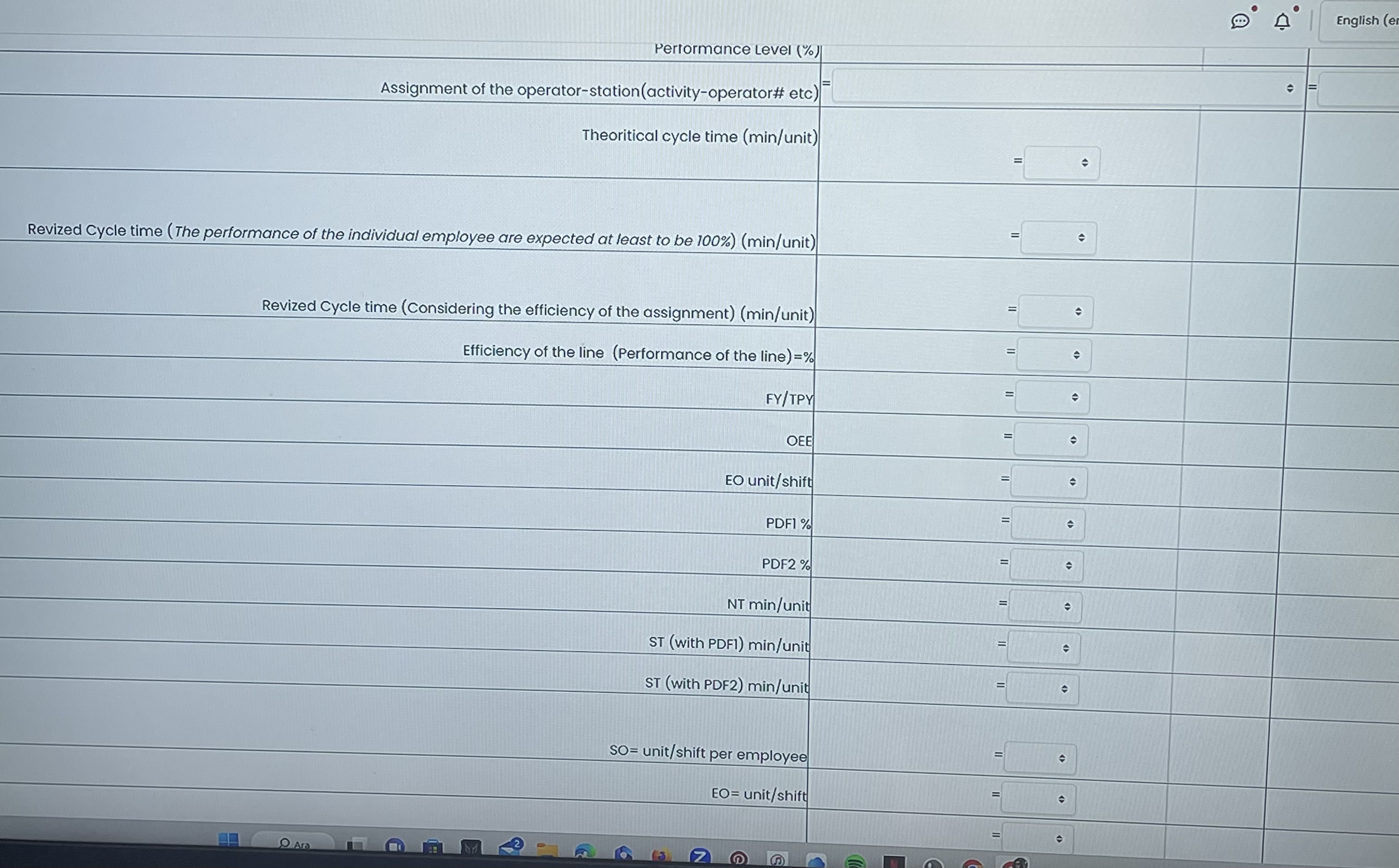
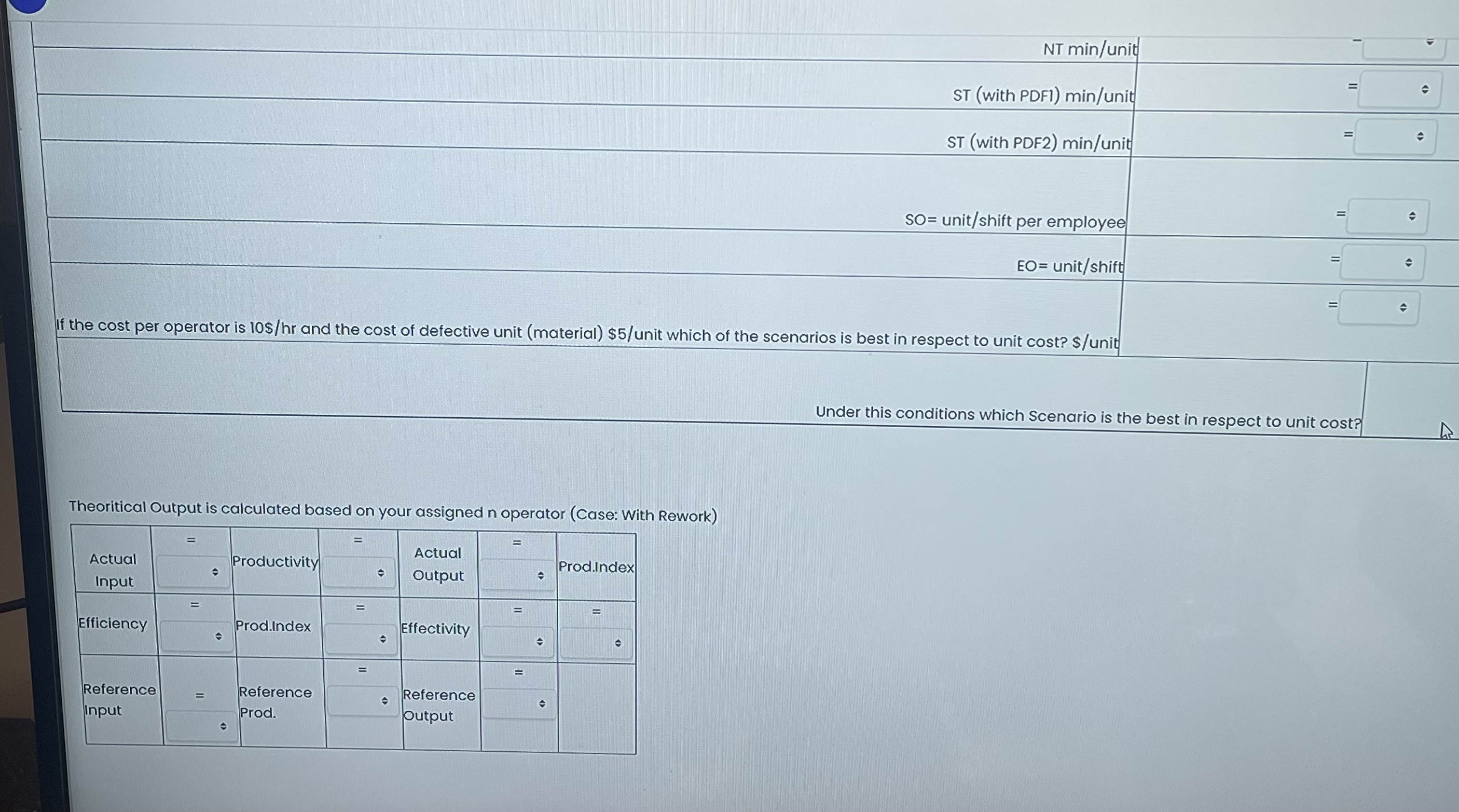
Requested daily quantity for a product is 1050 units (defect free). The production times (given as normal time) of the two operations respectively are as follows: Operation a=1min; Operation b=2min. The defect rates is given as 15% for each station in serial. Workers assigned to these operations will accomplish the conversions. The number of workers in the department is limited to 10. There are two scenarios: Scenario l: with Rework Although the defect rates are given, no product is permitted to leave the plant with any quality defects. Accordingly, all of the defects must be corrected, and the average time to correct the defect is 150% of the initial conversion time (Example for a=1min repair of a=11,5=1,5min ). The same work teams will accomplish this rework. The plant is run as a one-shift 9hr/ day (meal break of 30min (unpaid); Short Breaks 215min; downtime =35min ) operation. Don't forget: The number of workers in the department is limited to 10. The performance of employees 1sperformances1,25 (because of qualified workforce and motivational effect of wage support). A performance below 100% or above 125% is not desired in determining the required number of workers. In the case Scenario ll:without Rework There is no rework. The plant is run as a one-shift 9hr/ day (meal break of 30min (unpaid); Short Breaks 215min; downtime=45min) operation. Don't forget: The wage support). A performance below is limited to 10. The performance of employees 1 Performances1,25 (because of qualified workforce and motivational effect of wage support). A performance below 100% or above 125% is not desired in determining the required number of work Theoritical Output is calculated based on your assigned n operator (Case: With Rework)
Step by Step Solution
There are 3 Steps involved in it

Get step-by-step solutions from verified subject matter experts
 Study Help