







Question: Requlred Informatlon PepsiCo's Diversification in 2 0 2 2 This case is ideal for a module on corporate diversification strategies. The case teaches well because
Requlred Informatlon
PepsiCo's Diversification in
This case is ideal for a module on corporate diversification strategies. The case teaches well because the majority of
students are likely to be regular consumers of PepsiCo's products. Class debate should center on whether PepsiCo's
diversification strategy has contributed to increased shareholder value. Analysis of the case data will lead students to
conclude that PepsiCo's top managers have built a fine collection of businesses capable of delivering impressive earnings
and cash flows. Students will recognize the success Pepsico management has achieved in exploiting strategic fit
opportunities across business units, acquiring new businesses to strengthen the overall quality of its business line up and
increasing revenues and earnings in international markets. The issue in is what further modifications to PepsiCo's
corporate strategy are needed to increase shareholder value.
Before completing these exercises, be sure to read the Pepsico Case.
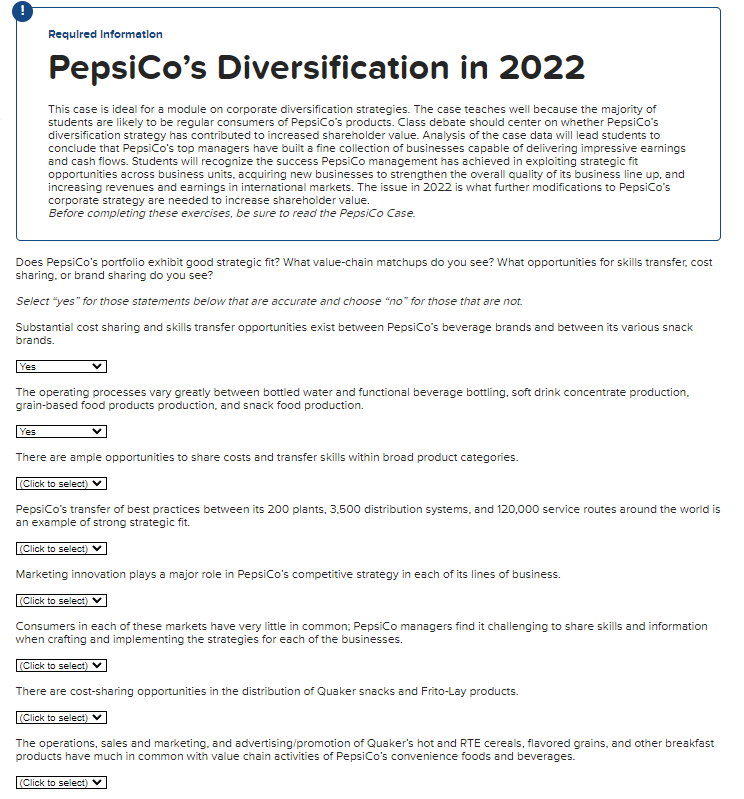
Does PepsiCo's portfolio exhibit good strategic fit? What valuechain matchups do you see? What opportunities for skills transfer, cost
sharing, or brand sharing do you see?
Select "yes" for those statements below that are accurate and choose no for those that are not.
Substantial cost sharing and skills transfer opportunities exist between PepsiCo's beverage brands and between its various snack
brands.
The operating processes vary greatly between bottled water and functional beverage bottling. soft drink concentrate production.
grainbased food products production, and snack food production.
There are ample opportunities to share costs and transfer skills within broad product categories.
PepsiCo's transfer of best practices between its plants, distribution systems, and service routes around the world is
an example of strong strategic fit.
Marketing innovation plays a major role in PepsiCo's competitive strategy in each of its lines of business.
Consumers in each of these markets have very little in common; PepsiCo managers find it challenging to share skills and information
when crafting and implementing the strategies for each of the businesses.
There are costsharing opportunities in the distribution of Quaker snacks and FritoLay products.
The operations, sales and marketing, and advertisingpromotion of Quaker's hot and RTE cereals, flavored grains, and other breakfast
products have much in common with value chain activities of PepsiCo's convenience foods and beverages.
Step by Step Solution
There are 3 Steps involved in it
1 Expert Approved Answer
Step: 1 Unlock

Question Has Been Solved by an Expert!
Get step-by-step solutions from verified subject matter experts
Step: 2 Unlock
Step: 3 Unlock
 Study Help