







Question: Ringsmith Company is considering two different processes to make its product-process 1 and process 2. Process 1 requires Ringsmith to manufacture subcomponents of the product
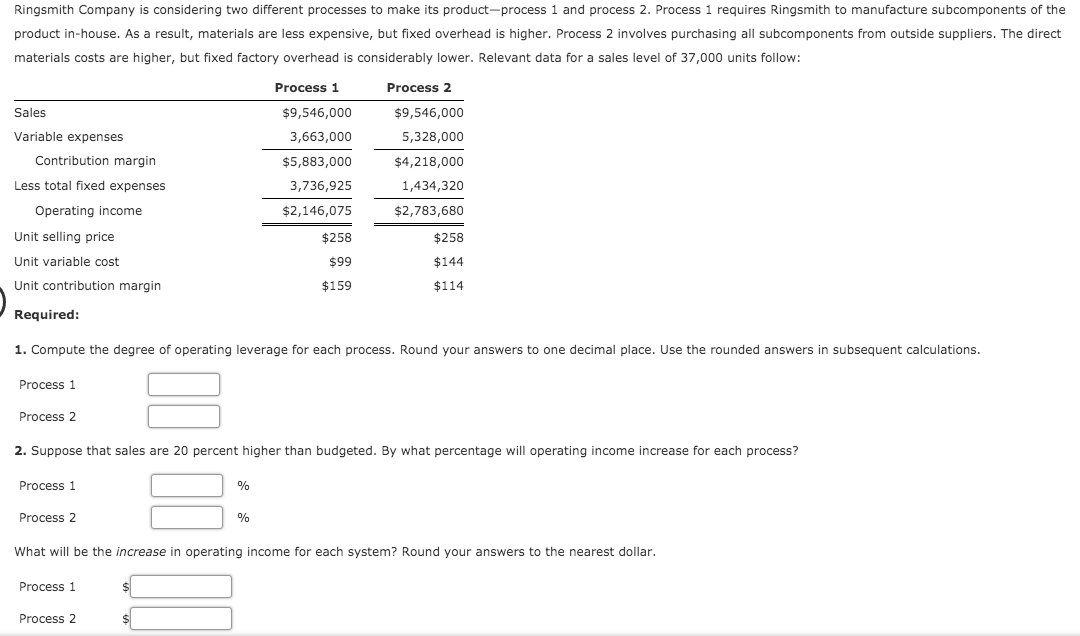
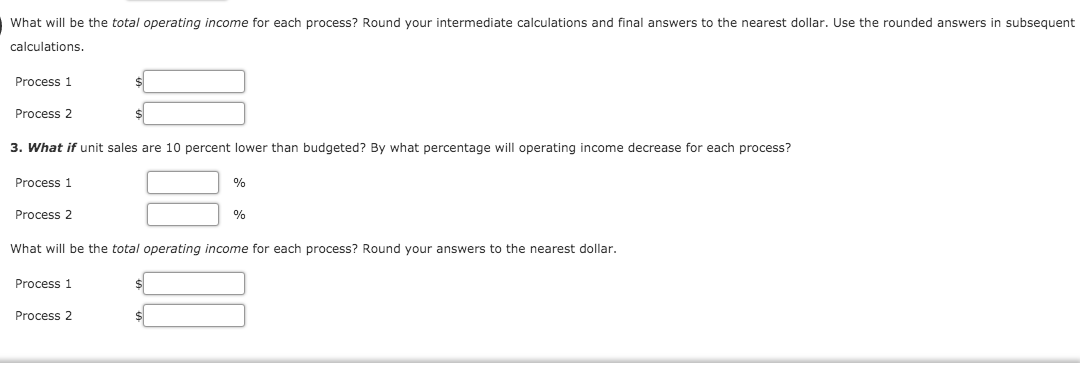
Ringsmith Company is considering two different processes to make its product-process 1 and process 2. Process 1 requires Ringsmith to manufacture subcomponents of the product in-house. As a result, materials are less expensive, but fixed overhead is higher. Process 2 involves purchasing all subcomponents from outside suppliers. The direct materials costs are higher, but fixed factory overhead is considerably lower. Relevant data for a sales level of 37,000 units follow: Sales Variable expenses Contribution margin Less total fixed expenses Operating income Unit selling price Unit variable cost Unit contribution margin Process 1 $9,546,000 3,663,000 $5,883,000 3,736,925 $2,146,075 $258 $99 $159 Process 2 $9,546,000 5,328,000 $4,218,000 1,434,320 $2,783,680 $258 $144 $114 Required: 1. Compute the degree of operating leverage for each process. Round your answers to one decimal place. Use the rounded answers in subsequent calculations. Process 1 Process 2 2. Suppose that sales are 20 percent higher than budgeted. By what percentage will operating income increase for each process? Process 1 % Process 2 What will be the increase in operating income for each system? Round your answers to the nearest dollar. Process 1 $ Process 2 What will be the total operating income for each process? Round your intermediate calculations and final answers to the nearest dollar. Use the rounded answers in subsequent calculations. Process 1 Process 2 3. What if unit sales are 10 percent lower than budgeted? By what percentage will operating income decrease for each process? Process 1 % Process 2 What will be the total operating income for each process? Round your answers to the nearest dollar. Process 1 Process 2
Step by Step Solution
There are 3 Steps involved in it

Get step-by-step solutions from verified subject matter experts
 Study Help