







Question: Set as interpreter #!/usr/bin/python3 from random import randrange def RandomizedPartition(array, low, high):|| Implement Randomized partitioning from Cormen book 20% Points will be deducted if you
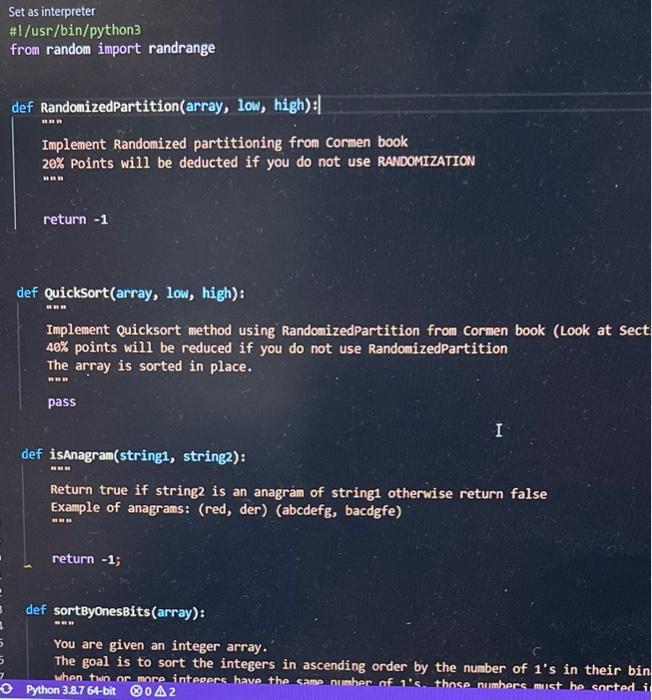
Set as interpreter #!/usr/bin/python3 from random import randrange def RandomizedPartition(array, low, high):|| Implement Randomized partitioning from Cormen book 20% Points will be deducted if you do not use RANDOMIZATION return -1 def Quicksort(array, low, high): Implement Quicksort method using RandomizedPartition from Cormen book (Look at Sect 40% points will be reduced if you do not use RandomizedPartition The array is sorted in place. pass I def isAnagram(string1, string2): BE Return true if string2 is an anagram of stringi otherwise return false Example of anagrams: (red, der) (abcdefg, bacdgfe) NH return -1; def sortByOnesBits(array): BB You are given an integer array. The goal is to sort the integers in ascending order by the number of 1's in their bin when two or more intepers have the same number of 1's those numbers must be sorted i Python 3.8.7 64-bit 0A2 5 7
Step by Step Solution
There are 3 Steps involved in it

Get step-by-step solutions from verified subject matter experts
 Study Help