







Question: Sets can be represented using bit strings. For example, the universal set U = {0, 1, 2, 3, 4, 5, 6, 7, 8} has
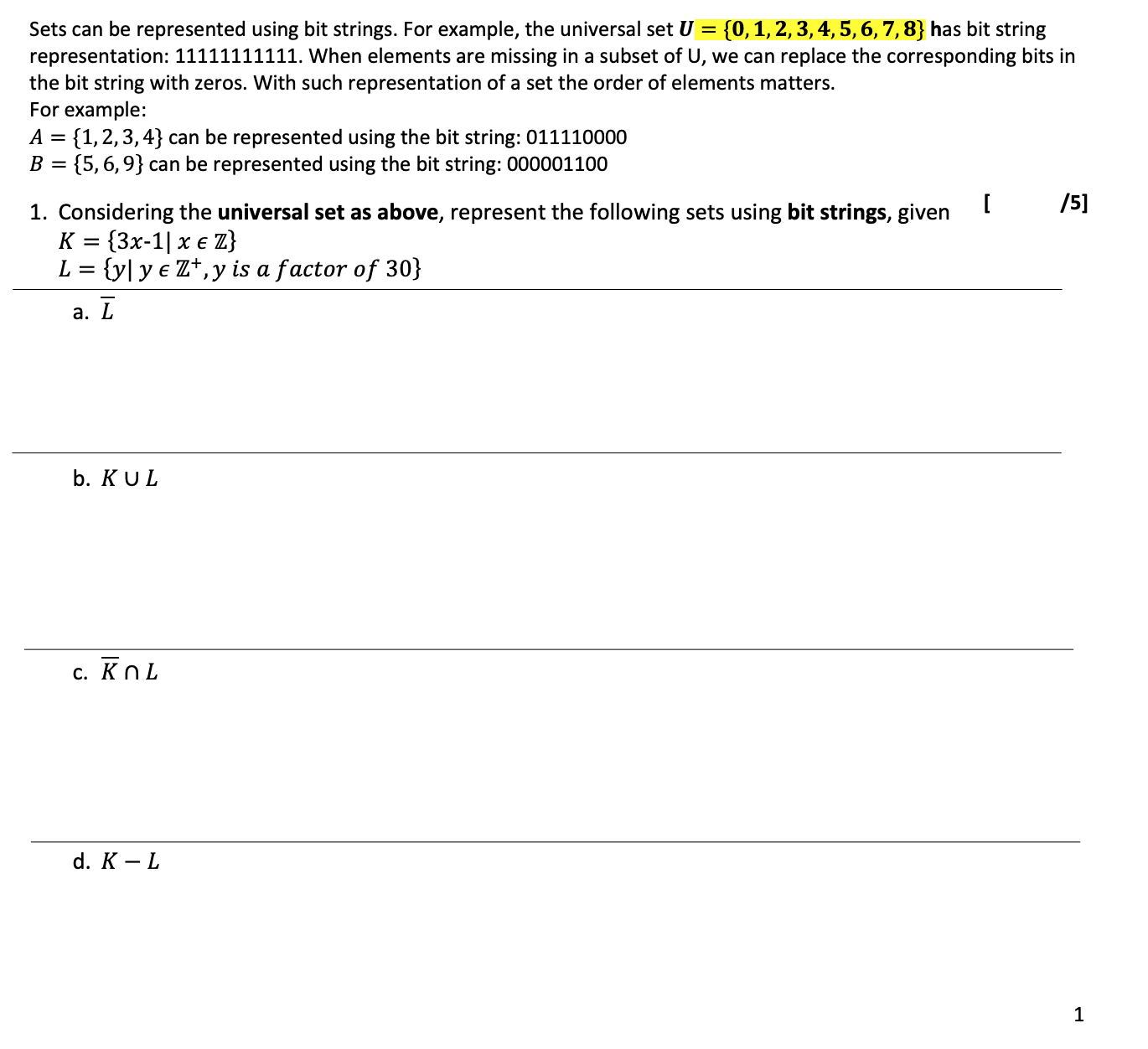
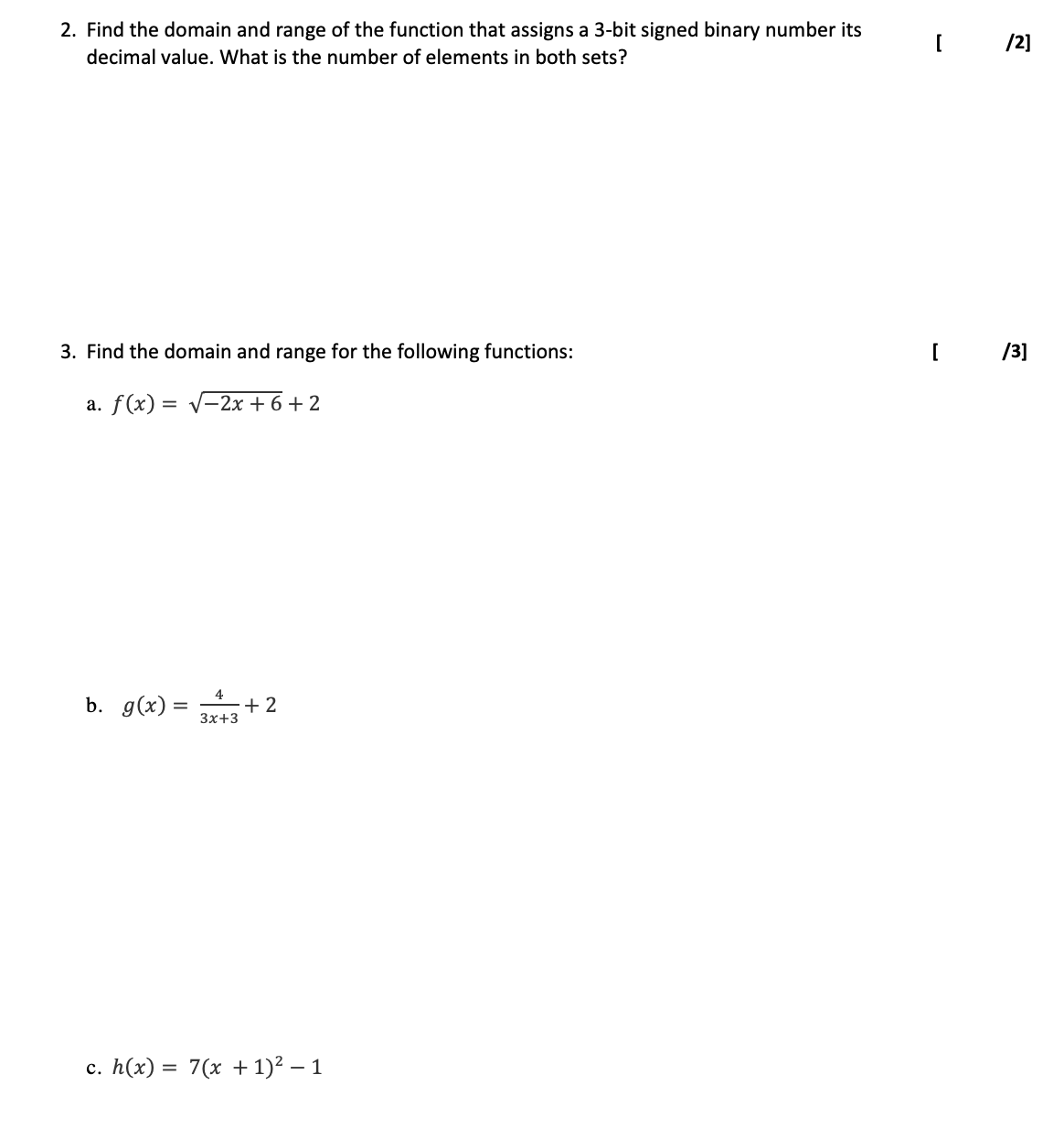
Sets can be represented using bit strings. For example, the universal set U = {0, 1, 2, 3, 4, 5, 6, 7, 8} has bit string representation: 11111111111. When elements are missing in a subset of U, we can replace the corresponding bits in the bit string with zeros. With such representation of a set the order of elements matters. For example: A = {1, 2, 3, 4} can be represented using the bit string: 011110000 B = {5,6,9} can be represented using the bit string: 000001100 1. Considering the universal set as above, represent the following sets using bit strings, given [ /5] K = {3x-1|x e Z} L = {y| y e Z+, y is a factor of 30} a. L b. KUL C. KOL d. K L 1 2. Find the domain and range of the function that assigns a 3-bit signed binary number its decimal value. What is the number of elements in both sets? /2] 3. Find the domain and range for the following functions: a. f(x)=-2x+6+2 [ /3] b. g(x) = 3x+3 +2 c. h(x) = 7(x+1) - 1
Step by Step Solution
There are 3 Steps involved in it

Get step-by-step solutions from verified subject matter experts
 Study Help