







Question: Solve a partition problem using dynamic programming use n positive integers sum of each subsequence is the same. For example, if the input were (10,
Solve a partition problem using dynamic programming use n positive integers sum of each subsequence is the same. For example, if the input were (10, 20, 30, 40, 40, 50, 80), with a total of m = 270, the three m/3 = 90 subsequences could be (10, 80), (20, 30, 40), and (40, 50). If the input were (20, 20, 30, 50), then no solution is possible even though the values yield a sum (m = 120) divisible by 3 (m/3 = 40). This is a two-dimensional DP situation.
if a solution exists then the output is:
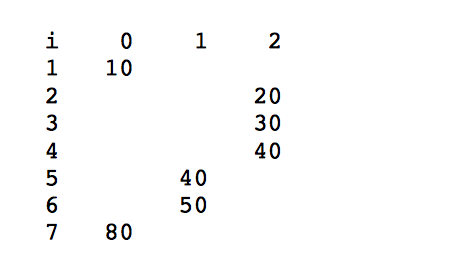 0
0
2 2 000 1 0 5 0 1 1 1 2 3 4 5 6 7 2 2 000 1 0 5 0 1 1 1 2 3 4 5 6 7
Step by Step Solution
There are 3 Steps involved in it
1 Expert Approved Answer
Step: 1 Unlock

Question Has Been Solved by an Expert!
Get step-by-step solutions from verified subject matter experts
Step: 2 Unlock
Step: 3 Unlock
 Study Help