Question: Special Problem 1: This problem is a continuation of Exercise 4.3 in Chapter 4 on page 96 of the textbook. You need to read the
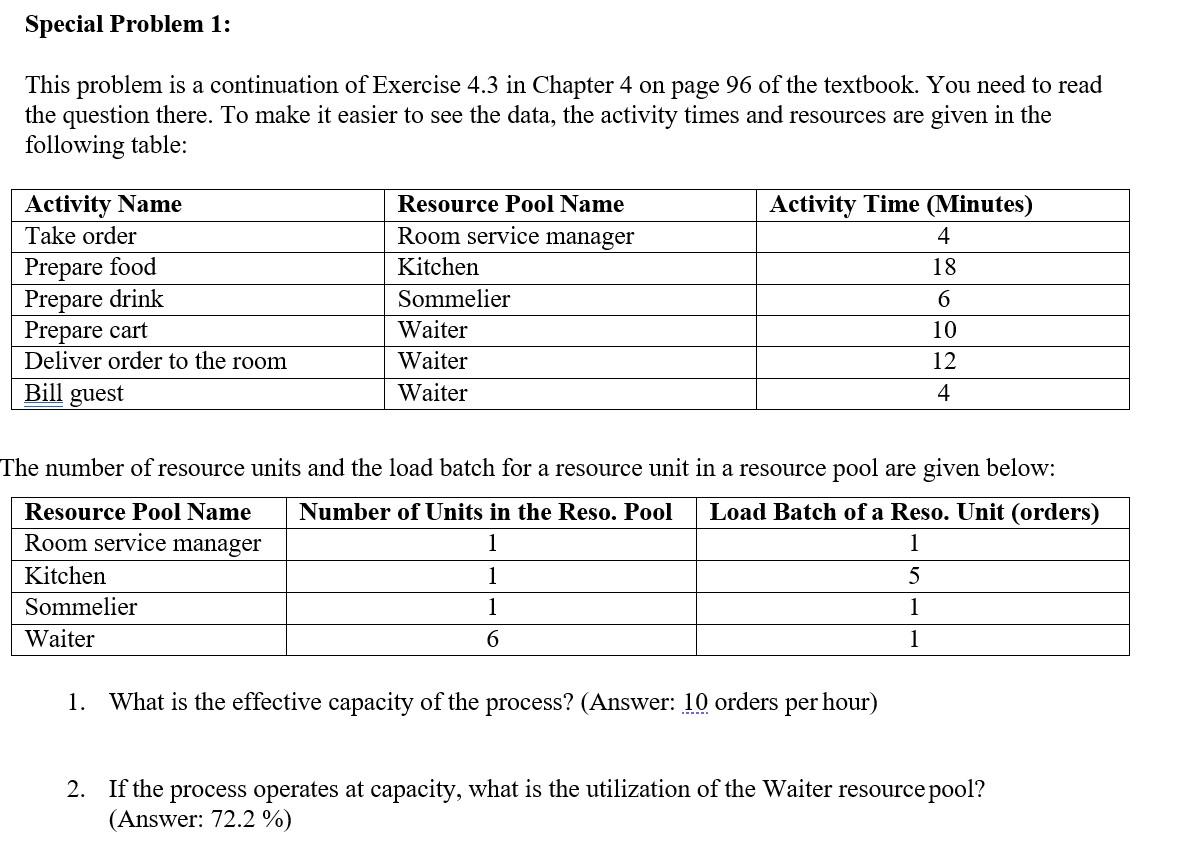
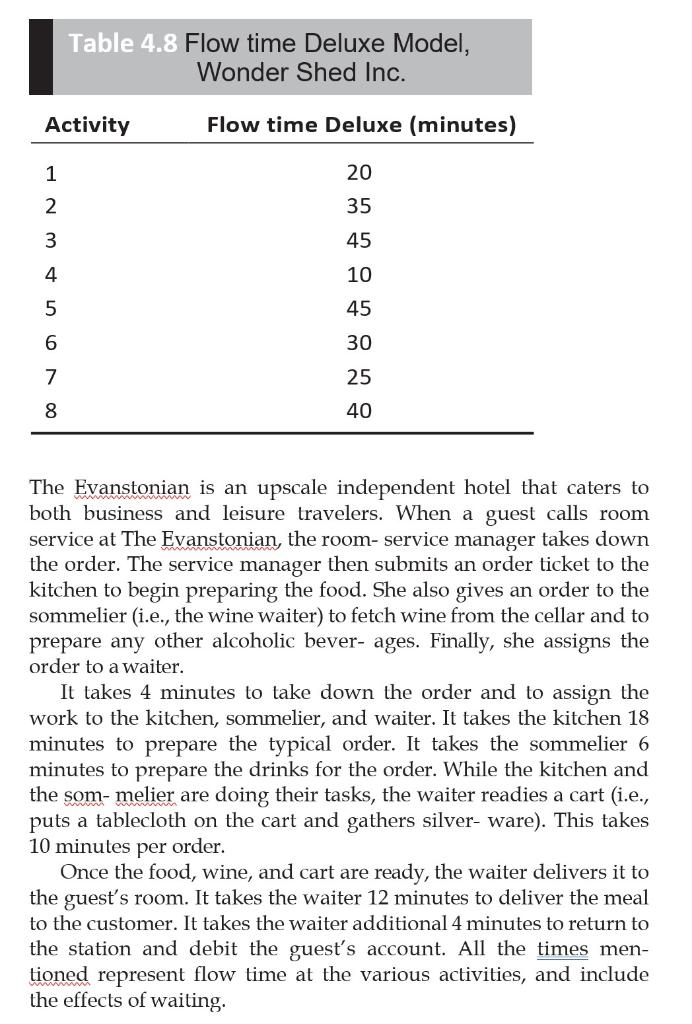
Special Problem 1: This problem is a continuation of Exercise 4.3 in Chapter 4 on page 96 of the textbook. You need to read the question there. To make it easier to see the data, the activity times and resources are given in the following table: Activity Name Take order Prepare food Prepare drink Prepare cart Deliver order to the room Resource Pool Name Room service manager Kitchen Sommelier Waiter Waiter Waiter Activity Time (Minutes) 4 18 6 10 12 4 Bill guest The number of resource units and the load batch for a resource unit in a resource pool are given below: Resource Pool Name Number of Units in the Reso. Pool Load Batch of a Reso. Unit (orders) Room service manager 1 1 Kitchen 1 5 Sommelier 1 1 Waiter 6 1 1. What is the effective capacity of the process? (Answer: 10 orders per hour) 2. If the process operates at capacity, what is the utilization of the Waiter resource pool? (Answer: 72.2%) Table 4.8 Flow time Deluxe Model, Wonder Shed Inc. Activity Flow time Deluxe (minutes) 1 20 2 35 3 45 4 10 5 45 6 30 7 25 8 40 The Evanstonian is an upscale independent hotel that caters to both business and leisure travelers. When a guest calls room service at The Evanstonian, the room-service manager takes down the order. The service manager then submits an order ticket to the kitchen to begin preparing the food. She also gives an order to the sommelier (i.e., the wine waiter) to fetch wine from the cellar and to prepare any other alcoholic bever- ages. Finally, she assigns the order to a waiter. It takes 4 minutes to take down the order and to assign the work to the kitchen, sommelier, and waiter. It takes the kitchen 18 minutes to prepare the typical order. It takes the sommelier 6 minutes to prepare the drinks for the order. While the kitchen and the som- melier are doing their tasks, the waiter readies a cart (i.e., puts a tablecloth on the cart and gathers silver-ware). This takes 10 minutes per order. Once the food, wine, and cart are ready, the waiter delivers it to the guest's room. It takes the waiter 12 minutes to deliver the meal to the customer. It takes the waiter additional 4 minutes to return to the station and debit the guest's account. All the times men- tioned represent flow time at the various activities, and include the effects of waiting. Special Problem 1: This problem is a continuation of Exercise 4.3 in Chapter 4 on page 96 of the textbook. You need to read the question there. To make it easier to see the data, the activity times and resources are given in the following table: Activity Name Take order Prepare food Prepare drink Prepare cart Deliver order to the room Resource Pool Name Room service manager Kitchen Sommelier Waiter Waiter Waiter Activity Time (Minutes) 4 18 6 10 12 4 Bill guest The number of resource units and the load batch for a resource unit in a resource pool are given below: Resource Pool Name Number of Units in the Reso. Pool Load Batch of a Reso. Unit (orders) Room service manager 1 1 Kitchen 1 5 Sommelier 1 1 Waiter 6 1 1. What is the effective capacity of the process? (Answer: 10 orders per hour) 2. If the process operates at capacity, what is the utilization of the Waiter resource pool? (Answer: 72.2%) Table 4.8 Flow time Deluxe Model, Wonder Shed Inc. Activity Flow time Deluxe (minutes) 1 20 2 35 3 45 4 10 5 45 6 30 7 25 8 40 The Evanstonian is an upscale independent hotel that caters to both business and leisure travelers. When a guest calls room service at The Evanstonian, the room-service manager takes down the order. The service manager then submits an order ticket to the kitchen to begin preparing the food. She also gives an order to the sommelier (i.e., the wine waiter) to fetch wine from the cellar and to prepare any other alcoholic bever- ages. Finally, she assigns the order to a waiter. It takes 4 minutes to take down the order and to assign the work to the kitchen, sommelier, and waiter. It takes the kitchen 18 minutes to prepare the typical order. It takes the sommelier 6 minutes to prepare the drinks for the order. While the kitchen and the som- melier are doing their tasks, the waiter readies a cart (i.e., puts a tablecloth on the cart and gathers silver-ware). This takes 10 minutes per order. Once the food, wine, and cart are ready, the waiter delivers it to the guest's room. It takes the waiter 12 minutes to deliver the meal to the customer. It takes the waiter additional 4 minutes to return to the station and debit the guest's account. All the times men- tioned represent flow time at the various activities, and include the effects of waiting









 Study Help