



Question: SPH 4U Name: Circular Motion Assignment 131 Include Free-Body Diagrams where necessary. Use the GRASS/GRESS Method. Include directions for all vector quantities unless otherwise stated.
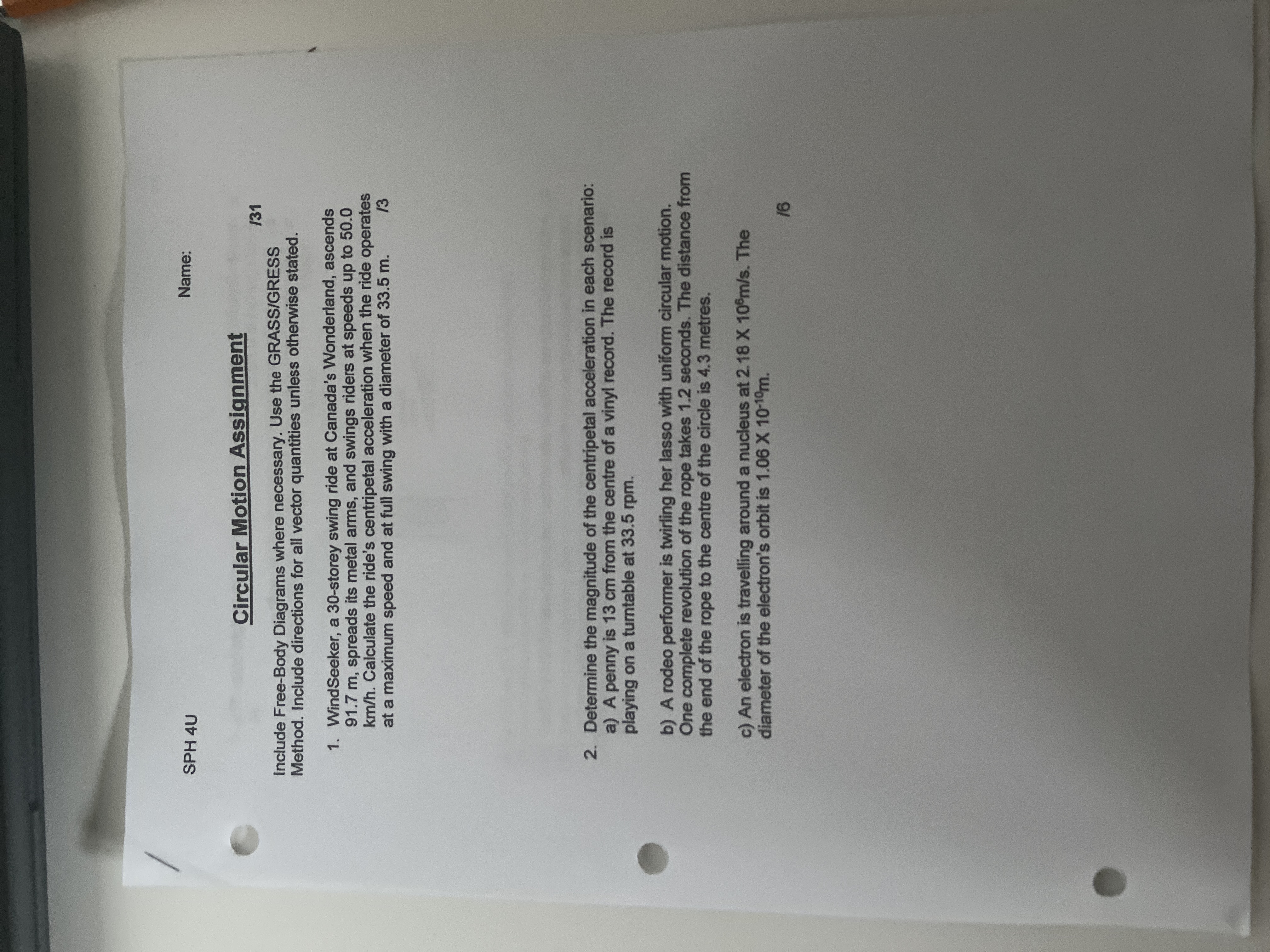
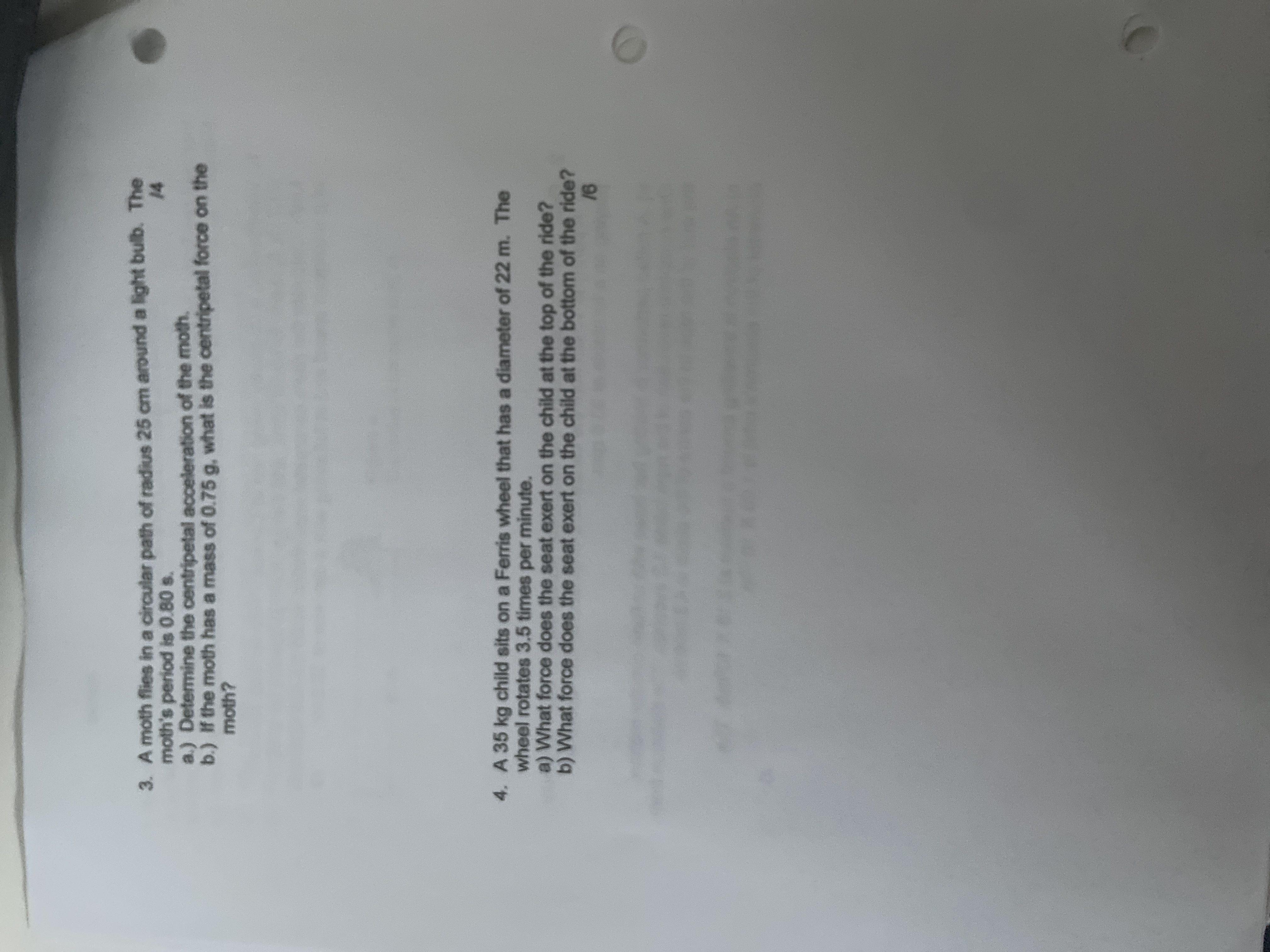
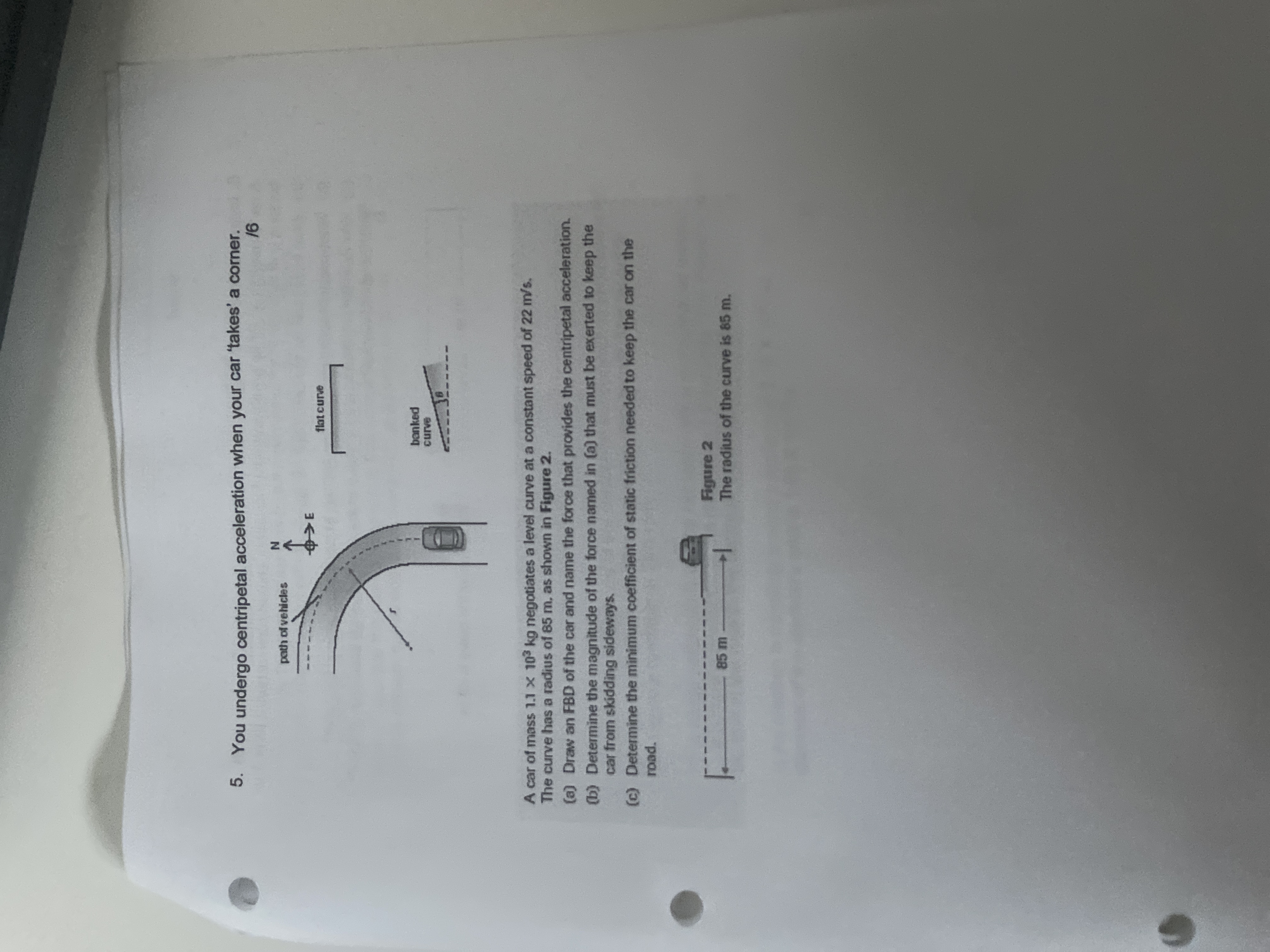
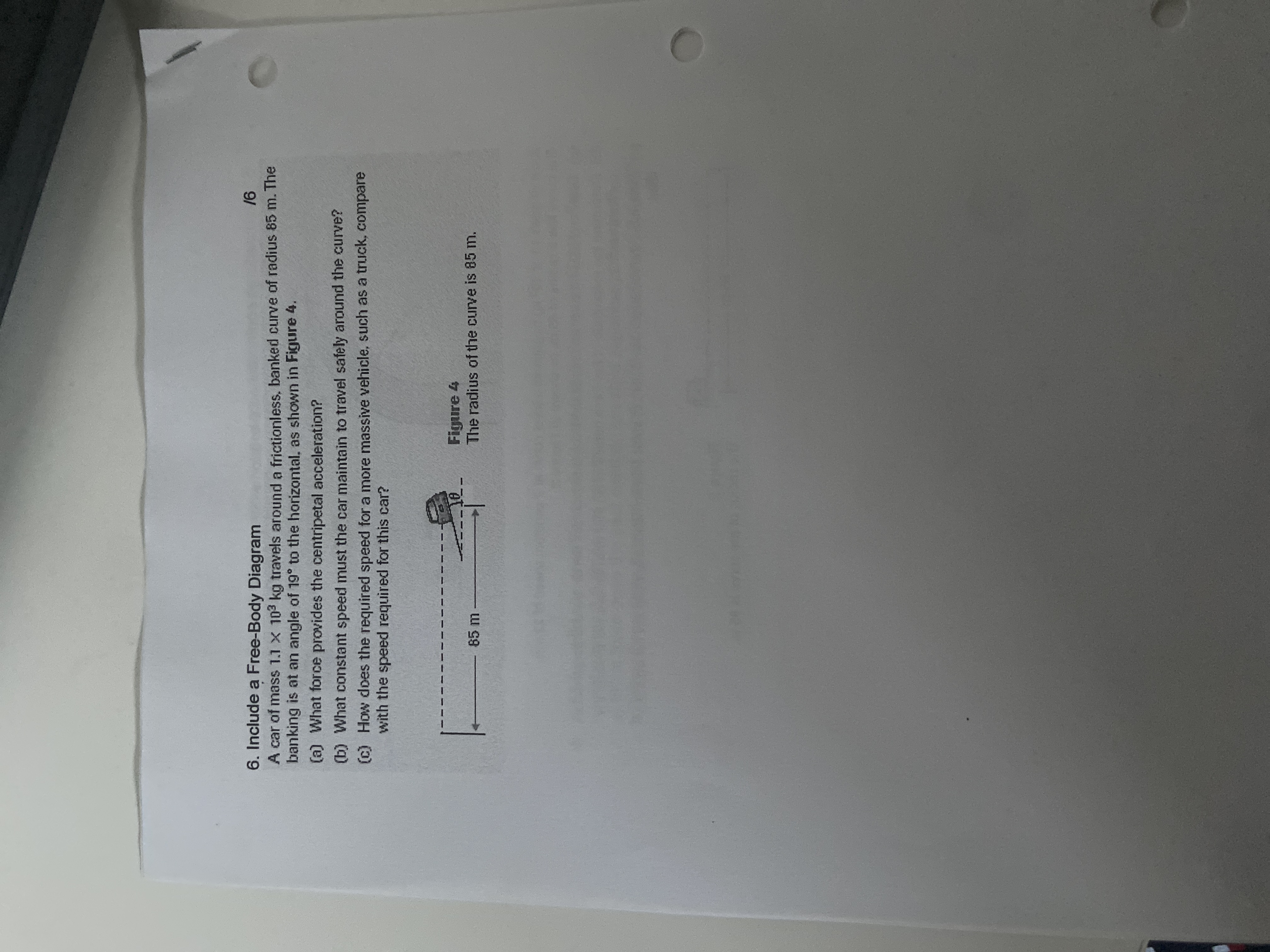
SPH 4U Name: Circular Motion Assignment 131 Include Free-Body Diagrams where necessary. Use the GRASS/GRESS Method. Include directions for all vector quantities unless otherwise stated. 1. WindSeeker, a 30-storey swing ride at Canada's Wonderland, ascends 91.7 m, spreads its metal arms, and swings riders at speeds up to 50.0 km/h. Calculate the ride's centripetal acceleration when the ride operates at a maximum speed and at full swing with a diameter of 33.5 m. 13 2. Determine the magnitude of the centripetal acceleration in each scenario: a) A penny is 13 cm from the centre of a vinyl record. The record is playing on a turntable at 33.5 rpm. b) A rodeo performer is twirling her lasso with uniform circular motion. One complete revolution of the rope takes 1.2 seconds. The distance from the end of the rope to the centre of the circle is 4.3 metres. c) An electron is travelling around a nucleus at 2. 18 X 105m/s. The diameter of the electron's orbit is 1.06 X 10⁻¹⁰m. 163. A moth flies in a circular path of radius 25 cm around a light bulb. The moth's period is 0.80 s. 14 a.) Determine the centripetal acceleration of the moth. b.) If the moth has a mass of 0.75 g, what is the centripetal force on the moth? 4. A 35 kg child sits on a Ferris wheel that has a diameter of 22 m. The wheel rotates 3.5 times per minute. a) What force does the seat exert on the child at the top of the ride? b) What force does the seat exert on the child at the bottom of the ride? 165. You undergo centripetal acceleration when your car 'takes' a corner. 16 path of vehicles N E flat curve banked curve A car of mass 1.1 x 10⁵ kg negotiates a level curve at a constant speed of 22 m/s. The curve has a radius of 85 m, as shown in Figure 2. (a) Draw an FBD of the car and name the force that provides the centripetal acceleration. (b) Determine the magnitude of the force named in (a) that must be exerted to keep the car from skidding sideways. (c) Determine the minimum coefficient of static friction needed to keep the car on the road. Figure 2 85 m The radius of the curve is 85 m.6. Include a Free-Body Diagram 16 A car of mass 1.1 x 10³ kg travels around a frictionless, banked curve of radius 85 m. The banking is at an angle of 19 to the horizontal. as shown in Figure 4. (a) What force provides the centripetal acceleration? (b) What constant speed must the car maintain to travel safely around the curve? (c) How does the required speed for a more massive vehicle, such as a truck, compare with the speed required for this car? Figure 4 85 m The radius of the curve is 85 m
Step by Step Solution
There are 3 Steps involved in it

Get step-by-step solutions from verified subject matter experts