







Question: Step 2: Derive the best-response function for the typical firm. (5 marks) Step 3: Find the equilibrium quantity for the typical firm, the equilibrium market
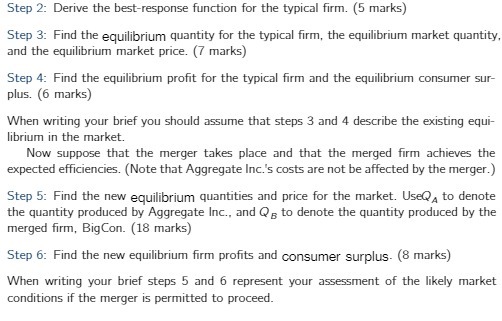
Step 2: Derive the best-response function for the typical firm. (5 marks) Step 3: Find the equilibrium quantity for the typical firm, the equilibrium market quantity and the equilibrium market price. (7 marks) Step 4: Find the equilibrium profit for the typical firm and the equilibrium consumer sur- plus. (6 marks) When writing your brief you should assume that steps 3 and 4 describe the existing equi- librium in the market. Now suppose that the merger takes place and that the merged firm achieves the expected efficiencies. (Note that Aggregate Inc.'s costs are not be affected by the merger.) Step 5: Find the new equilibrium quantities and price for the market. UseQ, to denote the quantity produced by Aggregate Inc., and @ to denote the quantity produced by the merged firm, BigCon. (18 marks) Step 6: Find the new equilibrium firm profits and consumer surplus. (8 marks) When writing your brief steps 5 and 6 represent your assessment of the likely market conditions if the merger is permitted to proceed
Step by Step Solution
There are 3 Steps involved in it

Get step-by-step solutions from verified subject matter experts
 Study Help