



Question: This is e-commerce 5. Case Analysis Click2procure Since 1999, Siemens has spent over $870 million building its e-procurement system called Click2procure, using technology provided by
This is e-commerce
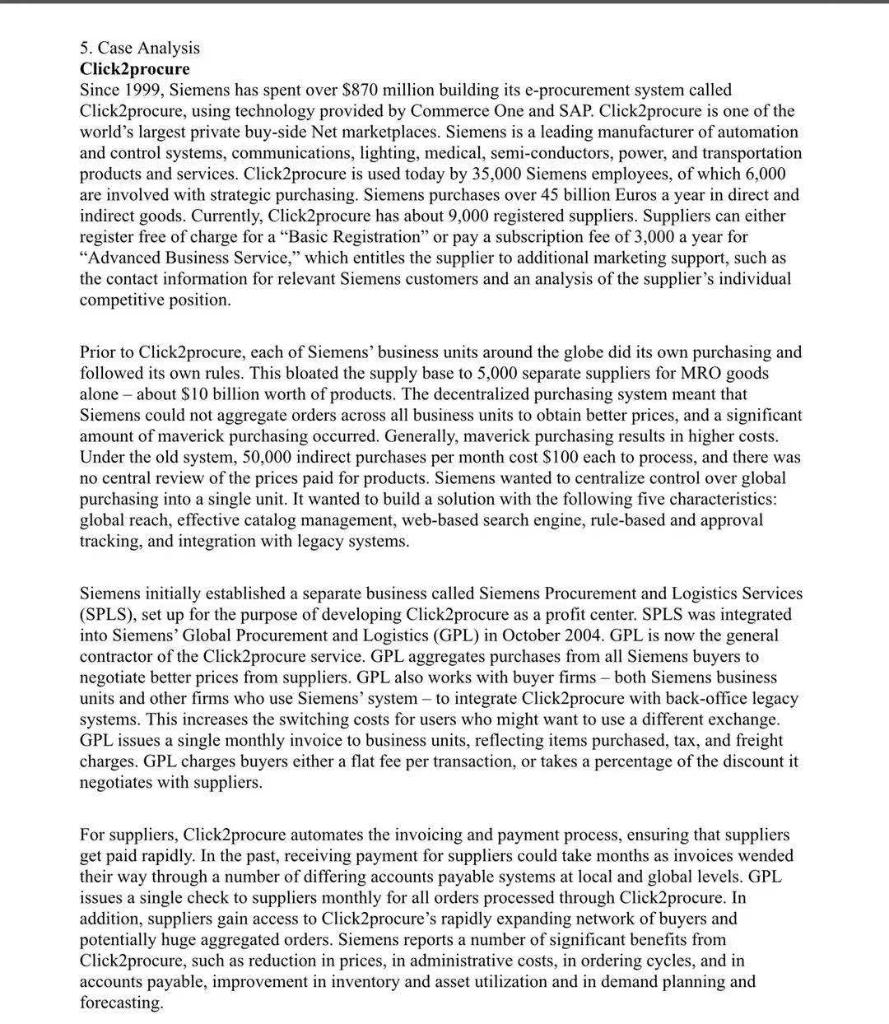
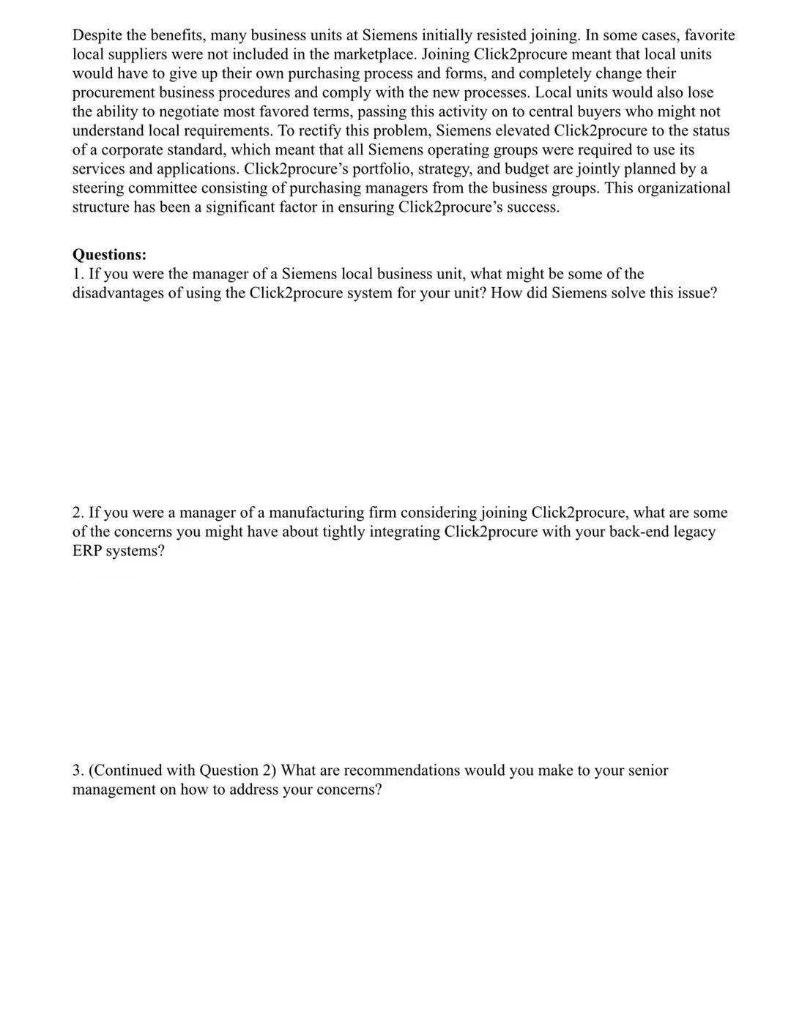
5. Case Analysis Click2procure Since 1999, Siemens has spent over $870 million building its e-procurement system called Click2procure, using technology provided by Commerce One and SAP. Click2procure is one of the world's largest private buy-side Net marketplaces. Siemens is a leading manufacturer of automation and control systems, communications, lighting, medical, semi-conductors, power, and transportation products and services. Click2procure is used today by 35,000 Siemens employees, of which 6,000 are involved with strategic purchasing. Siemens purchases over 45 billion Euros a year in direct and indirect goods. Currently, Click2procure has about 9,000 registered suppliers. Suppliers can either register free of charge for a Basic Registration" or pay a subscription fee of 3,000 a year for "Advanced Business Service," which entitles the supplier to additional marketing support, such as the contact information for relevant Siemens customers and an analysis of the supplier's individual competitive position. Prior to Click2procure, each of Siemens' business units around the globe did its own purchasing and followed its own rules. This bloated the supply base to 5,000 separate suppliers for MRO goods alone - about $10 billion worth of products. The decentralized purchasing system meant that Siemens could not aggregate orders across all business units to obtain better prices, and a significant amount of maverick purchasing occurred. Generally, maverick purchasing results in higher costs. Under the old system, 50,000 indirect purchases per month cost $100 each to process, and there was no central review of the prices paid for products. Siemens wanted to centralize control over global purchasing into a single unit. It wanted to build a solution with the following five characteristics: global reach, effective catalog management, web-based search engine, rule-based and approval tracking, and integration with legacy systems. Siemens initially established a separate business called Siemens Procurement and Logistics Services (SPLS), set up for the purpose of developing Click2procure as a profit center. SPLS was integrated into Siemens' Global Procurement and Logistics (GPL) in October 2004. GPL is now the general contractor of the Click2procure service. GPL aggregates purchases from all Siemens buyers to negotiate better prices from suppliers. GPL also works with buyer firms - both Siemens business units and other firms who use Siemens' system - to integrate Click2procure with back-office legacy systems. This increases the switching costs for users who might want to use a different exchange. GPL issues a single monthly invoice to business units, reflecting items purchased, tax, and freight charges. GPL charges buyers either a flat fee per transaction, or takes a percentage of the discount it negotiates with suppliers. For suppliers, Click2procure automates the invoicing and payment process, ensuring that suppliers get paid rapidly. In the past, receiving payment for suppliers could take months as invoices wended their way through a number of differing accounts payable systems at local and global levels. GPL issues a single check to suppliers monthly for all orders processed through Click2procure. In addition, suppliers gain access to Click2procure's rapidly expanding network of buyers and potentially huge aggregated orders. Siemens reports a number of significant benefits from Click2procure, such as reduction in prices, in administrative costs, in ordering cycles, and in accounts payable, improvement in inventory and asset utilization and in demand planning and forecasting Despite the benefits, many business units at Siemens initially resisted joining. In some cases, favorite local suppliers were not included in the marketplace. Joining Click2procure meant that local units would have to give up their own purchasing process and forms, and completely change their procurement business procedures and comply with the new processes. Local units would also lose the ability to negotiate most favored terms, passing this activity on to central buyers who might not understand local requirements. To rectify this problem, Siemens elevated Click2procure to the status of a corporate standard, which meant that all Siemens operating groups were required to use its services and applications. Click2procure's portfolio, strategy, and budget are jointly planned by a steering committee consisting of purchasing managers from the business groups. This organizational structure has been a significant factor in ensuring Click2procure's success. Questions: 1. If you were the manager of a Siemens local business unit, what might be some of the disadvantages of using the Click2procure system for your unit? How did Siemens solve this issue? 2. If you were a manager of a manufacturing firm considering joining Click2procure, what are some of the concerns you might have about tightly integrating Click2procure with your back-end legacy ERP systems? 3. (Continued with Question 2) What are recommendations would you make to your senior management on how to address your concernsStep by Step Solution
There are 3 Steps involved in it
1 Expert Approved Answer
Step: 1 Unlock

Question Has Been Solved by an Expert!
Get step-by-step solutions from verified subject matter experts
Step: 2 Unlock
Step: 3 Unlock