







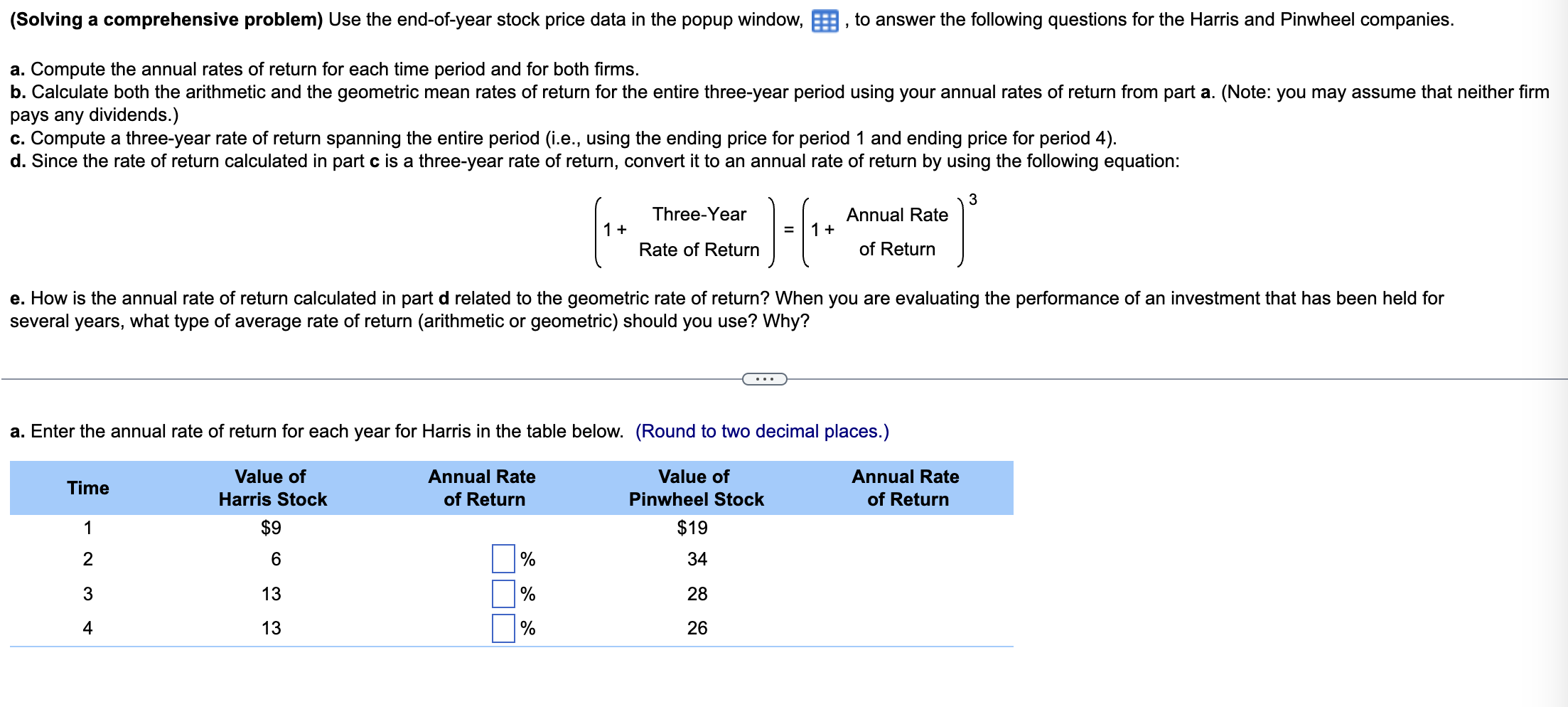
Question: This is the complete question as provided. What portion is Incomplete? What more information is needed? (Solving a comprehensive problem) Use the end-of-year stock price
This is the complete question as provided. What portion is Incomplete? What more information is needed?
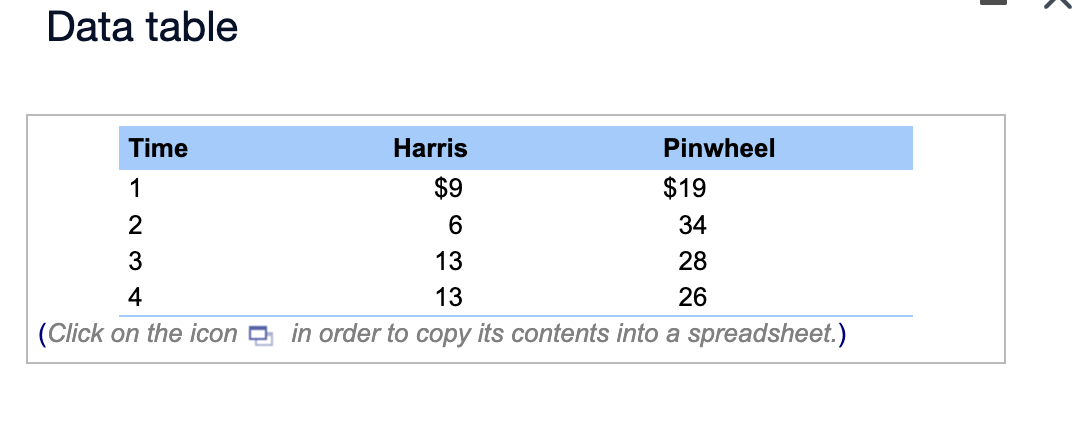
(Solving a comprehensive problem) Use the end-of-year stock price data in the popup window, , to answer the following questions for the Harris and Pinwheel companies. a. Compute the annual rates of return for each time period and for both firms. b. Calculate both the arithmetic and the geometric mean rates of return for the entire three-year period using your annual rates of return from part a. (Note: you may assume that neither firm pays any dividends.) c. Compute a three-year rate of return spanning the entire period (i.e., using the ending price for period 1 and ending price for period 4 ). d. Since the rate of return calculated in part c is a three-year rate of return, convert it to an annual rate of return by using the following equation: (1+Three-YearRateofReturn)=(1+AnnualRateofReturn)3 e. How is the annual rate of return calculated in part d related to the geometric rate of return? When you are evaluating the performance of an investment that has been held for several years, what type of average rate of return (arithmetic or geometric) should you use? Why? Data table
Step by Step Solution
There are 3 Steps involved in it

Get step-by-step solutions from verified subject matter experts
 Study Help