Question: This is the complete reading. A Good Team Player Topic: Leadership Characters: Steven, Assistant Department Manager Kristin, Newly appointed supervisor of Steven's work section Having
This is the complete reading. 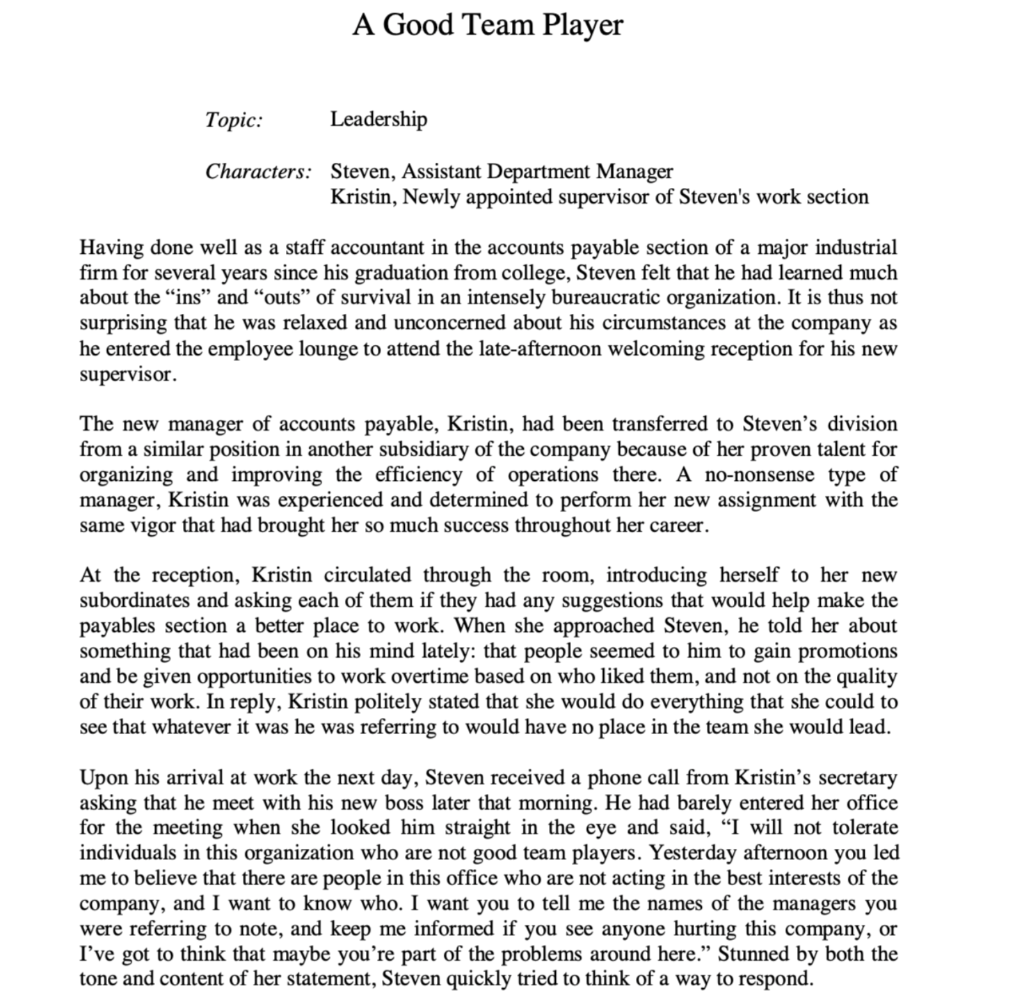
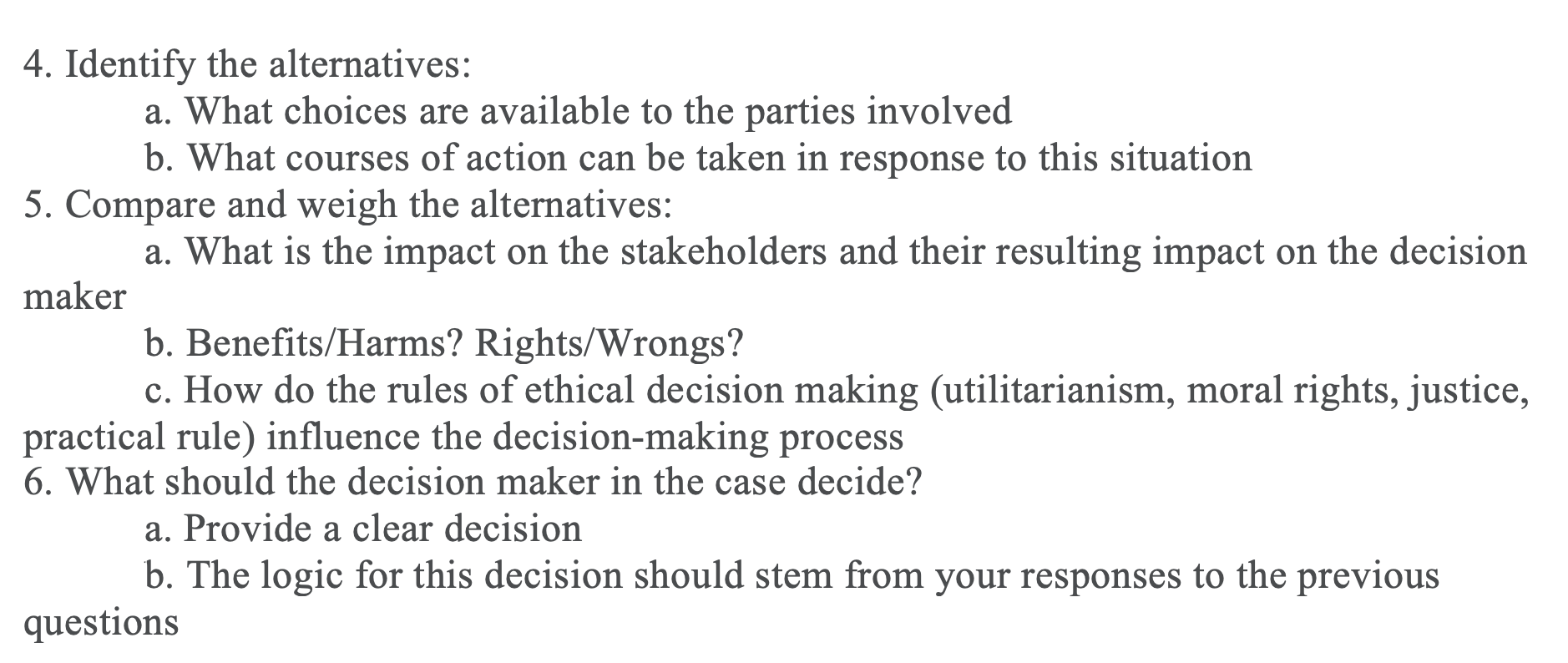
A Good Team Player Topic: Leadership Characters: Steven, Assistant Department Manager Kristin, Newly appointed supervisor of Steven's work section Having done well as a staff accountant in the accounts payable section of a major industrial firm for several years since his graduation from college, Steven felt that he had learned much about the ins and outs of survival in an intensely bureaucratic organization. It is thus not surprising that he was relaxed and unconcerned about his circumstances at the company as he entered the employee lounge to attend the late afternoon welcoming reception for his new supervisor. The new manager of accounts payable, Kristin, had been transferred to Steven's division from a similar position in another subsidiary of the company because of her proven talent for organizing and improving the efficiency of operations there. A no-nonsense type of manager, Kristin was experienced and determined to perform her new assignment with the same vigor that had brought her so much success throughout her career. At the reception, Kristin circulated through the room, introducing herself to her new subordinates and asking each of them if they had any suggestions that would help make the payables section a better place to work. When she approached Steven, he told her about something that had been on his mind lately: that people seemed to him to gain promotions and be given opportunities to work overtime based on who liked them, and not on the quality of their work. In reply, Kristin politely stated that she would do everything that she could to see that whatever it was he was referring to would have no place in the team she would lead. Upon his arrival at work the next day, Steven received a phone call from Kristin's secretary asking that he meet with his new boss later that morning. He had barely entered her office for the meeting when she looked him straight in the eye and said, I will not tolerate individuals in this organization who are not good team players. Yesterday afternoon you led me to believe that there are people in this office who are not acting in the best interests of the company, and I want to know who. I want you to tell me the names of the managers you were referring to note, and keep me informed if you see anyone hurting this company, or I've got to think that maybe you're part of the problems around here. Stunned by both the tone and content of her statement, Steven quickly tried to think of a way to respond. 4. Identify the alternatives: a. What choices are available to the parties involved b. What courses of action can be taken in response to this situation 5. Compare and weigh the alternatives: a. What is the impact on the stakeholders and their resulting impact on the decision maker b. Benefits/Harms? Rights/Wrongs? c. How do the rules of ethical decision making (utilitarianism, moral rights, justice, practical rule) influence the decision-making process 6. What should the decision maker in the case decide? a. Provide a clear decision b. The logic for this decision should stem from your responses to the previous questions A Good Team Player Topic: Leadership Characters: Steven, Assistant Department Manager Kristin, Newly appointed supervisor of Steven's work section Having done well as a staff accountant in the accounts payable section of a major industrial firm for several years since his graduation from college, Steven felt that he had learned much about the ins and outs of survival in an intensely bureaucratic organization. It is thus not surprising that he was relaxed and unconcerned about his circumstances at the company as he entered the employee lounge to attend the late afternoon welcoming reception for his new supervisor. The new manager of accounts payable, Kristin, had been transferred to Steven's division from a similar position in another subsidiary of the company because of her proven talent for organizing and improving the efficiency of operations there. A no-nonsense type of manager, Kristin was experienced and determined to perform her new assignment with the same vigor that had brought her so much success throughout her career. At the reception, Kristin circulated through the room, introducing herself to her new subordinates and asking each of them if they had any suggestions that would help make the payables section a better place to work. When she approached Steven, he told her about something that had been on his mind lately: that people seemed to him to gain promotions and be given opportunities to work overtime based on who liked them, and not on the quality of their work. In reply, Kristin politely stated that she would do everything that she could to see that whatever it was he was referring to would have no place in the team she would lead. Upon his arrival at work the next day, Steven received a phone call from Kristin's secretary asking that he meet with his new boss later that morning. He had barely entered her office for the meeting when she looked him straight in the eye and said, I will not tolerate individuals in this organization who are not good team players. Yesterday afternoon you led me to believe that there are people in this office who are not acting in the best interests of the company, and I want to know who. I want you to tell me the names of the managers you were referring to note, and keep me informed if you see anyone hurting this company, or I've got to think that maybe you're part of the problems around here. Stunned by both the tone and content of her statement, Steven quickly tried to think of a way to respond. 4. Identify the alternatives: a. What choices are available to the parties involved b. What courses of action can be taken in response to this situation 5. Compare and weigh the alternatives: a. What is the impact on the stakeholders and their resulting impact on the decision maker b. Benefits/Harms? Rights/Wrongs? c. How do the rules of ethical decision making (utilitarianism, moral rights, justice, practical rule) influence the decision-making process 6. What should the decision maker in the case decide? a. Provide a clear decision b. The logic for this decision should stem from your responses to the previous questions









 Study Help