







Question: This question is about Henry & Rogers - Response Complexity in motor learning and control. The chart below shows how reaction time (RT) is affected
This question is about Henry & Rogers - Response Complexity in motor learning and control.
The chart below shows how reaction time (RT) is affected by changes in movement complexity, via the response programming stage of information processing.
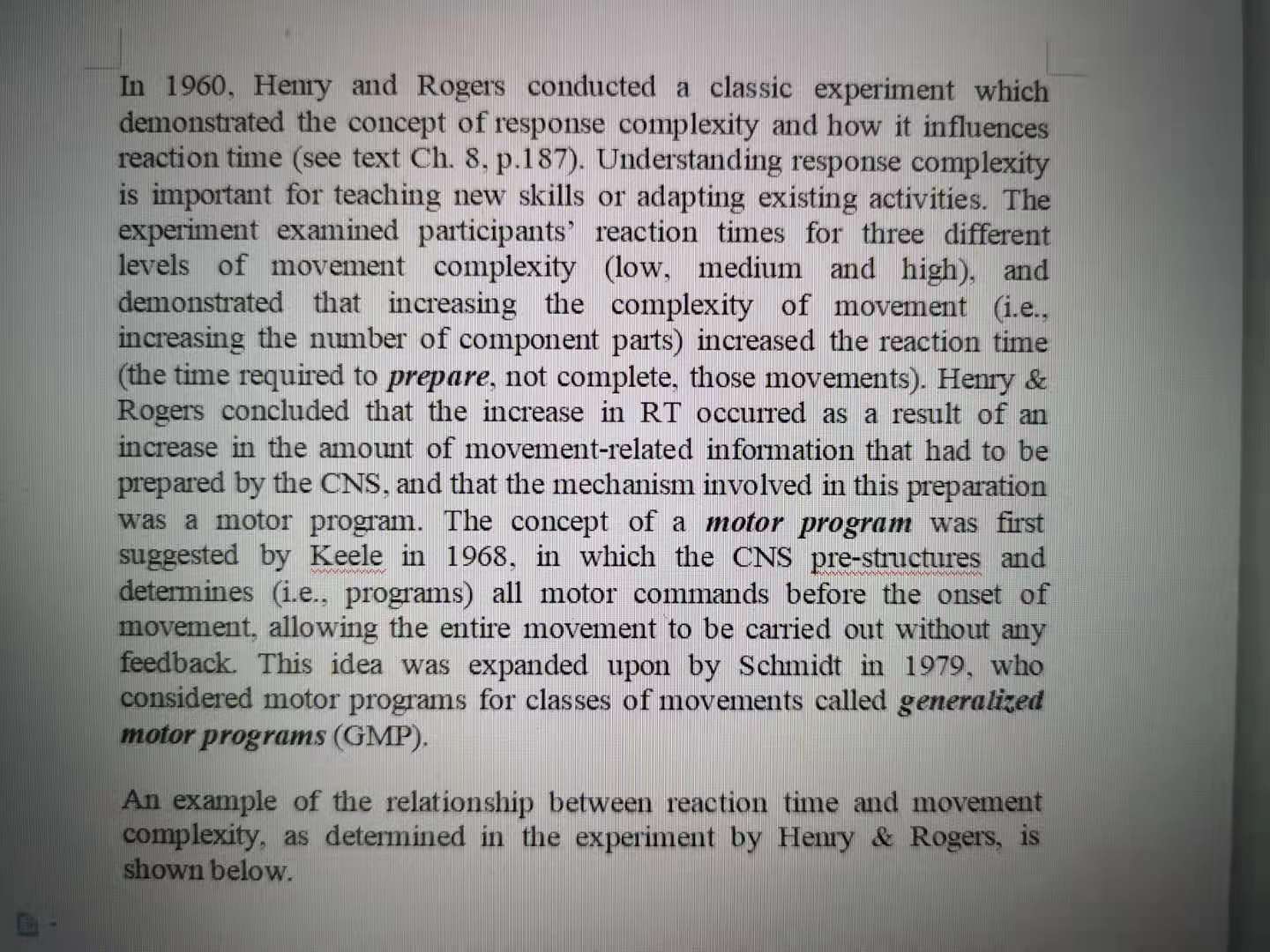
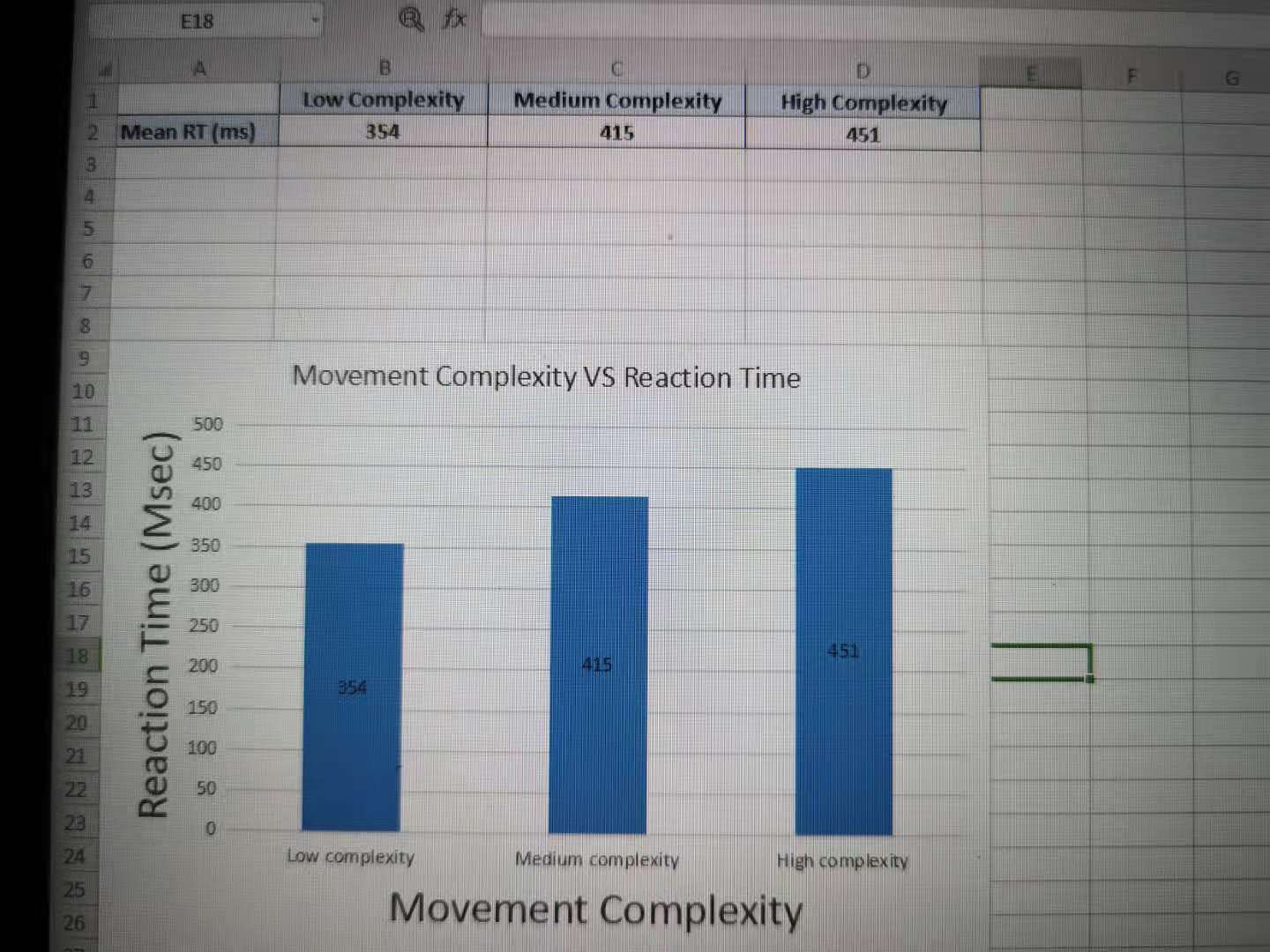
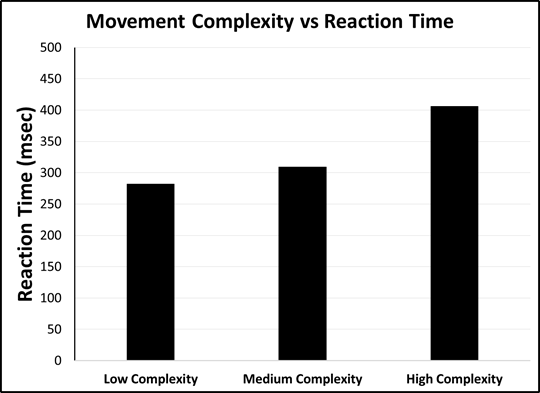
In 1960, Henry and Rogers conducted a classic experiment which demonstrated the concept of response complexity and how it influences reaction time (see text Ch. 8. p.187). Understanding response complexity is important for teaching new skills or adapting existing activities. The experiment examined participants' reaction times for three different levels of movement complexity (low, medium and high), and demonstrated that increasing the complexity of movement (i.e., increasing the number of component parts) increased the reaction time (the time required to prepare, not complete, those movements). Henry & Rogers concluded that the increase in RT occurred as a result of an increase in the amount of movement-related information that had to be prepared by the CNS, and that the mechanism involved in this preparation was a motor program. The concept of a motor program was first suggested by Keele in 1968, in which the CNS pre-structures and determines (i.e., programs) all motor commands before the onset of movement, allowing the entire movement to be carried out without any feedback. This idea was expanded upon by Schmidt in 1979, who considered motor programs for classes of movements called generalized motor programs (GMP). An example of the relationship between reaction time and movement complexity, as determined in the experiment by Henry & Rogers, is shown below.E18 B D G Low Complexity Medium Complexity High Complexity TH Mean RT (ms) 354 415 451 OUT Movement Complexity VS Reaction Time 10 11 500 12 450 13 400 14 350 15 16 300 17 Reaction Time (Msec) 250 200 415 254 150 100 50 Low complexity Medium complexity High complexity Movement ComplexityMovement Complexity vs Reaction Time 500 450 400 350 300 Reaction Time (msec) 250 200 150 100 50 0 Low Complexity Medium Complexity High Complexity
Step by Step Solution
There are 3 Steps involved in it

Get step-by-step solutions from verified subject matter experts
 Study Help