Question: this question is from Managing Human Resource Management 8e Luis R Gomez- Meja David B balkin Robert L Cardy please answer the experential Individual questions
this question is from Managing Human Resource Management 8e Luis R Gomez- Meja David B balkin Robert L Cardy
please answer the experential Individual questions in details
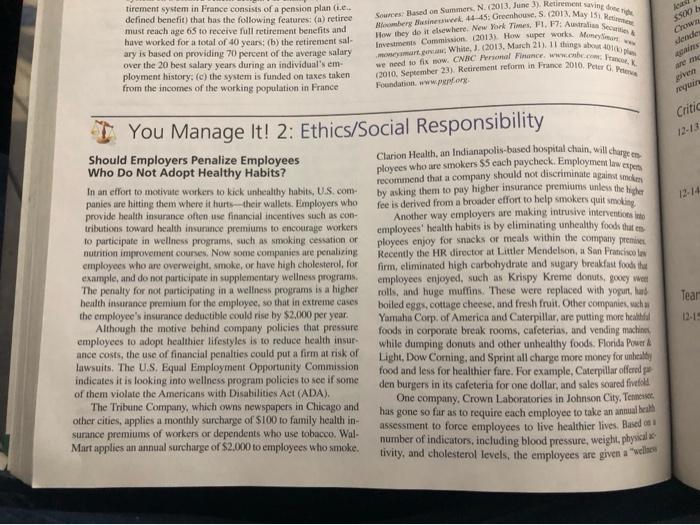
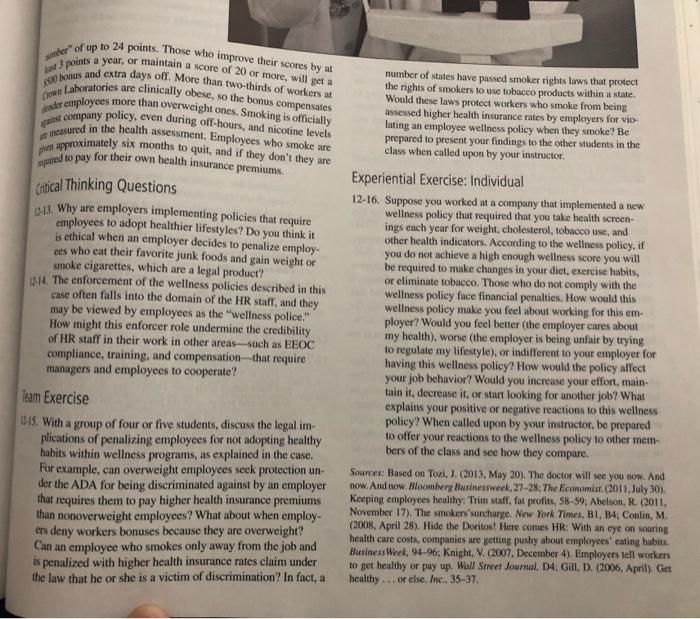
Bibertine 14-45: Greenhouse, S. (2013, May 15 Sources. Based on Summer N 2013 June 3. Record How they do it elsewhere. New York Times, FI, F7. Am Se Investments Commission (2013) How super works Money mart, White, J. 2013 March 2011 tigbo we need to fit now. CNC Fra Fine www.com SCO Chown dende ins ven Critic 12-13 12:14 2010 September 233. Retirement reform in France 2010, Peter Pan Clarion Health, an Indianapolis-based hospital chain, will changes ployees who are smokers $5 each paycheck. Employment law recommend that a company should not discriminate again tirement system in France consists of a pension plan (i.e. defined benefit that has the following features: (a) retiree must reach age 65 to receive full retirement benefits and have worked for a total of 40 years; (b) the retirement sal- ary is based on providing 70 percent of the average salary over the 20 best salary years during an individual's em- ployment history: (c) the system is funded on taxes taken from the incomes of the working population in France Foundation www.pretorg. You Manage It! 2: Ethics/Social Responsibility Should Employers Penalize Employees Who Do Not Adopt Healthy Habits? In an effort to motivate workers to kick unhealthy habits, U.S.com by asking them to pay higher insurance premiums unless the higher panies are hitting them where it hurts their wallets. Employers who fee is derived from a broader effort to help smokers quit smoking provide health insurance often use financial incentives such as con Another way employers are making intrusive interventions into tributions toward health insurance premiums to encourage workers employees' health habits is by eliminating unhealthy foods that es to participate in wellness programs, such as smoking cessation or ployees enjoy for snacks or meals within the company premises nutrition improvement courses. Now some companies are penalizing Recently the HR director at Littler Mendelson, a San Francisco employees who are overweight, smoke, or have high cholesterol, for firm, eliminated high carbohydrate and sugary breakfast foods that example, and do not participate in supplementary wellness programs. employees enjoyed, such as Krispy Kreme donuts, gooey weet The penalty for not participating in a wellness programs is a higher rolls, and huge muffins. These were replaced with yogurt, land health insurance premium for the employee, so that in extreme cases boiled eggs.cottage cheese, and fresh fruit. Other companies, ah the employee's insurance deductible could rise by $2.000 per year Yamaha Corp. of America and Caterpillar, are putting more healidad Although the motive behind company policies that pressure foods in corporate break rooms, cafeterias, and vending machines employees to adopt healthier lifestyles is to reduce health insur- while dumping donuts and other unhealthy foods. Florida Power ance costs, the use of financial penalties could put a firm at risk of Light, Dow Corning, and Sprint all charge more money for unbeatby lawsuits. The U.S. Equal Employment Opportunity Commission food and less for healthier fare. For example, Caterpillar offered pa indicates it is looking into wellness program policies to see if some of them violate the Americans with Disabilities Act (ADA), den burgers in its cafeteria for one dollar, and sales scared fivefold One The Tribune Company, which owns newspapers in Chicago and company, Crown Laboratories in Johnson City, Tenne. other cities, applies a monthly surcharge of $100 to family health in- has gone so far as to require each employee to take an annual bath surance premiums of workers or dependents who use tobacco. Wal- assessment to force employees to live healthier lives. Based on 1 Mart applies an annual surcharge of $2.000 to employees who smoke. number of indicators, including blood pressure, weight, physicale tivity, and cholesterol levels, the employees are given a wellies Tear 12-13 s points a year, or maintain a score of 20 or more, will get a her of up to 24 points. Those who improve their scores by at bonus and extra days ofl. More than two-thirds of workers al Cow Laboratories are clinically obese, so the bonus compensates ir employees more than overweight ones. Smoking is officially is company policy, even during off-hours, and nicotine levels sured in the health assessment. Employees who smoke are prin approximately six months to quit, and if they don't they are mind to pay for their own health insurance premiums. Critical Thinking Questions 3. Why are employers implementing policies that require employees to adopt healthier lifestyles? Do you think it is ethical when an employer decides to penalize employ- ces who eat their favorite junk foods and gain weight or smoke cigarettes, which are a legal product? 14. The enforcement of the wellness policies described in this case often falls into the domain of the HR staff, and they may be viewed by employees as the "wellness police." How might this enforcer role undermine the credibility of HR staff in their work in other areas such as EEOC compliance, training, and compensation that require managers and employees to cooperate? Team Exercise 15. With a group of four or five students, discuss the legal im plications of penalizing employees for not adopting healthy habits within wellness programs, as explained in the case. For example, can overweight employees seek protection un der the ADA for being discriminated against by an employer that requires them to pay higher health insurance premiums than nonoverweight employees? What about when employ- er deny workers bonuses because they are overweight? Can an employee who smokes only away from the job and is penalized with higher health insurance rates claim under the law that he or she is a victim of discrimination? In fact, a number of states have passed smoker rights laws that protect the rights of smokers to use tobacco products within a state Would these laws protect workers who smoke from being assessed higher health insurance rates by employers for vio- lating an employee wellness policy when they smoke? Be prepared to present your findings to the other students in the class when called upon by your instructor. Experiential Exercise: Individual 12-16. Suppose you worked at a company that implemented a new wellness policy that required that you take health screen- ings each year for weight, cholesterol, tobacco use, and other health indicators. According to the wellness policy. if you do not achieve a high enough wellness score you will be required to make changes in your diet, exercise habits, or eliminate tobacco. Those who do not comply with the wellness policy face financial penalties. How would this wellness policy make you feel about working for this em- ployer? Would you feel better the employer cares about my health), worse (the employer is being unfair by trying to regulate my lifestyle), or indifferent to your employer for having this wellness policy? How would the policy affect your job behavior? Would you increase your effort, main- tain it, decrease it, or start looking for another job? What explains your positive or negative reactions to this wellness policy? When called upon by your instructor, be prepared to offer your reactions to the wellness policy to other mem- bers of the class and see how they compare. Sources: Based on Tozi, J. (2013, May 20). The doctor will see you now. And now. And now. Bloomberg Businessweek. 27-28: The Economist. (2011, July 30). Keeping employees healthy. Trim staff, fat profits, 58-59; Abelson, R. (2011, November 17). The smokers 'surcharge. New York Times, B1, B4: Conlin, M. (2008, April 28). Hide the Doritos! Here comes HR: With an eye on soaring health care costs, companies are getting pushy about employees' eating habits. Business Week 94-96: Knight, V. (2007, December 4). Employers tell workers to get healthy or pay up. Wall Street Journal, D4, Gill, D. (2006. April). Get healthy...or else. Inc. 35-37









 Study Help