Question: This question presents you with a change situation. For a number of related scenarios, you, as the change leader, are asked to identify the most
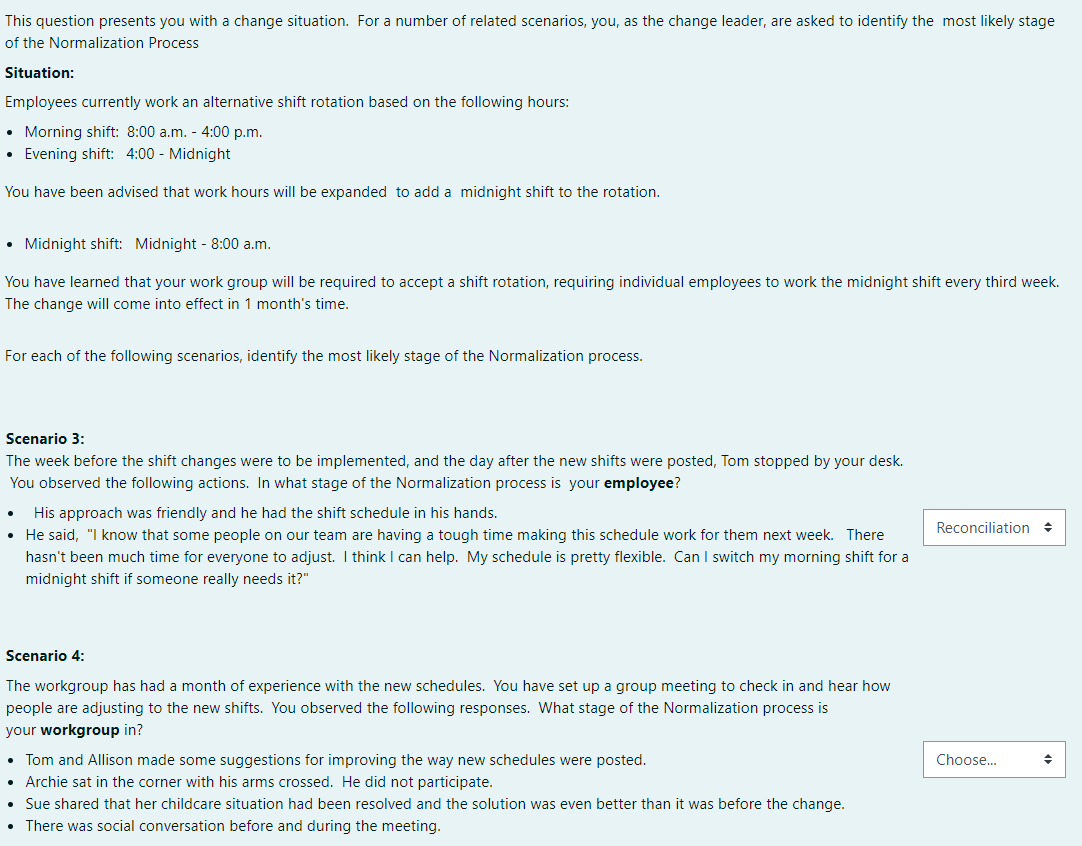
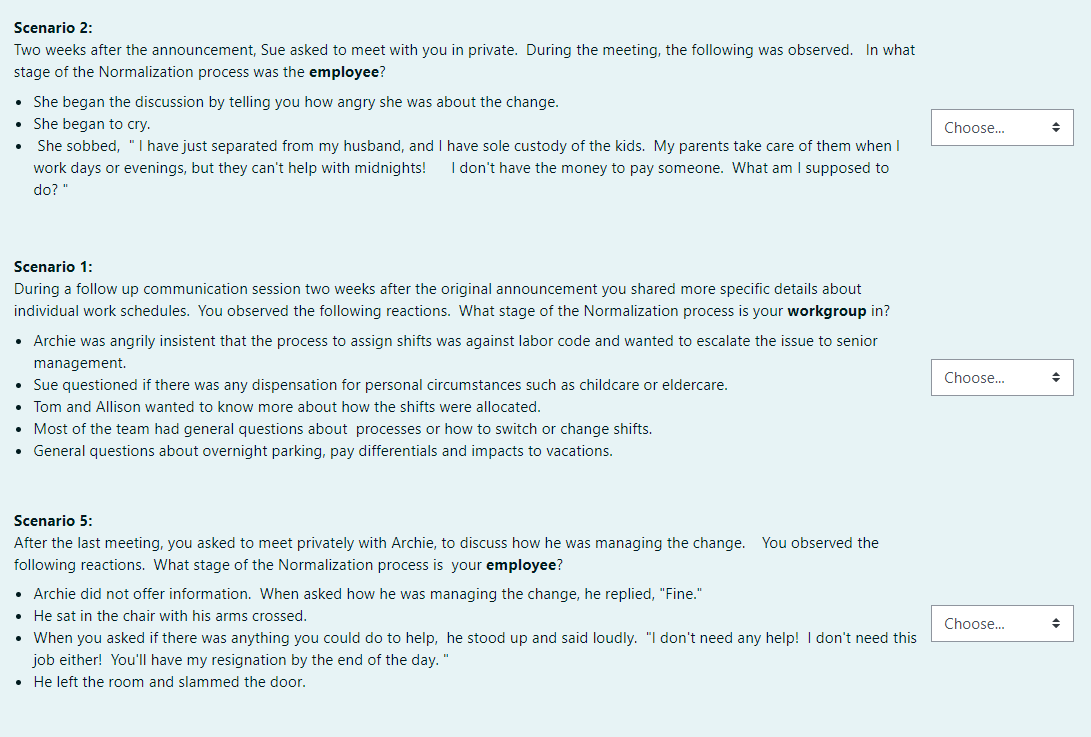
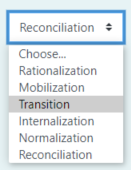
This question presents you with a change situation. For a number of related scenarios, you, as the change leader, are asked to identify the most likely stage of the Normalization Process Situation: Employees currently work an alternative shift rotation based on the following hours: Morning shift: 8:00 a.m. - 4:00 p.m. Evening shift: 4:00 - Midnight You have been advised that work hours will be expanded to add a midnight shift to the rotation. Midnight shift: Midnight - 8:00 a.m. You have learned that your work group will be required to accept a shift rotation, requiring individual employees to work the midnight shift every third week. The change will come into effect in 1 month's time. For each of the following scenarios, identify the most likely stage of the Normalization process. Scenario 3: The week before the shift changes were to be implemented, and the day after the new shifts were posted, Tom stopped by your desk. You observed the following actions. In what stage of the Normalization process is your employee? His approach was friendly and he had the shift schedule in his hands. He said, "I know that some people on our team are having a tough time making this schedule work for them next week. There hasn't been much time for everyone to adjust. I think I can help. My schedule is pretty flexible. Can I switch my morning shift for a midnight shift if someone really needs it?" Reconciliation - Scenario 4: The workgroup has had a month of experience with the new schedules. You have set up a group meeting to check in and hear how people are adjusting to the new shifts. You observed the following responses. What stage of the Normalization process is your workgroup in? Tom and Allison made some suggestions for improving the way new schedules were posted. Archie sat in the corner with his arms crossed. He did not participate. Sue shared that her childcare situation had been resolved and the solution was even better than it was before the change. There was social conversation before and during the meeting. Choose... Scenario 2: Two weeks after the announcement, Sue asked to meet with you in private. During the meeting, the following was observed. In what stage of the Normalization process was the employee? She began the discussion by telling you how angry she was about the change. She began to cry. She sobbed, "I have just separated from my husband, and I have sole custody of the kids. My parents take care of them when I work days or evenings, but they can't help with midnights! I don't have the money to pay someone. What am I supposed to do? Choose... Scenario 1: During a follow up communication session two weeks after the original announcement you shared more specific details about individual work schedules. You observed the following reactions. What stage of the Normalization process is your workgroup in? Archie was angrily insistent that the process to assign shifts was against labor code and wanted to escalate the issue to senior management Sue questioned if there was any dispensation for personal circumstances such as childcare or eldercare. Tom and Allison wanted to know more about how the shifts were allocated. Most of the team had general questions about processes or how to switch or change shifts. General questions about overnight parking, pay differentials and impacts to vacations. Choose... Scenario 5: After the last meeting, you asked to meet privately with Archie, to discuss how he was managing the change. You observed the following reactions. What stage of the Normalization process is your employee? Archie did not offer information. When asked how he was managing the change, he replied, "Fine." He sat in the chair with his arms crossed. When you asked if there was anything you could do to help, he stood up and said loudly. "I don't need any help! I don't need this job either! You'll have my resignation by the end of the day." He left the room and slammed the door. Choose... Reconciliation - Choose.. Rationalization Mobilization Transition Internalization Normalization Reconciliation









 Study Help