







Question: Two investment advisors are comparing performance. Advisor A average a 20% return with a portfolio beta of 1.5 and Advisor B averaged a 15% return
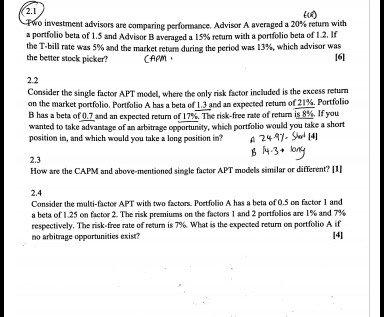
Two investment advisors are comparing performance. Advisor A average a 20% return with a portfolio beta of 1.5 and Advisor B averaged a 15% return with a portfolio beta of 1.2. If the T-bill rate was 5% and the market return during the period was 13%, which advisor was the better stock picker? Consider the single factor APT model, where the only risk factor included is the excess return on the market portfolio. Portfolio A has a beta of 1.3 and a expected return of 21%. Portfolio B has a beta of 0.7 and an expected return of 17%. The risk-free rate of return is 8%. If you wanted to take advantage of an arbitrage opportunity, which portfolio would you take a short position in, and which would you take a long position in? How are the CAPM and above mentioned single factor APT models similar or different? Consider the multi-factor APT with two factors. Portfolio A has a beta of 0.5 on factor 1 and a beta of 1.25 on factor 2. The risk premium on the factors 1 and 2 portfolios are 1% and 7% respectively. The risk-free rate of return is 7%. What is the expected return on portfolio a if no arbitrage opportunities exist
Step by Step Solution
There are 3 Steps involved in it

Get step-by-step solutions from verified subject matter experts
 Study Help