







Question: Two spiders find a dead insect. Simultaneously, each spider chooses to attack (A) or back down (B). If only one spider attacks, then that
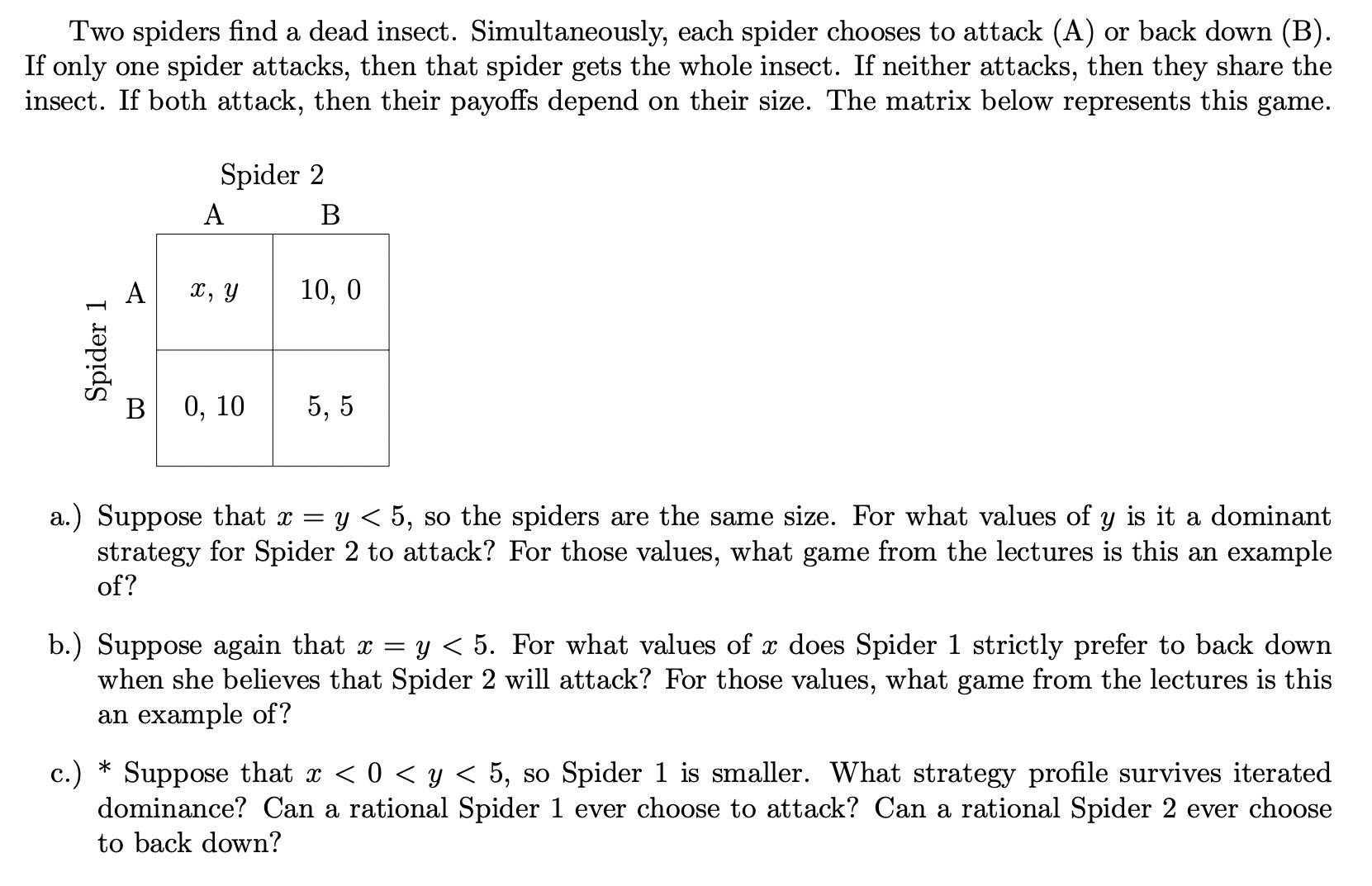
Two spiders find a dead insect. Simultaneously, each spider chooses to attack (A) or back down (B). If only one spider attacks, then that spider gets the whole insect. If neither attacks, then they share the insect. If both attack, then their payoffs depend on their size. The matrix below represents this game. Spider 2 A B Spider 1 A X, Y 10, 0 B 0, 10 5,5 a.) Suppose that x = y < 5, so the spiders are the same size. For what values of y is it a dominant strategy for Spider 2 to attack? For those values, what game from the lectures is this an example of? b.) Suppose again that x = y < 5. For what values of x does Spider 1 strictly prefer to back down when she believes that Spider 2 will attack? For those values, what game from the lectures is this an example of? c.) * Suppose that x < 0 < y < 5, so Spider 1 is smaller. What strategy profile survives iterated dominance? Can a rational Spider 1 ever choose to attack? Can a rational Spider 2 ever choose to back down?
Step by Step Solution
There are 3 Steps involved in it
a If x y 5 Spider 2s dominant strategy to attack occurs when the payoff for attacking 10 is greater ... View full answer

Get step-by-step solutions from verified subject matter experts
 Study Help