



Question: Uber Continuing Case-Chapter 2: Management Theory This part of the Uber continuing case focuses on Chapter 2 and provides parallels to management theory. This
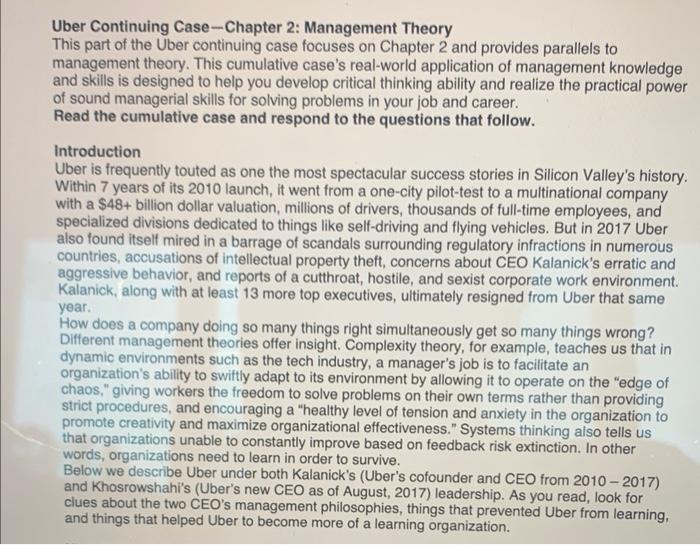
Uber Continuing Case-Chapter 2: Management Theory This part of the Uber continuing case focuses on Chapter 2 and provides parallels to management theory. This cumulative case's real-world application of management knowledge and skills is designed to help you develop critical thinking ability and realize the practical power of sound managerial skills for solving problems in your job and career. Read the cumulative case and respond to the questions that follow. Introduction Uber is frequently touted as one the most spectacular success stories in Silicon Valley's history. Within 7 years of its 2010 launch, it went from a one-city pilot-test to a multinational company with a $48+ billion dollar valuation, millions of drivers, thousands of full-time employees, and specialized divisions dedicated to things like self-driving and flying vehicles. But in 2017 Uber also found itself mired in a barrage of scandals surrounding regulatory infractions in numerous countries, accusations of intellectual property theft, concerns about CEO Kalanick's erratic and aggressive behavior, and reports of a cutthroat, hostile, and sexist corporate work environment. Kalanick, along with at least 13 more top executives, ultimately resigned from Uber that same year. How does a company doing so many things right simultaneously get so many things wrong? Different management theories offer insight. Complexity theory, for example, teaches us that in dynamic environments such as the tech industry, a manager's job is to facilitate an organization's ability to swiftly adapt to its environment by allowing it to operate on the "edge of chaos," giving workers the freedom to solve problems on their own terms rather than providing strict procedures, and encouraging a "healthy level of tension and anxiety in the organization to promote creativity and maximize organizational effectiveness." Systems thinking also tells us that organizations unable to constantly improve based on feedback risk extinction. In other words, organizations need to learn in order to survive. Below we describe Uber under both Kalanick's (Uber's cofounder and CEO from 2010-2017) and Khosrowshahi's (Uber's new CEO as of August, 2017) leadership. As you read, look for clues about the two CEO's management philosophies, things that prevented Uber from learning, and things that helped Uber to become more of a learning organization.
Step by Step Solution
There are 3 Steps involved in it

Get step-by-step solutions from verified subject matter experts