use managing capacity for solving
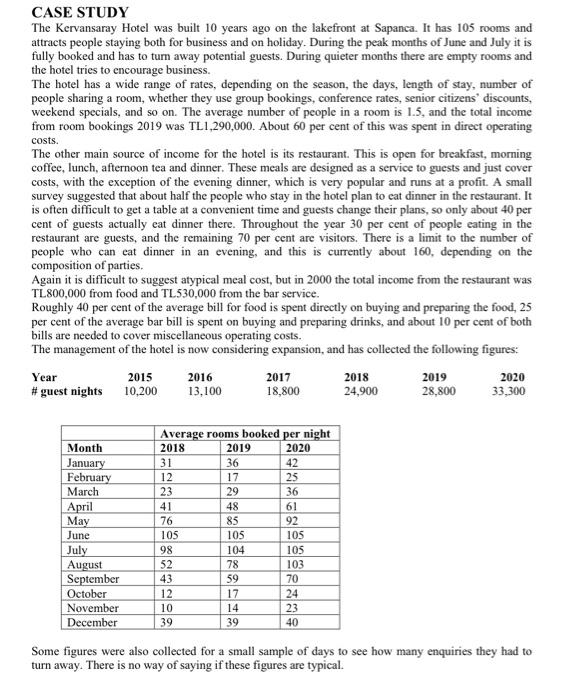
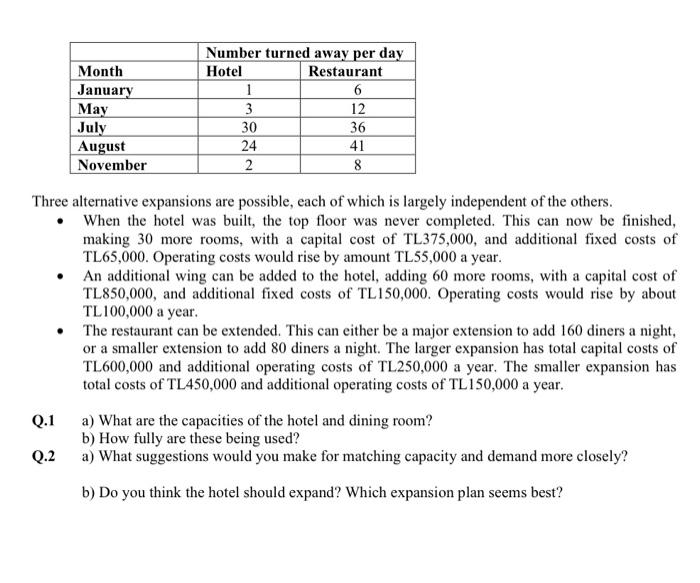
costs. CASE STUDY The Kervansaray Hotel was built 10 years ago on the lakefront at Sapanca. It has 105 rooms and attracts people staying both for business and on holiday. During the peak months of June and July it is fully booked and has to turn away potential guests. During quieter months there are empty rooms and the hotel tries to encourage business. The hotel has a wide range of rates, depending on the season, the days, length of stay, number of people sharing a room, whether they use group bookings, conference rates, senior citizens' discounts weekend specials, and so on. The average number of people in a room is 1.5, and the total income from room bookings 2019 was TL1,290,000. About 60 per cent of this was spent in direct operating The other main source of income for the hotel is its restaurant. This is open for breakfast, morning coffee, lunch, afternoon tea and dinner. These meals are designed as a service to guests and just cover costs, with the exception of the evening dinner, which is very popular and runs at a profit. A small survey suggested that about half the people who stay in the hotel plan to cat dinner in the restaurant. It is often difficult to get a table at a convenient time and guests change their plans, so only about 40 per cent of guests actually eat dinner there. Throughout the year 30 per cent of people eating in the restaurant are guests, and the remaining 70 per cent are visitors. There is a limit to the number of people who can eat dinner in an evening, and this is currently about 160, depending on the composition of parties Again it is difficult to suggest atypical meal cost, but in 2000 the total income from the restaurant was TL800,000 from food and TL530,000 from the bar service. Roughly 40 per cent of the average bill for food is spent directly on buying and preparing the food, 25 per cent of the average bar bill is spent on buying and preparing drinks, and about 10 per cent of both bills are needed to cover miscellaneous operating costs. The management of the hotel is now considering expansion, and has collected the following figures: Year #guest nights 2015 10,200 2016 13.100 2017 18,800 2018 24,900 2019 28,800 2020 33,300 Average rooms booked per night 2018 31 2019 36 12 17 23 41 29 48 85 76 Month January February March April May June July August September October November December 105 105 2020 42 25 36 61 92 105 105 103 70 24 23 40 98 104 43 12 78 59 17 14 39 39 Some figures were also collected for a small sample of days to see how many enquiries they had to turn away. There is no way of saying if these figures are typical. Month January May July August November Number turned away per day Hotel Restaurant 1 6 3 12 30 36 24 41 2 8 Three alternative expansions are possible, each of which is largely independent of the others. When the hotel was built, the top floor was never completed. This can now be finished, making 30 more rooms, with a capital cost of TL375,000, and additional fixed costs of TL65,000. Operating costs would rise by amount TL55,000 a year. An additional wing can be added to the hotel, adding 60 more rooms, with a capital cost of TL850,000, and additional fixed costs of TL 150,000. Operating costs would rise by about TL100,000 a year. The restaurant can be extended. This can either be a major extension to add 160 diners a night, or a smaller extension to add 80 diners a night. The larger expansion has total capital costs of TL600,000 and additional operating costs of TL250,000 a year. The smaller expansion has total costs of TL450,000 and additional operating costs of TL150,000 a year. Q.1 a) What are the capacities of the hotel and dining room? b) How fully are these being used? a) What suggestions would you make for matching capacity and demand more closely? Q.2 b) Do you think the hotel should expand? Which expansion plan seems best? costs. CASE STUDY The Kervansaray Hotel was built 10 years ago on the lakefront at Sapanca. It has 105 rooms and attracts people staying both for business and on holiday. During the peak months of June and July it is fully booked and has to turn away potential guests. During quieter months there are empty rooms and the hotel tries to encourage business. The hotel has a wide range of rates, depending on the season, the days, length of stay, number of people sharing a room, whether they use group bookings, conference rates, senior citizens' discounts weekend specials, and so on. The average number of people in a room is 1.5, and the total income from room bookings 2019 was TL1,290,000. About 60 per cent of this was spent in direct operating The other main source of income for the hotel is its restaurant. This is open for breakfast, morning coffee, lunch, afternoon tea and dinner. These meals are designed as a service to guests and just cover costs, with the exception of the evening dinner, which is very popular and runs at a profit. A small survey suggested that about half the people who stay in the hotel plan to cat dinner in the restaurant. It is often difficult to get a table at a convenient time and guests change their plans, so only about 40 per cent of guests actually eat dinner there. Throughout the year 30 per cent of people eating in the restaurant are guests, and the remaining 70 per cent are visitors. There is a limit to the number of people who can eat dinner in an evening, and this is currently about 160, depending on the composition of parties Again it is difficult to suggest atypical meal cost, but in 2000 the total income from the restaurant was TL800,000 from food and TL530,000 from the bar service. Roughly 40 per cent of the average bill for food is spent directly on buying and preparing the food, 25 per cent of the average bar bill is spent on buying and preparing drinks, and about 10 per cent of both bills are needed to cover miscellaneous operating costs. The management of the hotel is now considering expansion, and has collected the following figures: Year #guest nights 2015 10,200 2016 13.100 2017 18,800 2018 24,900 2019 28,800 2020 33,300 Average rooms booked per night 2018 31 2019 36 12 17 23 41 29 48 85 76 Month January February March April May June July August September October November December 105 105 2020 42 25 36 61 92 105 105 103 70 24 23 40 98 104 43 12 78 59 17 14 39 39 Some figures were also collected for a small sample of days to see how many enquiries they had to turn away. There is no way of saying if these figures are typical. Month January May July August November Number turned away per day Hotel Restaurant 1 6 3 12 30 36 24 41 2 8 Three alternative expansions are possible, each of which is largely independent of the others. When the hotel was built, the top floor was never completed. This can now be finished, making 30 more rooms, with a capital cost of TL375,000, and additional fixed costs of TL65,000. Operating costs would rise by amount TL55,000 a year. An additional wing can be added to the hotel, adding 60 more rooms, with a capital cost of TL850,000, and additional fixed costs of TL 150,000. Operating costs would rise by about TL100,000 a year. The restaurant can be extended. This can either be a major extension to add 160 diners a night, or a smaller extension to add 80 diners a night. The larger expansion has total capital costs of TL600,000 and additional operating costs of TL250,000 a year. The smaller expansion has total costs of TL450,000 and additional operating costs of TL150,000 a year. Q.1 a) What are the capacities of the hotel and dining room? b) How fully are these being used? a) What suggestions would you make for matching capacity and demand more closely? Q.2 b) Do you think the hotel should expand? Which expansion plan seems best