







Question: Use the Limit Comparison Test to determine whether the series converges or diverges. V8In2 + 7n + 10 an n=1 n=1 7n5 + 5n3 +
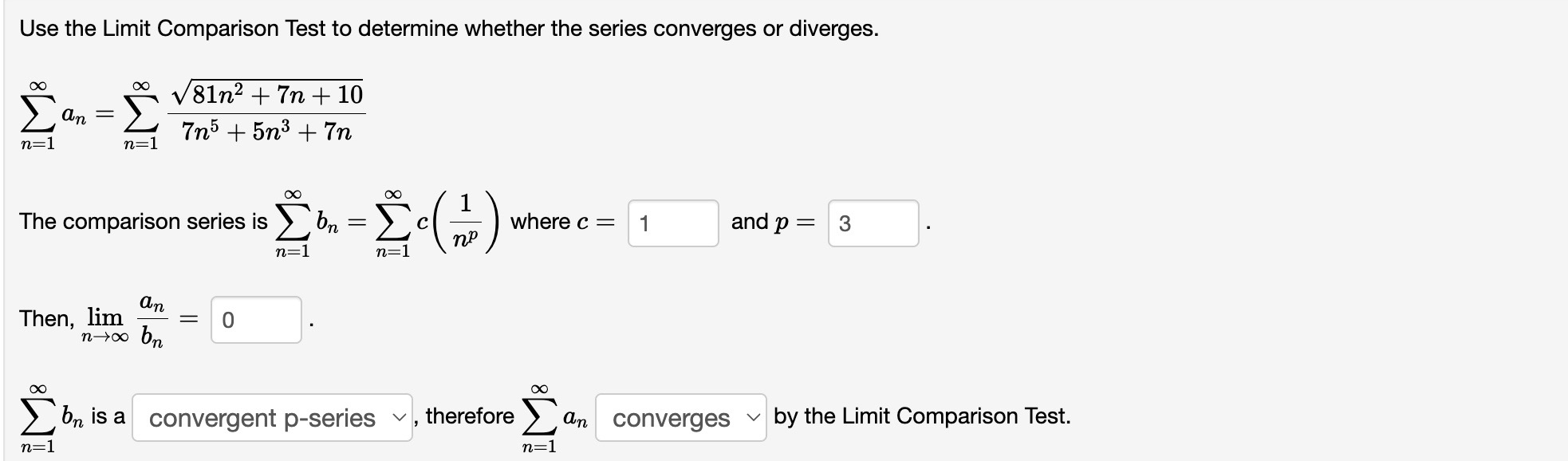
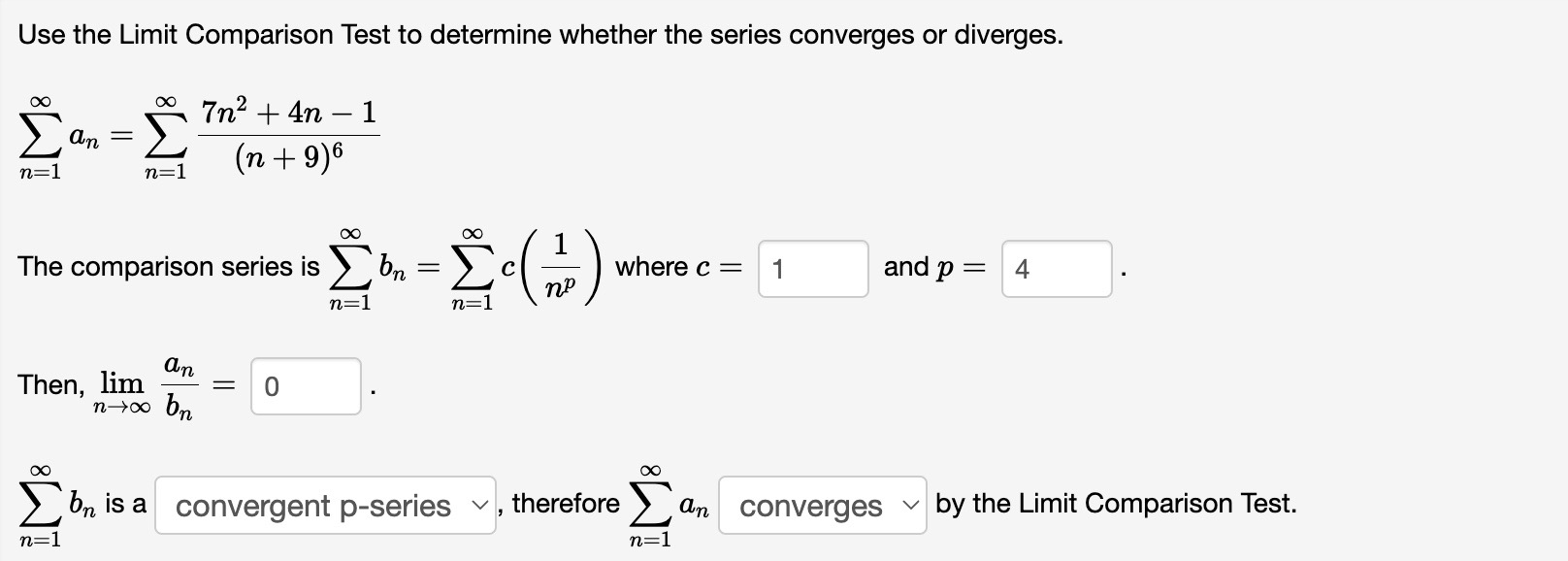
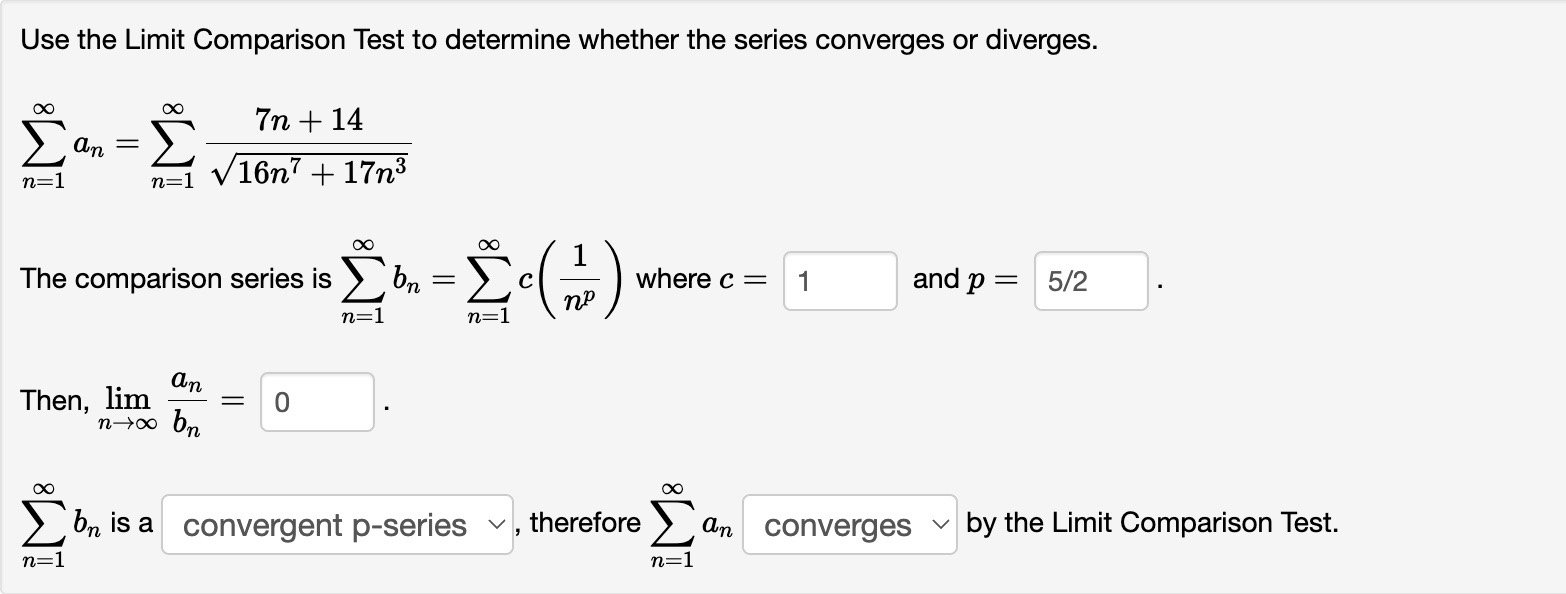
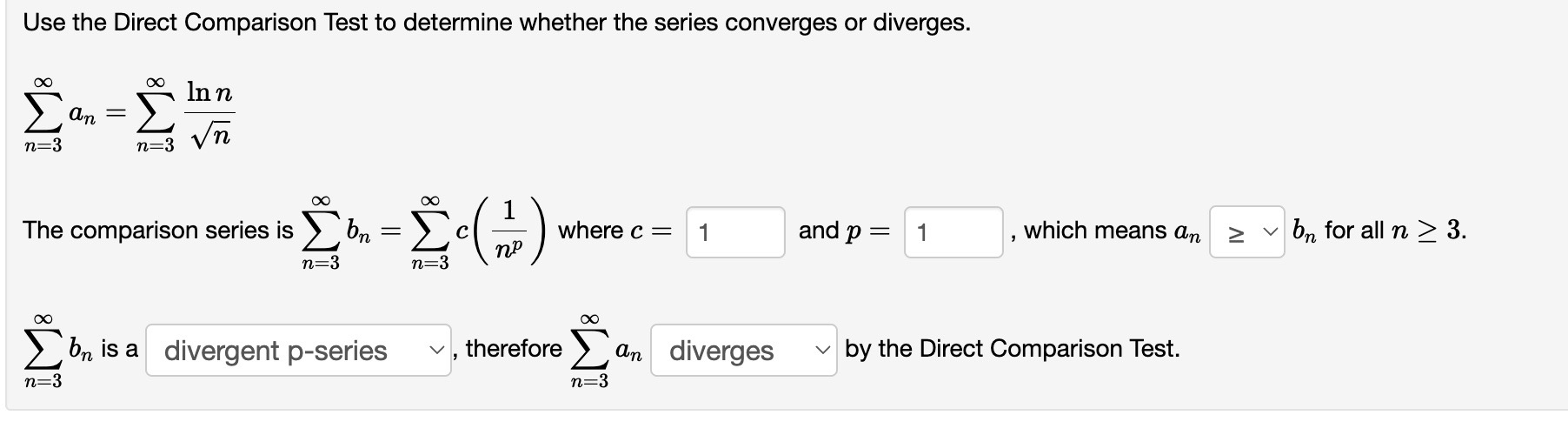
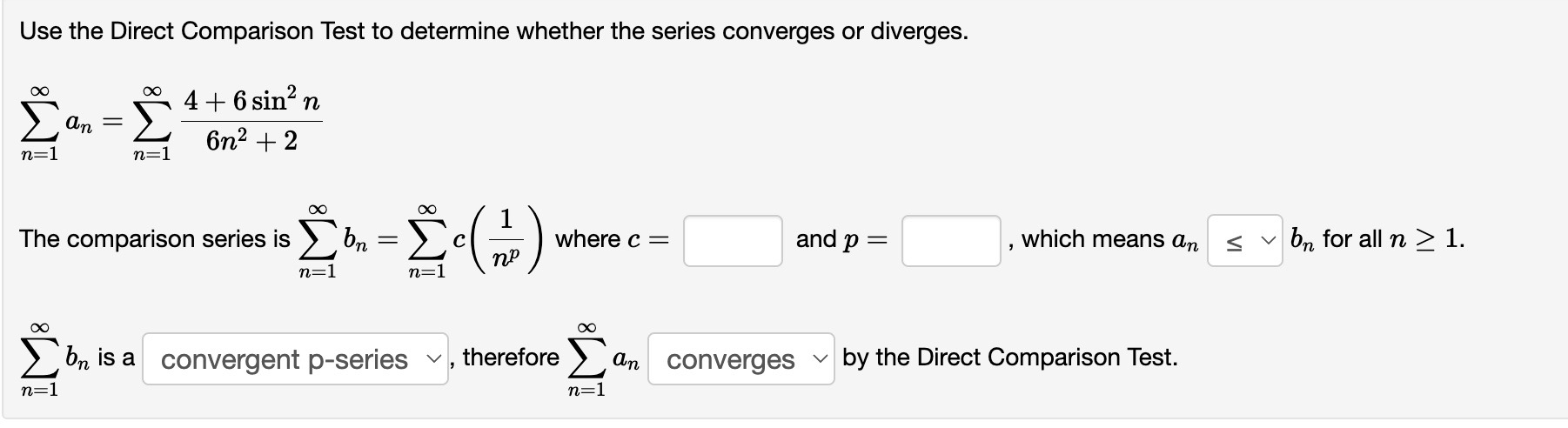
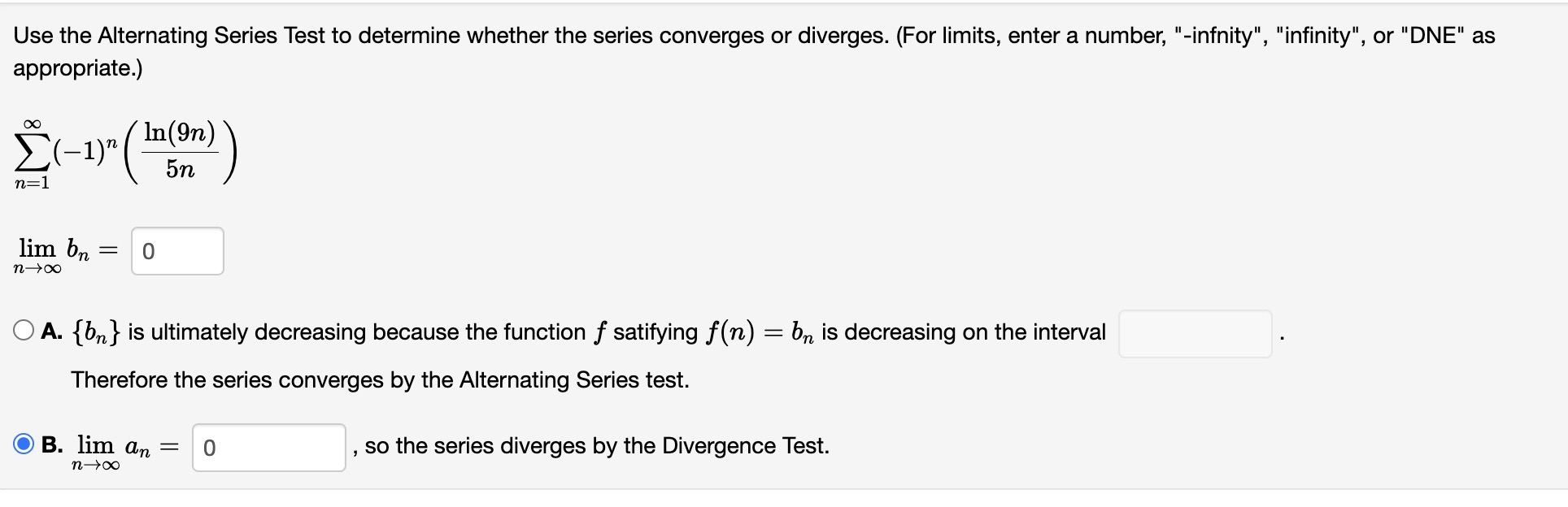
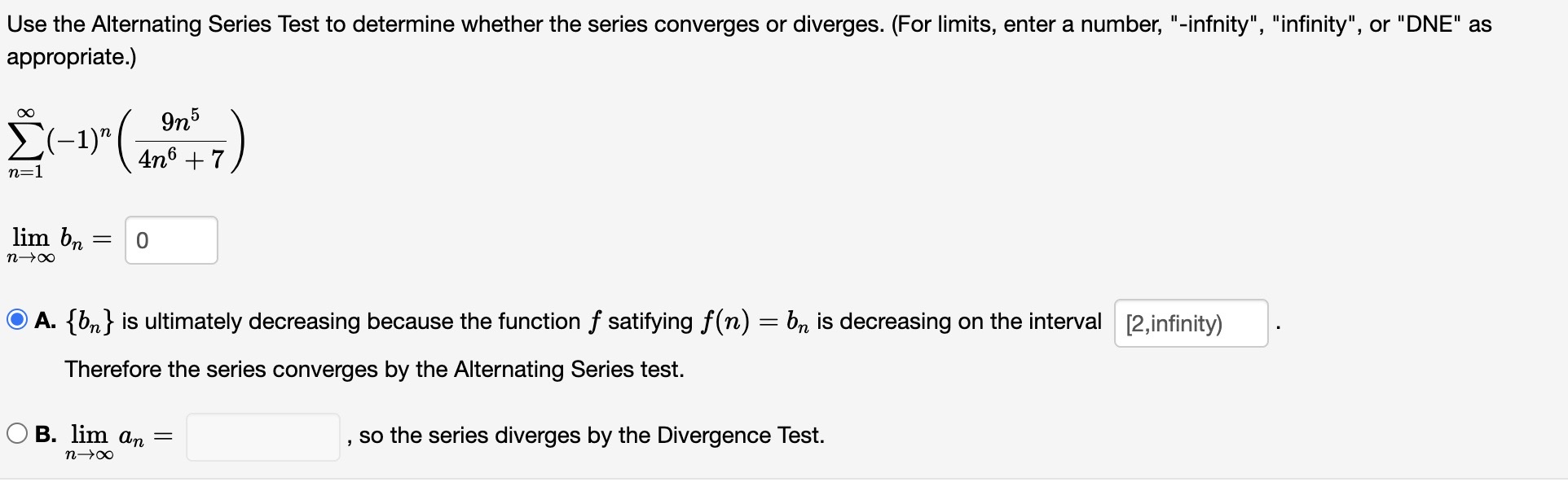
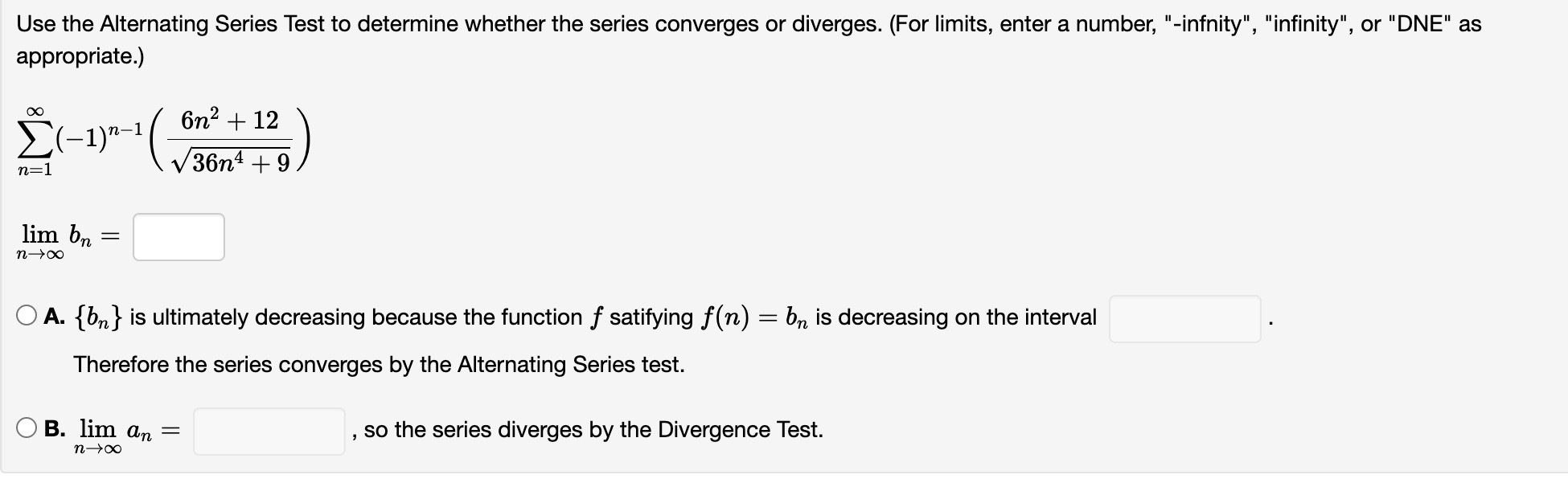
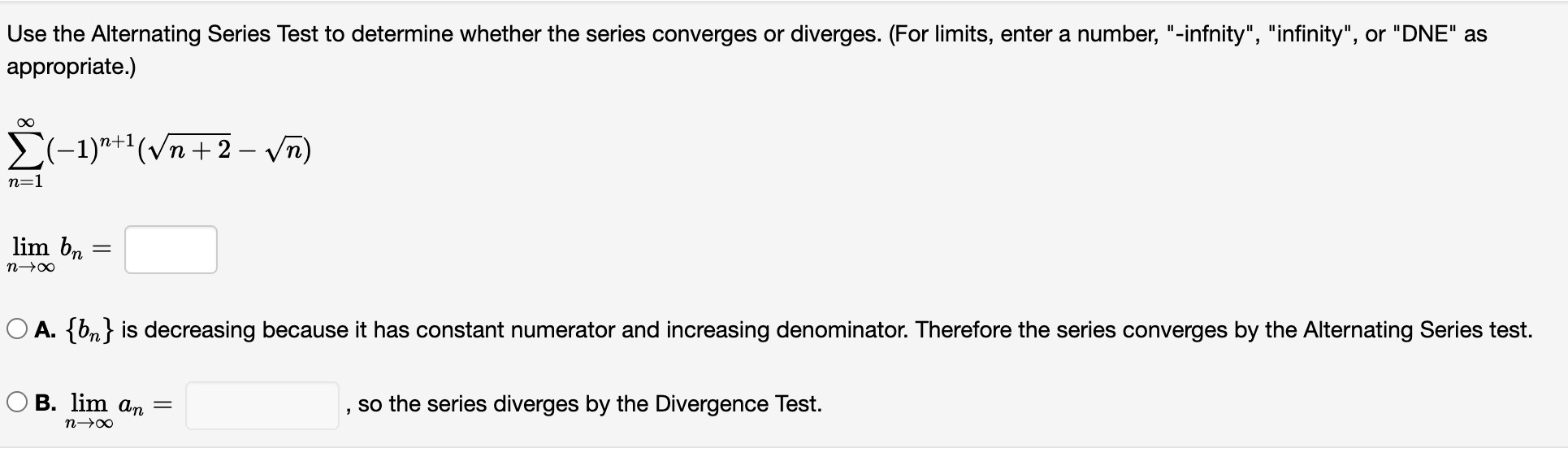
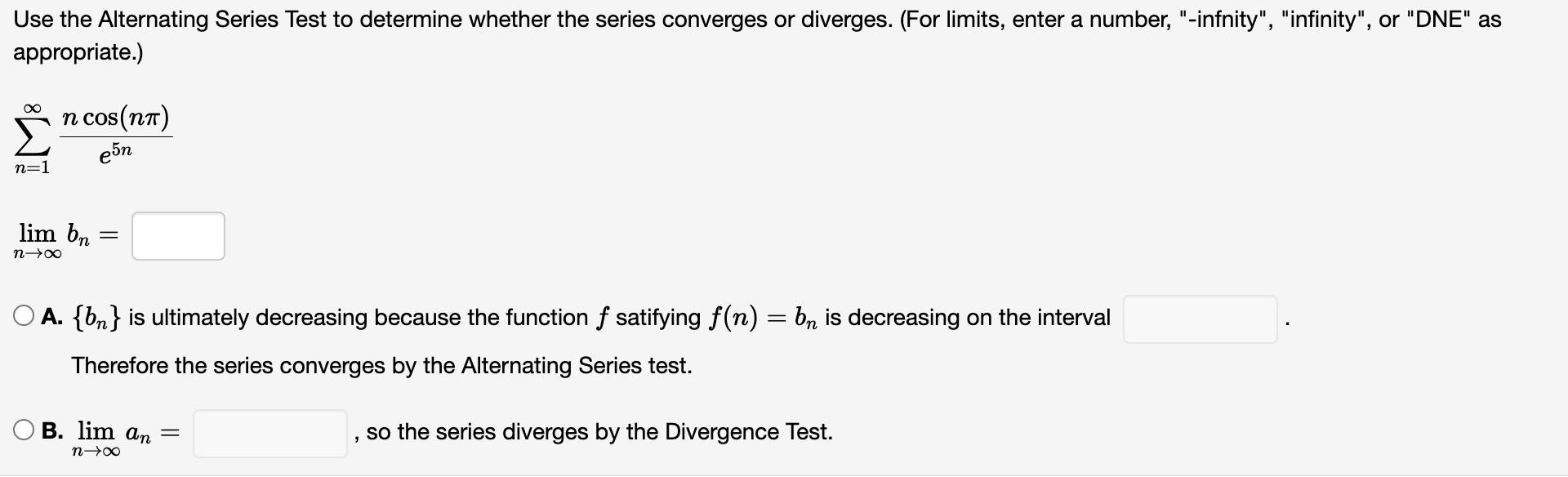
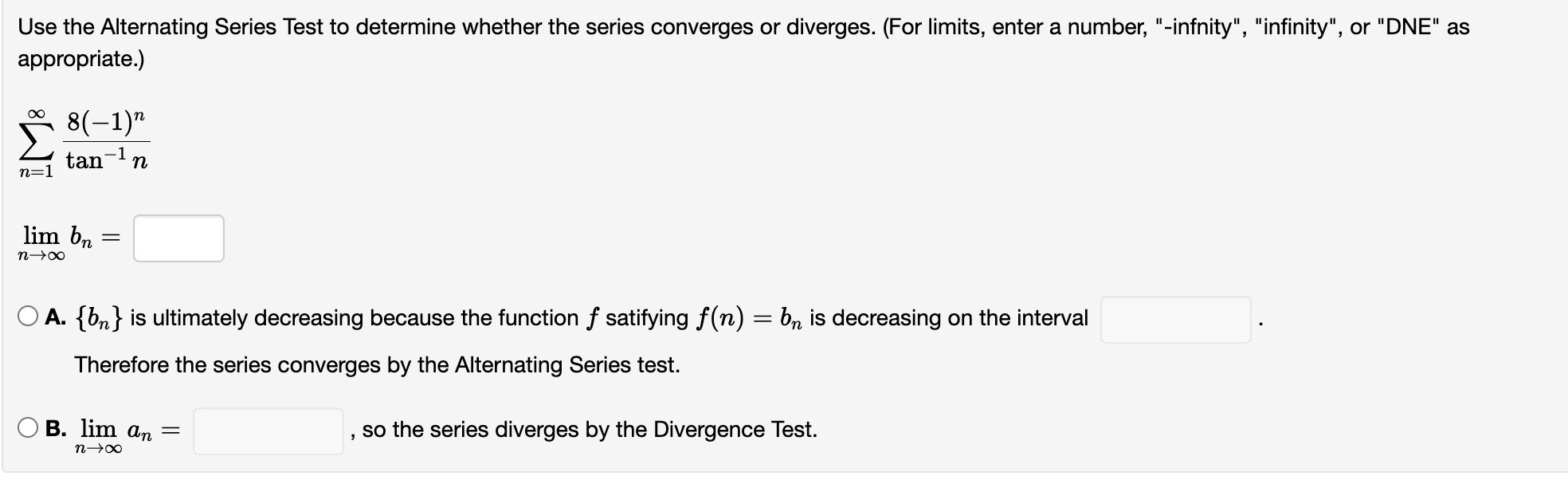
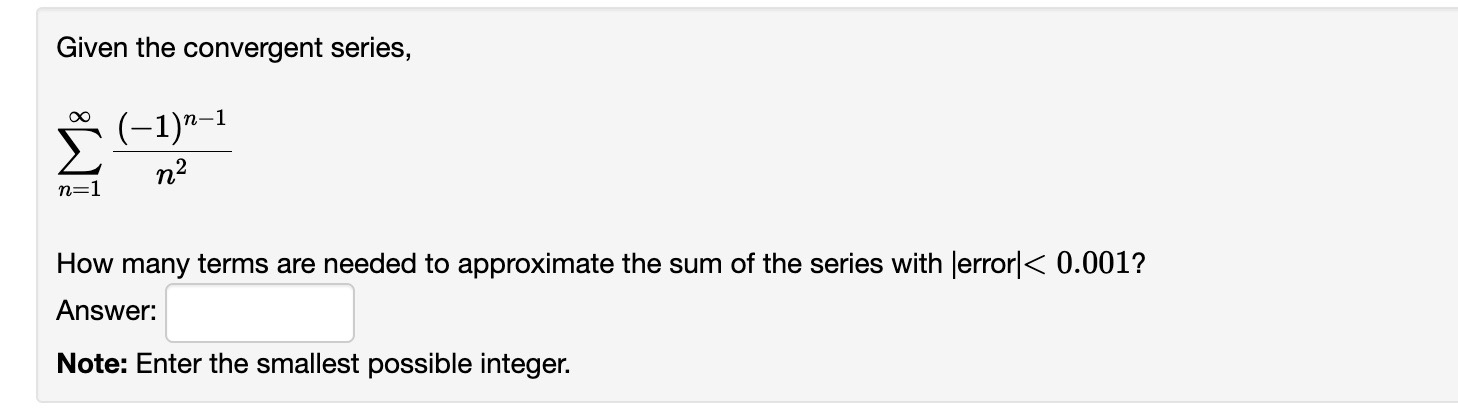
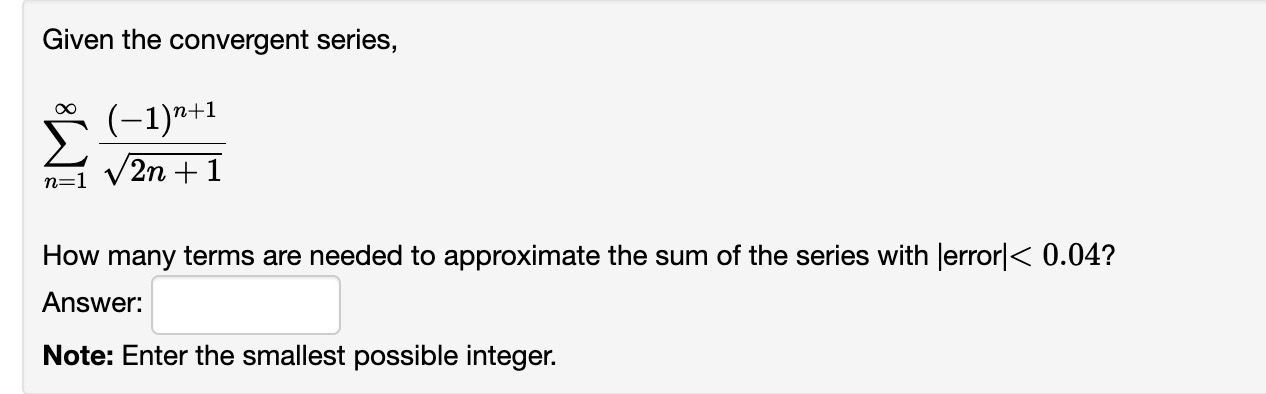
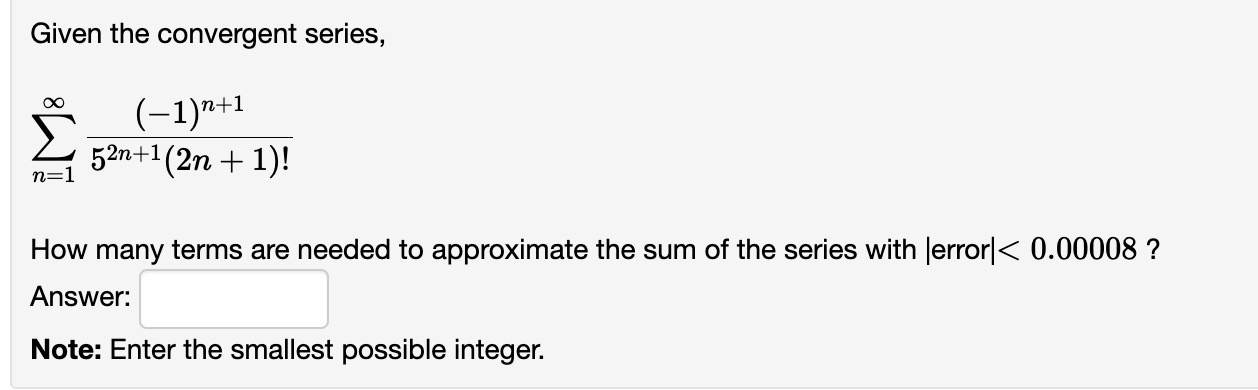
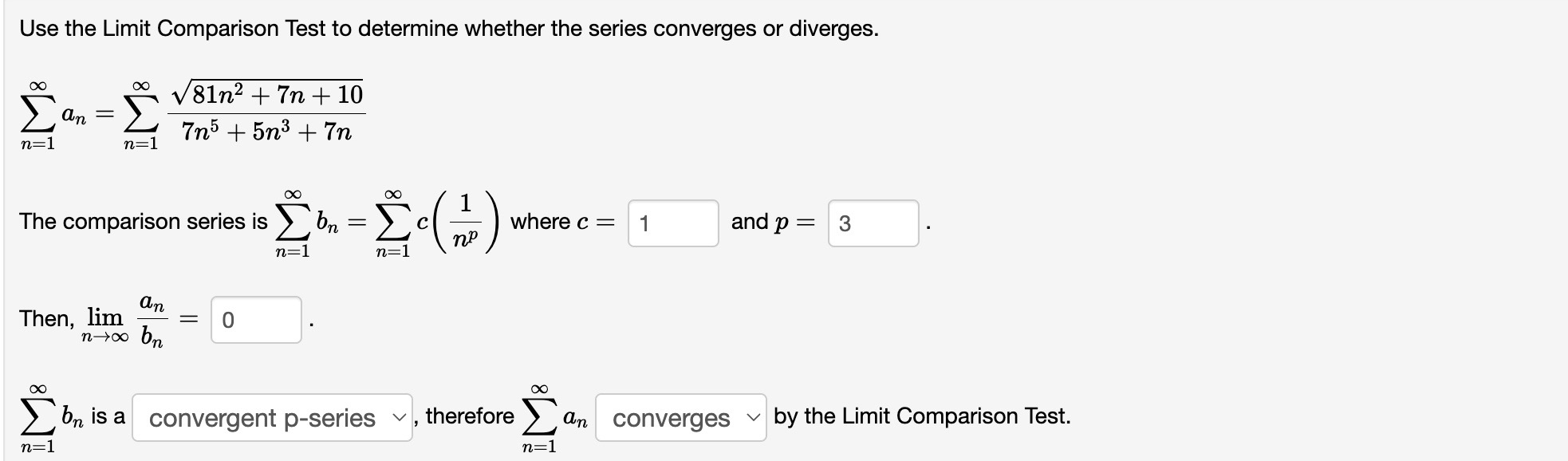
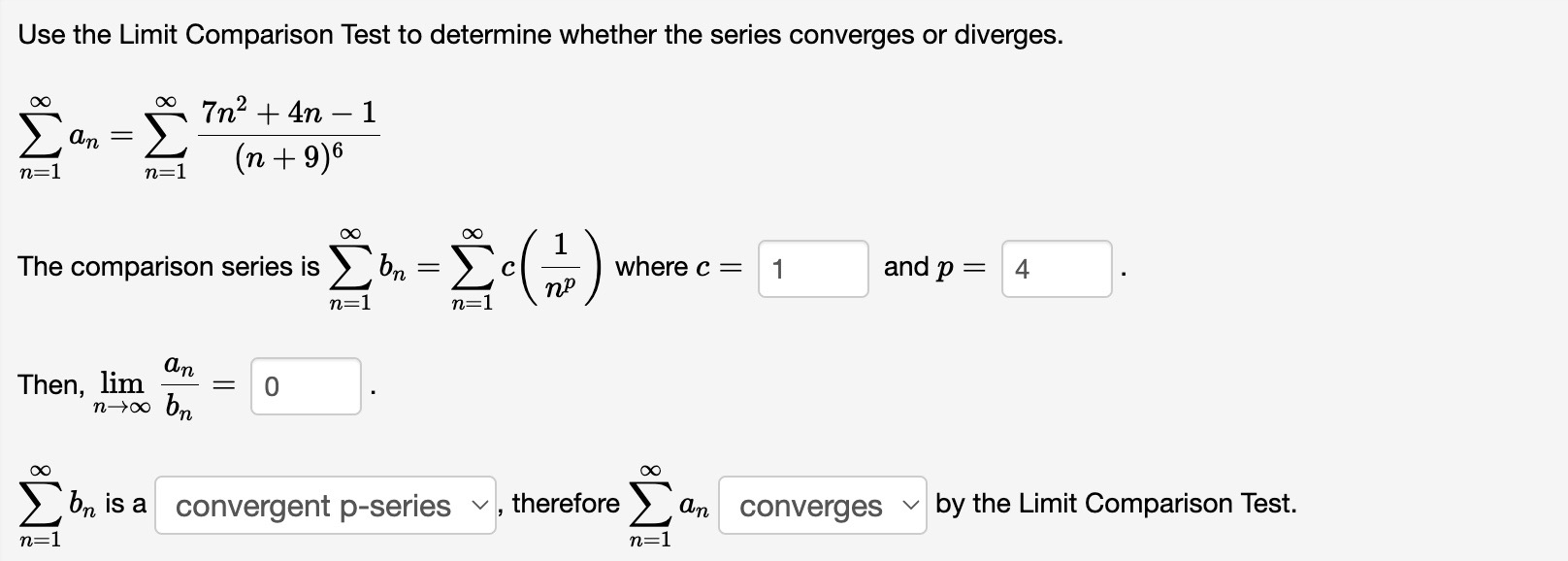
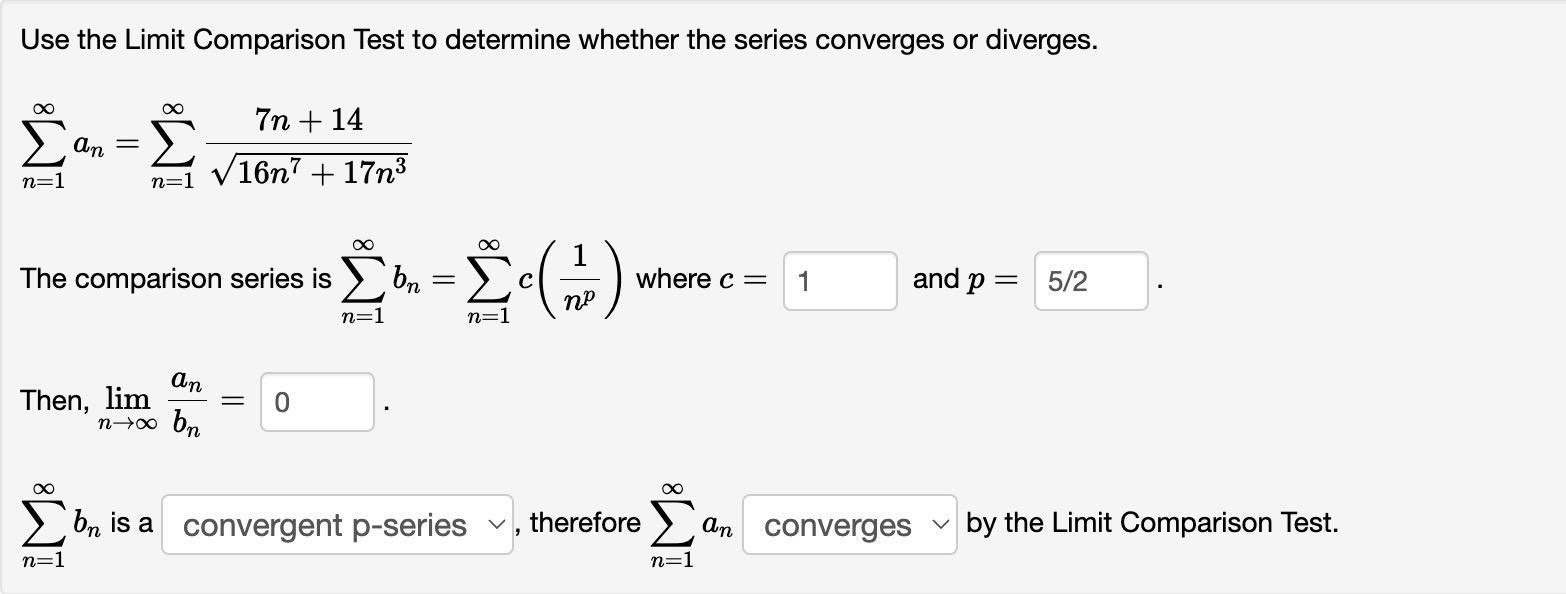
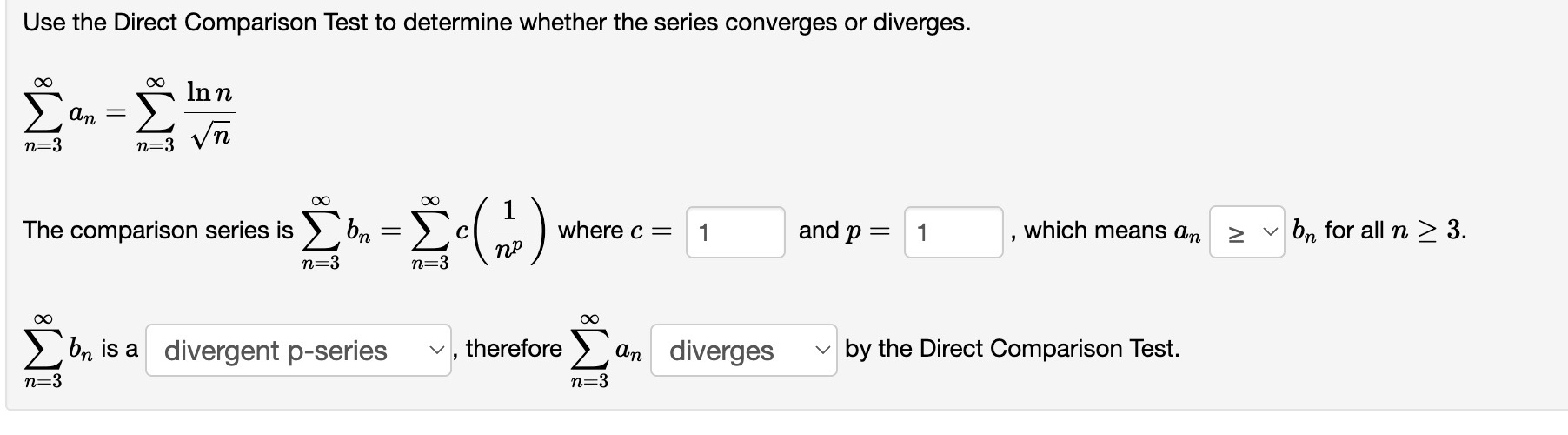
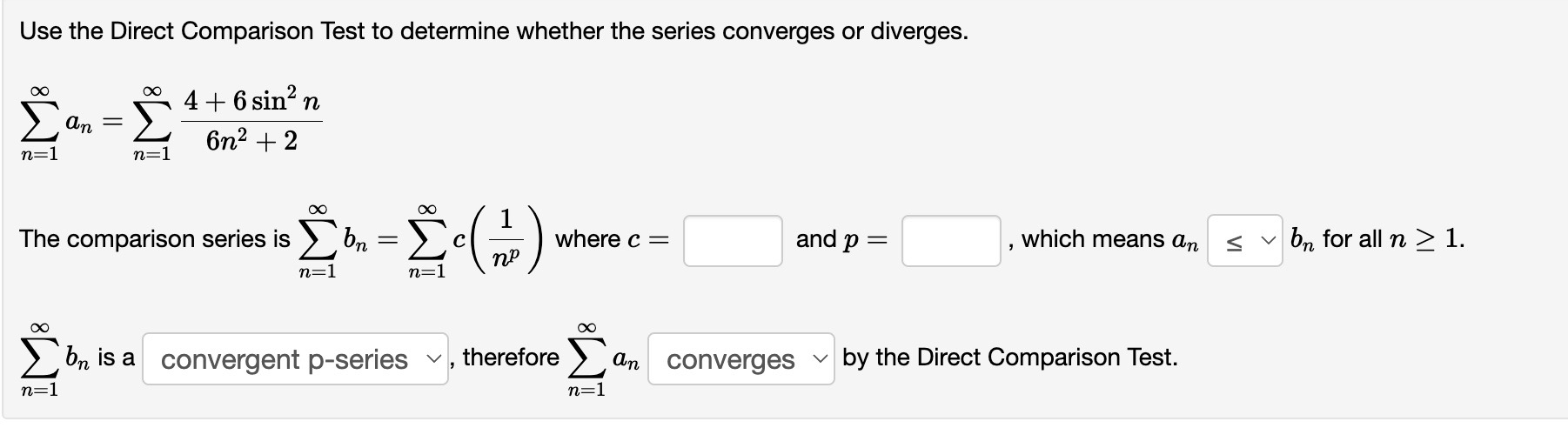
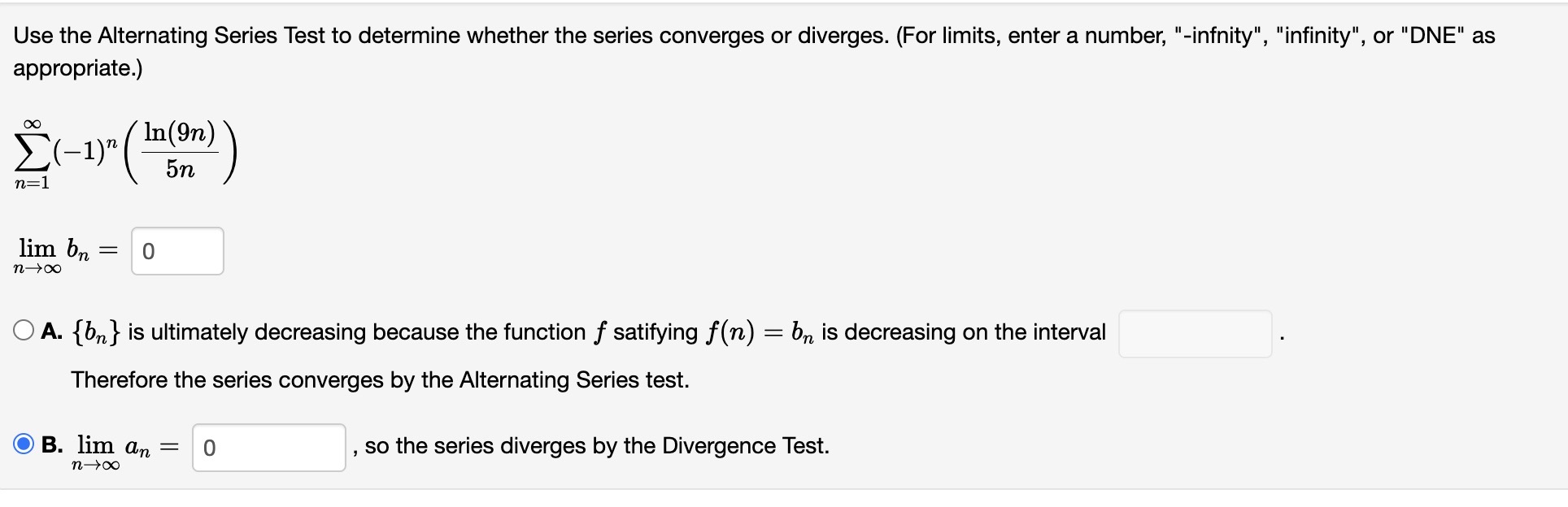
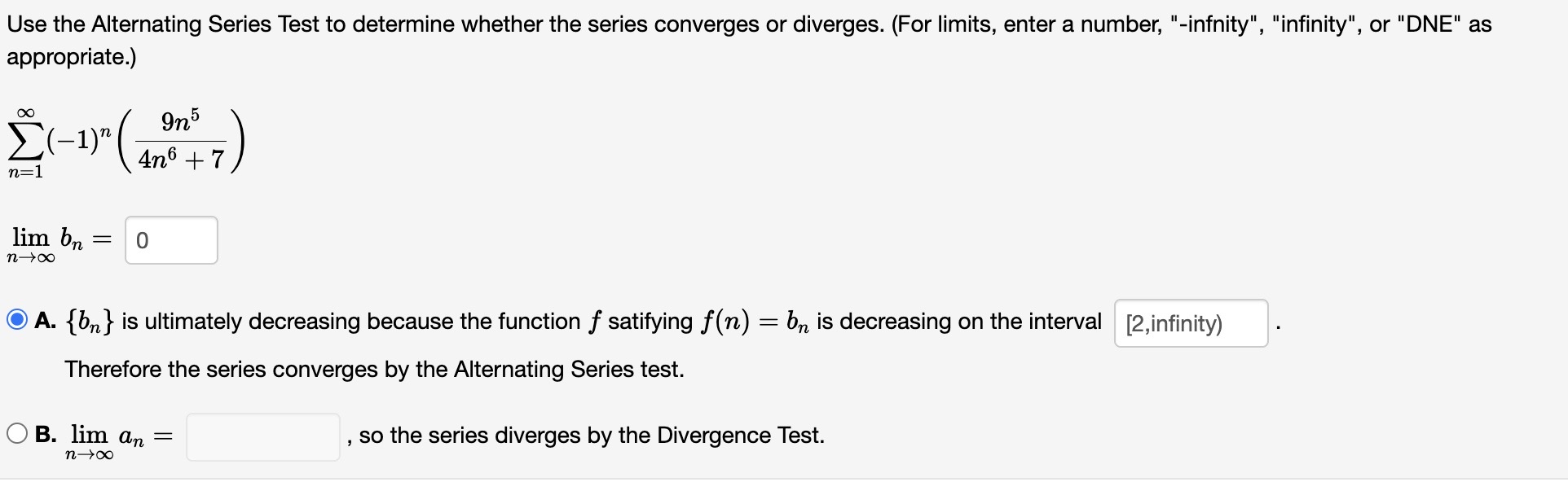
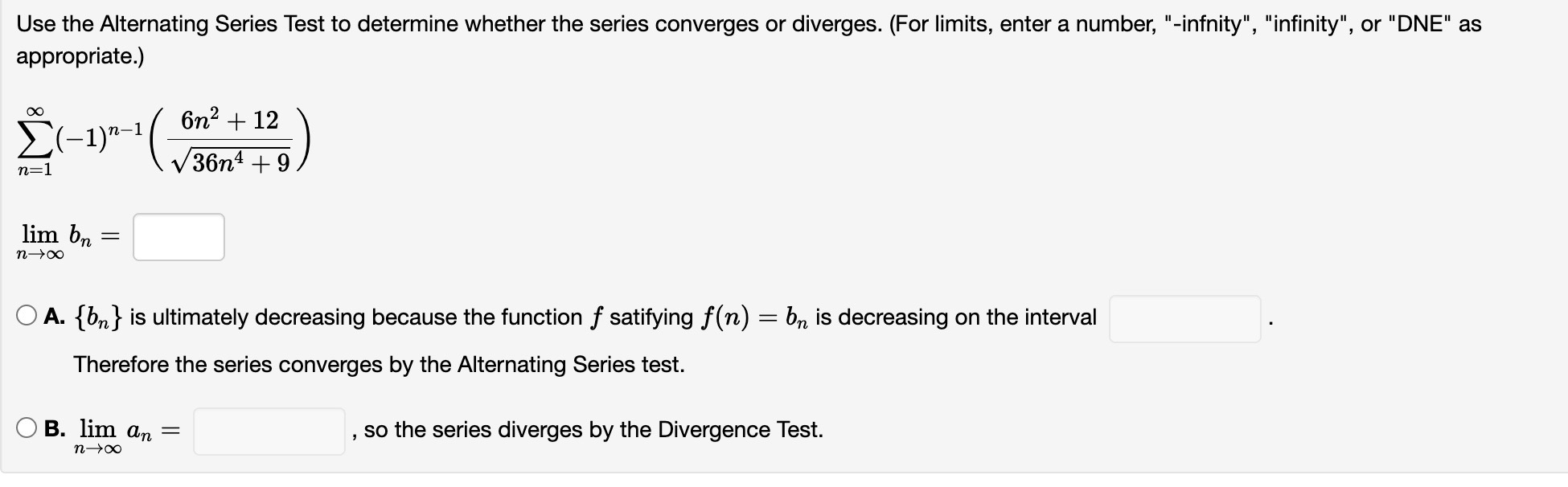
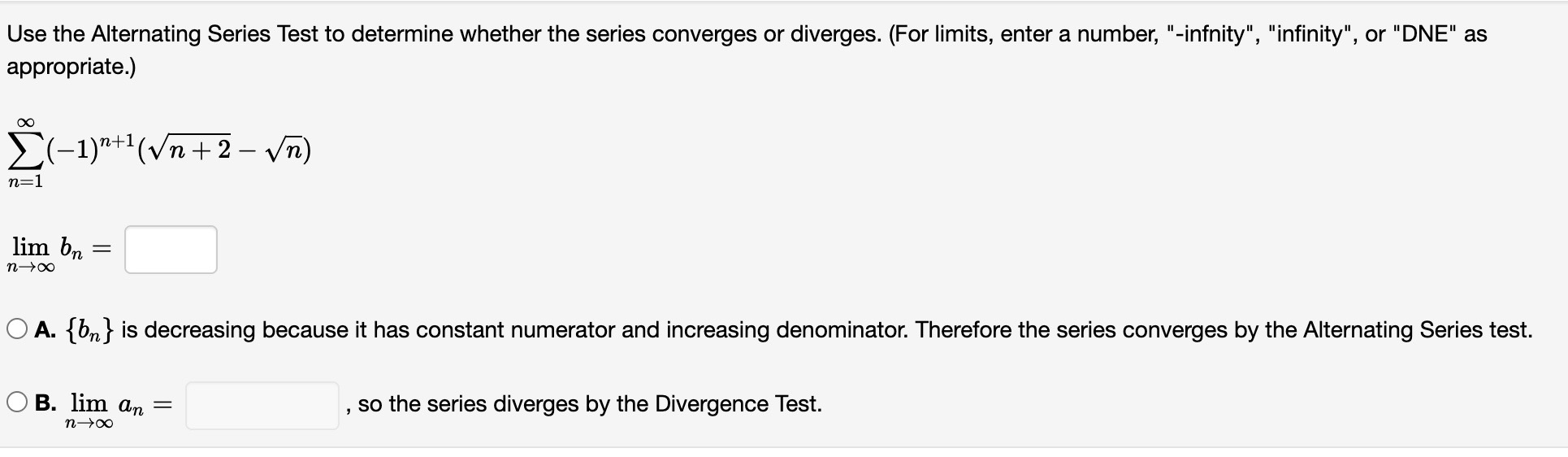
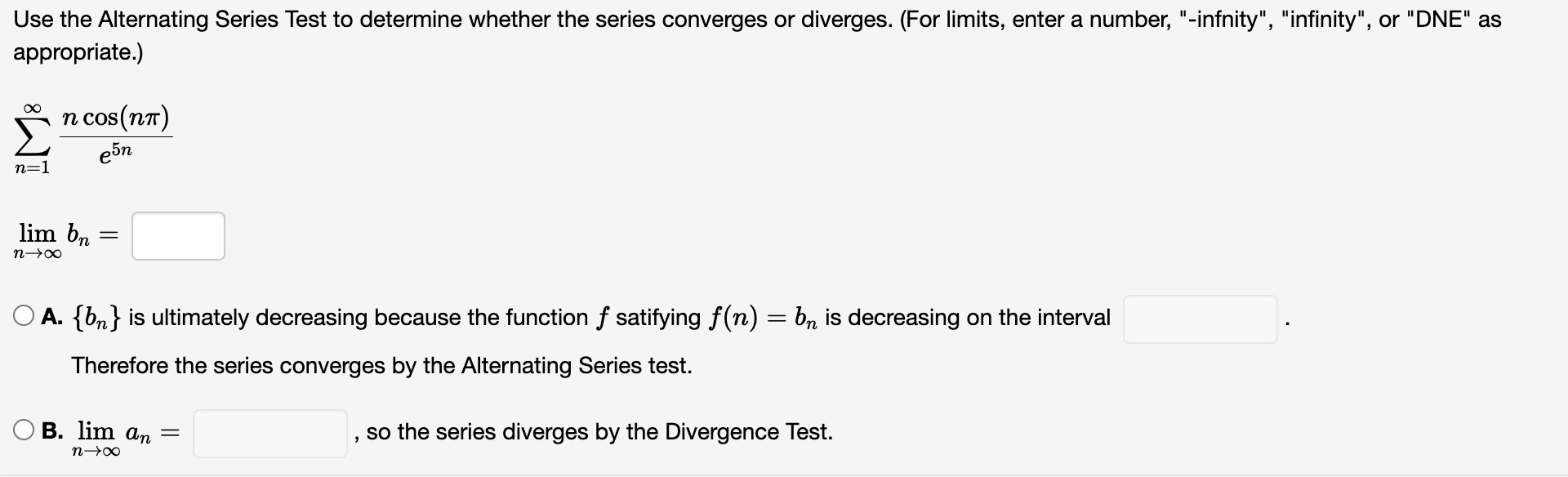
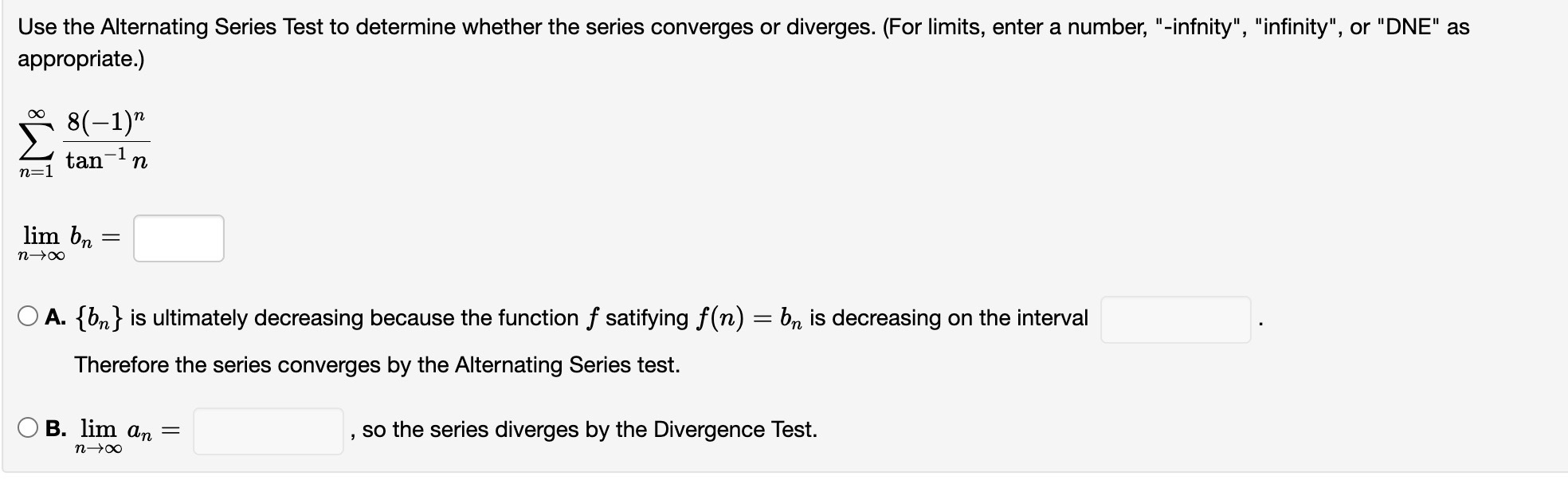
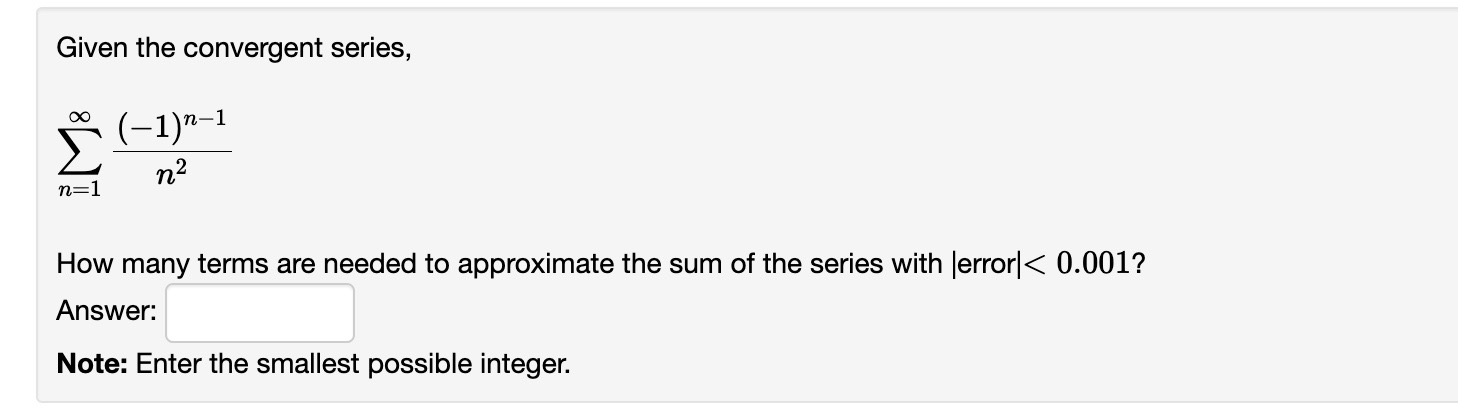
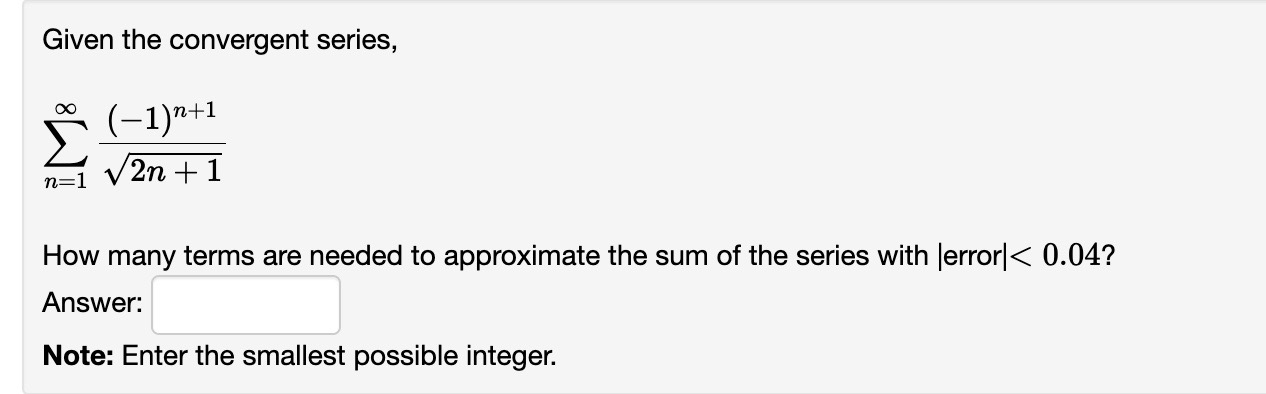
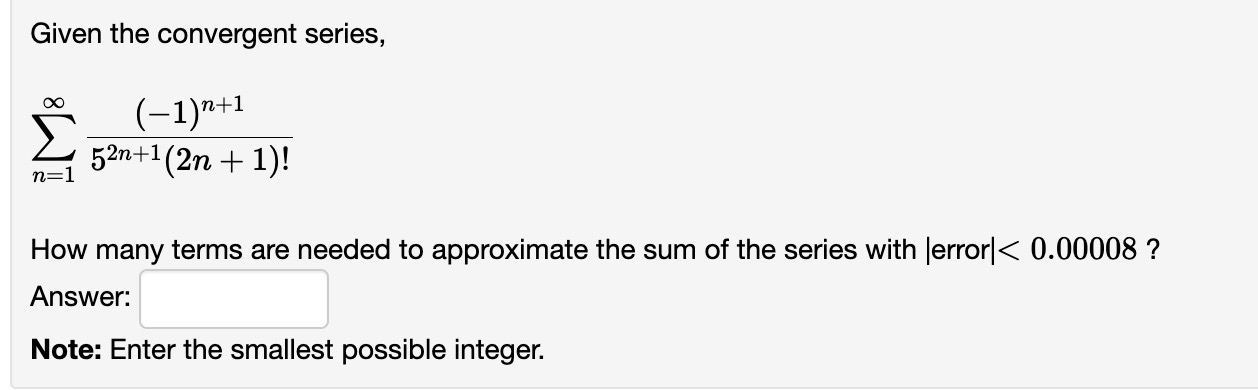
Use the Limit Comparison Test to determine whether the series converges or diverges. V8In2 + 7n + 10 an n=1 n=1 7n5 + 5n3 + 7n The comparison series is > bn C where c = 1 and p = 3 np n=1 n=1 Then, lim an 0 on Ebn is a convergent p-series , therefore converges v by the Limit Comparison Test. n= 1 n= 1Use the Limit Comparison Test to determine whether the series converges or diverges. f: :0: 7112 + 4n 1 an : n:l n:1 (n + 9)6 00 00 1 The com arison series is b : 7 h : d : p Z Zc(m)wem 1 an ,9 4 71:1 11:1 0: Then, lim n : 0 viz>00 b\" 00 00 E b" is a convergent pseries v , therefore 2 an converges v by the Limit Comparison Test. 71:1 71:1 Use the Limit Comparison Test to determine whether the series converges or diverges. 00 . . 1 The comparison series is E I)\": go c(;) where c : 1 and p : 5/2 71:1 71:1 0. Then, lim n : 0 nmo (3n 2 bn is a convergent pseries v , therefore 2 an converges v by the Limit Comparison Test. Use the Direct Comparison Test to determine whether the series converges or diverges. 0 00 In n 2 an : Z i n:3 n:3 x/ 00 OO 1 The comparison series is Z I) : Z C(np) where c : 1 and p : 1 , which means an 2 v b\" for all n 2 3. n23 n:3 OO 00 2 b" is a divergent pseries v , therefore 2 an diverges v by the Direct Comparison Test. n:3 n:3 Use the Direct Comparison Test to determine whether the series converges or diverges. 0 0 4 + 6 sin2 n 2 an : Z 6 2 + 2 91:1 7121 n 00 ()0 1 The comparison series is Z I)\" = Z c() where c = and p = , which means an 5 v bn for all n 2 1. 71:1 71:1 Ti? 00 00 Z: bn is a convergent pseries v , therefore 2 an converges v by the Direct Comparison Test. 91:1 n:1 Use the Alternating Series Test to determine whether the series converges or diverges. (For limits, enter a number, "-infnity", "infinity", or "DNE" as appropriate.) C(-1) In(In) 5n n=1 lim on = 0 O A. {bn } is ultimately decreasing because the function f satifying f(n) = bn is decreasing on the interval Therefore the series converges by the Alternating Series test. OB. lim an = 0 so the series diverges by the Divergence Test.Use the Alternating Series Test to determine whether the series converges or diverges. (For limits, enter a number, "-infnity", "infinity", or "DNE" as appropriate.) [(-1)" In5 n=1 An6 + 7 lim on = 0 O A. {bn} is ultimately decreasing because the function f satifying f(n) = bn is decreasing on the interval [2,infinity) Therefore the series converges by the Alternating Series test. OB. lim an = , so the series diverges by the Divergence Test.Use the Alternating Series Test to determine whether the series converges or diverges. (For limits, enter a number, "-infnity", "infinity", or "DNE" as appropriate.) E(-1) -1 6n2 + 12 n=1 36n4 + 9 lim on = O A. {bn} is ultimately decreasing because the function f satifying f(n) = bn is decreasing on the interval Therefore the series converges by the Alternating Series test. OB. lim an = , so the series diverges by the Divergence Test.Use the Alternating Series Test to determine whether the series converges or diverges. (For limits, enter a number, "-infnity", "infinity", or "DNE" as appropriate.) E(-1) not] (Vn+2 - Vn) n=1 lim on = n-+ 00 O A. {bn } is decreasing because it has constant numerator and increasing denominator. Therefore the series converges by the Alternating Series test. O B. lim an = , so the series diverges by the Divergence Test.Use the Alternating Series Test to determine whether the series converges or diverges. (For limits, enter a number, "-infnity", "infinity", or "DNE" as appropriate.) n cos (NTT) esn n=1 lim on = O A. {bn} is ultimately decreasing because the function f satifying f (n) = bn is decreasing on the interval Therefore the series converges by the Alternating Series test. OB. lim an = , so the series diverges by the Divergence Test.Use the Alternating Series Test to determine whether the series converges or diverges. (For limits, enter a number, "-infnity", "infinity", or "DNE" as appropriate.) 8 ( -1) n n= 1 tan In lim on = O A. {bn} is ultimately decreasing because the function f satifying f (n) = bn is decreasing on the interval Therefore the series converges by the Alternating Series test. OB. lim an = , so the series diverges by the Divergence Test.Given the convergent series, 00 _1 111 2 % 71:1 How many terms are needed to approximate the sum of the series with |error|
Step by Step Solution
There are 3 Steps involved in it

Get step-by-step solutions from verified subject matter experts
 Study Help