







Question: using javascript undefined In this exercise you will build a simple banking system according the design shown in Figure 1. Bank BankAccount accounts: BankAccount getAccount/accountNo:
using javascript 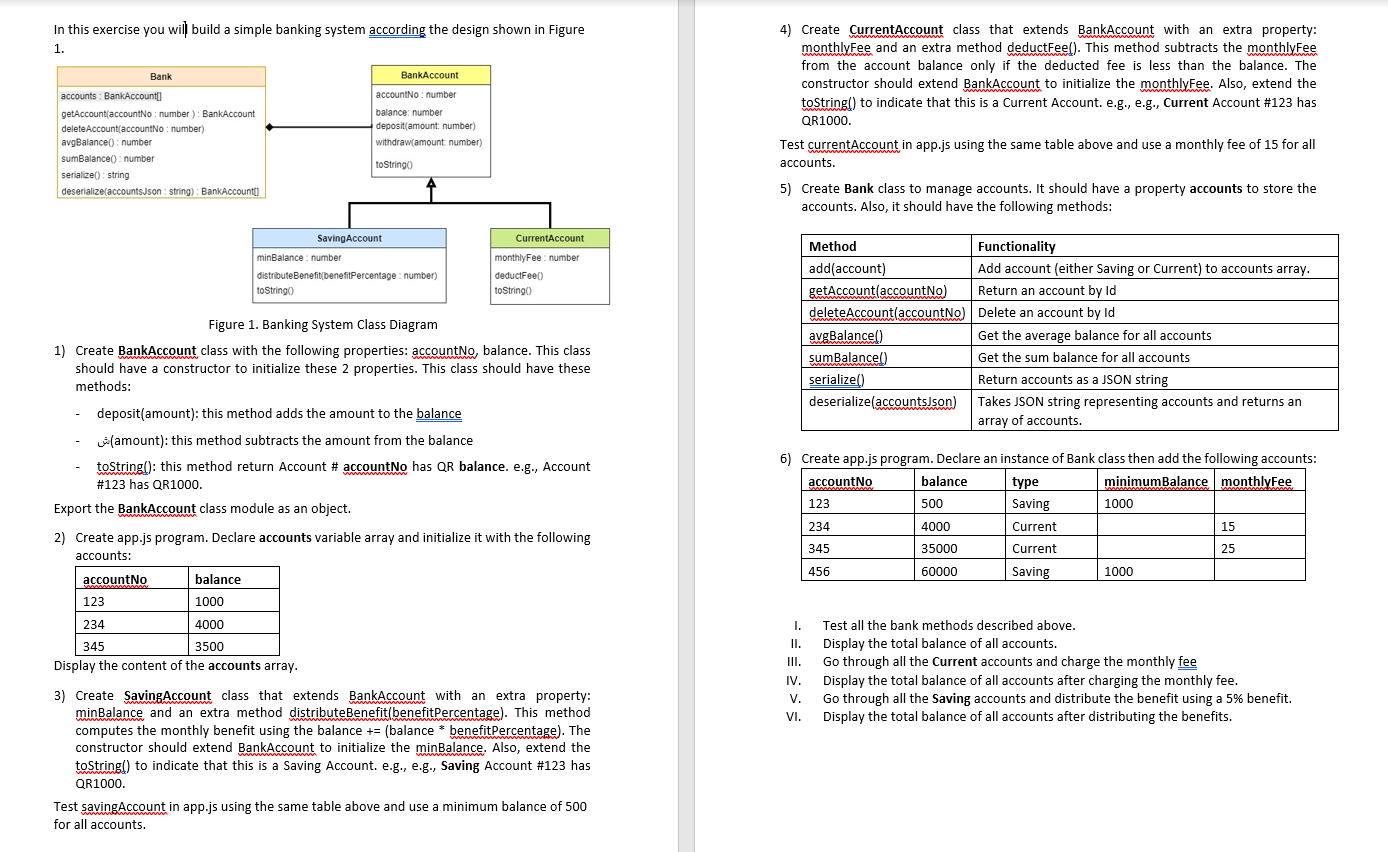 undefined
In this exercise you will build a simple banking system according the design shown in Figure 1. Bank BankAccount accounts: BankAccount getAccount/accountNo: number): BankAccount delete Account(accountNo: number) avgBalance(): number sumBalance(): number serialize(): string deserialize(accounts.json:string): BankAccount) accountNo: number balance number depositamount number) withdraw(amount number) 4) Create CurrentAccount class that extends BankAccount with an extra property: monthly fee and an extra method deductFeel). This method subtracts the monthlyFee from the account balance only if the deducted fee is less than the balance. The constructor should extend BankAccount to initialize the monthlyFee. Also, extend the toString() to indicate that this is a Current Account. e.g., e.g., Current Account #123 has QR1000. Test currentAccount in app.js using the same table above and use a monthly fee of 15 for all accounts. 5) Create Bank class to manage accounts. It should have a property accounts to store the accounts. Also, it should have the following methods: toStringo SavingAccount minBalance : number distribute Benefit benefitPercentage : number) toStringo CurrentAccount monthlyFee: number deductFeed toString Method Functionality add(account) Add account (either Saving or Current) to accounts array. getAccount(accountNo) Return an account by Id deleteAccount(accountNo) Delete an account by Id avgBalancel) Get the average balance for all accounts sumBalancel) Get the sum balance for all accounts serializel) Return accounts as a JSON string deserialize(accountsJson) Takes JSON string representing accounts and returns an array of accounts. Figure 1. Banking System Class Diagram 1) Create BankAccount class with the following properties: accountNo, balance. This class should have a constructor to initialize these 2 properties. This class should have these methods: deposit(amount): this method adds the amount to the balance wilamount): this method subtracts the amount from the balance toStringl): this method return Account # accountNo has QR balance. e.g., Account #123 has QR1000. Export the BankAccount class module as an object. 2) Create app.js program. Declare accounts variable array and initialize it with the following accounts: 6) Create app.js program. Declare an instance of Bank class then add the following accounts: accountNo balance type minimumBalance monthlyFee 123 500 Saving 1000 234 4000 Current 15 345 35000 Current 25 456 60000 Saving 1000 accountNo balance 123 1000 234 4000 345 3500 Display the content of the accounts array. 1. II. III. IV. V. VI. Test all the bank methods described above. Display the total balance of all accounts. Go through all the Current accounts and charge the monthly fee Display the total balance of all accounts after charging the monthly fee. Go through all the Saving accounts and distribute the benefit using a 5% benefit. Display the total balance of all accounts after distributing the benefits. 3) Create SavingAccount class that extends BankAccount with an extra property: minBalance and an extra method distributeBenefit benefitPercentage). This method computes the monthly benefit using the balance += (balance * benefit Percentage). The constructor should extend BankAccount to initialize the minBalance. Also, extend the toString() to indicate that this is a Saving Account. e.g., e.g., Saving Account #123 has QR1000. Test savingAccount in app.js using the same table above and use a minimum balance of 500 for all accounts
Step by Step Solution
There are 3 Steps involved in it

Get step-by-step solutions from verified subject matter experts
 Study Help