







Question: USING MATLAB the ideal low-pass filter (LPF) h -such that it has cut-off frequencies at (a) (15 points) Consider ae = Design two FIR filters,
USING MATLAB
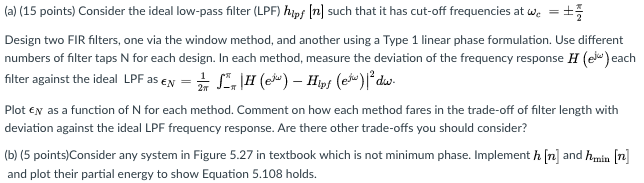
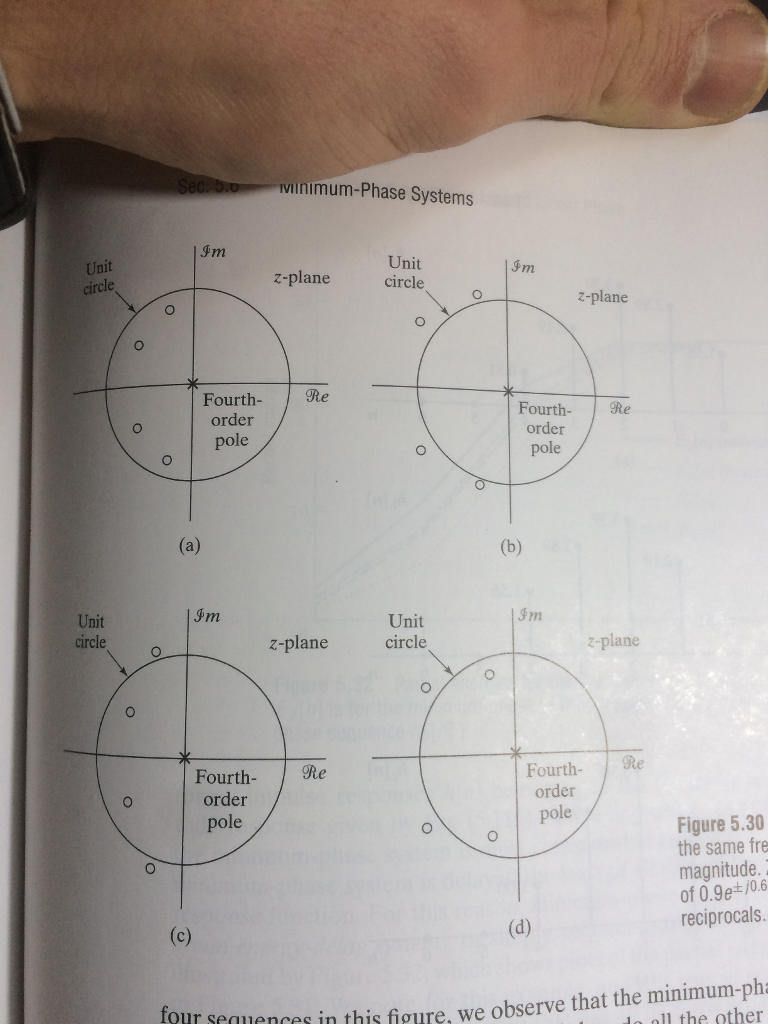
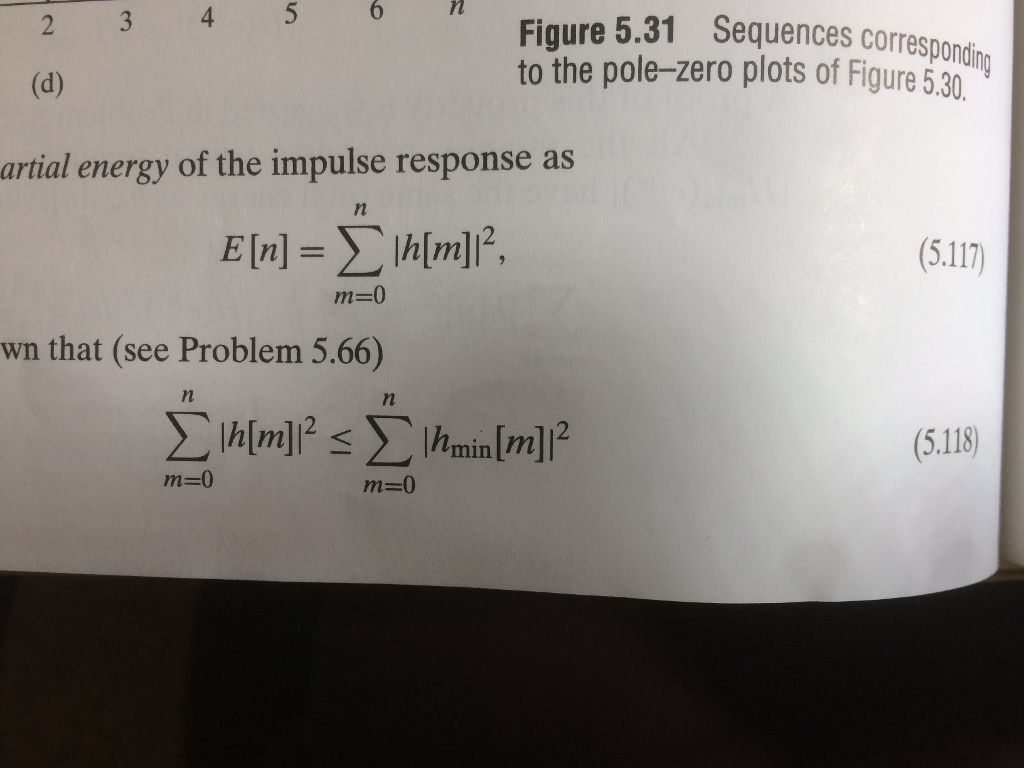
the ideal low-pass filter (LPF) h -such that it has cut-off frequencies at (a) (15 points) Consider ae = Design two FIR filters, one via the window method, and another using a Type 1 linear phase formulation. Use different numbers of filter taps N for each design. In each method, measure the deviation of the frequency response H (eeach filter against the ideal LPF ag-1 r-H (e")-H (ei)l2dw Plot ev as a function of N for each method. Comment on how each method fares in the trade-off of filter length with deviation against the ideal LPF frequency response. Are there other trade-offs you should consider? b) (5 points/Consider any system in Figure 5.27 in textbook which is not minimum phase. Implement h [n] and hmin [n and plot their partial energy to show Equation 5.108 holds. the ideal low-pass filter (LPF) h -such that it has cut-off frequencies at (a) (15 points) Consider ae = Design two FIR filters, one via the window method, and another using a Type 1 linear phase formulation. Use different numbers of filter taps N for each design. In each method, measure the deviation of the frequency response H (eeach filter against the ideal LPF ag-1 r-H (e")-H (ei)l2dw Plot ev as a function of N for each method. Comment on how each method fares in the trade-off of filter length with deviation against the ideal LPF frequency response. Are there other trade-offs you should consider? b) (5 points/Consider any system in Figure 5.27 in textbook which is not minimum phase. Implement h [n] and hmin [n and plot their partial energy to show Equation 5.108 holds
Step by Step Solution
There are 3 Steps involved in it

Get step-by-step solutions from verified subject matter experts
 Study Help