Question: want to ask q2 CASE: Amazon was the e biggest Internet-based retailer in the United States and had frequently been featured in Fortune magazine's Elite
want to ask q2
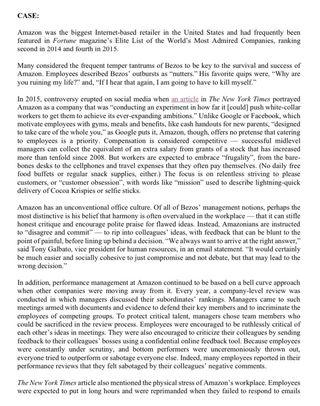
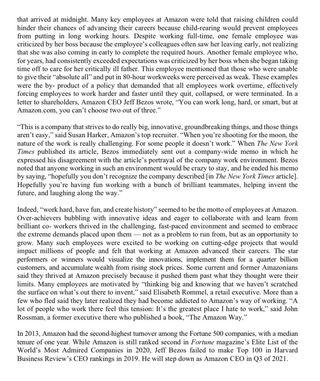
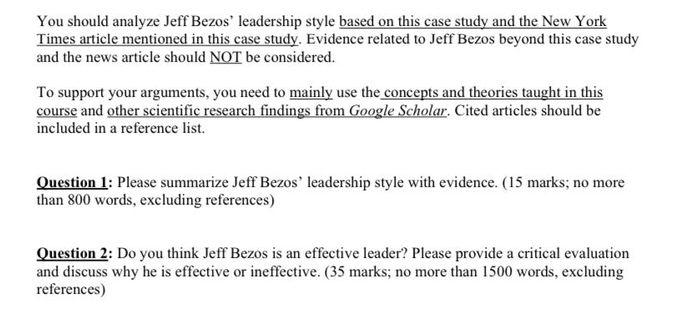
CASE: Amazon was the e biggest Internet-based retailer in the United States and had frequently been featured in Fortune magazine's Elite List of the World's Most Admired Companies, ranking scoord in 2014 and fourth 2015 Many considered the request temperatus of Beas to be key to the survival and success of Amare Employees described Beasbestsasters." His favorite quis were "Why are you ruining my biker and, "If I hear that apain, I am going to have to kill myself In 2015.controversy erupted on xial media when article in the New York Times portrayed Amazon as a company that was conducting an expert in how far it could push white collar workers to get them to achieve its ever-panding ambitions Unlike Google e Facebook, which motivate employees with gyms, meals and benefits, bike cash bandouts for new parent designed to take care of the whole you."as Google puts it. Amazon, though offers no pretense that catering employees is a priority, Compensatie is considerod competitive successful midlevel managers can collect the equivalent of an extra salary from grants of a stock that has increased more than enfold since 2008. But workers are expected to embrace "frugality, from the bare bune desks to the cellphones and travel experties that they often pay themselves. (No daily free food bullets or regular snack supplicaciter) The focus is on relentless striving to please customers, or "customer obsession with words like missed used to describe lightning-quick delivery of Cocoa Krispies or selfie sticke Amazon has an unconventional office culture of all of Bezos management notions, perhaps the mos distinctive is his belief that harmony is often avevalued in the workplace --that it can stille honest critique and encourage polite praise for flawed Ideas Instead, Amaronians are instructed "disagree and commit to rip into colleagues ideas, with feedback that can be blunt to the point of pamfal before lining up behind a decision. We always want to arrive at the right said Tony Galbato vice president for human resources, in an email torment would certainly be much easier and socially cohesive to just compromise and not debute, but that may lead to the Ton de In addition, performance management Amazon continued to be based on a beli curve appeach when the companies were moving way from it. Every year, a company-level review was conducted in which manages discussed their subordinates ranking Managers came to such meetings armed with documents and evidence to defend their key members and to incriminate the employees of competing groups. To protect critical talent managers chose team members who could be sacrificed in the review process Employees were couraged to be ruthlessly critical of each other's das in meetings. They were also encouraged to critice their colleagues by sending feedback to their collagens bosses using a confidential online feedback tool. Becais employees were constantly under rutiny, and bottom performers were un ceremoniously thrown out. everyone tried to outperfomo sabotage everyone else Indeed, many employees repeted in the performance revious that they felt sabotaged by their colleagues' negative comments The New York Times article also meted the physical stress of Amazon's workplace. Employees were expected to put in long hours and were reprimanded when they failed to reped to emails that arrived at midnight. Many key employees at Amazon were told that raising children could hinder their chances of advancing the careers because child-scaring would prevent itployees from putting in ling working hours. Despite working full-time on temak employce was criticized by her boss because the employee's colapsodien saw her loving carly, not realizing at she was also coming in caly to complete the required hoses. Another female employee who foe years balconsistently exceeded expectations was entered by her boss when she began taking inte off to care for beteritically all fatket. This employee mentioned those who were unable to pise their holate all and put in 80-bout work weeks were perceived as well. These example were the by, product of a policy that demanded that all employees work overtime, effectively forcing employees to work harder and faster until they quit, collapsed, or were terminated. In a Iller to sharebolder Amazon CHO K Bros Wrols. You can work long, hard, or mart but at Amazon.com, you can't choose two out of the "This is a company that strives to do really big, innovative groundheaking things and those things aren't cay, said Susan Harker. Amazon's top recruiter. When you're showing for the moon, the nature of the work is really challenging. For some people is doesn't work. When The New York Times published ils acle, Bezos inmediately sent out a company wide mento in which he expressed his disagreement with the articles pretrayal of the company work environment. Bros noted that anyone working in ach an environment should be crazy to stay, and he ended his memo by saying "hopefully you don't recopose the company described in The New York Times article Hopefully you're having fun working with a bunch of brilliant cames, helping in the future, and forghing along the way." Indeed, wek hard, have fun, and create history seemed to be the moto of employees at Amazon Over-achieves bubbling with innovative ideas and cager to collaborate with and kam from brilliant co-workers thrived in the challenging fast-paced environment and somed to embrace the extreme demands placed upon thom-Dot as a problem to na from, but as an opportunity to grow. May sach employees were excited to be working on cutting-edge projects that would import millions of people and felt that working at Amace advanced their careers. The star perfomers or we would visualize the resovation, implement them for a quarterbilion Customers, and accumulate wealth from rising stock prices. Some current and former Amazoniam said they theived at Amiwe precisely because it pushed the past what they thought were their limits. Many employees te motivated by thinking big and knowing that we have scratched the surface on what's out there to invent said Elisabeth Rommel, a retail exccutive More than a few who fled as they later tralized they has become addicted to Amare's way of working ks of people who work there feels the greatest place I hate to work and Jon Rossman, a former executive there who published a book. "The Amazon Way." In 2013, Amawe had the second hughest bumover among the Fortune 500 companies with a median Some of coc year. While Amazon is still ranked second in Forw magazine's Elite List of the World's Most Admired Companies in 2020. Bez failed to make Top 100 in Harvard Husiness Reviews CEO ranking in 2019. He will step down as Amazon CEO in 03.-2021 You should analyze Jeff Bezos' leadership style based on this case study and the New York Times article mentioned in this case study. Evidence related to Jeff Bezos beyond this case study and the news article should NOT be considered. To support your arguments, you need to mainly use the concepts and theories taught in this course and other scientific research findings from Google Scholar. Cited articles should be included in a reference list. Question 1: Please summarize Jeff Bezos' leadership style with evidence. (15 marks; no more than 800 words, excluding references) Question 2: Do you think Jeff Bezos is an effective leader? Please provide a critical evaluation and discuss why he is effective or ineffective. (35 marks; no more than 1500 words, excluding references)









 Study Help