



Question: We have covered problems in class (e.g., involving the rotational barrier of an amide CN bond or involving the anomeric effect) wherein the properties of
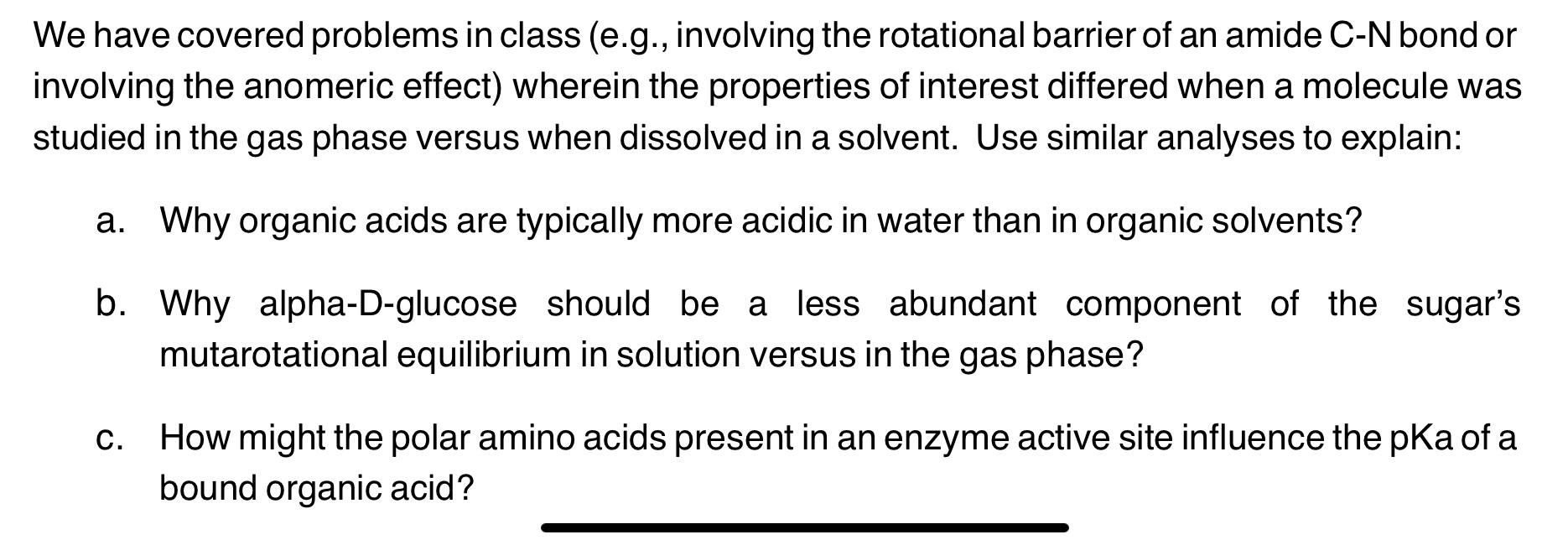
We have covered problems in class (e.g., involving the rotational barrier of an amide CN bond or involving the anomeric effect) wherein the properties of interest differed when a molecule was studied in the gas phase versus when dissolved in a solvent. Use similar analyses to explain: a. Why organic acids are typically more acidic in water than in organic solvents? b. Why alpha-D-glucose should be a less abundant component of the sugar's mutarotational equilibrium in solution versus in the gas phase? c. How might the polar amino acids present in an enzyme active site influence the pKa of a bound organic acid
Step by Step Solution
There are 3 Steps involved in it
1 Expert Approved Answer
Step: 1 Unlock

Question Has Been Solved by an Expert!
Get step-by-step solutions from verified subject matter experts
Step: 2 Unlock
Step: 3 Unlock