







Question: The two cases (slide 1 versus slide 2) demonstrates that at the same 20% growth (and the same assumption that Debt-Equity Ratios stay constant year
The two cases (slide 1 versus slide 2) demonstrates that at the same 20% growth (and the same assumption that Debt-Equity Ratios stay constant year to year) into the next year for both cases, slide 2 does not need EFN (rather, slide 2 could afford to pay out some dividend in the next year), but slide 3 does need EFN.
Please explain what fundamentally gives rise to the difference? Try to relate your explanation to the Sustainable Growth Rate (as well as the SGR formula given in the textbook), ROE and other concepts if needed. Show algebra if it helps.
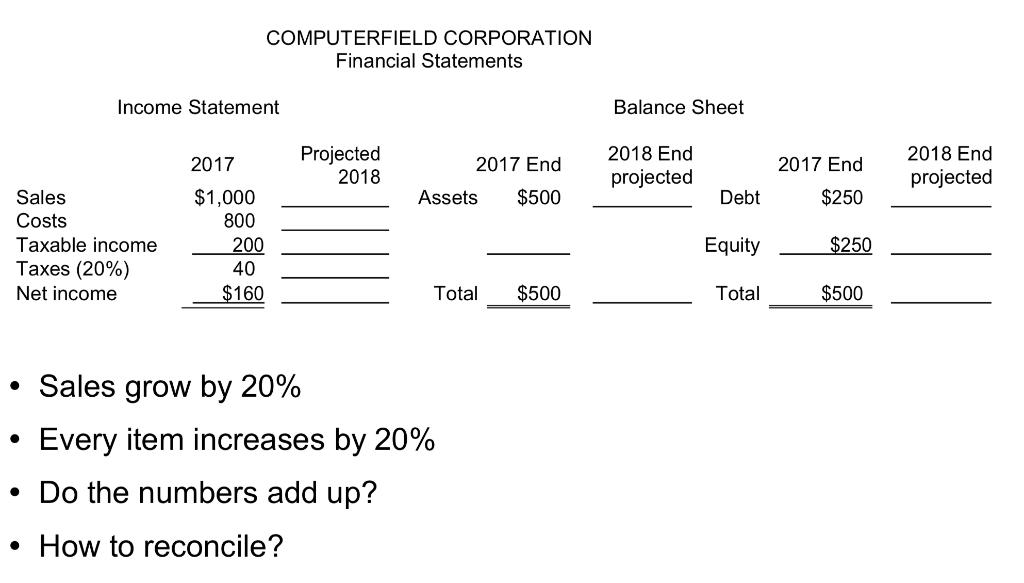
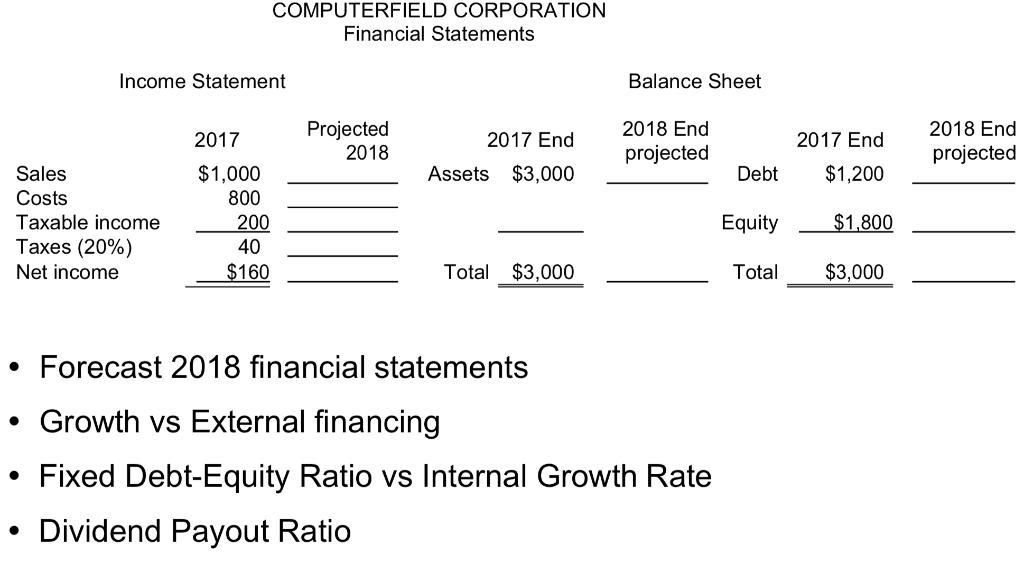
Sales Costs Taxable income Taxes (20%) Net income Income Statement 2017 $1,000 800 COMPUTERFIELD CORPORATION Financial Statements 200 40 $160 Projected 2018 Sales grow by 20% Every item increases by 20% Do the numbers add up? How to reconcile? 2017 End $500 Assets Total $500 Balance Sheet 2018 End projected Debt Equity Total 2017 End $250 $250 $500 2018 End projected
Step by Step Solution
3.45 Rating (148 Votes )
There are 3 Steps involved in it
ANSWER The difference in the two cases arises from the fact that in the first case the company is as... View full answer

Get step-by-step solutions from verified subject matter experts
 Study Help