







Question: What is the underlying problem in this case from Fast Food industrys perspective? What are the causes of this problem? What are the major motivational
- What is the underlying problem in this case from Fast Food industrys perspective?
- What are the causes of this problem?
- What are the major motivational issues at play in the fast food industry according to the major needs- based theories of motivation (Maslows hierarchy, McClellandss acquired needs)
- What would Herzbergs theory say about the hygiene and motivational factors present in fast food industry jobs?
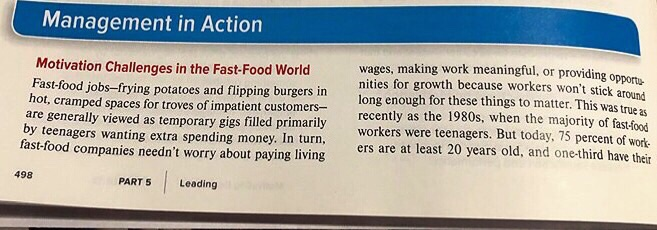
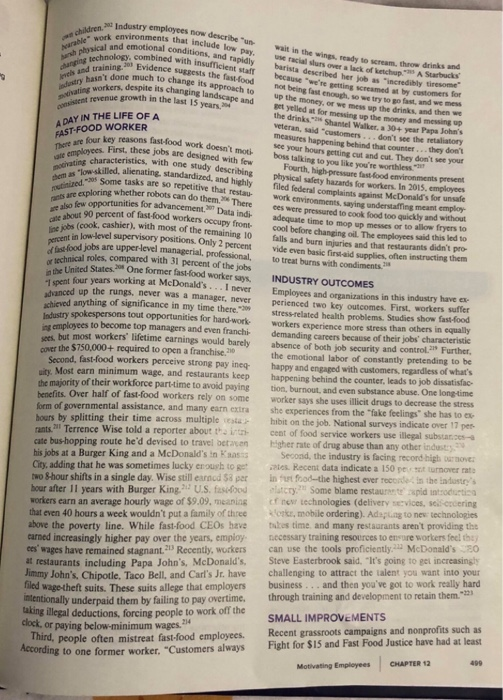
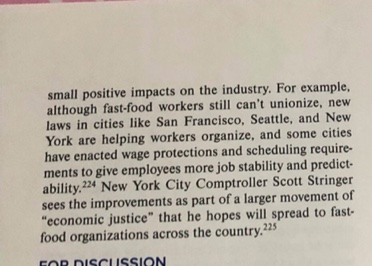
Management in Action Motivation Challenges in the Fast-Food World Fast-food jobs-frying potatoes and flipping burgers in hot, cramped spaces for troves of impatient customers- are generally viewed as temporary gigs filled primarily by teenagers wanting extra spending money. In turn, fast-food companies needn't worry about paying living wages, making work meaningful, or providing opportu nities for growth because workers won't stick around long enough for these things to matter. This was true as recently as the 1980s, when the majority of fast-food workers were teenagers. But today, 75 percent of work ers are at least 20 years old, and one-third have their 498 PART 5 Leading FAST-FOOD WORKER children. Industry employees now describe Nurable work environments that include low pay. phosical and emotional conditions, and rapidly walt in the wings, ready to scream, throw drinks and ung technology combined with insuficient staff barista described her you incredibly tiresome wherracial sturs over a lack of ketchup. * A Succes in and training. Evidence suggests the fast-food because we're getting screamed by customers for dustry hasn't done much to change its approach to not being fast enough, so we try to go fast, and we me ting workers, despite its changing landscape and en revenue growth in the last 15 years up the money, or we mess up the drinks, and then we Bet yelled ut for messing up the money and messing up the drinks *** Shantel Walker, a 30+ yeat Papa John's A DAY IN THE LIFE OF A veteran, said "customers ... don't see the retaliatory measures happening behind that counter they don't There are four key reasons fast-food work doesn't mot ate employees. First, these jobs are designed with few see your hours getting cut and cut. They don't see your boss talking to you like you're worthless. nocivating characteristics, with one study describing Fourth, high pressure fast food environments present them as low skilled, alienating, standardized, and highly physical safety hazards for workers. In 2015, employees red. Some tasks are so repetitive that resta filed federal complaints against McDonald's for unsafe are exploring whether robots can do them. There work environments, saying understaffing meant employ avabo few opportunities for advancement Data indi- ces were pressured to cook food too quickly and without cate about 90 percent of fast food workers Occupy front adequate time to mop up messes or to allow fryers to line jobs (cook, cashier), with most of the remaining 10 cool before changing oil. The employees and this led to percent in low-level supervisory positions. Only 2 percent falls and burn injuries and that restaurants didn't pro ofistfood jobs are upper level managerial, professional, vide even basic first aid supplies, often instructing them or technical roles, compared with 31 percent of the jobs to treat burns with condiments *** the United States. One former fast-food worker says, INDUSTRY OUTCOMES 1 spent four years working at McDonald's ... I never advanced up the rungs, never was a manager, never Employees and organizations in this industry have achieved anything of significance in my time there." perienced two key outcomes. First workers suffer stress-related health problems. Studies show fast-food Industry spokespersons tout opportunities for hard-work workers experience more stress than others in equally ing employees to become top managers and even franch demanding careers because of their jobs' characteristie sees, but most workers' lifetime earnings would barely absence of both job security and control. Further, cover the $750,000+ required to open a franchise 210 the emotional labor of constantly pretending to be Second, fast-food workers perceive strong pay ineg happy and engaged with customers, regardless of what's wity. Most earn minimum wage, and restaurants keep happening behind the counter, leads to job dissatisfac the majority of their workforce part-time to avoid paying tion, burnout, and even substance abuse. One long time benefits. Over half of fast-food workers rely on some worker says she uses illicit drugs to decrease the stress form of governmental assistance, and many earn extra she experiences from the "fake feelings she has to ex hours by splitting their time across multiple hibit on the job. National surveys indicate over 17 per rants. Terrence Wise told a reporter about the inte cont of food service workers use illegal substances cate bus-hopping route he'd devised to travel beton Higher rate of drug abuse than any other industry his jobs at a Burger King and a McDonald's in kanss Second, the industry is facing record high nov City, adding that he was sometimes lucky enough to get Recent data indicate a 150 per turnover rate two hour shifts in a single day. Wise still earned $8 per in fut food--the highest ever record in the industry's altcrySome blame restaurapid introdurtica hour after Il years with Burger King." U.S. fasfood workers earn an average hourly wage of $9.09. meaning cf new technologies (delivery services. Soiscrering that even 40 hours a week wouldn't put a family of three Bloks, mobile ordering). Adapung to new technologies takes time, and many restaurants aren't providing the above the poverty line. While fast-food CEOs have carned increasingly higher pay over the years, employ necessary training resources to ensure workers feel they can use the tools proficiently. McDonald's 80 ees' wages have remained stagnant. Recently, workers Steve Easterbrook said, "It's going to get increasingly af restaurants including Papa John's, McDonald's, challenging to attract the talent you want into your Jimmy John's, Chipotle, Taco Bell, and Carl's Jr. have business ... and then you've got to work really hard filed wage-theft suits. These suits allege that employers through training and development to retain them."223 intentionally underpaid them by failing to pay overtime. taking illegal deductions, forcing people to work off the SMALL IMPROVEMENTS clock, or paying below-minimum wages.24 Recent grassroots campaigns and nonprofits such as Third, people often mistreat fast-food employees. Fight for $15 and Fast Food Justice have had at least According to one former worker. "Customers always 499 Motivating Employees CHAPTER 12 small positive impacts on the industry. For example, although fast-food workers still can't unionize, new laws in cities like San Francisco, Seattle, and New York are helping workers organize, and some cities have enacted wage protections and scheduling require- ments to give employees more job stability and predict ability.224 New York City Comptroller Scott Stringer sees the improvements as part of a larger movement of "economic justice that he hopes will spread to fast- food organizations across the country.225 FOR DISCUSSION
Step by Step Solution
There are 3 Steps involved in it
1 Expert Approved Answer
Step: 1 Unlock

Question Has Been Solved by an Expert!
Get step-by-step solutions from verified subject matter experts
Step: 2 Unlock
Step: 3 Unlock
 Study Help