Question: Which consumer choice model involves choosing important service attributes and then eliminating brands that do not exceed minimum thresholds on all of those attributes? a.
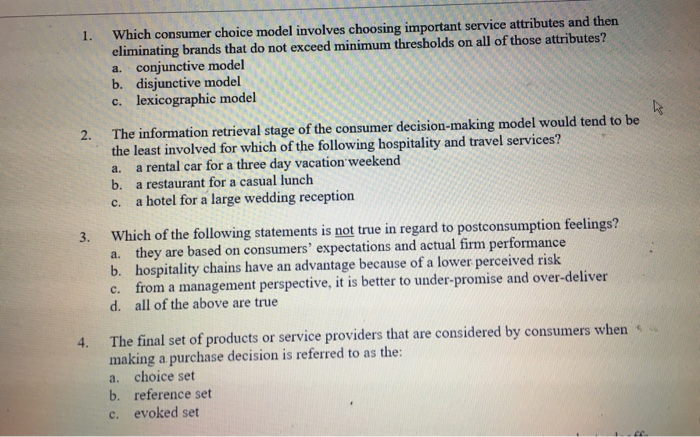
Which consumer choice model involves choosing
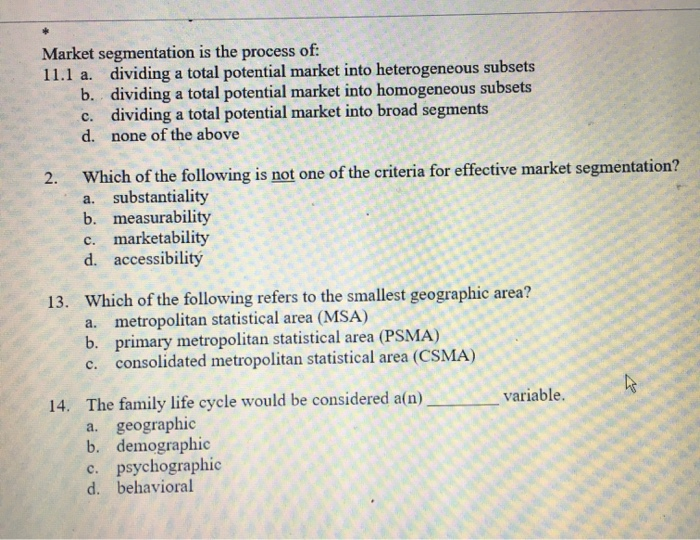
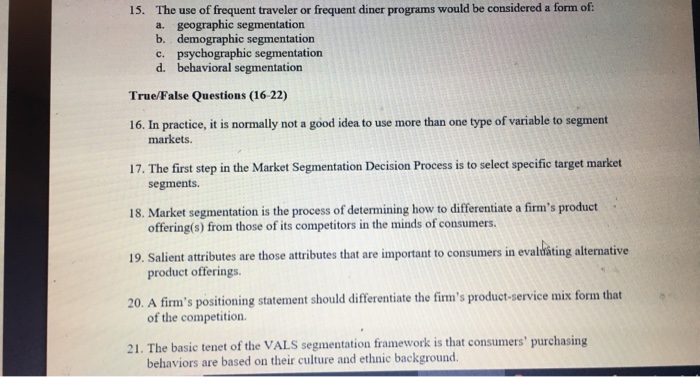
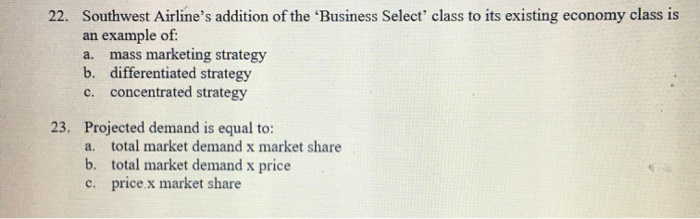
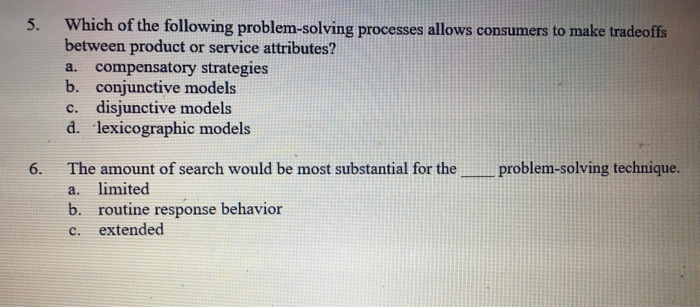
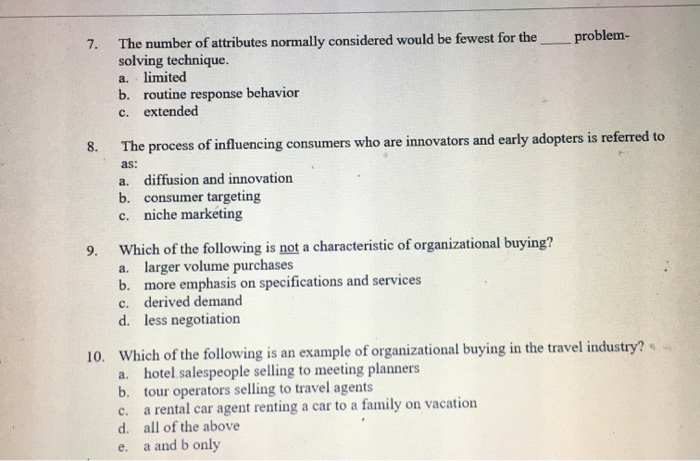
Which consumer choice model involves choosing important service attributes and then eliminating brands that do not exceed minimum thresholds on all of those attributes? a. conjunctive model b. disjunctive model c. lexicographic model The information retrieval stage of the consumer decision-making model would tend to be the least involved for which of the following hospitality and travel services? a. a rental car for a three day vacation weekend b. a restaurant for a casual lunch c. a hotel for a large wedding reception 3. Which of the following statements is not true in regard to postconsumption feelings? a. they are based on consumers' expectations and actual firm performance b. hospitality chains have an advantage because of a lower perceived risk c. from a management perspective, it is better to under-promise and over-deliver d. all of the above are true The final set of products or service providers that are considered by consumers when making a purchase decision is referred to as the: a. choice set b. reference set c. evoked set 5. Which of the following problem-solving processes allows consumers to make tradeoffs between product or service attributes? a compensatory strategies b. conjunctive models c. disjunctive models d. lexicographic models 6. problem-solving technique. The amount of search would be most substantial for the a. limited b. routine response behavior c. extended 7. problem- The number of attributes normally considered would be fewest for the solving technique. a. limited b. routine response behavior c. extended 8. The process of influencing consumers who are innovators and early adopters is referred to as: a. diffusion and innovation b. consumer targeting c. niche marketing Which of the following is not a characteristic of organizational buying? a. larger volume purchases b. more emphasis on specifications and services c. derived demand d. less negotiation 10. Which of the following is an example of organizational buying in the travel industry? a. hotel salespeople selling to meeting planners b. tour operators selling to travel agents c. a rental car agent renting a car to a family on vacation d. all of the above e. a and b only Market segmentation is the process of: 11.1 a. dividing a total potential market into heterogeneous subsets b. dividing a total potential market into homogeneous subsets c. dividing a total potential market into broad segments d. none of the above 2. Which of the following is not one of the criteria for effective market segmentation? a. substantiality b. measurability c. marketability d. accessibility Ca Which of the following refers to the smallest geographic area? a. metropolitan statistical area (MSA) b. primary metropolitan statistical area (PSMA) c. consolidated metropolitan statistical area (CSMA) variable. 14. The family life cycle would be considered a(n) a. geographic b. demographic c. psychographic d. behavioral 15. The use of frequent traveler or frequent diner programs would be considered a form of a. geographic segmentation b. demographic segmentation c. psychographic segmentation d. behavioral segmentation True/False Questions (16-22) 16. In practice, it is normally not a good idea to use more than one type of variable to segment markets. 17. The first step in the Market Segmentation Decision Process is to select specific target market segments. 18. Market segmentation is the process of determining how to differentiate a firm's product offering(s) from those of its competitors in the minds of consumers. 19. Salient attributes are those attributes that are important to consumers in evaluating alternative product offerings 20. A firm's positioning statement should differentiate the firm's product-service mix form that of the competition 21. The basic tenet of the VALS segmentation framework is that consumers' purchasing behaviors are based on their culture and ethnic background. 22. Southwest Airline's addition of the 'Business Select class to its existing economy class is an example of: a. mass marketing strategy b. differentiated strategy c. concentrated strategy 23. Projected demand is equal to: a. total market demand x market share b. total market demand x price c. price x market share
Step by Step Solution

There are 3 Steps involved in it

1 Expert Approved Answer
Step: 1 Unlock blur-text-image

Question Has Been Solved by an Expert!

Get step-by-step solutions from verified subject matter experts

Step: 2 Unlock
Step: 3 Unlock

Students Have Also Explored These Related General Management Questions!