







Question: Write the case analysis for this case study. Abstract The field of health care is changing due to a variety of factors, such as rising
Write the case analysis for this case study.
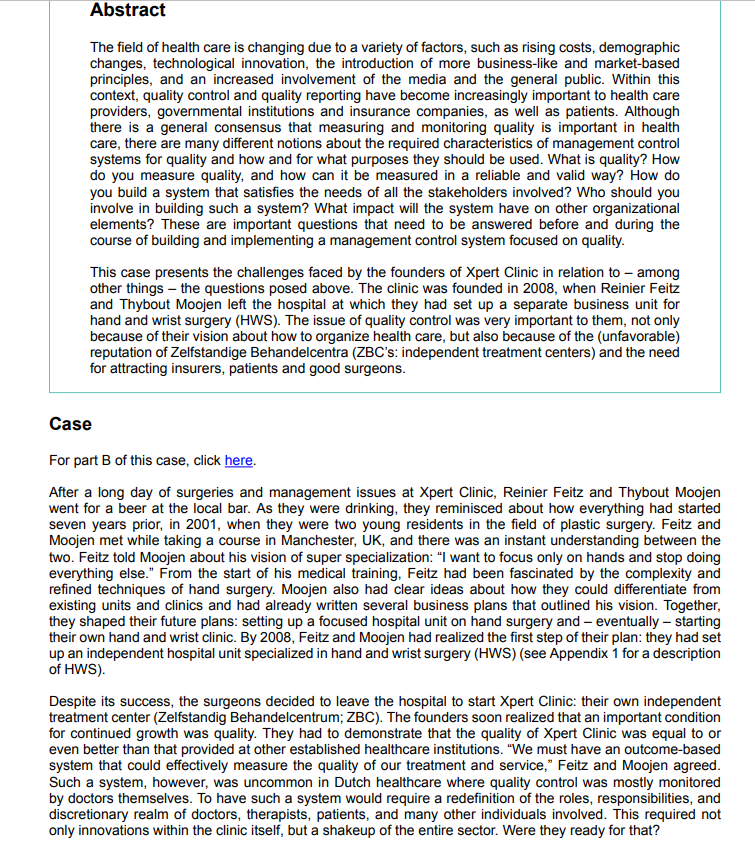
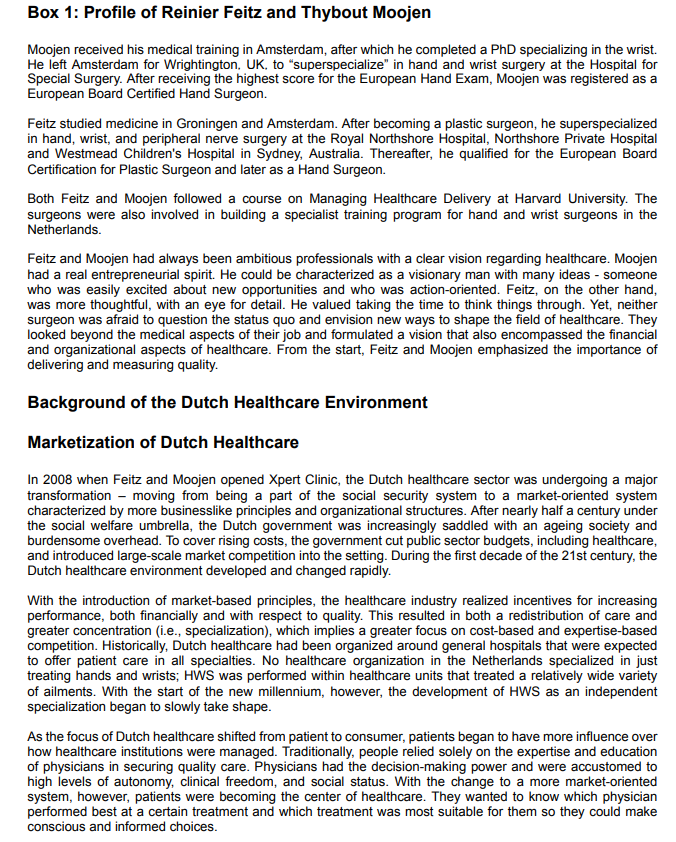
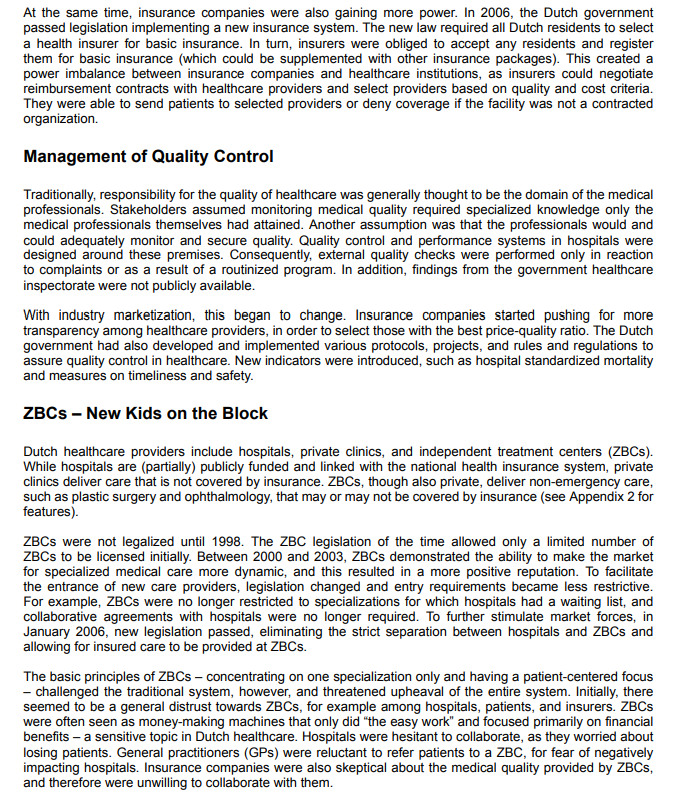
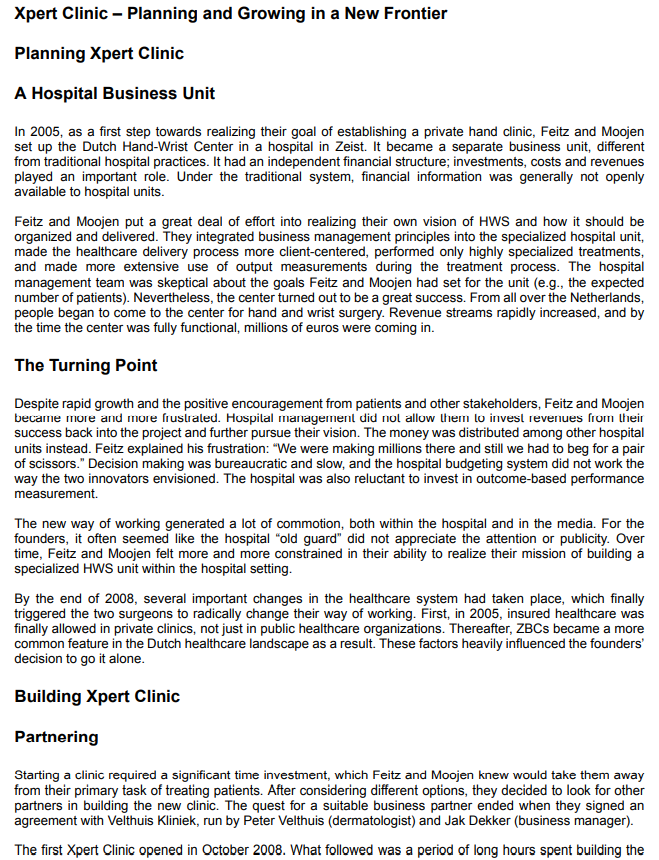
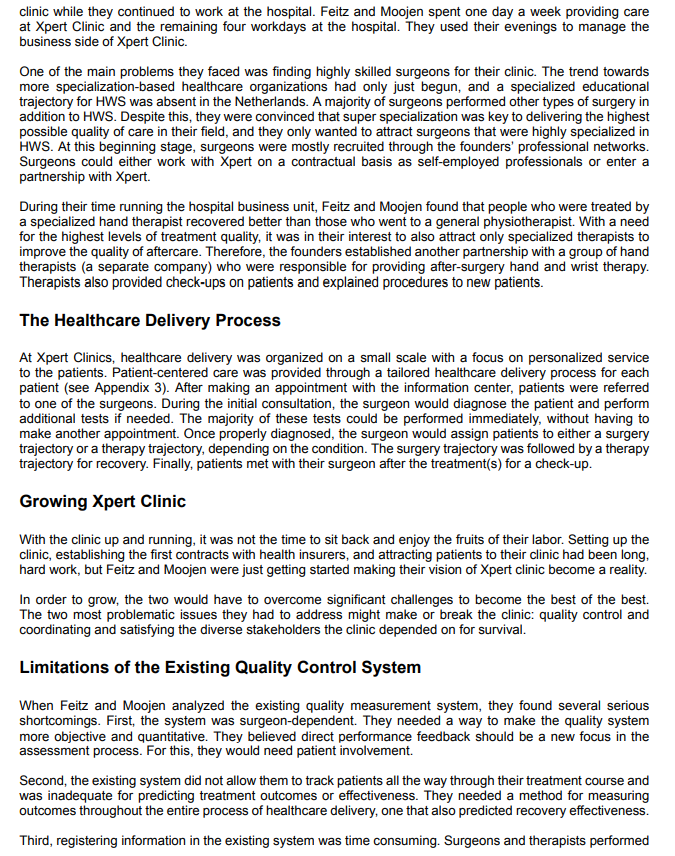
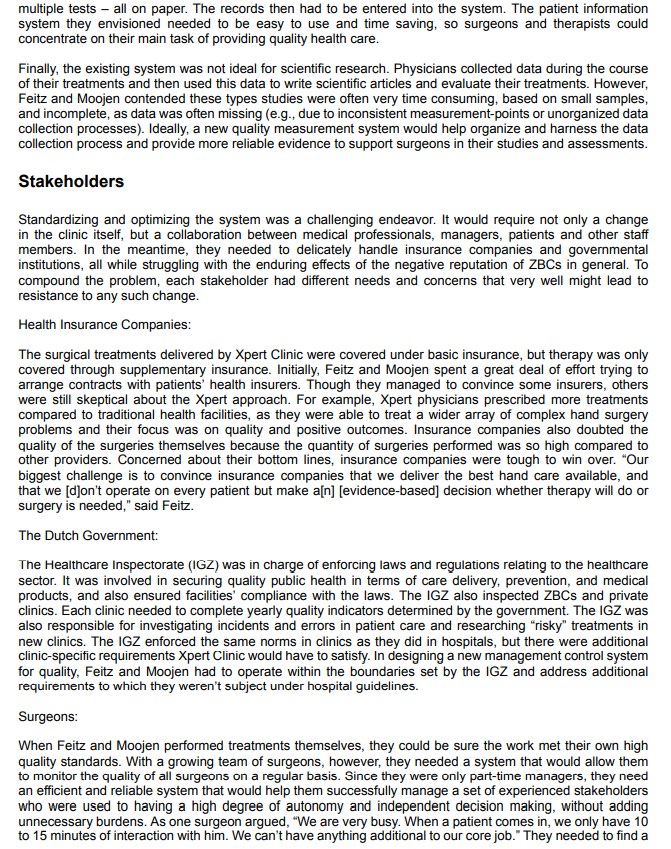
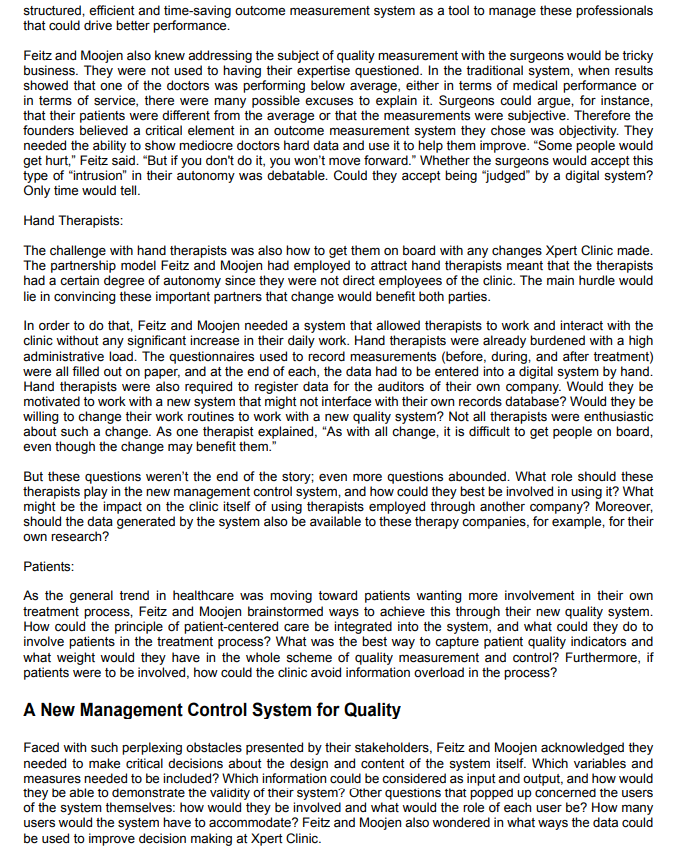
Abstract The field of health care is changing due to a variety of factors, such as rising costs, demographic changes, technological innovation, the introduction of more business-like and market-based principles, and an increased involvement of the media and the general public. Within this context, quality control and quality reporting have become increasingly important to health care providers, governmental institutions and insurance companies, as well as patients. Although there is a general consensus that measuring and monitoring quality is important in health care, there are many different notions about the required characteristics of management control systems for quality and how and for what purposes they should be used. What is quality? How do you measure quality, and how can it be measured in a reliable and valid way? How do you build a system that satisfies the needs of all the stakeholders involved? Who should you involve in building such a system? What impact will the system have on other organizational elements? These are important questions that need to be answered before and during the course of building and implementing a management control system focused on quality. This case presents the challenges faced by the founders of Xpert Clinic in relation to - among other things - the questions posed above. The clinic was founded in 2008, when Reinier Feitz and Thybout Moojen left the hospital at which they had set up a separate business unit for hand and wrist surgery (HWS). The issue of quality control was very important to them, not only because of their vision about how to organize health care, but also because of the (unfavorable) reputation of Zelfstandige Behandelcentra (ZBC's: independent treatment centers) and the need for attracting insurers, patients and good surgeons. Case For part B of this case, click here. After a long day of surgeries and management issues at Xpert Clinic, Reinier Feitz and Thybout Moojen went for a beer at the local bar. As they were drinking, they reminisced about how everything had started seven years prior, in 2001, when they were two young residents in the field of plastic surgery. Feitz and Moojen met while taking a course in Manchester, UK, and there was an instant understanding between the two. Feitz told Moojen about his vision of super specialization: "I want to focus only on hands and stop doing everything else." From the start of his medical training, Feitz had been fascinated by the complexity and refined techniques of hand surgery. Moojen also had clear ideas about how they could differentiate from existing units and clinics and had already written several business plans that outlined his vision. Together, they shaped their future plans: setting up a focused hospital unit on hand surgery and eventually - starting their own hand and wrist clinic. By 2008, Feitz and Moojen had realized the first step of their plan: they had set up an independent hospital unit specialized in hand and wrist surgery (HWS) (see Appendix 1 for a description of HWS). Despite its success, the surgeons decided to leave the hospital to start Xpert Clinic: their own independent treatment center (Zelfstandig Behandelcentrum, ZBC). The founders soon realized that an important condition for continued growth was quality. They had to demonstrate that the quality of Xpert Clinic was equal to or even better than that provided at other established healthcare institutions. "We must have an outcome-based system that could effectively measure the quality of our treatment and service," Feitz and Moojen agreed. Such a system, however, was uncommon in Dutch healthcare where quality control was mostly monitored by doctors themselves. To have such a system would require a redefinition of the roles, responsibilities, and discretionary realm of doctors, therapists, patients, and many other individuals involved. This required not only innovations within the clinic itself, but a shakeup of the entire sector. Were they ready for that? Box 1: Profile of Reinier Feitz and Thybout Moojen Moojen received his medical training in Amsterdam, after which he completed a PhD specializing in the wrist. He left Amsterdam for Wrightington, UK, to "superspecialize" in hand and wrist surgery at the Hospital for Special Surgery. After receiving the highest score for the European Hand Exam, Moojen was registered as a European Board Certified Hand Surgeon. Feitz studied medicine in Groningen and Amsterdam. After becoming a plastic surgeon, he superspecialized in hand, wrist, and peripheral nerve surgery at the Royal Northshore Hospital, Northshore Private Hospital and Westmead Children's Hospital in Sydney, Australia. Thereafter, he qualified for the European Board Certification for Plastic Surgeon and later as a Hand Surgeon. Both Feitz and Moojen followed a course on Managing Healthcare Delivery at Harvard University. The surgeons were also involved in building a specialist training program for hand and wrist surgeons in the Netherlands. Feitz and Moojen had always been ambitious professionals with a clear vision regarding healthcare. Moojen had a real entrepreneurial spirit. He could be characterized as a visionary man with many ideas - someone who was easily excited about new opportunities and who was action-oriented. Feitz, on the other hand, was more thoughtful, with an eye for detail. He valued taking the time to think things through. Yet, neither surgeon was afraid to question the status quo and envision new ways to shape the field of healthcare. They looked beyond the medical aspects of their job and formulated a vision that also encompassed the financial and organizational aspects of healthcare. From the start, Feitz and Moojen emphasized the importance of delivering and measuring quality. Background of the Dutch Healthcare Environment Marketization of Dutch Healthcare In 2008 when Feitz and Moojen opened Xpert Clinic, the Dutch healthcare sector was undergoing a major transformation - moving from being a part of the social security system to a market-oriented system characterized by more businesslike principles and organizational structures. After nearly half a century under the social welfare umbrella, the Dutch government was increasingly saddled with an ageing society and burdensome overhead. To cover rising costs, the government cut public sector budgets, including healthcare, and introduced large-scale market competition into the setting. During the first decade of the 21st century, the Dutch healthcare environment developed and changed rapidly. With the introduction of market-based principles, the healthcare industry realized incentives for increasing performance, both financially and with respect to quality. This resulted in both a redistribution of care and greater concentration (i.e., specialization), which implies a greater focus on cost-based and expertise-based competition. Historically, Dutch healthcare had been organized around general hospitals that were expected to offer patient care in all specialties. No healthcare organization in the Netherlands specialized in just treating hands and wrists; HWS was performed within healthcare units that treated a relatively wide variety of ailments. With the start of the new millennium, however, the development of HWS as an independent specialization began to slowly take shape. As the focus of Dutch healthcare shifted from patient to consumer, patients began to have more influence over how healthcare institutions were managed. Traditionally, people relied solely on the expertise and education of physicians in securing quality care. Physicians had the decision-making power and were accustomed to high levels of autonomy, clinical freedom, and social status. With the change to a more market-oriented system, however, patients were becoming the center of healthcare. They wanted to know which physician performed best at a certain treatment and which treatment was most suitable for them so they could make conscious and informed choices. At the same time, insurance companies were also gaining more power. In 2006, the Dutch government passed legislation implementing a new insurance system. The new law required all Dutch residents to select a health insurer for basic insurance. In turn, insurers were obliged to accept any residents and register them for basic insurance (which could be supplemented with other insurance packages). This created a power imbalance between insurance companies and healthcare institutions, as insurers could negotiate reimbursement contracts with healthcare providers and select providers based on quality and cost criteria. They were able to send patients to selected providers or deny coverage if the facility was not a contracted organization. Management of Quality Control Traditionally, responsibility for the quality of healthcare was generally thought to be the domain of the medical professionals. Stakeholders assumed monitoring medical quality required specialized knowledge only the medical professionals themselves had attained. Another assumption was that the professionals would and could adequately monitor and secure quality. Quality control and performance systems in hospitals were designed around these premises. Consequently, external quality checks were performed only in reaction to complaints or as a result of a routinized program. In addition, findings from the government healthcare inspectorate were not publicly available. With industry marketization, this began to change. Insurance companies started pushing for more transparency among healthcare providers, in order to select those with the best price-quality ratio. The Dutch government had also developed and implemented various protocols, projects, and rules and regulations to assure quality control in healthcare. New indicators were introduced, such as hospital standardized mortality and measures on timeliness and safety. ZBCs - New Kids on the Block Dutch healthcare providers include hospitals, private clinics, and independent treatment centers (ZBCs). While hospitals are (partially) publicly funded and linked with the national health insurance system, private clinics deliver care that is not covered by insurance. ZBCs, though also private, deliver non-emergency care, such as plastic surgery and ophthalmology, that may or may not be covered by insurance (see Appendix 2 for features) ZBCs were not legalized until 1998. The ZBC legislation of the time allowed only a limited number of ZBCs to be licensed initially. Between 2000 and 2003, ZBCs demonstrated the ability to make the market for specialized medical care more dynamic, and this resulted in a more positive reputation. To facilitate the entrance of new care providers, legislation changed and entry requirements became less restrictive. For example, ZBCs were no longer restricted to specializations for which hospitals had a waiting list, and collaborative agreements with hospitals were no longer required. To further stimulate market forces, in January 2006, new legislation passed, eliminating the strict separation between hospitals and ZBCs and allowing for insured care to be provided at ZBCs. The basic principles of ZBCs - concentrating on one specialization only and having a patient-centered focus - challenged the traditional system, however, and threatened upheaval of the entire system. Initially, there seemed to be a general distrust towards ZBCs, for example among hospitals, patients, and insurers. ZBCs were often seen as money-making machines that only did the easy work" and focused primarily on financial benefits - a sensitive topic in Dutch healthcare. Hospitals were hesitant to collaborate, as they worried about losing patients. General practitioners (GPs) were reluctant to refer patients to a ZBC, for fear of negatively impacting hospitals. Insurance companies were also skeptical about the medical quality provided by ZBCs, and therefore were unwilling to collaborate with them. Xpert Clinic - Planning and Growing in a New Frontier Planning Xpert Clinic A Hospital Business Unit In 2005, as a first step towards realizing their goal of establishing a private hand clinic, Feitz and Moojen set up the Dutch Hand-Wrist Center in a hospital in Zeist. It became a separate business unit, different from traditional hospital practices. It had an independent financial structure; investments, costs and revenues played an important role. Under the traditional system, financial information was generally not openly available to hospital units. Feitz and Moojen put a great deal of effort into realizing their own vision of HWS and how it should be organized and delivered. They integrated business management principles into the specialized hospital unit, made the healthcare delivery process more client-centered, performed only highly specialized treatments, and made more extensive use of output measurements during the treatment process. The hospital management team was skeptical about the goals Feitz and Moojen had set for the unit (e.g., the expected number of patients). Nevertheless, the center turned out to be a great success. From all over the Netherlands, people began to come to the center for hand and wrist surgery. Revenue streams rapidly increased, and by the time the center was fully functional, millions of euros were coming in. The Turning Point Despite rapid growth and the positive encouragement from patients and other stakeholders, Feitz and Moojen became more and more frustrated. Hospital management did not allow them to invest revenues from their success back into the project and further pursue their vision. The money was distributed among other hospital units instead. Feitz explained his frustration: "We were making millions there and still we had to beg for a pair of scissors." Decision making was bureaucratic and slow, and the hospital budgeting system did not work the way the two innovators envisioned. The hospital was also reluctant to invest in outcome-based performance measurement The new way of working generated a lot of commotion, both within the hospital and in the media. For the founders, it often seemed like the hospital "old guard" did not appreciate the attention or publicity. Over time, Feitz and Moojen felt more and more constrained in their ability to realize their mission of building a specialized HWS unit within the hospital setting. By the end of 2008, several important changes in the healthcare system had taken place, which finally triggered the two surgeons to radically change their way of working. First, in 2005, insured healthcare was finally allowed in private clinics, not just in public healthcare organizations. Thereafter, ZBCs became a more common feature in the Dutch healthcare landscape as a result. These factors heavily influenced the founders' decision to go it alone. Building Xpert Clinic Partnering Starting a clinic required a significant time investment, which Feitz and Moojen knew would take them away from their primary task of treating patients. After considering different options, they decided to look for other partners in building the new clinic. The quest for a suitable business partner ended when they signed an agreement with Velthuis Kliniek, run by Peter Velthuis (dermatologist) and Jak Dekker (business manager). The first Xpert Clinic opened in October 2008. What followed was a period of long hours spent building the clinic while they continued to work at the hospital. Feitz and Moojen spent one day a week providing care at Xpert Clinic and the remaining four workdays at the hospital. They used their evenings to manage the business side of Xpert Clinic. One of the main problems they faced was finding highly skilled surgeons for their clinic. The trend towards more specialization-based healthcare organizations had only just begun, and a specialized educational trajectory for HWS was absent in the Netherlands. A majority of surgeons performed other types of surgery in addition to HWS. Despite this, they were convinced that super specialization was key to delivering the highest possible quality of care in their field, and they only wanted to attract surgeons that were highly specialized in HWS. At this beginning stage, surgeons were mostly recruited through the founders' professional networks. Surgeons could either work with Xpert on a contractual basis as self-employed professionals or enter a partnership with Xpert During their time running the hospital business unit, Feitz and Moojen found that people who were treated by a specialized hand therapist recovered better than those who went to a general physiotherapist. With a need for the highest levels of treatment quality, it was in their interest to also attract only specialized therapists to improve the quality of aftercare. Therefore, the founders established another partnership with a group of hand therapists (a separate company) who were responsible for providing after-surgery hand and wrist therapy. Therapists also provided check-ups on patients and explained procedures to new patients. The Healthcare Delivery Process At Xpert Clinics, healthcare delivery was organized on a small scale with a focus on personalized service to the patients. Patient-centered care was provided through a tailored healthcare delivery process for each patient (see Appendix 3). After making an appointment with the information center, patients were referred to one of the surgeons. During the initial consultation, the surgeon would diagnose the patient and perform additional tests if needed. The majority of these tests could be performed immediately, without having to make another appointment. Once properly diagnosed, the surgeon would assign patients to either a surgery trajectory or a therapy trajectory, depending on the condition. The surgery trajectory was followed by a therapy trajectory for recovery. Finally, patients met with their surgeon after the treatment(s) for a check-up. Growing Xpert Clinic With the clinic up and running, it was not the time to sit back and enjoy the fruits of their labor. Setting up the clinic, establishing the first contracts with health insurers, and attracting patients to their clinic had been long, hard work, but Feitz and Moojen were just getting started making their vision of Xpert clinic become a reality. In order to grow, the two would have to overcome significant challenges to become the best of the best. The two most problematic issues they had to address might make or break the clinic: quality control and coordinating and satisfying the diverse stakeholders the clinic depended on for survival. Limitations of the Existing Quality Control System When Feitz and Moojen analyzed the existing quality measurement system, they found several serious shortcomings. First, the system was surgeon-dependent. They needed a way to make the quality system more objective and quantitative. They believed direct performance feedback should be a new focus in the assessment process. For this, they would need patient involvement. Second, the existing system did not allow them to track patients all the way through their treatment course and was inadequate for predicting treatment outcomes or effectiveness. They needed a method for measuring outcomes throughout the entire process of healthcare delivery, one that also predicted recovery effectiveness. Third, registering information in the existing system was time consuming. Surgeons and therapists performed multiple tests - all on paper. The records then had to be entered into the system. The patient information system they envisioned needed to be easy to use and time saving, so surgeons and therapists could concentrate on their main task of providing quality health care. Finally, the existing system was not ideal for scientific research. Physicians collected data during the course of their treatments and then used this data to write scientific articles and evaluate their treatments. However, Feitz and Moojen contended these types studies were often very time consuming, based on small samples, and incomplete, as data was often missing (e.g., due to inconsistent measurement-points or unorganized data collection processes). Ideally, a new quality measurement system would help organize and harness the data collection process and provide more reliable evidence to support surgeons in their studies and assessments. Stakeholders Standardizing and optimizing the system was a challenging endeavor. It would require not only a change in the clinic itself, but a collaboration between medical professionals, managers, patients and other staff members. In the meantime, they needed to delicately handle insurance companies and governmental institutions, all while struggling with the enduring effects of the negative reputation of ZBCs in general. To compound the problem, each stakeholder had different needs and concerns that very well might lead to resistance to any such change. Health Insurance Companies: The surgical treatments delivered by Xpert Clinic were covered under basic insurance, but therapy was only covered through supplementary insurance. Initially, Feitz and Moojen spent a great deal of effort trying to arrange contracts with patients' health insurers. Though they managed to convince some insurers, others were still skeptical about the Xpert approach. For example, Xpert physicians prescribed more treatments compared to traditional health facilities, as they were able to treat a wider array of complex hand surgery problems and their focus was on quality and positive outcomes. Insurance companies also doubted the quality of the surgeries themselves because the quantity of surgeries performed was so high compared to other providers. Concerned about their bottom lines, insurance companies were tough to win over. "Our biggest challenge is to convince insurance companies that we deliver the best hand care available, and that we [d]on't operate on every patient but make a[n] (evidence-based) decision whether therapy will do or surgery is needed," said Feitz. The Dutch Government: The Healthcare Inspectorate (IGZ) was in charge of enforcing laws and regulations relating to the healthcare sector. It was involved in securing quality public health in terms of care delivery, prevention, and medical products, and also ensured facilities' compliance with the laws. The IGZ also inspected ZBCs and private clinics. Each clinic needed to complete yearly quality indicators determined by the government. The IGZ was also responsible for investigating incidents and errors in patient care and researching "risky" treatments in new clinics. The IGZ enforced the same norms in clinics as they did in hospitals, but there were additional clinic-specific requirements Xpert Clinic would have to satisfy. In designing a new management control system for quality, Feitz and Moojen had to operate within the boundaries set by the IGZ and address additional requirements to which they weren't subject under hospital guidelines. Surgeons: When Feitz and Moojen performed treatments themselves, they could be sure the work met their own high quality standards. With a growing team of surgeons, however, they needed a system that would allow them to monitor the quality of all surgeons on a regular basis. Since they were only part-time managers, they need an efficient and reliable system that would help them successfully manage a set of experienced stakeholders who were used to having a high degree of autonomy and independent decision making, without adding unnecessary burdens. As one surgeon argued, "We are very busy. When a patient comes in, we only have 10 to 15 minutes of interaction with him. We can't have anything additional to our core job." They needed to find a structured, efficient and time-saving outcome measurement system as a tool to manage these professionals that could drive better performance. Feitz and Moojen also knew addressing the subject of quality measurement with the surgeons would be tricky business. They were not used to having their expertise questioned. In the traditional system, when results showed that one of the doctors was performing below average, either in terms of medical performance or in terms of service, there were many possible excuses to explain it. Surgeons could argue, for instance, that their patients were different from the average or that the measurements were subjective. Therefore the founders believed a critical element in an outcome measurement system they chose was objectivity. They needed the ability to show mediocre doctors hard data and use it to help them improve. "Some people would get hurt," Feitz said. "But if you don't do it, you won't move forward." Whether the surgeons would accept this type of "intrusion" in their autonomy was debatable. Could they accept being judged" by a digital system? Only time would tell Hand Therapists: The challenge with hand therapists was also how to get them on board with any changes Xpert Clinic made. The partnership model Feitz and Moojen had employed to attract hand therapists meant that the therapists had a certain degree of autonomy since they were not direct employees of the clinic. The main hurdle would lie in convincing these important partners that change would benefit both parties. In order to do that, Feitz and Moojen needed a system that allowed therapists to work and interact with the clinic without any significant increase in their daily work. Hand therapists were already burdened with a high administrative load. The questionnaires used to record measurements (before, during, and after treatment) were all filled out on paper, and at the end of each, the data had to be entered into a digital system by hand. Hand therapists were also required to register data for the auditors of their own company. Would they be motivated to work with a new system that might not interface with their own records database? Would they be willing to change their work routines to work with a new quality system? Not all therapists were enthusiastic about such a change. As one therapist explained, "As with all change, it is difficult to get people on board, even though the change may benefit them." But these questions weren't the end of the story, even more questions abounded. What role should these therapists play in the new management control system, and how could they best be involved in using it? What might be the impact on the clinic itself of using therapists employed through another company? Moreover, should the data generated by the system also be available to these therapy companies, for example, for their own research? Patients: As the general trend in healthcare was moving toward patients wanting more involvement in their own treatment process, Feitz and Moojen brainstormed ways to achieve this through their new quality system. How could the principle of patient-centered care be integrated into the system, and what could they do to involve patients in the treatment process? What was the best way to capture patient quality indicators and what weight would they have in the whole scheme of quality measurement and control? Furthermore, if patients were to be involved, how could the clinic avoid information overload in the process? A New Management Control System for Quality Faced with such perplexing obstacles presented by their stakeholders, Feitz and Moojen acknowledged they needed to make critical decisions about the design and content of the system itself. Which variables and measures needed to be included? Which information could be considered as input and output, and how would they be able to demonstrate the validity of their system? Other questions that popped up concerned the users of the system themselves: how would they be involved and what would the role of each user be? How many users would the system have to accommodate? Feitz and Moojen also wondered in what ways the data could be used to improve decision making at Xpert ClinicStep by Step Solution
There are 3 Steps involved in it
1 Expert Approved Answer
Step: 1 Unlock

Question Has Been Solved by an Expert!
Get step-by-step solutions from verified subject matter experts
Step: 2 Unlock
Step: 3 Unlock
 Study Help