



Question: You have been tasked with creating a fundraising event for a local charity at your campus. Create the plan using the five elements of event
You have been tasked with creating a fundraising event for a local charity at your campus. Create the plan using the five elements of event planning and include the venue, budget, and special needs
using this five elements
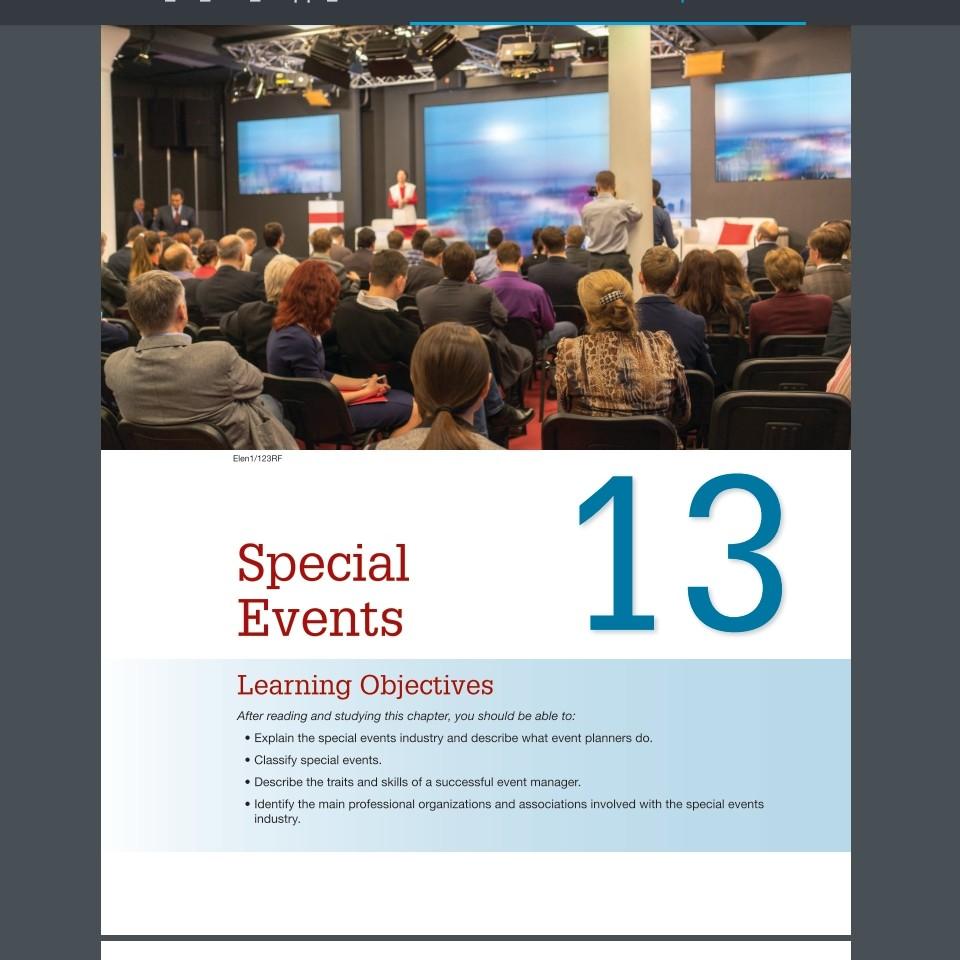
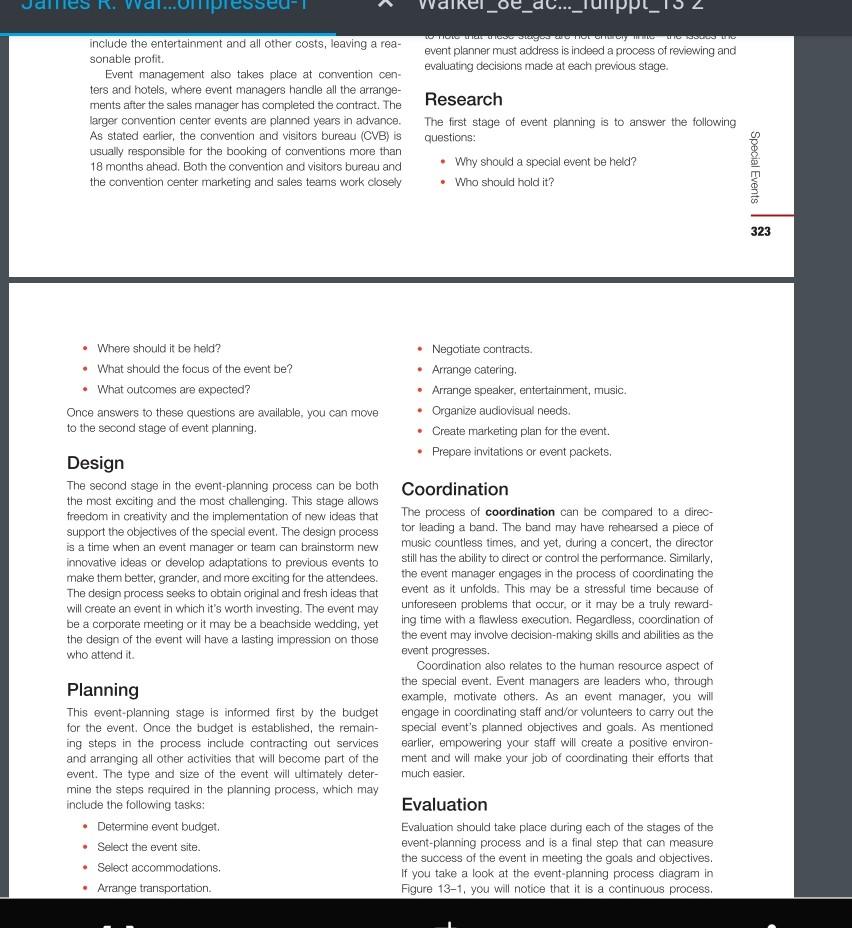
Leanmly UuJecives After reading and studying this chapter, you should be able to: - Explain the special events industry and describe what event planners do. - Classify special events. - Describe the traits and skills of a successful event manager. - Identify the main professional organizations and associations involved with the special events industry. include the entertainment and all other costs, leaving a reasonable profit. Event management also takes place at convention centers and hotels, where event managers handle all the arrangements after the sales manager has completed the contract. The larger convention center events are planned years in advance. As stated earlier, the convention and visitors bureau (CVB) is usually responsible for the booking of conventions more than 18 months ahead. Both the convention and visitors bureau and the convention center marketing and sales teams work closely event planner must address is indeed a process of reviewing and evaluating decisions made at each previous stage. Research The first stage of event planning is to answer the following questions: - Why should a special event be held? - Who should hold it? - Where should it be held? -What should the focus of the event be? - What outcomes are expected? Once answers to these questions are available, you can move to the second stage of event planning. Design The second stage in the event-planning process can be both the most exciting and the most challenging. This stage allows freedom in creativity and the implementation of new ideas that support the objectives of the special event. The design process is a time when an event manager or team can brainstorm new innovative ideas or develop adaptations to previous events to make them better, grander, and more exciting for the attendees. The design process seeks to obtain original and fresh ideas that will create an event in which it's worth investing. The event may be a corporate meeting or it may be a beachside wedding, yet the design of the event will have a lasting impression on those who attend it. Planning This event-planning stage is informed first by the budget for the event. Once the budget is established, the remaining steps in the process include contracting out services and arranging all other activities that will become part of the event. The type and size of the event will ultimately determine the steps required in the planning process, which may include the following tasks: - Determine event budget. - Select the event site. - Select accommodations. - Arrange transportation. - Negotiate contracts. - Arrange catering. - Arrange speaker, entertainment, music. - Organize audiovisual needs. - Create marketing plan for the event. - Prepare invitations or event packets. Coordination The process of coordination can be compared to a director leading a band. The band may have rehearsed a piece of music countless times, and yet, during a concert, the director still has the ability to direct or control the performance. Similarly, the event manager engages in the process of coordinating the event as it unfolds. This may be a stressful time because of unforeseen problems that occur, or it may be a truly rewarding time with a flawless execution. Regardless, coordination of the event may involve decision-making skills and abilities as the event progresses. Coordination also relates to the human resource aspect of the special event. Event managers are leaders who, through example, motivate others. As an event manager, you will engage in coordinating staff and/or volunteers to carry out the special event's planned objectives and goals. As mentioned earlier, empowering your staff will create a positive environment and will make your job of coordinating their efforts that much easier. Evaluation Evaluation should take place during each of the stages of the event-planning process and is a final step that can measure the success of the event in meeting the goals and objectives. If you take a look at the event-planning process diagram in Figure 131, you will notice that it is a continuous process
Step by Step Solution
There are 3 Steps involved in it

Get step-by-step solutions from verified subject matter experts