







Question: Your individual supply function is P = 10 + 1.5Q. Your capacity Q is Qc = 80. (a) Compute Total Revenue (TR), Total Cost (TC),

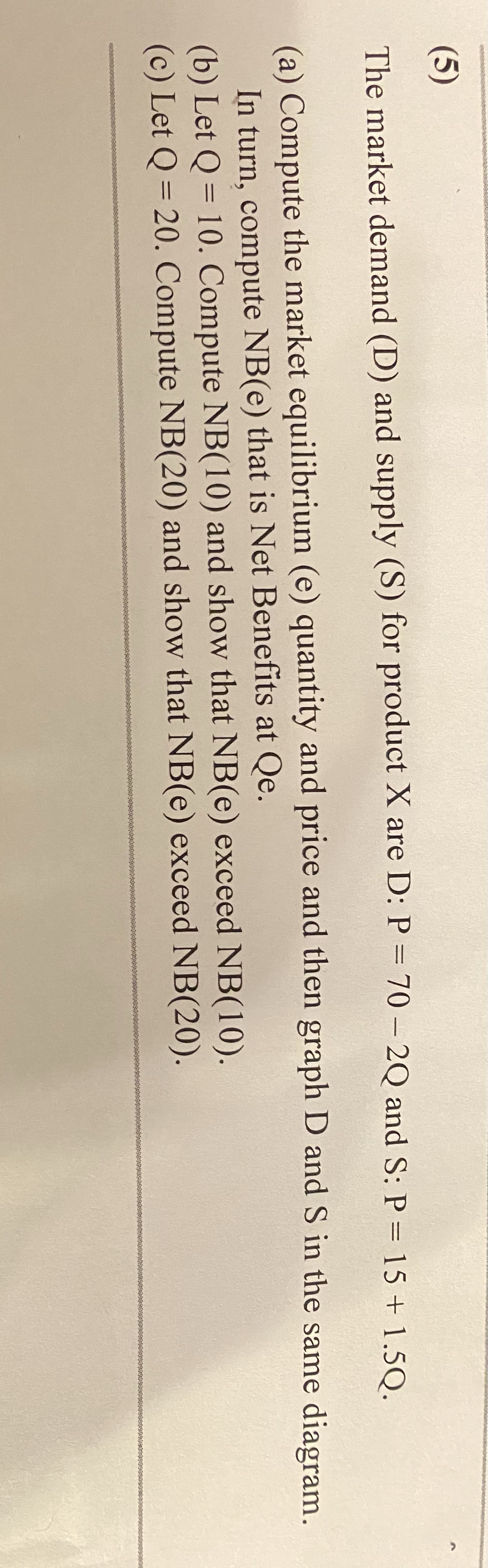
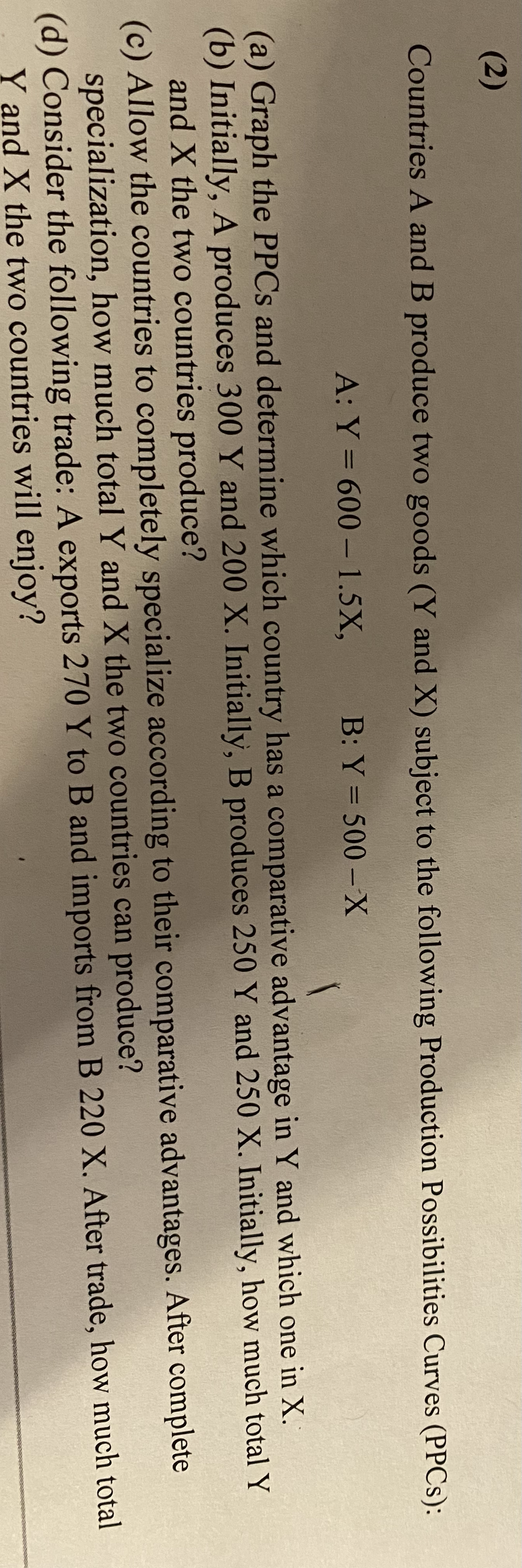
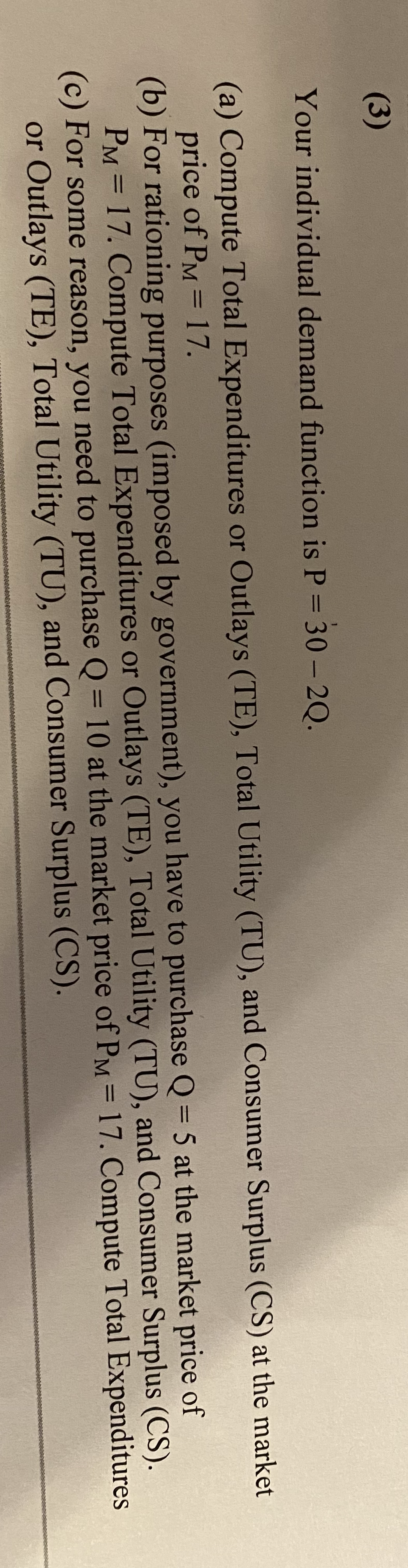
Your individual supply function is P = 10 + 1.5Q. Your capacity Q is Qc = 80. (a) Compute Total Revenue (TR), Total Cost (TC), and Profit (II) at the market price of PM = 50. (b) Compute Total Revenue (TR), Total Cost (TC), and Profit (II) at the market price of PM = 130. (c) Compute Total Revenue (TR), Total Cost (TC), and Profit (II) at the market price of PM = 140.The market demand (D) and supply (S) for product X are D: P = 70 - 2Q and S: P = 15 + 1.5Q. (a) Compute the market equilibrium (e) quantity and price and then graph D and S in the same diagram. In turn, compute NB(e) that is Net Benefits at Qe. (b) Let Q = 10. Compute NB(10) and show that NB(e) exceed NB(10). (c) Let Q = 20. Compute NB(20) and show that NB(e) exceed NB(20).Countries A and B produce two goods (Y and X) subject to the following Production Possibilities Curves (PPCs): A: Y = 600 - 1.5X, B: Y = 500 - X (a) Graph the PPCs and determine which country has a comparative advantage in Y and which one in X. (b) Initially, A produces 300 Y and 200 X. Initially, B produces 250 Y and 250 X. Initially, how much total Y and X the two countries produce? (c) Allow the countries to completely specialize according to their comparative advantages. After complete specialization, how much total Y and X the two countries can produce? (d) Consider the following trade: A exports 270 Y to B and imports from B 220 X. After trade, how much total Y and X the two countries will enjoy?Your individual demand function is P = 30 - 2Q. (a) Compute Total Expenditures or Outlays (TE), Total Utility (TU), and Consumer Surplus (CS) at the market price of PM = 17. (b) For rationing purposes (imposed by government), you have to purchase Q = 5 at the market price of PM = 17. Compute Total Expenditures or Outlays (TE), Total Utility (TU), and Consumer Surplus (CS). (c) For some reason, you need to purchase Q = 10 at the market price of PM = 17. Compute Total Expenditures or Outlays (TE), Total Utility (TU), and Consumer Surplus (CS)
Step by Step Solution
There are 3 Steps involved in it

Get step-by-step solutions from verified subject matter experts
 Study Help