New Semester
Started
Get
50% OFF
Study Help!
--h --m --s
Claim Now
Question Answers
Textbooks
Find textbooks, questions and answers
Oops, something went wrong!
Change your search query and then try again
S
Books
FREE
Study Help
Expert Questions
Accounting
General Management
Mathematics
Finance
Organizational Behaviour
Law
Physics
Operating System
Management Leadership
Sociology
Programming
Marketing
Database
Computer Network
Economics
Textbooks Solutions
Accounting
Managerial Accounting
Management Leadership
Cost Accounting
Statistics
Business Law
Corporate Finance
Finance
Economics
Auditing
Tutors
Online Tutors
Find a Tutor
Hire a Tutor
Become a Tutor
AI Tutor
AI Study Planner
NEW
Sell Books
Search
Search
Sign In
Register
study help
sciences
essential cell biology
Essential Cell Biology 5th Edition Bruce Alberts, Karen Hopkin, Alexander Johnson, David Morgan, Martin Raff, Keith Roberts, Peter Walter - Solutions
Use drawings to explain how an enzyme (such as hexokinase, mentioned in the text) can distinguish its normal substrate (here, D-glucose) from the optical isomer L-glucose, which is not a substrate.
Random mutations only very rarely result in changes that improve a protein’s usefulness for the cell, yet useful mutations are selected in evolution. Because these changes are so rare, for each useful mutation there are innumerable mutations that lead to either no improvement or inactive
In a mushroom, a reaction in a single-step biosynthetic pathway that converts a metabolite into a particularly vicious poison (metabolite ↔ poison) is energetically highly unfavorable. The reaction is normally driven by ATP hydrolysis. Assume that a mutation in the enzyme that catalyzes the
Discuss the following statement: “Whether the ΔG for a reaction is larger, smaller, or the same as ΔG° depends on the concentration of the compounds that participate in the reaction.”
Which of the following statements are correct? Explain your answers.A. Some enzyme-catalyzed reactions cease completely if their enzyme is absent.B. High-energy electrons (such as those found in the activated carriers NADH and NADPH) move faster around the atomic nucleus.C. Hydrolysis of ATP to AMP
Which of the following reactions will occur only if coupled to a second, energetically favorable reaction?A. Glucose + O2 → CO2 + H2OB. CO2 + H2O → glucose + O2C. Nucleoside triphosphates →DNAD. Nucleotide bases → nucleoside triphosphatesE. ADP + Pi → ATP
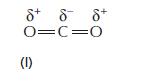
Are the formulas in Figure Q2–21 correct or incorrect Explain your answer in each case. Figure Q2–21Figure Q2–21 8+ 8 8+ O=C=O (1)
The phosphoanhydride bond that links two phosphate groups in ATP in a high-energy linkage has a ΔG° of –30.5 kJ/mole. Hydrolysis of this bond in a cell liberates from 46 to 54 kJ/mole of usable energy. How can this be? Why do you think a range of energies is given, rather than a precise number
In cells, an enzyme catalyzes the reaction AB → A + B. It was isolated, however, as an enzyme that carries out the opposite reaction A + B → AB. Explain the paradox.
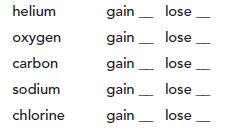
A. How many electrons can be accommodated in the first, second, and third electron shells of an atom?B. How many electrons would atoms of the elements listed below have to gain or lose to obtain a completely filled outer shell?C. What do the answers tell you about the reactivity of helium and the
Consider the analogy of the jiggling box containing coins that was described. The reaction, the flipping of coins that either face heads up (H) or tails up (T), is described by the equation H ↔ T, where the rate of the forward reaction equals the rate of the reverse reaction.A. What are ΔG and
In which of the following reactions does the red atom undergo an oxidation?A. Na → Na+ (Na atom → Na+ ion)B. Cl → Cl– (Cl atom → Cl– ion)C. CH3CH2OH → CH3CHO (ethanol → acetaldehyde)D. CH3 CHO → CH3COO–(acetaldehyde → acetic acid)E. CH2=CH2 → CH3CH3 (ethene →
Consider the equation light energy + CO2 + H2O → sugars + O2 + heat energy.Would you expect this reaction to occur in a single step? Why must heat be generated in the reaction? Explain your answers.
Fatty acids are said to be “amphipathic.” What is meant by this term, and how does an amphipathic molecule behave in water? Draw a diagram to illustrate your answer.
What are the forces that determine the folding of a macromolecule into a unique shape?
A. Describe the similarities and differences between van der Waals attractions and hydrogen bonds.B. Which of the two bonds would form (a) between two hydrogens bound to carbon atoms, (b) between a nitrogen atom and a hydrogen bound to a carbon atom, and (c) between a nitrogen atom and a hydrogen
This is a biology textbook. Explain why the chemical principles that are described in this chapter are important in the context of modern cell biology.
A. How many different molecules composed of (a) two, (b) three, and (c) four amino acids, linked together by peptide bonds, can be made from the set of 20 naturally occurring amino acids?B. Assume you were given a mixture consisting of one molecule each of all possible sequences of a smallish
Which of the following statements are correct? Explain your answers.A. Proteins are so remarkably diverse because each is made from a unique mixture of amino acids that are linked in random order.B. Lipid bilayers are macromolecules that are made up mostly of phospholipid subunits.C. Nucleic acids
Write the chemical formula for a condensation reaction of two amino acids to form a peptide bond. Write the formula for its hydrolysis.
The elements oxygen and sulfur have similar chemical properties because they both have six electrons in their outermost electron shells. Indeed, both elements form molecules with two hydrogen atoms, water (H2O) and hydrogen sulfide (H2S). Surprisingly, at room temperature, water is a liquid, yet
To gain a better feeling for atomic dimensions, assume that the page on which this question is printed is made entirely of the polysaccharide cellulose, whose molecules are described by the formula (CnH2nOn), where n can be a quite large number and is variable from one molecule to another. The
Which of the following statements are correct? Explain your answers.A. An atomic nucleus contains protons and neutrons.B. An atom has more electrons than protons.C. The nucleus is surrounded by a double membrane.D. All atoms of the same element have the same number of neutrons.E. The number of
Why could covalent bonds not be used in place of non covalent bonds to mediate most of the interactions of macromolecules?
In principle, there are many different, chemically diverse ways in which small molecules can be joined together to form polymers. For example, the small molecule ethene (CH2=CH2) is used commercially to make the plastic polyethylene (...–CH2–CH2–CH2–CH2–CH2–...). The individual subunits
What is meant by “polarity” of a polypeptide chain and by “polarity” of a chemical bond? How do the meanings differ?
Why do you suppose only L-amino acids and not a random mixture of the L- and D-forms of each amino acid are used to make proteins?
A. Are there H3O+ ions present in pure water at neutral pH (i.e., at pH = 7.0)? If so, how are they formed?B. If they exist, what is the ratio of H3O+ ions to H2O molecules at neutral pH?
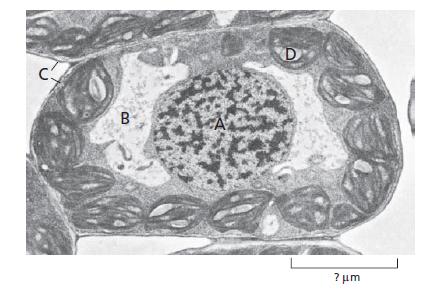
Identify the different organelles indicated with letters in the electron micrograph of a plant cell shown below. Estimate the length of the scale bar in the figure. B D ? μm
True or false? “When NaCl is dissolved in water, the water molecules closest to the ions will tend to preferentially orient themselves so that their oxygen atoms face the sodium ions and face away from the chloride ions.” Explain your answer
Discuss whether the following statement is correct: “An ionic bond can, in principle, be thought of as a very polar covalent bond. Polar covalent bonds, then, fall somewhere between ionic bonds at one end of the spectrum and nonpolar covalent bonds at the other end.”
A carbon atom contains six protons and six neutrons.A. What are its atomic number and atomic weight?B. How many electrons does it have?C. How many additional electrons must it add to fill its outermost shell? How does this affect carbon’s chemical behavior?D. Carbon with an atomic weight of 14 is
A cup containing exactly 18 g, or 1 mole, of water was emptied into the Aegean Sea 3000 years ago. What are the chances that the same quantity of water, scooped today from the Pacific Ocean, would include at least one of these ancient water molecules? Assume perfect mixing and an approximate volume
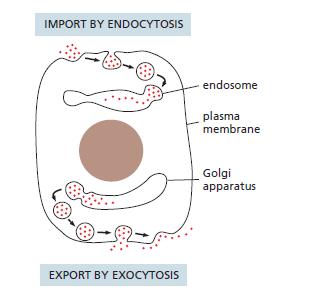
Suggest a reason why it would be advantageous for eukaryotic cells to evolve elaborate internal membrane systems that allow them to import substances from the outside, as shown in Figure 1–25. IMPORT BY ENDOCYTOSIS EXPORT BY EXOCYTOSIS endosome plasma membrane Golgi apparatus
Looking at some pond water with a light microscope, you notice an unfamiliar rod-shaped cell about 200 μm long. Knowing that some exceptional bacteria can be as big as this or even bigger, you wonder whether your cell is a bacterium or a eukaryote. How will you decide? If it is not a eukaryote,
What are the arguments that all living cells evolved from a common ancestor cell? Imagine the very “early days” of evolution of life on Earth. Would you assume that the primordial ancestor cell was the first and only cell to form?
Draw to scale the outline of two spherical cells, one a bacterium with a diameter of 1 μm, the other an animal cell with a diameter of 15 μm. Calculate the volume, surface area, and surface-to-volume ratio for each cell. How would the latter ratio change if you included the internal membranes of
When bacteria are cultured under adverse conditions for example, in the presence of a poison such as an antibiotic most cells grow and divide slowly. But it is not uncommon to find that the rate of proliferation is restored to normal after a few days. Suggest why this may be the case.
What, if any, are the advantages in being multicellular?
Natural selection is such a powerful force in evolution because organisms or cells with even a small reproductive advantage will eventually outnumber their competitors. To illustrate how quickly this process can occur, consider a cell culture that contains 1 million bacterial cells that double
Apply the principle of exponential growth of a population of cells in a culture to the cells in a multicellular organism, such as yourself. There are about 1013 cells in your body. Assume that one cell has acquired mutations that allow it to divide in an uncontrolled manner to become a cancer cell.
“The structure and function of a living cell are dictated by the laws of chemistry, physics, and thermodynamics.” Provide examples that support (or refute) this claim.
There are three major classes of protein filaments that make up the cytoskeleton of a typical animal cell. What are they, and what are the differences in their functions? Which cytoskeletal filaments would be most plentiful in a muscle cell or in an epidermal cell making up the outer layer of the
Your next-door neighbor has donated $100 in support of cancer research and is horrified to learn that her money is being spent on studying brewer’s yeast. How could you put her mind at ease?
Discuss the relative advantages and disadvantages of light and electron microscopy. How could you best visualize a living skin cell, a yeast mitochondrion, a bacterium, and a microtubule?
A bacterium weighs about 10–12 g and can divide every 20 minutes. If a single bacterial cell carried on dividing at this rate, how long would it take before the mass of bacteria would equal that of the Earth (6 × 1024 kg)? Contrast your result with the fact that bacteria originated at least
You have embarked on an ambitious research project: to create life in a test tube. You boil up a rich mixture of yeast extract and amino acids in a flask, along with a sprinkling of the inorganic salts known to be essential for life. You seal the flask and allow it to cool. After several months,
Mutations are mistakes in the DNA that change the genetic plan from that of the previous generation. Imagine a shoe factory. Would you expect mistakes (i.e., unintentional changes) in copying the shoe design to lead to improvements in the shoes produced? Explain your answer.
“Life” is easy to recognize but difficult to define. According to one popular biology text, living things:1. Are highly organized compared to natural inanimate objects. 2. Display homeostasis, maintaining a relatively constant internal environment.3. Reproduce themselves.4. Grow and
In an alien world, the genetic code is written in pairs of nucleotides. How many amino acids could such a code specify? In a different world, a triplet code is used, but the order of nucleotides is not important; it only matters which nucleotides are present. How many amino acids could this code
By now you should be familiar with the following cell components. Briefly define what they are and what function they provide for cells.A. CytosolB. CytoplasmC. MitochondriaD. NucleusE. ChloroplastsF. LysosomesG. ChromosomesH. Golgi apparatusI. PeroxisomesJ. Plasma membraneK. Endoplasmic
Showing 300 - 400
of 351
1
2
3
4
Step by Step Answers

 Get 50% OFF
Claim Now
Get 50% OFF
Claim Now