New Semester
Started
Get
50% OFF
Study Help!
--h --m --s
Claim Now
Question Answers
Textbooks
Find textbooks, questions and answers
Oops, something went wrong!
Change your search query and then try again
S
Books
FREE
Study Help
Expert Questions
Accounting
General Management
Mathematics
Finance
Organizational Behaviour
Law
Physics
Operating System
Management Leadership
Sociology
Programming
Marketing
Database
Computer Network
Economics
Textbooks Solutions
Accounting
Managerial Accounting
Management Leadership
Cost Accounting
Statistics
Business Law
Corporate Finance
Finance
Economics
Auditing
Tutors
Online Tutors
Find a Tutor
Hire a Tutor
Become a Tutor
AI Tutor
AI Study Planner
NEW
Sell Books
Search
Search
Sign In
Register
study help
business
finance
Finance Applications and Theory 3rd edition Marcia Cornett, Troy Adair - Solutions
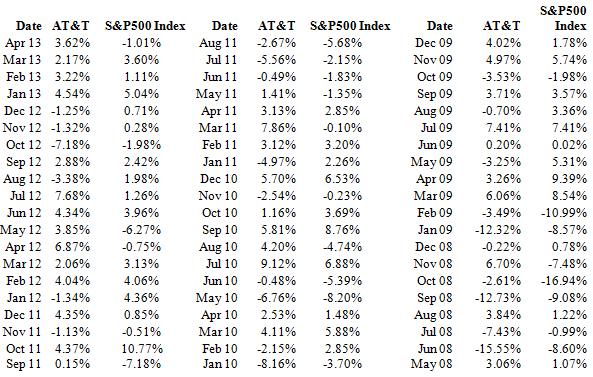
When you go on the Web to find a firm’s beta, you do not know how recently it was computed, what index was used as a proxy for the market portfolio, or which time series of returns the calculations used. Earlier in this chapter, it was shown that when we went on the Web to find a beta for
Under what situations would you want to use the CAPM approach for estimating the component cost of equity? The constant-growth model?
Why do we use market-based weights instead of book-value-based weights when computing the WACC?
Suppose your firm wanted to expand into a new line of business quickly, and that management anticipated that the new line of business would constitute over 80 percent of your firm’s operations within three years. If the expansion was going to be financed partially with debt, would it still make
Explain why the divisional cost of capital approach may cause problems if new projects are assigned to the wrong division.
When will the subjective approach to forming divisional WACCs be better than using the firmwide WACC to evaluate all projects?
Diddy Corp. stock has a beta of 1.2, the current risk-free rate is 5 percent, and the expected return on the market is 13.5 percent. What is Diddy’s cost of equity?
JaiLai Cos. stock has a beta of 0.9, the current risk-free rate is 6.2 percent, and the expected return on the market is 12 percent. What is JaiLai’s cost of equity?
Oberon, Inc. has a $20 million (face value) 10-year bond issue selling for 97 percent of par that pays an annual coupon of 8.25 percent. What would be Oberon’s before-tax component cost of debt?
KatyDid Clothes has a $150 million (face value) 30-year bond issue selling for 104 percent of par that carries a coupon rate of 11 percent, paid semiannually. What would be Katydid’s before-tax component cost of debt?
PDQ, Inc. expects EBIT to be approximately $11 million per year for the foreseeable future, and that they have 25,000 20-year, 8 percent annual coupon bonds outstanding. What would the appropriate tax rate be for use in the calculation of the debt component of PDQ’s WACC?
ILK has preferred stock selling for 97 percent of par that pays an 8 percent annual coupon. What would be ILK’s component cost of preferred stock?
Marme, Inc. has preferred stock selling for 96 percent of par that pays an 11 percent annual coupon. What would be Marme’s component cost of preferred stock?
FarCry Industries, a maker of telecommunications equipment, has two million shares of common stock outstanding, one million shares of preferred stock outstanding, and 10,000 bonds. If the common shares are selling for $27 per share, the preferred shares are selling for $14.50 per share, and the
OMG Inc. has four million shares of common stock outstanding, three million shares of preferred stock outstanding, and 5,000 bonds. If the common shares are selling for $17 per share, the preferred shares are selling for $26 per share, and the bonds are selling for 108 percent of par, what would be
FarCry Industries, a maker of telecommunications equipment, has two million shares of common stock outstanding, one million shares of preferred stock outstanding, and 10,000 bonds. If the common shares are selling for $27 per share, the preferred shares are selling for $14.50 per share, and the
OMG Inc. has four million shares of common stock outstanding, three million shares of preferred stock outstanding, and 5,000 bonds. If the common shares are selling for $27 per share, the preferred shares are selling for $26 per share, and the bonds are selling for 108 percent of par, what weight
FarCry Industries, a maker of telecommunications equipment, has two million shares of common stock outstanding, one million shares of preferred stock outstanding, and 10,000 bonds. If the common shares sell for $27 per share, the preferred shares sell for $14.50 per share, and the bonds sell for 98
OMG Inc. has four million shares of common stock outstanding, three million shares of preferred stock outstanding, and 5,000 bonds. If the common shares sell for $17 per share, the preferred shares sell for $16 per share, and the bonds sell for 108 percent of par, what weight should you use for
Suppose that TapDance, Inc.’s capital structure features 65 percent equity, 35 percent debt, and that its before-tax cost of debt is 8 percent, while its cost of equity is 13 percent. If the appropriate weighted average tax rate is 34 percent, what will be TapDance’s WACC?
Suppose that JB Cos. has a capital structure of 78 percent equity, 22 percent debt, and that its before-tax cost of debt is 11 percent while its cost of equity is 15 percent. If the appropriate weighted average tax rate is 25 percent, what will be JB’s WACC?
Suppose that B2B, Inc. has a capital structure of 37 percent equity, 17 percent preferred stock, and 46 percent debt. If the before-tax component costs of equity, preferred stock and debt are 14.5 percent, 11 percent, and 9.5 percent, respectively, what is B2B’s WACC if the firm faces an average
Suppose that MNINK Industries’ capital structure features 63 percent equity, 7 percent preferred stock, and 30 percent debt. If the before-tax component costs of equity, preferred stock and debt are 11.60 percent, 9.5 percent, and 9 percent, respectively, what is MNINK’s WACC if the firm faces
TAFKAP Industries has three million shares of stock outstanding selling at $17 per share and an issue of $20 million in 7.5 percent, annual coupon bonds with a maturity of 15 years, selling at 106 percent of par. If TAFKAP’s weighted average tax rate is 34 percent and its cost of equity is 14.5
Johnny Cake Ltd. has ten million shares of stock outstanding selling at $23 per share and an issue of $50 million in 9 percent, annual coupon bonds with a maturity of 17 years, selling at 93.5 percent of par. If Johnny Cake’s weighted average tax rate is 34 percent, its next dividend is expected
BetterPie Industries has three million shares of common stock outstanding, two million shares of preferred stock outstanding, and 10,000 bonds. If the common shares are selling for $47 per share, the preferred shares are selling for $24.50 per share, and the bonds are selling for 99 percent of par,
WhackAmOle has two million shares of common stock outstanding, 1.5 million shares of preferred stock outstanding, and 50,000 bonds. If the common shares are selling for $63 per share, the preferred shares are selling for $52 per share, and the bonds are selling for 103 percent of par, what would be
Suppose that Brown-Murphies’ common shares sell for $19.50 per share, that the firm is expected to set their next annual dividend at $0.57 per share, and that all future dividends are expected to grow by 4 percent per year, indefinitely. If Brown-Murphies faces a flotation cost of 13 percent on
A firm is considering a project that will generate perpetual after-tax cash flows of $15,000 per year beginning next year. The project has the same risk as the firm's overall operations and must be financed externally. Equity flotation costs 14 percent and debt issues cost 4 percent on an after-tax
An all-equity firm is considering the projects shown as follows. The T-bill rate is 4 percent and the market risk premium is 7 percent. If the firm uses its current WACC of 12 percent to evaluate these projects, which project(s), if any, will be incorrectly rejected?
An all-equity firm is considering the projects shown as follows. The T-bill rate is 4 percent and the market risk premium is 7 percent. If the firm uses its current WACC of 12 percent to evaluate these projects, which project(s), if any, will be incorrectlyaccepted?
Suppose your firm has decided to use a divisional WACC approach to analyze projects. The firm currently has four divisions, A through D, with average betas for each division of 0.6, 1.0, 1.3, and 1.6, respectively. If all current and future projects will be financed with half debt and half equity,
Suppose your firm has decided to use a divisional WACC approach to analyze projects. The firm currently has four divisions, A through D, with average betas for each division of 0.9, 1.1, 1.3, and 1.5, respectively. If all current and future projects will be financed with 25 percent debt and 75
Suppose that LilyMac Photography expects EBIT to be approximately $200,000 per year for the foreseeable future, and that they have 1,000 10-year, 9 percent annual coupon bonds outstanding. What would the appropriate tax rate be for use in the calculation of the debt component of LilyMac’s WACC?
Why does a decrease in NWC result in a cash inflow to the firm?
Suppose you sell a fixed asset for $109,000 when its book value is $129,000. If your company’s marginal tax rate is 39 percent, what will be the effect on cash flows of this sale (i.e., what will be the after-tax cash flow of this sale)?
Your company is considering a new project that will require $1 million of new equipment at the start of the project. The equipment will have a depreciable life of 10 years and will be depreciated to a book value of $150,000 using straight-line depreciation. The cost of capital is 13 percent, and
You are trying to pick the least-expensive car for your new delivery service. You have two choices: the Scion xA, which will cost $14,000 to purchase and which will have OCF of -$1,200 annually throughout the vehicle’s expected life of three years as a delivery vehicle; and the Toyota Prius,
You are evaluating two different cookie-baking ovens. The Pillsbury 707 costs $57,000, has a five-year life, and has an annual OCF (after tax) of -$10,000 per year. The Keebler CookieMunster costs $90,000, has a seven-year life, and has an annual OCF (after tax) of -$8,000 per year. If your
You are considering the purchase of one of two machines used in your manufacturing plant. Machine A has a life of two years, costs $80 initially, and then $125 per year in maintenance costs. Machine B costs $150 initially, has a life of three years, and requires $100 in annual maintenance costs.
KADS, Inc. has spent $400,000 on research to develop a new computer game. The firm is planning to spend $200,000 on a machine to produce the new game. Shipping and installation costs of the machine will be capitalized and depreciated; they total $50,000. The machine has an expected life of three
Your firm needs a computerized machine tool lathe which costs $50,000, and requires $12,000 in maintenance for each year of its three-year life.After three years, this machine will be replaced. The machine falls into the MACRS 3-year class life category. Assume a tax rate of 35 percent and a
If the lathe in the previous problem can be sold for $5,000 at the end of year 3, what is the after-tax salvage value?
You have been asked by the president of your company to evaluate the proposed acquisition of a new special-purpose truck for $60,000. The truck falls into the MACRS three-year class, and it will be sold after three years for $20,000. Use of the truck will require an increase in NWC (spare parts
Continuing the previous problem, what is the operating cash flow for the project in year 2?In problem, You are evaluating a project for The Tiff-any golf club, guaranteed to correct that nasty slice. You estimate the sales price of The Tiff-any to be $400 per unit and sales volume to be 1,000
You are considering adding a new software title to those published by your highly successful software company. If you add the new product, it will use capacity on your disk duplicating machines that you had planned on using for your flagship product, “Battlin’ Bobby.” You had planned on
You are evaluating a project for The Ultimate recreational tennis racket, guaranteed to correct that wimpy backhand. You estimate the sales price of The Ultimate to be $400 per unit and sales volume to be 1,000 units in year 1; 1,250 units in year 2; and 1,325 units in year 3. The project has a
Mom's Cookies, Inc. is considering the purchase of a new cookie oven. The original cost of the old oven was $30,000; it is now five years old, and it has a current market value of $13,333.33. The old oven is being depreciated over a 10-year life toward a zero estimated salvage value on a
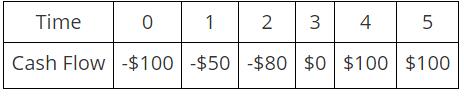
Is the set of cash flows depicted in the following table normal or non-normal? Explain.
Derive an accept/reject rule for IRR similar to equation 13-8 that would make the correct decision on cash flows that are non-normal, but that always have one large positive cash flow at time zero followed by a series of negative cash flows:Time012345Cash Flow+-----
Compute the NPV for Project M and accept or reject the project with the cash flows shown as follows if the appropriate cost of capital is 8percent.
Compute the NPV statistic for Project Y and note whether the firm should accept or reject the project with the cash flows shown as follows if the appropriate cost of capital is 12percent.
Compute the NPV statistic for Project U and recommend whether the firm should accept or reject the project with the cash flows shown as follows if the appropriate cost of capital is tenpercent.
Compute the NPV statistic for Project K and recommend whether the firm should accept or reject the project with the cash flows shown as follows if the appropriate cost of capital is sixpercent.
Compute the payback statistic for Project B and decide whether the firm should accept or reject the project with the cash flows shown as follows if the appropriate cost of capital is 12 percent and the maximum allowable payback is threeyears.
Compute the payback statistic for Project A and recommend whether the firm should accept or reject the project with the cash flows shown as follows if the appropriate cost of capital is 8 percent and the maximum allowable payback is fouryears.
Compute the discounted payback statistic for Project C and recommend whether the firm should accept or reject the project with the cash flows shown as follows if the appropriate cost of capital is 8 percent and the maximum allowable discounted payback is threeyears.
Compute the IRR statistic for project F and note whether the firm should accept or reject the project with the cash flows shown as follows if the appropriate cost of capital is 12percent.
Compute the MIRR statistic for Project I and tell whether to accept or reject the project with the cash flows shown as follows if the appropriate cost of capital is 12percent.
Compute the MIRR statistic for Project J and advise whether to accept or reject the project with the cash flows shown as follows if the appropriate cost of capital is 10percent.
Compute the PI statistic for Project Z for and advise the firm whether to accept or reject the project with the cash flows shown as follows if the appropriate cost of capital is 8percent.
Compute the PI statistic for Project Q and tell whether you would accept or reject the project with the cash flows shown as follows if the appropriate cost of capital is 12percent.
How many possible IRRs could you find for the following set of cash flows?
How many possible IRRs could you find for the following set of cash flows? Discuss.
Use the payback decision rule to evaluate this project; should it be accepted or rejected?
Use the discounted payback decision rule to evaluate this project; should it be accepted or rejected?
Use the IRR decision rule to evaluate this project; should it be accepted or rejected? The IRR for this project will be the solution to:
Use the MIRR decision rule to evaluate this project; should it be accepted or rejected? Cash flows will be moved as follows:
Use the NPV decision rule to evaluate this project; should it be accepted or rejected?
Use the PI decision rule to evaluate this project; should it be accepted or rejected?
Use the payback decision rule to evaluate this project; should it be accepted or rejected?Suppose your firm is considering investing in a project with the cash flows shown as follows, that the required rate of return on projects of this risk class is 11 percent, and that the maximum allowable
Use the discounted payback decision rule to evaluate this project; should it be accepted or rejected?Suppose your firm is considering investing in a project with the cash flows shown as follows, that the required rate of return on projects of this risk class is 11 percent, and that the maximum
Use the IRR decision rule to evaluate this project; should it be accepted or rejected?Suppose your firm is considering investing in a project with the cash flows shown as follows, that the required rate of return on projects of this risk class is 11 percent, and that the maximum allowable payback
Use the MIRR decision rule to evaluate this project; should it be accepted or rejected?Suppose your firm is considering investing in a project with the cash flows shown as follows, that the required rate of return on projects of this risk class is 11 percent, and that the maximum allowable payback
Suppose your firm is considering investing in a project with the cash flows shown as follows, that the required rate of return on projects of this risk class is 11 percent, and that the maximum allowable payback and discounted payback statistics for your company are 3 and 3.5 years,respectively.
Use the PI decision rule to evaluate this project; should it be accepted or rejected?Suppose your firm is considering investing in a project with the cash flows shown as follows, that the required rate of return on projects of this risk class is 11 percent, and that the maximum allowable payback
Graph the NPV profiles for both projects on a common chart, making sure that you identify all of the crucial points.
Construct an NPV profile and determine EXACTLY how many nonnegative IRRs you can find for the following set of cashflows:
Construct an NPV profile and determine EXACTLY how many nonnegative IRRs you can find for the following set of cashflows:
The capital budgeting decision techniques that we’ve discussed all have strengths and weaknesses, but they do comprise the most popular rules for valuing projects. Valuing entire businesses, on the other hand, requires that some adjustments be made to various pieces of these methodologies. For
Suppose your firm is considering investing in a project with the cash flows shown as follows, that the required rate of return on projects of this risk class is 11 percent, and that the maximum allowable payback and discounted payback statistics for your company are 3 and 3.5 years,
If a firm has a cash cycle of 67 days and an operating cycle of 104 days, what is its average payment period?
If a firm has a cash cycle of 45 days and an operating cycle of 77 days, what is its average payment period?
If a firm has a cash cycle of 73 days and an operating cycle of 127 days, what is its payables turnover?
If a firm has a cash cycle of 54 days and an operating cycle of 77 days, what is its payables turnover?
Would it be worth it to incur a compensating balance of $10,000 in order to get a 1-percent-lower interest rate on a one-year, pure discount loan of $225,000?
Would it be worth it to incur a compensating balance of $7,500 in order to get a 0.65-percent-lower interest rate on a two-year, pure discount loan of $150,000?
Suppose that Dunn Industries has annual sales of $2,300,000, cost of goods sold of $1,650,000, average inventories of $1,116,000, and average accounts receivable of $750,000. Assuming that all of Dunn’s sales are on credit, what will be the firm’s operating cycle?
Suppose that LilyMac Photography has annual sales of $230,000, cost of goods sold of $165,000, average inventories of $4,500, and average accounts receivable of $25,000. Assuming that all of LilyMac’s sales are on credit, what will be the firm’s operating cycle?
Suppose that LilyMac Photography has annual sales of $230,000, cost of goods sold of $165,000, average inventories of $4,500, average accounts receivable of $25,000, and an average accounts payable balance of $7,000. Assuming that all of LilyMac’s sales are on credit, what will be the firm’s
Suppose that the Ken-Z Art Gallery has annual sales of $870,000, cost of goods sold of $560,000, average inventories of $244,500, average accounts receivable of $265,000, and an average accounts payable balance of $79,000. Assuming that all of Ken-Z’s sales are on credit, what will be
Suppose your firm is seeking an eight-year, amortizing $800,000 loan with annual payments and your bank is offering you the choice between an $850,000 loan with a $50,000 compensating balance and an $800,000 loan without a compensating balance. If the interest rate on the $800,000 loan is 8.5
Suppose your firm is seeking a four-year, amortizing $200,000 loan with annual payments and your bank is offering you the choice between a $205,000 loan with a $5,000 compensating balance and a $200,000 loan without a compensating balance. If the interest rate on the $200,000 loan is 9.8 percent,
Rose Axels faces a smooth annual demand for cash of $5,000,000, incurs transaction costs of $275 every time they sell marketable securities, and can earn 4.3 percent on their marketable securities. What will be their optimal cash replenishment level?
Watkins Resources faces a smooth annual demand for cash of $1,500,000, incurs transaction costs of $75 every time they sell marketable securities, and can earn 3.7 percent on their marketable securities. What will be their optimal cash replenishment level?
HotFoot Shoes would like to maintain their cash account at a minimum level of $25,000, but expect the standard deviation in net daily cash flows to be $4,000, the effective annual rate on marketable securities to be 6.5 percent per year, and the trading cost per sale or purchase of marketable
Veggie Burgers, Inc., would like to maintain their cash account at a minimum level of $245,000, but expect the standard deviation in net daily cash flows to be $12,000, the effective annual rate on marketable securities to be 4.7 percent per year, and the trading cost per sale or purchase of
Veggie Burgers, Inc., would like to maintain their cash account at a minimum level of $245,000, but expect the standard deviation in net daily cash flows to be $12,000, the effective annual rate on marketable securities to be 3.7 percent per year, and the trading cost per sale or purchase of
HotFoot Shoes would like to maintain their cash account at a minimum level of $25,000, but expect the standard deviation in net daily cash flows to be $2,000, the effective annual rate on marketable securities to be 3.5 percent per year, and the trading cost per sale or purchase of marketable
Showing 7400 - 7500
of 20267
First
68
69
70
71
72
73
74
75
76
77
78
79
80
81
82
Last
Step by Step Answers

 Get 50% OFF
Claim Now
Get 50% OFF
Claim Now


.png)
.png)
.png)
.png)
.png)
.png)
.png)
.png)
.png)
.png)
.png)
.png)
.png)






.png)
.png)
.png)
.png)
.png)

.png)
.png)
.png)
.png)


