New Semester
Started
Get
50% OFF
Study Help!
--h --m --s
Claim Now
Question Answers
Textbooks
Find textbooks, questions and answers
Oops, something went wrong!
Change your search query and then try again
S
Books
FREE
Study Help
Expert Questions
Accounting
General Management
Mathematics
Finance
Organizational Behaviour
Law
Physics
Operating System
Management Leadership
Sociology
Programming
Marketing
Database
Computer Network
Economics
Textbooks Solutions
Accounting
Managerial Accounting
Management Leadership
Cost Accounting
Statistics
Business Law
Corporate Finance
Finance
Economics
Auditing
Tutors
Online Tutors
Find a Tutor
Hire a Tutor
Become a Tutor
AI Tutor
AI Study Planner
NEW
Sell Books
Search
Search
Sign In
Register
study help
business
principles corporate finance
Corporate Finance Theory And Practice 2nd Edition Pierre Vernimmen, Pascal Quiry - Solutions
A company treasurer invests 100 for 18 months. The first bank he approaches offers to reinvest the funds at 0.8% per quarter, and the second bank, at 1.6% per half-year.Without actually doing the calculation, show how the first bank’s offer would be the best option. What are the 2 yields to
A company treasurer invests €10,000,000 on the monetary market for 24 days. He gets back €10,019,745. What is the rate of return over 24 days? What is the yield to maturity?
Draw up a repayment schedule for a loan of 100, with a yield to maturity of 7% over 4 years, showing repayment in fixed annual instalments and constant amortisation.
Draw up a repayment schedule for a loan of 400, with a yield to maturity of 6.5% over 7 years with repayment deferred for 2 years, showing repayment in fixed annual instalments and constant amortisation.
A bond issued at 98% of the nominal value is repaid at maturity at 108% after 10 years.Annual interest paid to subscribers is 7% of the nominal value. What is the yield to maturity of this bond? And what if it had been issued at 101%? So what is the rule?
What is the discounted cost for the issuer of the bond described in question 10 if we factor in a 0.35% placement commission, and annual management fee of 2.5% of the coupon, a closing fee of 0.6% of the amount paid, and an issue price of 98%.
You sell your flat valued at €300,000 for a down payment of €100,000 and 20 monthly payments of €11,000. What is the monthly interest rate for this transaction? What is the yield to maturity?
Calculate the yield to maturity of the following Investment, which can be purchased today for 1,000: Year 1 2 3 4 5 Cash flow 232 2088 232 -232 -927
When making an investment decision, should you reason:◦ in terms of cash flow?◦ marginally?◦ without regard to the type of financing?◦ with consideration for taxation?
Define the payback ratio.
What are the drawbacks of the payback ratio?
Define return on capital employed.
Can an investment decision be based on return on capital employed?
What purpose does the return on capital employed serve?
What roles do depreciation and amortisation play in the calculation of cash flows to be discounted?
What is the optimal depreciation method for a company that is not taxed? What about for a company that pays tax at the standard rate?
A company is planning to build a new plant to replace an older one that is to be demolished. What are the most important flows to consider?(a) market value of the land and the older plant;(b) demolition costs;(c) costs of building access road the previous year;(d) production losses while an old
When can investment in working capital be neglected?
Provide examples of investments where residual value must under no circumstances be neglected.
In Germany, profits for 2000 were taxed at 40% if they were paid out and 30% if reinvested. What rate should be used when making an investment decision?
In an inflationary environment, how should you reason in evaluating an investment?
When operating cash flow is negative, should IRR and NPV be calculated including the interest expense on loans used to finance it?
Should an investment subsidy be included in investment flows or by reducing the discount rate?
The following investment project is submitted to you:◦ Project: extension of an industrial plant;◦ purchase of equipment €20m;◦ set-up costs €1.5m;◦ useful life 8 years;◦ residual value 0;◦ increase in working capital €2.5m.The project will result in an increase in EBITDA of €3m
A company is planning to replace a machine with a new, better performing one. The figures for the investment are as follows:◦ Purchase of new machine:◦ cost €2m;◦ useful life 5 years, residual value nil;◦ linear depreciation over 5 years;◦ savings on charges €0.8m per year.◦ Sale of
Take the following project:What problem do you come up against when calculating the payback ratio? What is the NPV of this project at 10%? What is the internal rate of return? Period 0 1 2 3 4 5 Cash flow -100 110 -30 25 50 100
The Catalunia region is prepared to pay €2m to a private company to run a bus service three times a day between Lerida and Tarragona, for a period of 10 years. The initial outlay for the project is estimated at €0.8m, but annual operating losses (excluding depreciation) will amount to €0.2m.
Industrial Electric plc estimates its needs for a component used in its products at 7000 units per year for the next 10 years. A subcontractor offers to supply the parts at €5 per unit.Industrial Electric can make the part in its own workshops for €3 per unit, if it buys a new machine. A new
A large oil company has been invited to get involved in a project to build a parking facility in the centre of Frankfurt. The project includes a 450-car public parking lot, a 200-car garage and a petrol station covering 1000 sq.m. It will take one year to build and a 30-year concession to run the
A year ago, Robin plc invested in a machine to improve the manufacturing of one of its products. It has just discovered that a new machine has come onto the market which would improve performance more than the one it bought. The first machine cost €8000 a year ago, and is depreciated on a
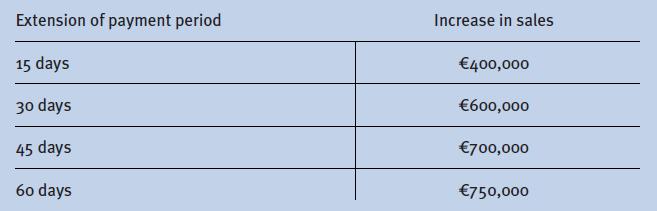
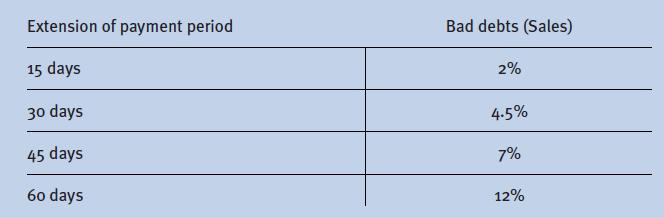
Pincer plc is hoping to increase sales by granting its customers longer payment periods. Its annual sales currently stand at €1m and it gives its customers an average of 30 days to pay.The company made the following assumptions when defining its customer credit policy.The sales price of a
In the summer of 2001, the UK advertising group WPP got involved in a stock market battle with Havas Advertising for Tempus, a company listed on the London Stock Exchange. Havas Advertising offered shareholders 541 pence per share, before WPP increased its offer to 555 pence per share. WPP’s
A company raises BC500m in shareholders’ equity for an R&D project. Has it become richer or poorer? By how much? What is your answer if the company spends half of the funds in the first two years, and the project does not produce results? In the third year, the company uses the remaining funds to
What are the accounting items corresponding to additions to wealth for shareholders, lenders and the State?
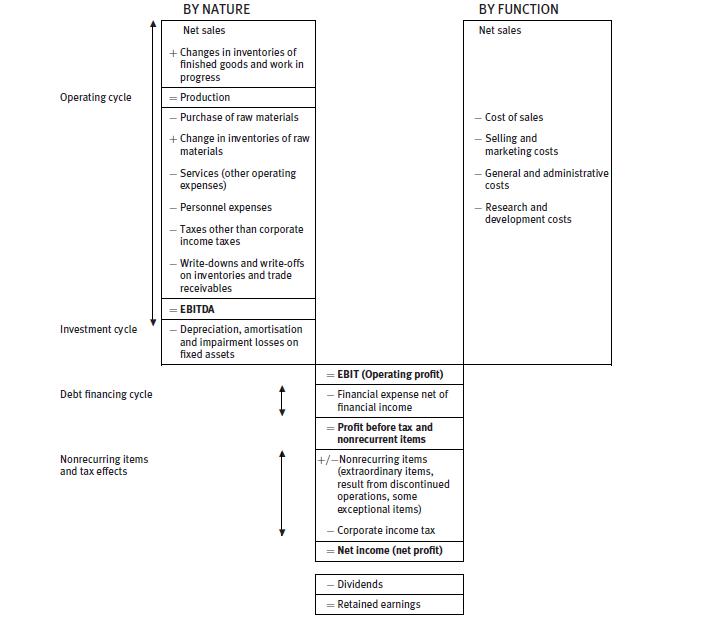
In concrete terms, based on the diagram on page 35, by how much does a company create wealth over a given financial period? Why? Operating cycle Investment cycle Debt financing cycle Nonrecurring items and tax effects BY NATURE Net sales + Changes in inventories of finished goods and work in
Comment on the following two statements: “This year, we’re going to have go into debt to cover our losses” and “We’ll be able to buy out our main competitor, thanks to the profits we made this year”.
In 2005, a company’s free cash flow turns negative. Has the company created or destroyed wealth?
Does EBITDA always flow directly into a company’s bank account?
Is it correct to say that a company’s wealth is increased each year by the amount of EBITDA?
According to the terminology used in Chapter 2, is depreciation a cash expense or a non-cash charge? What is the difference between these two concepts? At the risk of oversimplifying, we will use the following terminology in this book: the financial manager or chief financial officer (CFO) is
Analyse the similarities and the differences between cash and wealth, looking at, for example, investment in real estate and investment in research.
Will repayment of a loan always be recorded on the income statement? Will it always be recorded under a cash item?
Does the inflation-related increase in the nominal value of an asset appear on the income statement?
Why is the increase in inventories of raw materials deducted from purchases in the by-nature income statement format?
Why is change in finished goods inventories recorded under income in the by-nature income statement format?
Should the sale of a fixed asset be classified as part of the “ordinary course of business” of a company? How is it recorded on the income statement? Why under this heading?
Provide several examples illustrating the difference between cash receipts and revenues, cash expenses and charges.
Is there a substantial difference between the income statement and the cash flow statement?
What is a non-cash expense? What is a deferred charge? Describe their similarities and the differences between them.
You are asked by a Swedish company that assembles computers to draw up a by-nature and by-function income statement for year n. You are provided with the following information:Retail price of a PC: BC1500.Cost of various components:Over the financial period, the company paid out BC60,000 in
Draw up the income statement for 2005 in both the by-nature and by-function formats.Depreciation and amortisation come to €6m.
Consider an Indian business that sells oak barrels to vineyards. At the start of the year, its inventory of finished products was zero. It sold 800 of the 900 barrels it had produced, leaving the closing inventory at 100 barrels. Each barrel sells for INR 10,000. To produce one barrel, the company
You want to launch the first kite surf monthly magazine in Singapore. The economics are the following:◦ For each issue you need to pay some friends for the articles $2000 (paid each month including social charges)◦ the magazine will be sold only by subscription, you know the universe of buyers
When do we use a capital-employed analysis of the balance sheet? And when do we use a solvency-and-liquidity analysis of the balance sheet?
Which approach to the balance sheet should you adopt:◦ when warranting a company’s balance sheet when it is being sold?◦ when forecasting a company’s working capital?
Do liabilities that arise during the operating cycle always have a maturity of less than one year?
Classify the following as “stocks”, in/outflows, or change in in/outflows: sales, trade receivables, change in trade receivables, increase in dividends, financial expense, increase in sales, EBITDA.
A company’s sales clearly represent a source of funds. However, they do not appear on the balance sheet. Why?
Classify the following balance sheet items under fixed assets, working capital, shareholders’equity or net debt: overdraft, retained earnings, brands, taxes payable, finished goods inventories, bonds.
Is a company that is currently unable to pay its debts always insolvent?
Assess the liquidity of the following assets: plant, unlisted securities, listed securities, head office building located in the centre of a large city, ships and aircraft, commercial papers, raw materials inventories, work-in-progress inventories.
Provide examples of items classified under nonoperating working capital.
Give a synonym for net assets.
What is another way of describing a difference in “stocks”?
What is the difference between liabilities and sources of funds?
What is another way of describing a cumulative inflow or outflow?
The main manufacturers of telephony equipment (Ericsson, Nokia, etc.) provided telecoms operators (Deutsche Telekom, Swisscom, etc.) with substantial supplier credit lines, in order to assist them in financing the construction of their UMTS networks.State your views.
Do inventories valuation methods influence:◦ the company’s net income?◦ the company’s cash position?
Same question for the following:(a) depreciation and amortisation(b) corporate income tax(c) capital increase through cash contribution(d) cash purchase of fixed assets(e) recognition and payment of salaries(f) disposal for cash of an asset at its book value(g) sale of goods on credit(h) payment
What differences are there between cash flow from operating activities and operating cash flow?
What noncash charges must be factored back into calculations of cash flow?
Is cash flow a measure of an increase in wealth? Or an increase in cash?
Why is the difference between EBITDA and operating cash flows equal to a change in working capital?
What difference is there between sales in a financial year and operating receipts over the same period?
What is the difference between cash flow and cash flow from operating activities?
Why is decrease in net debt more relevant than change in cash position or marketable securities?
Make use of the cash flow statement to show how impairment losses on current assets have no impact on cash.
Will a capital increase by way of incorporation of reserves appear on the cash flow statement?
Pearson plc is in the process of revaluing all of its tangible assets. How will this impact on the cash flow statement?
Describe the three methods used for consolidating accounts.
What criticism can be made of the equity method of accounting?
What criticism can be made of proportionate consolidation?
What is the difference between the proportion of voting rights held and the ownership level?
On the consolidated income statement, what is the “share of earnings in companies accounted for under the equity method” similar to?
In what circumstances should the group’s share be separated from that attributable to minority investors?
Will opening up the capital of a subsidiary to shareholders outside the group have an impact on the group’s earnings? Is this a paradox? Explain.
Why do dividends paid by subsidiaries have to be restated when consolidated accounts are drawn up?
What is goodwill and how is it stated?
What is the most frequently used method of consolidation? Why?
In French, in the UK or in Italian GAAP (used for some nonlisted companies) where goodwill is amortised linearly over a fixed period of time, does the rate at which goodwill is written down have an impact on the amount of tax paid by the group?
What is the pooling of interests method?
Is an impairment loss in the amount of goodwill a recurrent or a nonrecurrent item?Explain why nevertheless it has a negative impact on the share price.
Why has the phasing-out of the pooling of interests method made accounts more rigorous?
What is the logic behind the temporal method of translating fixed assets at the historical exchange rate?
The financial statements of company M and its subsidiary S are shown here (in BCm).Draw up the consolidated accounts for the groupM+S in the following circumstances:(a) M has 80% stake in S (full consolidation).(b) M has 50% stake in S (assuming the accounting principles allow for proportional
Do shareholders and lenders carry out financial analysis in the same way?
What are the two prerequisites for financial analysis?
Is a market an economic sector? Why?
Why is there less risk on an original equipment market than on a replacement product market?
When a new product is launched, should the company invest in the production process or in the product itself? Why?
Showing 4000 - 4100
of 5445
First
34
35
36
37
38
39
40
41
42
43
44
45
46
47
48
Last
Step by Step Answers

 Get 50% OFF
Claim Now
Get 50% OFF
Claim Now