







Question: A free particle has the initial wave function where A and a are (real and positive) constants. (a) Normalize (x,0). (b) Find (x,t).
A free particle has the initial wave function
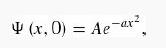 where A and a are (real and positive) constants.
(a) Normalize Ψ (x,0).
(b) Find Ψ (x,t). Integrals of the form
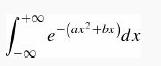
can be handled by “completing the square”: Let
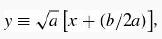
and note that
(ax2 + bx) = y2 - (b2/4a).

(c) Find |Ψ (x,t)|2. Express your answer in terms of the quantity
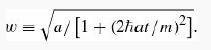
Sketch |Ψ|2 (as a function of x) at t = 0, and again for some very large t. Qualitatively, what happens to |Ψ|2, as time goes on?
(d) Find (x), (p) , (x2), (p2), σx and σp . Partial (p2) = αћ2 , but it may take some algebra to reduce it to this simple form.
(e) Does the uncertainty principle hold? At what time t does the system come closest to the uncertainty limit?
(x,0) = Ae-a
Step by Step Solution
3.46 Rating (162 Votes )
There are 3 Steps involved in it
a b c d e Closest at ... View full answer

Get step-by-step solutions from verified subject matter experts
 Study Help