New Semester
Started
Get
50% OFF
Study Help!
--h --m --s
Claim Now
Question Answers
Textbooks
Find textbooks, questions and answers
Oops, something went wrong!
Change your search query and then try again
S
Books
FREE
Study Help
Expert Questions
Accounting
General Management
Mathematics
Finance
Organizational Behaviour
Law
Physics
Operating System
Management Leadership
Sociology
Programming
Marketing
Database
Computer Network
Economics
Textbooks Solutions
Accounting
Managerial Accounting
Management Leadership
Cost Accounting
Statistics
Business Law
Corporate Finance
Finance
Economics
Auditing
Tutors
Online Tutors
Find a Tutor
Hire a Tutor
Become a Tutor
AI Tutor
AI Study Planner
NEW
Sell Books
Search
Search
Sign In
Register
study help
mathematics
applied calculus
Calculus And Its Applications 14th Edition Larry Goldstein, David Lay, David Schneider, Nakhle Asmar - Solutions
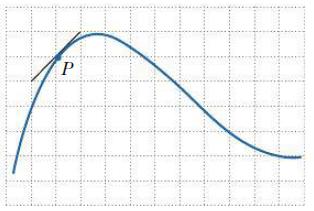
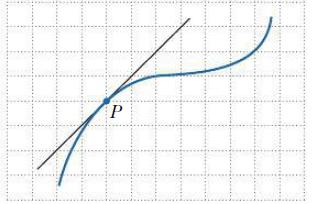
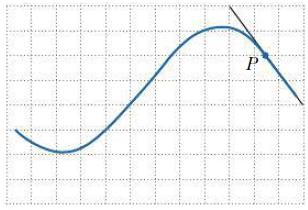
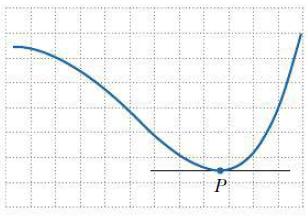
Estimate the slope of each of the following curves at the designated point P. P
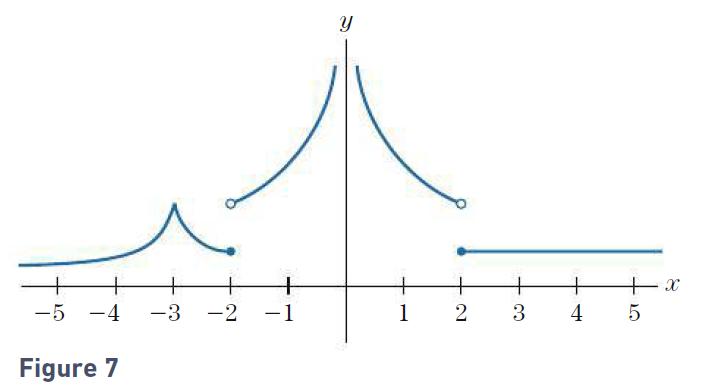
Is the function, whose graph is drawn in Fig. 7, continuous at the following values of x?x = .001 + -5 -4 -3 -2 -1 Figure 7 y 1 2 3 + 4 5 X
Suppose that f(x) = -6/x.(a) What is the average rate of change of f (x) over each of the intervals 1 to 2, 1 to 1.5, and 1 to 1.2?(b) What is the (instantaneous) rate of change of f (x) when x = 1?
Use formulas (1) and (2) and the power rule to find the derivatives of the following functions.f(x) = x7
Find the slopes and y-intercepts of the following lines.x = 2y - 3
Find the equation and sketch the graph of the following lines.Through (2, 0), with slope 5.
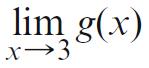
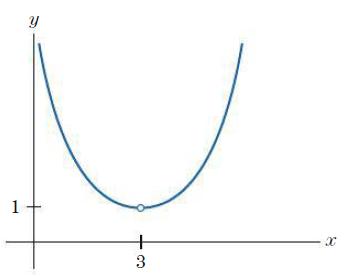
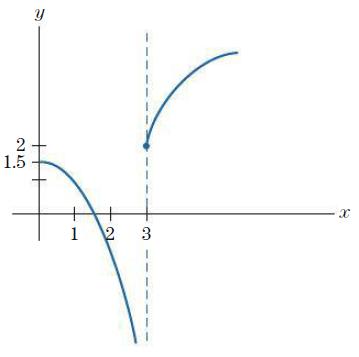
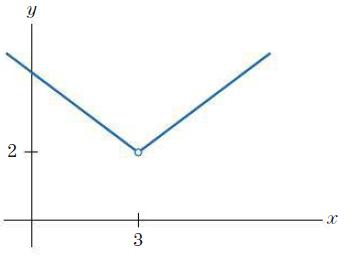
For each of the following functions g(x), determine whetherexists. If so, give the limit. lim g(x) x-3
Is the function, whose graph is drawn in Fig. 7, continuous at the following values of x?x = 3 + -5 -4 -3 -2 -1 Figure 7 y 1 2 3 + 4 5 X
Estimate the slope of each of the following curves at the designated point P. P
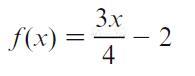
Use formulas (1) and (2) and the power rule to find the derivatives of the following functions. f(x) = 3.x 4 2
Find the first derivatives.v(t) = 4t2 + 11√t + 1
Estimate the slope of each of the following curves at the designated point P. P
Is the function, whose graph is drawn in Fig. 7, continuous at the following values of x?x = 0 + -5 -4 -3 -2 -1 Figure 7 y 1 2 3 + 4 5 X
Suppose that f(x) = 4x2.(a) What is the average rate of change of f(x) over each of the intervals 1 to 2, 1 to 1.5, and 1 to 1.1?(b) What is the (instantaneous) rate of change of f (x) when x = 1?
For each of the following functions g(x), determine whetherexists. If so, give the limit. lim g(x) x-3
Differentiate.y = 33√x
Find the equation and sketch the graph of the following lines.With slope 3/4, y-intercept (0, -1).
Find the first derivatives.f(P) = P3 + 3P2 - 7P + 2
Differentiate.y = 6x3
If f(x) = x2 + 3x, calculate the average rate of change of f(x) over the following intervals(a) 1 ≤ x ≤ 2,(b) 1 ≤ x ≤ 1.5,(c) 1 ≤ x ≤ 1.1.
Find the first derivatives.f(t) = (t2 + 1)5
Use formulas (1) and (2) and the power rule to find the derivatives of the following functions.f(x) = 3x + 7
Find the equation and sketch the graph of the following lines.With slope -2, y-intercept (0, 3).
Differentiate.y = 3x4
Use formulas (1) and (2) and the power rule to find the derivatives of the following functions.f(x) = -2x
Estimate the slope of each of the following curves at the designated point P. P I
If f(x) = 3x2 + 2, calculate the average rate of change of f(x) over the following intervals(a) 0 ≤ x ≤ .5,(b) 0 ≤ x ≤ .1,(c) 0 ≤ x ≤ .0.01.
Is the function, whose graph is drawn in Fig. 7, continuous at the following values of x?x = -3 + -5 -4 -3 -2 -1 Figure 7 y 1 2 3 + 4 5 X
For each of the following functions g(x), determine whetherexists. If so, give the limit. lim g(x) x-3
Showing 5500 - 5600
of 5529
First
42
43
44
45
46
47
48
49
50
51
52
53
54
55
56
Step by Step Answers

 Get 50% OFF
Claim Now
Get 50% OFF
Claim Now