New Semester
Started
Get
50% OFF
Study Help!
--h --m --s
Claim Now
Question Answers
Textbooks
Find textbooks, questions and answers
Oops, something went wrong!
Change your search query and then try again
S
Books
FREE
Study Help
Expert Questions
Accounting
General Management
Mathematics
Finance
Organizational Behaviour
Law
Physics
Operating System
Management Leadership
Sociology
Programming
Marketing
Database
Computer Network
Economics
Textbooks Solutions
Accounting
Managerial Accounting
Management Leadership
Cost Accounting
Statistics
Business Law
Corporate Finance
Finance
Economics
Auditing
Tutors
Online Tutors
Find a Tutor
Hire a Tutor
Become a Tutor
AI Tutor
AI Study Planner
NEW
Sell Books
Search
Search
Sign In
Register
study help
mathematics
applied calculus
Calculus And Its Applications 14th Edition Larry Goldstein, David Lay, David Schneider, Nakhle Asmar - Solutions
Suppose that 5 mg of a drug is injected into the bloodstream. Let f (t) be the amount present in the bloodstream after t hours. Interpret f(3) = 2 and f′(3) = -.5. Estimate the number of milligrams of the drug in the bloodstream after 3(1/2) hours.
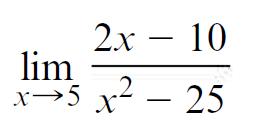
Determine which of the following limits exist. Compute the limits that exist. 2x - 10 lim x-5 x² - 25
How do you determine the proper units for a rate of change? Give an example.
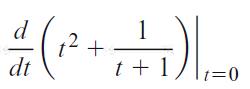
Compute the following. ·( d dt + +1)|-0 t + 1, t=0
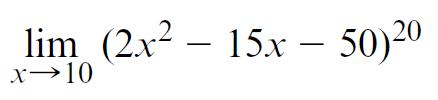
Determine which of the following limits exist. Compute the limits that exist. lim (2x²-15x -50) 20 x 10
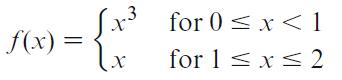
Determine whether each of the following functions is continuous and/or differentiable at x = 1. f(x) = { x ³² X for 0 for 1 < x < 1 ≤ x ≤ 2
Differentiate.y = 5x8
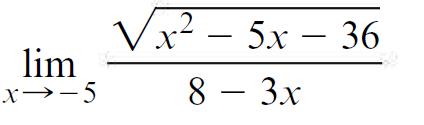
Determine which of the following limits exist. Compute the limits that exist. lim x--5 Vr2 – 5x – 36 X 8 - 3x
Determine whether each of the following functions is continuous and/or differentiable at x = 1. f(x) = √x + 2 | 3x for -1 ≤ x ≤ 1 for 1 < x < 5
Give two different notations for the first derivative of f(x) at x = 2. Do the same for the second derivative.
In Exercises, find the slope of the tangent line to the graph of y = x2 at the point indicated and then write the corresponding equation of the tangent line.(-1.5, 2.25)
Use formulas (1) and (2) and the power rule to find the derivatives of the following functions.f(x) = π
Differentiate.y = x7 + x3
Find an equation of the given line.Horizontal through (2, 9)
State the general power rule and give an example.
Let s(t) be the height (in feet) after t seconds of a ball thrown straight up into the air. Match each question with the proper solution.A. What is the velocity of the ball after 3 seconds?B. When is the velocity 3 feet per second?C. What is the average velocity during the first 3 seconds?D. When
In Exercises, find the slope of the tangent line to the graph of y = x2 at the point indicated and then write the corresponding equation of the tangent line. -Im
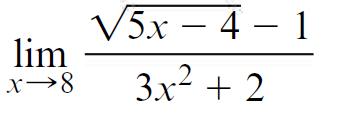
Determine which of the following limits exist. Compute the limits that exist. lim x →8 √5x4-1 3x²+2
Find an equation of the given line. (-1,-1) and (3, 1) on line
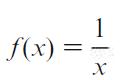
Determine whether each of the following functions is continuous and/or differentiable at x = 1. f(x) 1 X
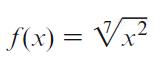
Use formulas (1) and (2) and the power rule to find the derivatives of the following functions. f(x)=√x²
Use formulas (1) and (2) and the power rule to find the derivatives of the following functions.f(x) = 42
Determine which of the following limits exist. Compute the limits that exist. lim (x + √x-6)(x² - 2x + 1) x→7
Find the equation and sketch the graph of the following lines.The x-axis.
In your own words, explain the meaning of “ f(x) is differentiable at x = 2.” Give an example of a function f(x) that is not differentiable at x = 2.
A helicopter is rising straight up in the air. Its distance from the ground t seconds after takeoff is s(t) feet, where s(t) = t2 + t.(a) How long will it take for the helicopter to rise 20 feet?(b) Find the velocity and the acceleration of the helicopter when it is 20 feet above the ground.
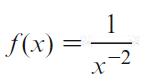
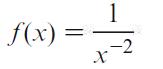
Use formulas (1) and (2) and the power rule to find the derivatives of the following functions. f(x) = 1 -2 X
Find an equation of the given line. (2, 1) and (1,4) on line
In Exercises, find the slope of the tangent line to the graph of y = x2 at the point indicated and then write the corresponding equation of the tangent line.(-2, 4)
Find an equation of the given line.(0, 0) and (1, 0) on line
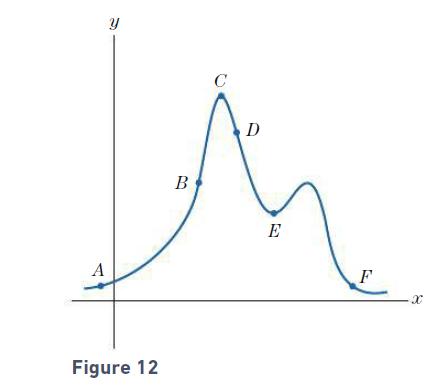
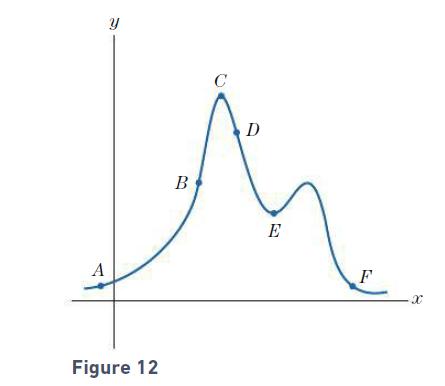
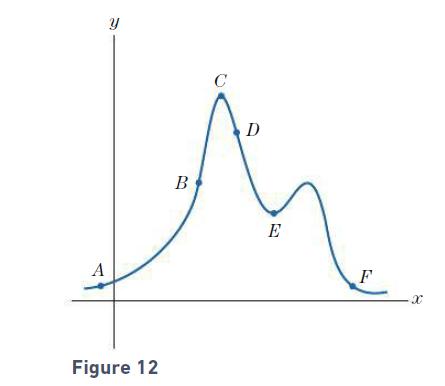
Exercises refer to the points in Fig. 12. Assign one of the following descriptors to each point: large positive slope, small positive slope, zero slope, small negative slope, large negative slope.Assign a value from the set {-6, - 1/2 , 0, 1, 8} to the slope of the graph at each point in Figure 12.
Find the equation and sketch the graph of the following lines.The y-axis.
Use formulas (1) and (2) and the power rule to find the derivatives of the following functions. f(x) = X 1 -2
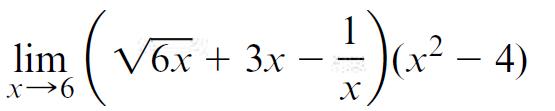
Determine which of the following limits exist. Compute the limits that exist. lim √6x + 3x x-6 -)(x²-4) (x² - 4) X
In your own words, explain the meaning of “ f(x) is continuous at x = 2.” Give an example of a function f(x) that is not continuous at x = 2.
Find an equation of the given line. (7,5) and (-½, -4) on line
Determine whether each of the following functions is continuous and/or differentiable at x = 1.f(x) = x2
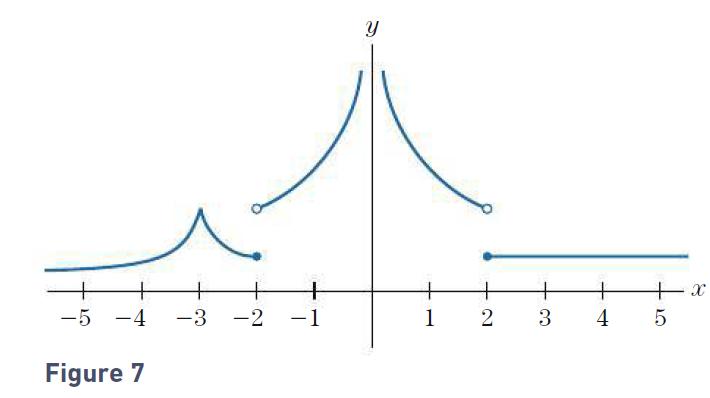
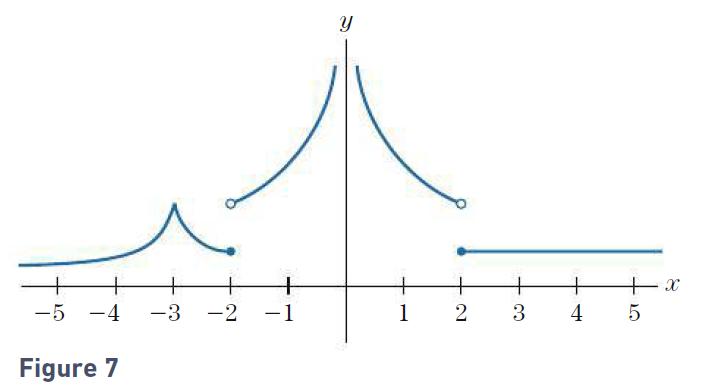
Is the function, whose graph is drawn in Fig. 7, differentiable at the following values of x?x = 2 -5 -4 Figure 7 -3 -2 -1 Y 1 2 3 + 4 +x 5 10
In Exercises, find the slope of the tangent line to the graph of y = x2 at the point indicated and then write the corresponding equation of the tangent line.(-.4, .16)
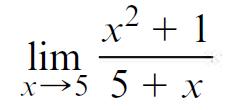
Determine which of the following limits exist. Compute the limits that exist. x² + 1 lim x 5 5 + x
Find the equation and sketch the graph of the following lines.Vertical and 4 units to the right of the y-axis.
Exercises refer to the points in Fig. 12. Assign one of the following descriptors to each point: large positive slope, small positive slope, zero slope, small negative slope, large negative slope.E and F A y Figure 12 B C D E F X
Is the function, whose graph is drawn in Fig. 7, differentiable at the following values of x?x = -2 -5 -4 Figure 7 -3 -2 -1 Y 1 2 3 + 4 +x 5 10
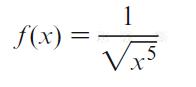
Use formulas (1) and (2) and the power rule to find the derivatives of the following functions. f(x) XA
Find the equation and sketch the graph of the following lines.Horizontal with height 3 units above the x–axis.
Is the function, whose graph is drawn in Fig. 7, differentiable at the following values of x?x = .001 -5 -4 Figure 7 -3 -2 -1 Y 1 2 3 + 4 +x 5 10
Give the limit definition of f′(2), that is, the slope of f (x) at the point (2, f (2)).
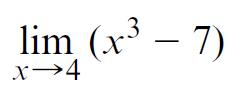
Determine which of the following limits exist. Compute the limits that exist. lim (x³ - 7) x→4
Exercises refer to the points in Fig. 12. Assign one of the following descriptors to each point: large positive slope, small positive slope, zero slope, small negative slope, large negative slope.C and D A y Figure 12 B C D E F X
Find an equation of the given line.Slope is 7/3 ; (1/4 , - 2/5 ) on line
Find the equation and sketch the graph of the following lines.Perpendicular to 3x + 4y = 5, passing through (6, 7).
In your own words, explain the meaning of limx→2 f (x) = 3. Give an example of a function with this property.
Is the function, whose graph is drawn in Fig. 7, differentiable at the following values of x?x = 3 -5 -4 Figure 7 -3 -2 -1 Y 1 2 3 + 4 +x 5 10
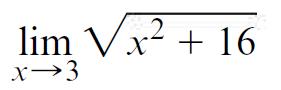
Determine which of the following limits exist. Compute the limits that exist. lim Vx² + 16 x-3
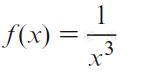
Use formulas (1) and (2) and the power rule to find the derivatives of the following functions. f(x) = 1 x-3
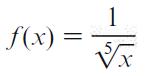
Use formulas (1) and (2) and the power rule to find the derivatives of the following functions.f(x) = 3√x
Find an equation of the given line.Slope is 1/2; (2, 1) on line
Exercises refer to the points in Fig. 12. Assign one of the following descriptors to each point: large positive slope, small positive slope, zero slope, small negative slope, large negative slope.A and B A y Figure 12 B C D E F X
Find the equation and sketch the graph of the following lines.Perpendicular to y = 3x + 4, passing through (1, 2).
Explain how to calculate f′(2) as the limit of slopes of secant lines through the point (2, f (2)).
An analysis of the daily output of a factory assembly line shows that about 60t + t2 - 1/12 t3 units are produced after t hours of work, 0 ≤ t ≤ 8. What is the rate of production (in units per hour) when t = 2?
Find an equation of the given line.Slope is 2; (1, -2) on line
Find the equation and sketch the graph of the following lines.Through (2, 1) and (5, 1).
Use formulas (1) and (2) and the power rule to find the derivatives of the following functions. f(x) = 1 x5
Find an equation of the given line.Slope is -1; (7, 1) on line
Find the equation and sketch the graph of the following lines.Through (-1, 4) and (3, 7).
Is the function, whose graph is drawn in Fig. 7, differentiable at the following values of x?x = -3 -5 -4 Figure 7 -3 -2 -1 Y 1 2 3 + 4 +x 5 10
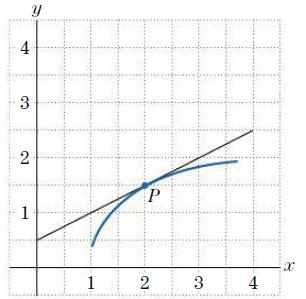
Estimate the slope of each of the following curves at the designated point P. 4 3 2 1 y 1 P 2 3 100 4 X
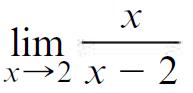
Determine which of the following limits exist. Compute the limits that exist. X lim x-2x - 2
State the power rule, the constant-multiple rule, and the sum rule, and give an example of each.
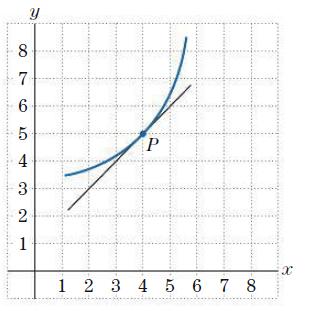
Estimate the slope of each of the following curves at the designated point P. Y 8 7 6 5 4 3 2 1 P 1 2 3 4 5 6 7 8 X
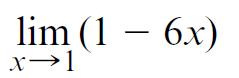
Determine which of the following limits exist. Compute the limits that exist. lim (1 - 6x) x→1
Is the function, whose graph is drawn in Fig. 7, differentiable at the following values of x?x = 0 -5 -4 Figure 7 -3 -2 -1 Y 1 2 3 + 4 +x 5 10
Find the first derivatives.
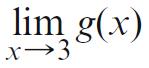
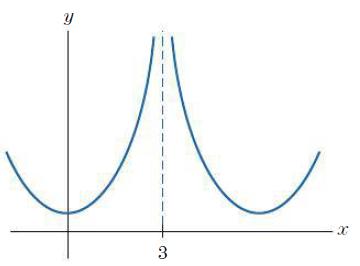
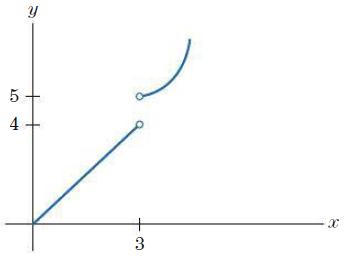
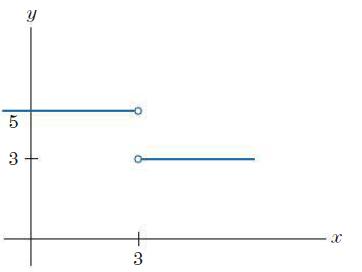
For each of the following functions g(x), determine whetherexists. If so, give the limit. lim g(x) x-3
Explain why the derivative of a constant function is 0.
Is the function, whose graph is drawn in Fig. 7, continuous at the following values of x?x = 2 + -5 -4 -3 -2 -1 Figure 7 y 1 2 3 + 4 5 X
Estimate the slope of each of the following curves at the designated point P. 4 3 y 2 1 1 P 2 3 4 X
An object moving in a straight line travels s(t) kilometers in t hours, where s(t) = 2t2 + 4t.(a) What is the object’s velocity when t = 6?(b) How far has the object traveled in 6 hours?(c) When is the object traveling at the rate of 6 kilometers per hour?
Use formulas (1) and (2) and the power rule to find the derivatives of the following functions.f(x) = x-1/2
Find the equation and sketch the graph of the following lines.Parallel to -2x + 3y = 6, passing through (0, 1).
Find the slopes and y-intercepts of the following lines.4x + 9y = -1
Find the first derivatives.x = 16t2 + 45t + 10
What does f′(2) represent?
For each of the following functions g(x), determine whetherexists. If so, give the limit. lim g(x) x-3
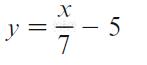
Find the slopes and y-intercepts of the following lines. y X 7 - 5
Suppose that f(t) = 3t + 2 -12/t.(a) What is the average rate of change of f (t) over the interval 2 to 3?(b) What is the (instantaneous) rate of change of f(t) when t = 2?
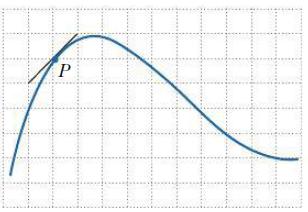
Estimate the slope of each of the following curves at the designated point P. P
Is the function, whose graph is drawn in Fig. 7, continuous at the following values of x?x = -2 + -5 -4 -3 -2 -1 Figure 7 y 1 2 3 + 4 5 X
Use formulas (1) and (2) and the power rule to find the derivatives of the following functions.f(x) = x2/3
Find the equation and sketch the graph of the following lines.Parallel to y = -2x, passing through (3, 5).
Find the first derivatives.y = T5 - 4T4 + 3T2 - T - 1
Give a physical description of what is meant by the slope of f(x) at the point (2, f (2)).
For each of the following functions g(x), determine whetherexists. If so, give the limit. lim g(x) x-3
Suppose that f(t) = t2 + 3t - 7.(a) What is the average rate of change of f (t) over the interval 5 to 6?(b) What is the (instantaneous) rate of change of f (t) when t = 5?
Use formulas (1) and (2) and the power rule to find the derivatives of the following functions.f(x) = x-2
Find the equation and sketch the graph of the following lines.Through (1, 4), with slope - 1/3.
Find the slopes and y-intercepts of the following lines.y = 6
Find the first derivatives.g(y) = y2 - 2y + 4
What can you say about the slopes of parallel lines? Perpendicular lines?
Showing 5400 - 5500
of 5529
First
42
43
44
45
46
47
48
49
50
51
52
53
54
55
56
Step by Step Answers

 Get 50% OFF
Claim Now
Get 50% OFF
Claim Now